Timeless Myths Logo
Aphrodite Apollo Ares Artemis Athena Atlas Coeus Crius Cronus Demeter Dionysus Gaia Hades Hephaestus Hera Hermes Hestia Hyperion Iapetus Mnemosyne Oceanus Phobos Phoebe Poseidon Prometheus Rhea Tethys Themis Uranus Zeus
Bacchus Ceres Diana Juno Jupiter Mars Mercury Minerva Neptune Pluto Venus Vesta Vulcan
Amun Anubis Aten Atum Babi Bastet Bes Geb Hapi hathor heqet Horus Isis Khepri Khnum Khonsu Maat Nephthys Nut Osiris Ptah Ra Seshat Seth Shu Sobek Thoth
Alfheim Baldur Freya Freyr Frigg Heimdallr Helheim Idun Jotunheim Loki Nerthus Njord Odin Thor Tyr
Aengus Arawn Badb Brigid Cailleach Ceridwen Cernunnos Cu Chulainn Dagda Danu Gwydion Herne the Hunter Lugh Medb Morrigan Neit Nuada Taliesin Taranis
Chalchiuhtlicue Coatlicue Huitzilopochtli Mictlantecuhtli Mixcoatl Ometeotl Quetzalcoatl Tezcatlipoca Tlaloc Tonatiuh Xipe Totec Xochiquetzal Xolotl
Amaterasu Ame no Uzume Benzaiten Bishamonten Daikokuten Ebisu Fujin Fukurokuju Inari Izanagi Kagutsuchi Raijin Susanoo Tsukuyomi
Caishen Cangjie Dragon King Eight Immortals Erlang Shen Fuxi Guanyin Hou Yi Huxian Jade Emperor King Yama Leizi Lu-ban Mazu Nezha Nuwa Pangu Shennong Sun Wukong Xiwangmu Yue Lao Zhong Kui
Norse Classical Celtic Arthurian
Literature Stories Names
Aphrodite Apollo Ares Artemis Athena Atlas Coeus Crius Cronus Demeter Dionysus Gaia Hades Hephaestus Hera Hermes Hestia Hyperion Iapetus Mnemosyne Oceanus Phobos Phoebe Poseidon Prometheus Rhea Tethys Themis Uranus Zeus
Bacchus Ceres Diana Juno Jupiter Mars Mercury Minerva Neptune Pluto Venus Vesta Vulcan
Amun Anubis Aten Atum Babi Bastet Bes Geb Hapi hathor heqet Horus Isis Khepri Khnum Khonsu Maat Nephthys Nut Osiris Ptah Ra Seshat Seth Shu Sobek Thoth
Alfheim Baldur Freya Freyr Frigg Heimdallr Helheim Idun Jotunheim Loki Nerthus Njord Odin Thor Tyr
Aengus Arawn Badb Brigid Cailleach Ceridwen Cernunnos Cu Chulainn Dagda Danu Gwydion Herne the Hunter Lugh Medb Morrigan Neit Nuada Taliesin Taranis
Chalchiuhtlicue Coatlicue Huitzilopochtli Mictlantecuhtli Mixcoatl Ometeotl Quetzalcoatl Tezcatlipoca Tlaloc Tonatiuh Xipe Totec Xochiquetzal Xolotl
Amaterasu Ame no Uzume Benzaiten Bishamonten Daikokuten Ebisu Fujin Fukurokuju Inari Izanagi Kagutsuchi Raijin Susanoo Tsukuyomi
Caishen Cangjie Dragon King Eight Immortals Erlang Shen Fuxi Guanyin Hou Yi Huxian Jade Emperor King Yama Leizi Lu-ban Mazu Nezha Nuwa Pangu Shennong Sun Wukong Xiwangmu Yue Lao Zhong Kui
Norse Classical Celtic Arthurian
Literature Stories Names
  1. Classical Literature
    Greece Rome Other Ancient Civilizations Timeline of Classical Literature Alphabetical List of Authors Index of Individual Works Index of Important Characters Sources About Us
  2. Rome
    Catullus Vergil (Virgil) Horace Ovid Seneca the Younger Lucan Juvenal Pliny the Younger
  3. Juvenal
    Satire III Satire VI Satire X
  4. Satire III

Satire III

(Satire, Latin/Roman, c. 110 CE, 322 lines)

Introduction

"Satire III" ("Satura III") is a verse satire by the Roman satirical poet Juvenal, written around 110 CE or after. The poem is a monologue by a friend of Juvenal called Umbricius who is leaving Rome for a better life in the country, and who lists all the many ways in which Rome has become an unbearable place to live. It is perhaps the single most famous of Juvenal's sixteen Satires.

Synopsis
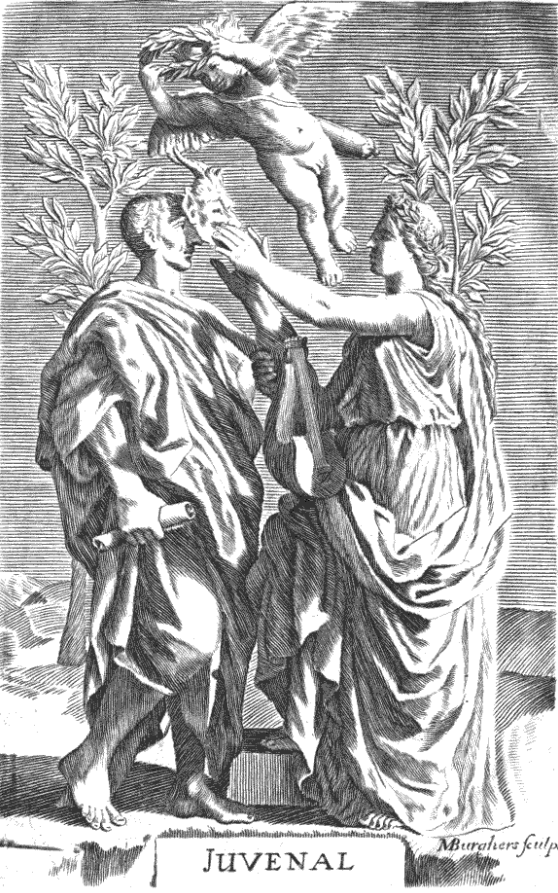
Juvenal, Roman satirical poet

Juvenal, Roman satirical poet

In the prologue, the poet addresses his audience in the first person, explaining that his friend Umbricius, whom he is meeting for the last time on the edge of the city of Rome, is about to depart from Rome for a better life in the country, a decision of which Juvenal thoroughly approves. The poet then joins the audience as Umbricius, a loyal Roman citizen who can no longer endure his homeland, speaks his mind in an extended monologue.

As he sets off for Cumae, Umbricius relates the reasons he has been driven from Rome: that there is no longer any room for honest men, only liars and paupers; that the only way to earn the patronage of great men is to learn their guilty secrets; that Greeks and Syrians (who are willing to lie and cheat and do whatever it takes) are starting to oust the native Romans from their jobs; that only rich men are believed on their oaths; that the poor are ejected from their places in the theatre; that he can never hope to marry an heiress or to receive a legacy; that costs are too high in Rome and the style of living too pretentious; that there is a constant danger from fires or falling houses; that the noisy crowded streets make sleep impossible; that the poor are hustled on the streets, while the rich are borne safely through the streets in litters; and that there is a constant danger from items thrown from windows, as well as from rowdies, burglars and bandits.

Umbricius begs Juvenal to visit him in Cumae whenever he is visiting his native Aquinum, and promises to support him in any attempts at political reform Juvenal might take up.

Analysis
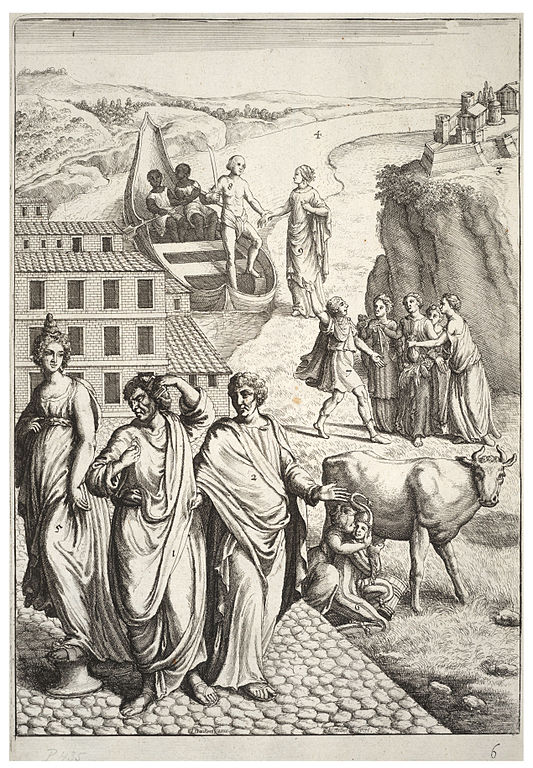
Illustration depicting scenes from Juvenal's Satire III

Illustration depicting scenes from Juvenal's Satire III

Juvenal is credited with sixteen known poems divided among five books, all in the Roman genre of satire, which, at its most basic in the time of the author, comprised a wide-ranging discussion of society and social mores, written in dactylic hexameter. Roman verse (as opposed to prose) satire is often called Lucilian satire, after Lucilius who is usually credited with originating the genre.

In a tone and manner ranging from irony to apparent rage, Juvenal criticizes the actions and beliefs of many of his contemporaries, providing insight more into value systems and questions of morality and less into the realities of Roman life. The scenes painted in his text are very vivid, often lurid, although Juvenal employs outright obscenity less frequently than does Martial or Catullus.

He makes constant allusion to history and myth as a source of object lessons or exemplars of particular vices and virtues. These tangential references, coupled with his dense and elliptical Latin, indicate that Juvenal's intended reader was the highly-educated subset of the Roman elite, primarily adult males of a more conservative social stance.

Resources

  • English translation by Niall Rudd (Google Books): https://books.google.ca/books?id=ngJemlYfB4MC&pg=PA15

  • Latin version (The Latin Library): http://www.thelatinlibrary.com/juvenal/3.shtml

By Timeless Myths

Juvenal:

  • • Satire III
  • • Satire VI
  • • Satire X
Satire III

Satire III

(Satire, Latin/Roman, c. 110 CE, 322 lines)Introduction "Satire III" ("Satura III") is a verse satire by the Roman satirical poet Juvenal, written around 110 CE or after. The poem is a monologue by a friend of Juvenal called Umbricius who is leavi...

October 25th, 2024 • Timeless Myths
Timeless Myths

Exploring mythology and legends from around the world.

Explore Myths

All Stories Characters All Articles Search Site Map

Mythologies

Norse Mythology Classical Mythology Celtic Mythology Arthurian Legends Mythology Gods Ancient Literature

About Us

Introduction About Jimmy Bibliography FAQs Retro Version

Resources

Timeless Myths All Stories All Articles Characters
© 1999-2026 Timeless Myths • Copyright • Privacy Policy • Cookie Policy • Contact
Follow us: