Timeless Myths Logo
Aphrodite Apollo Ares Artemis Athena Atlas Coeus Crius Cronus Demeter Dionysus Gaia Hades Hephaestus Hera Hermes Hestia Hyperion Iapetus Mnemosyne Oceanus Phobos Phoebe Poseidon Prometheus Rhea Tethys Themis Uranus Zeus
Bacchus Ceres Diana Juno Jupiter Mars Mercury Minerva Neptune Pluto Venus Vesta Vulcan
Amun Anubis Aten Atum Babi Bastet Bes Geb Hapi hathor heqet Horus Isis Khepri Khnum Khonsu Maat Nephthys Nut Osiris Ptah Ra Seshat Seth Shu Sobek Thoth
Alfheim Baldur Freya Freyr Frigg Heimdallr Helheim Idun Jotunheim Loki Nerthus Njord Odin Thor Tyr
Aengus Arawn Badb Brigid Cailleach Ceridwen Cernunnos Cu Chulainn Dagda Danu Gwydion Herne the Hunter Lugh Medb Morrigan Neit Nuada Taliesin Taranis
Chalchiuhtlicue Coatlicue Huitzilopochtli Mictlantecuhtli Mixcoatl Ometeotl Quetzalcoatl Tezcatlipoca Tlaloc Tonatiuh Xipe Totec Xochiquetzal Xolotl
Amaterasu Ame no Uzume Benzaiten Bishamonten Daikokuten Ebisu Fujin Fukurokuju Inari Izanagi Kagutsuchi Raijin Susanoo Tsukuyomi
Caishen Cangjie Dragon King Eight Immortals Erlang Shen Fuxi Guanyin Hou Yi Huxian Jade Emperor King Yama Leizi Lu-ban Mazu Nezha Nuwa Pangu Shennong Sun Wukong Xiwangmu Yue Lao Zhong Kui
Norse Classical Celtic Arthurian
Literature Stories Names
Aphrodite Apollo Ares Artemis Athena Atlas Coeus Crius Cronus Demeter Dionysus Gaia Hades Hephaestus Hera Hermes Hestia Hyperion Iapetus Mnemosyne Oceanus Phobos Phoebe Poseidon Prometheus Rhea Tethys Themis Uranus Zeus
Bacchus Ceres Diana Juno Jupiter Mars Mercury Minerva Neptune Pluto Venus Vesta Vulcan
Amun Anubis Aten Atum Babi Bastet Bes Geb Hapi hathor heqet Horus Isis Khepri Khnum Khonsu Maat Nephthys Nut Osiris Ptah Ra Seshat Seth Shu Sobek Thoth
Alfheim Baldur Freya Freyr Frigg Heimdallr Helheim Idun Jotunheim Loki Nerthus Njord Odin Thor Tyr
Aengus Arawn Badb Brigid Cailleach Ceridwen Cernunnos Cu Chulainn Dagda Danu Gwydion Herne the Hunter Lugh Medb Morrigan Neit Nuada Taliesin Taranis
Chalchiuhtlicue Coatlicue Huitzilopochtli Mictlantecuhtli Mixcoatl Ometeotl Quetzalcoatl Tezcatlipoca Tlaloc Tonatiuh Xipe Totec Xochiquetzal Xolotl
Amaterasu Ame no Uzume Benzaiten Bishamonten Daikokuten Ebisu Fujin Fukurokuju Inari Izanagi Kagutsuchi Raijin Susanoo Tsukuyomi
Caishen Cangjie Dragon King Eight Immortals Erlang Shen Fuxi Guanyin Hou Yi Huxian Jade Emperor King Yama Leizi Lu-ban Mazu Nezha Nuwa Pangu Shennong Sun Wukong Xiwangmu Yue Lao Zhong Kui
Norse Classical Celtic Arthurian
Literature Stories Names
  1. Classical Literature
    Greece Rome Other Ancient Civilizations Timeline of Classical Literature Alphabetical List of Authors Index of Individual Works Index of Important Characters Sources About Us
  2. Rome
    Catullus Vergil (Virgil) Horace Ovid Seneca the Younger Lucan Juvenal Pliny the Younger
  3. Horace
    Carmen Saeculare Ars Poetica Tu ne quaesieris (Odes, Book 1, Poem 11) Nunc est bibendum (Odes, Book 1, Poem 37)
  4. Carmen Saeculare

Carmen Saeculare

(Lyric Poem, Latin/Roman, 17 BCE, 76 lines)

Introduction
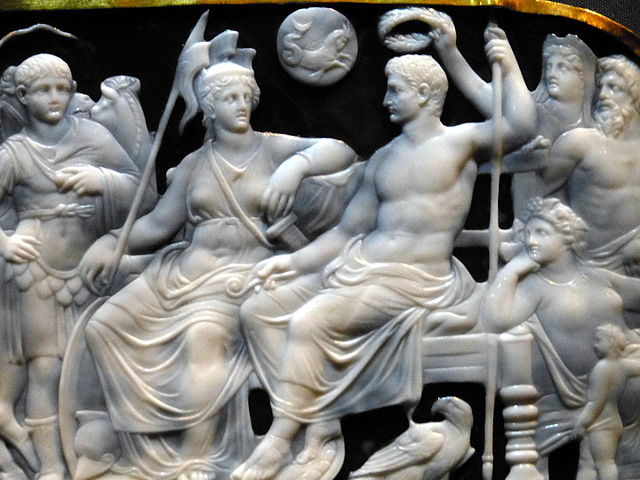
Gemma Augustea cameo showing Augustus and Roman gods

Gemma Augustea - Roman cameo from the Augustan era

"Carmen Saeculare" (literally, "Secular Hymn", usually translated as "Song of the Ages"), sometimes known as "The Carmen" for short, is a hymn or ode by the Roman lyric poet Horace, commissioned by the Roman Emperor Augustus in 17 BCE. It is collection of mythological and religious verses encouraging the restoration of the tradition and the glorification of the gods, particularly Phoebus, Diana, Jupiter and Venus.

Synopsis

The poem takes the the form of a prayer or hymn addressed to Phoebus (or Apollo) and Diana (Artemis).

It asks the gods to bless the great city of Rome and its empire, and praises the achievements of modern Rome and the Emperor Augustus. In particular, it asks for protection for the child-bearing mothers of the city and the sanctity of their marriages, and then asks the Fates and the gods of the earth to bless the harvest and ensure a fruitful yield from the crops. Recalling the glorious past history of Rome, back to its initial founding by the divine-born Aeneas and and his descendant Romulus, the hymn then asks for success in Rome's military endeavours.

The poem ends with a renewed call to Phoebus and Diana to hear the prayers of the children and to extend their protection and championship of Rome and its people.

Analysis
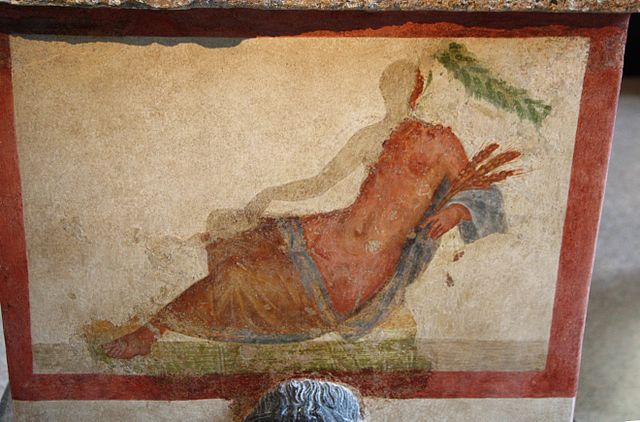
Classical painting of Ceres, goddess of harvest

Ceres, goddess of harvest, who is invoked in the hymn

"The Carmen" is a choral hymn, written by Horace at the command of the Emperor Augustus, to be performed as a festival hymn at the opening ceremony of the "ludi saeculares" ("secular games") by a choir of twenty-seven boys and twenty-seven girls. The "ludi saeculares" were a lavish festival of games, sacrifices and performances held roughly every century throughout the time of the Roman Republic, a custom revived by the Emperor Augustus soon after he had established himself as the supreme power in Rome after his final defeat of Mark Anthony and Cleopatra.

At that time, Horace was virtually in the position of Augustus' poet laureate and it was no surprise that he was called on to compose the festival hymn for the games. It is the first fully preserved Latin hymn whose circumstances of presentation are definitely known, and it is also the only lyric of Horace we can be certain was first presented orally.

It is generally written in an elevated and religious tone, and is composed in the Sapphic metre, consisting of nineteen four-line sapphic stanzas (three hendecasyllabic lines of eleven syllables, and a fourth line of five syllables).

Resources

  • English translation by A. S. Kline (Poetry in Translation): http://www.poetryintranslation.com/PITBR/Latin/HoraceEpodesAndCarmenSaeculare.htm#_Toc98670048

  • Latin version (The Latin Library): http://www.thelatinlibrary.com/horace/carmsaec.shtml

By Timeless Myths

Horace:

  • • Carmen Saeculare
  • • Ars Poetica
  • • Tu ne quaesieris (Odes, Book 1, Poem 11)
  • • Nunc est bibendum (Odes, Book 1, Poem 37)
Carmen Saeculare

Carmen Saeculare

(Lyric Poem, Latin/Roman, 17 BCE, 76 lines)Introduction "Carmen Saeculare" (literally, "Secular Hymn", usually translated as "Song of the Ages"), sometimes known as "The Carmen" for short, is a hymn or ode by the Roman lyric poet Horace, commissio...

October 25th, 2024 • Timeless Myths
Timeless Myths

Exploring mythology and legends from around the world.

Explore Myths

All Stories Characters All Articles Search Site Map

Mythologies

Norse Mythology Classical Mythology Celtic Mythology Arthurian Legends Mythology Gods Ancient Literature

About Us

Introduction About Jimmy Bibliography FAQs Retro Version

Resources

Timeless Myths All Stories All Articles Characters
© 1999-2026 Timeless Myths • Copyright • Privacy Policy • Cookie Policy • Contact
Follow us: