Timeless Myths Logo
Aphrodite Apollo Ares Artemis Athena Atlas Coeus Crius Cronus Demeter Dionysus Gaia Hades Hephaestus Hera Hermes Hestia Hyperion Iapetus Mnemosyne Oceanus Phobos Phoebe Poseidon Prometheus Rhea Tethys Themis Uranus Zeus
Bacchus Ceres Diana Juno Jupiter Mars Mercury Minerva Neptune Pluto Venus Vesta Vulcan
Amun Anubis Aten Atum Babi Bastet Bes Geb Hapi hathor heqet Horus Isis Khepri Khnum Khonsu Maat Nephthys Nut Osiris Ptah Ra Seshat Seth Shu Sobek Thoth
Alfheim Baldur Freya Freyr Frigg Heimdallr Helheim Idun Jotunheim Loki Nerthus Njord Odin Thor Tyr
Aengus Arawn Badb Brigid Cailleach Ceridwen Cernunnos Cu Chulainn Dagda Danu Gwydion Herne the Hunter Lugh Medb Morrigan Neit Nuada Taliesin Taranis
Chalchiuhtlicue Coatlicue Huitzilopochtli Mictlantecuhtli Mixcoatl Ometeotl Quetzalcoatl Tezcatlipoca Tlaloc Tonatiuh Xipe Totec Xochiquetzal Xolotl
Amaterasu Ame no Uzume Benzaiten Bishamonten Daikokuten Ebisu Fujin Fukurokuju Inari Izanagi Kagutsuchi Raijin Susanoo Tsukuyomi
Caishen Cangjie Dragon King Eight Immortals Erlang Shen Fuxi Guanyin Hou Yi Huxian Jade Emperor King Yama Leizi Lu-ban Mazu Nezha Nuwa Pangu Shennong Sun Wukong Xiwangmu Yue Lao Zhong Kui
Norse Classical Celtic Arthurian
Literature Stories Names
Aphrodite Apollo Ares Artemis Athena Atlas Coeus Crius Cronus Demeter Dionysus Gaia Hades Hephaestus Hera Hermes Hestia Hyperion Iapetus Mnemosyne Oceanus Phobos Phoebe Poseidon Prometheus Rhea Tethys Themis Uranus Zeus
Bacchus Ceres Diana Juno Jupiter Mars Mercury Minerva Neptune Pluto Venus Vesta Vulcan
Amun Anubis Aten Atum Babi Bastet Bes Geb Hapi hathor heqet Horus Isis Khepri Khnum Khonsu Maat Nephthys Nut Osiris Ptah Ra Seshat Seth Shu Sobek Thoth
Alfheim Baldur Freya Freyr Frigg Heimdallr Helheim Idun Jotunheim Loki Nerthus Njord Odin Thor Tyr
Aengus Arawn Badb Brigid Cailleach Ceridwen Cernunnos Cu Chulainn Dagda Danu Gwydion Herne the Hunter Lugh Medb Morrigan Neit Nuada Taliesin Taranis
Chalchiuhtlicue Coatlicue Huitzilopochtli Mictlantecuhtli Mixcoatl Ometeotl Quetzalcoatl Tezcatlipoca Tlaloc Tonatiuh Xipe Totec Xochiquetzal Xolotl
Amaterasu Ame no Uzume Benzaiten Bishamonten Daikokuten Ebisu Fujin Fukurokuju Inari Izanagi Kagutsuchi Raijin Susanoo Tsukuyomi
Caishen Cangjie Dragon King Eight Immortals Erlang Shen Fuxi Guanyin Hou Yi Huxian Jade Emperor King Yama Leizi Lu-ban Mazu Nezha Nuwa Pangu Shennong Sun Wukong Xiwangmu Yue Lao Zhong Kui
Norse Classical Celtic Arthurian
Literature Stories Names
  1. Classical Literature
    Greece Rome Other Ancient Civilizations Timeline of Classical Literature Alphabetical List of Authors Index of Individual Works Index of Important Characters Sources About Us
  2. Rome
    Catullus Vergil (Virgil) Horace Ovid Seneca the Younger Lucan Juvenal Pliny the Younger
  3. Horace
    Carmen Saeculare Ars Poetica Tu ne quaesieris (Odes, Book 1, Poem 11) Nunc est bibendum (Odes, Book 1, Poem 37)
  4. Tu ne quaesieris (Odes, Book 1, Poem 11)

Tu ne quaesieris (Odes, Book 1, Poem 11)

(Lyric Poem, Latin/Roman, c. 23 BCE, 8 lines)

Introduction
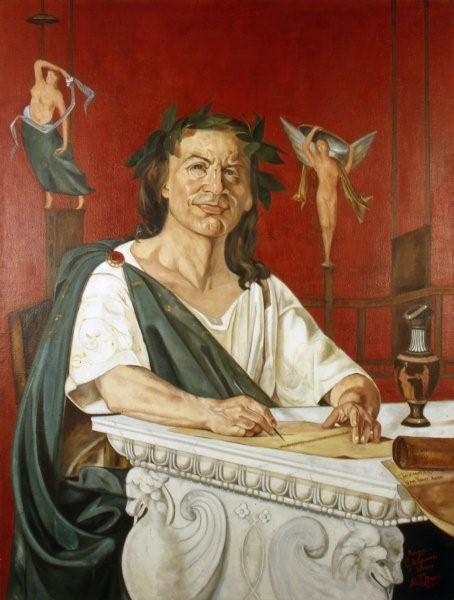
Portrait of Quintus Horatius Flaccus (Horace)

Portrait of Horace

"Tu ne quaesieris" ("Do not ask") is the most famous of the odes of the Roman lyric poet Horace, published in 23 BCE as Poem 11 in the first book of Horace's collected "Odes" or "Carmina". The poem takes the form of a short rebuke to a woman, Leuconoë, who is worrying about the future, and uses agricultural metaphors to urge us to embrace the pleasures available in everyday life rather than relying on remote aspirations for the future. The poem is often also known as "Carpe Diem" for the famous phrase in the final line, or sometimes as "Ad Leuconoem" for its initial dedication.

Synopsis

The poet advises Leuconoë not to question what fate the gods have in store for her, nor to rely on astrological predictions as the ancient Babylonians used to. Rather, she should just submit and make the best of whatever years are granted us, drinking wine and living life to the full with no thought for the future, because, even as she reads the poem, valuable time is passing.

Analysis

Horace developed his "Odes" in conscious imitation of the short lyric poetry of Greek originals such as Pindar, Sappho and Alcaeus. His genius lay in applying these older forms, largely using the ancient Greek Sapphic and Alcaic metres, to the social life of Rome in the age of Augustus. The first three books of the "Odes", including this one, were published in 23 BCE, with the earliest positively-dated poem in the collection ("Nunc est bibendum") dating from around 30 BCE. We have no exact date for the writing of this particular poem.

It is addressed to Leuconoë, an unknown younger female companion (probably not her real name, as it translates as something like "empty head"). It seems likely from hints in the poem that, at the time of its writing, Horace and Leuconoë were together in a villa on the shores of the Bay of Naples (the "Tyrrhenian Sea") on a wild winter's day.

There is a definite music in the poem, especially when read aloud, and Horace manages to conjure vivid imagery in the sparest, most economical phrases. It closes with the famous line "carpe diem, quam minimum credula postero" ("seize the day, trusting tomorrow as little as possible").

Carpe diem quote from Horace

The famous "carpe diem" line from Horace's Odes

Resources

  • English translation by John Conington (Perseus Project): http://www.perseus.tufts.edu/hopper/text.jsp?doc=Perseus:text:1999.02.0025:book=1:poem=11

  • Latin version with word-by-word translation (Perseus Project): http://www.perseus.tufts.edu/hopper/text.jsp?doc=Perseus:text:1999.02.0024:book=1:poem=11

By Timeless Myths

Horace:

  • • Carmen Saeculare
  • • Ars Poetica
  • • Tu ne quaesieris (Odes, Book 1, Poem 11)
  • • Nunc est bibendum (Odes, Book 1, Poem 37)
Tu ne quaesieris (Odes, Book 1, Poem 11)

Tu ne quaesieris (Odes, Book 1, Poem 11)

(Lyric Poem, Latin/Roman, c. 23 BCE, 8 lines)Introduction "Tu ne quaesieris" ("Do not ask") is the most famous of the odes of the Roman lyric poet Horace, published in 23 BCE as Poem 11 in the first book of Horace's collected "Odes" or "Carmina". ...

October 25th, 2024 • Timeless Myths
Timeless Myths

Exploring mythology and legends from around the world.

Explore Myths

All Stories Characters All Articles Search Site Map

Mythologies

Norse Mythology Classical Mythology Celtic Mythology Arthurian Legends Mythology Gods Ancient Literature

About Us

Introduction About Jimmy Bibliography FAQs Retro Version

Resources

Timeless Myths All Stories All Articles Characters
© 1999-2026 Timeless Myths • Copyright • Privacy Policy • Cookie Policy • Contact
Follow us: