Female Centaur: The Myth of the Centaurides in Ancient Greek Folklore
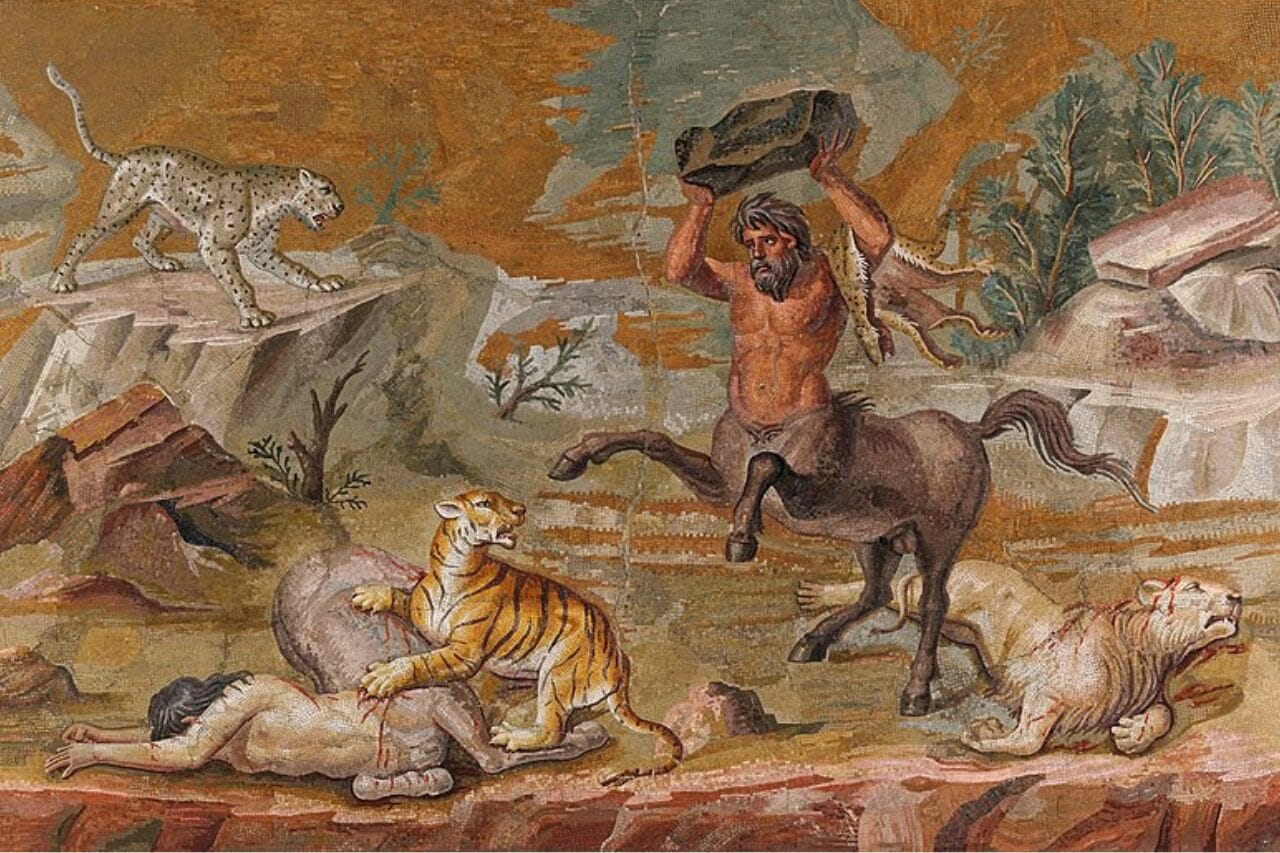
The female centaur in Greek mythology
The female centaur, also known as a centauride, existed alongside their male counterparts between Mt. Pelion and Laconia. They were wild and dangerous, thus, were disliked by the mortals and the deities. Stories about the female centaurs were scarce in Ancient Greece as compared to the males, hence we have little information about them. This article would look at the description and role of the centauride in ancient Greece.
What Is the Origin of Female Centaurs?
The centaurides and the centaurs share the same origin, thus they were either born from the union of Ixion and Nephele or a man named Centaurus. According to the myth, Ixion had a strong desire to sleep with Hera, the wife of Zeus, after Zeus had saved him.
Zeus's Trick
When Zeus realized Ixion's true intentions, he tricked him by making Nephele appear as Hera and to seduce Ixion. Ixion slept with Nephele and the couple gave birth to the centaurs and centaurides.
Another version of the origin of the centaurides narrated that a man named Centaurus slept with the Magnesian mares and the unnatural union brought forth centaurs. The ancient Greeks believed Centaurus to be either the son of Ixion and Nephele or Apollo and Stilbe, the nymph. Centaurus was the twin brother of Lapithes, the ancestor of the Lapiths who fought with the centaurs in the centauromachy.
Other Tribes of Female Centaurs
Then there were the horned centauridess who lived in the region of Cyprus. They originated from Zeus who lusted after Aphrodite and pursued her to have sex with her. However, the goddess proved elusive, forcing Zeus to spill his semen on the ground in frustration. From his seed sprung the horned centauridess who were different from their tribesmen in mainland Greece.
Another type was the 12 ox-horned centaurs who were ordered by Zeus to protect the infant Dionysos from. These centaurs were originally known as Lamian Pheres and were spirits of the river Lamos. Hera, however, succeeded in transforming the Lamian Pheres into the horned oxen who later helped Dionysos to fight the Indians.
The Description of the Centaurides
The centaurides shared the same physical characteristics as the centaur; half-woman and half-horse. Philostratus the Elder described them as beautiful and enchanting horses who grew into centaurides. According to him, some of them were white and others had the complexion of a chestnut. Some centaurides also featured dappled skin which shone brightly when hit by the sunlight.
He also described the beauty of the centaurides that had a mixed complexion of black and white and thought they represented unity.
The poet Ovid wrote about the popular centauride, Hylonome, as the most attractive among the centauridess whose love and sweet words worn the heart of Cyllarus (a centaur).
Hylonome: The Most Popular Centaurides
Ovid continued that Hylonome took great care of herself and did everything to appear presentable and attractive. Hylonome had curly glossy hair which she adorned either with roses, violets or pure lily. According to Ovid, Cyllarus bathed twice a day in the lustrous brook in Pagasae's thick forest and dressed in the most beautiful animal skin.
As already mentioned, Hylonome was the wife of Cyllarus who took part in the Centauromachy. The Centauromachy was a war between the Centaurs and the Lapiths, cousins of the centaurs. Hylonome fought alongside her husband in the battle and showed great skill and strength. The war began when the centaurs attempted to kidnap Hippodamia and the women of Lapith during her marriage to Pirithous, the King of the Lapiths.
Theseus, the mythical King of Athens who was a guest at the wedding, fought on the side of the Lapiths and helped them to defeat the centaurs. Cyllarus, the husband of Hylonome, died during the Centauromachy when a spear went through his guts. When Hylonome saw her husband dying she abandoned the fight and rushed to his side. Hylonome then threw herself on the spear that killed her husband and she died alongside the man she loved more than her life.
Artistic Representations of a Centaurides
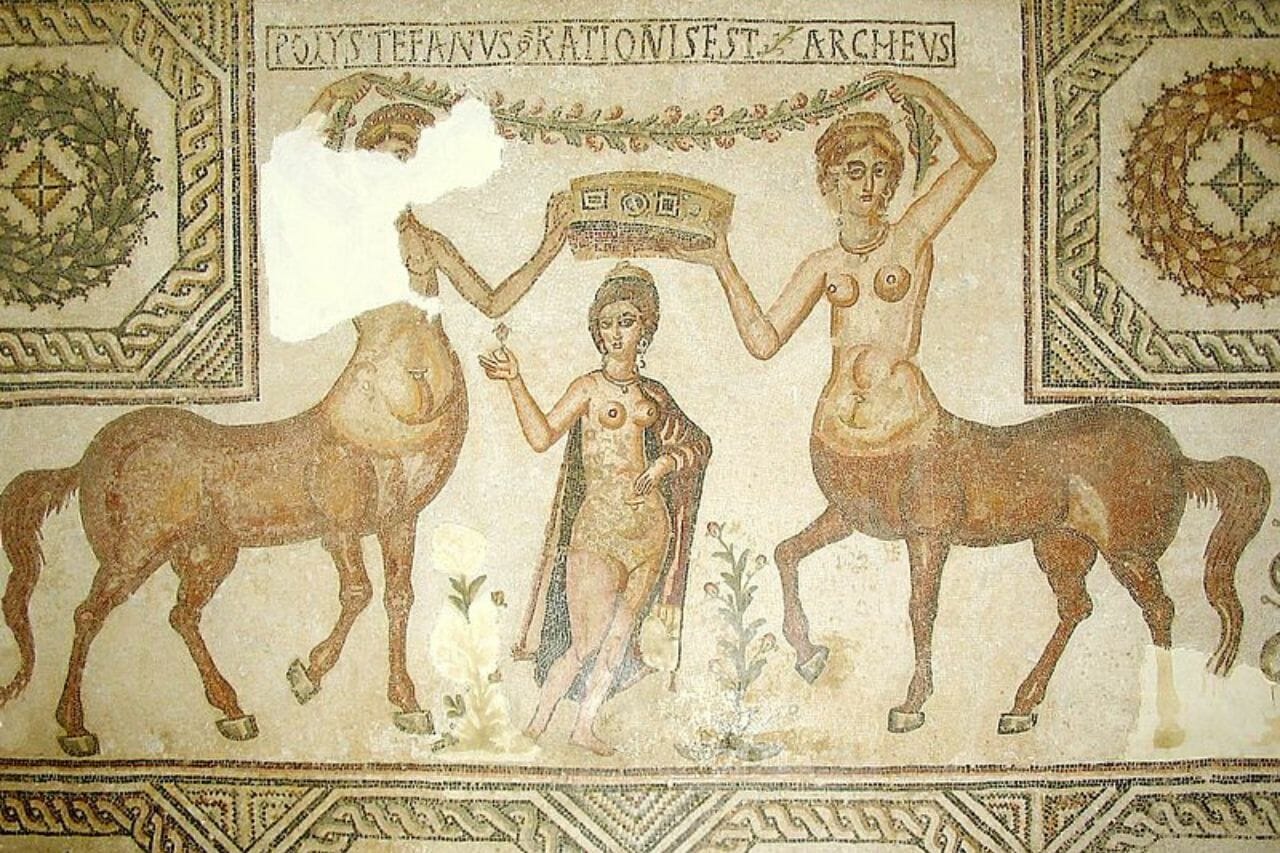
The Ancient Greeks depicted the centauridess in three different forms. The first one and the most popular was a female torso placed on the withers (neck area) of a horse. The top of the female was mostly unclad though there were some drawings that depicted their hair covering the breasts. The second representation of a centauride showed a human body with legs joined at the waist to the rest of the horse. Then the last form was similar to the second one but had human legs in front and with horses' hooves at the back.
In later periods, centaurides were depicted with wings but this art form was less popular than the ones mentioned above. The Romans frequently depicted the centaurs in their paintings with the most famous example being the Cameo of Constantine which featured Constantine in a centaur-driven chariot.
FAQ
Do Female Centaurides Appearance Outside Mythology?
Yes, female centaurides do appear outside of Greek mythology, for example, one family named Lambert from Britain used a centauride with a rose in the left hand as their symbol. However, they had to change the image to a male in the 18th Century for reasons best known to them. Nonetheless, in popular culture, they were seen as Disney also featured centaurides in their 1940 animated movie, Fantasia, where they were called centaurettes instead of centaurides.
Centaurides have featured prominently in Japan since the 2000s as part of the "monster girl" craze that hit the Japanese anime scene. Comics such as Monster Musume and A Centaur's Life feature centaurides among other beasts in their monthly releases.
In the 1972 song by Barbara Dickson titled Witch of the Westmoreland, a line describes a benevolent witch as a half-woman and half-mare with many interpreting it to be a centauride.
Conclusion
This article looked at how centaurides have been depicted both in Greek myth and modern literature. Here's a recap of the main topics covered in this article:
The female centaur who were they
Centaurides were less popular in mythology than their male counterparts, thus information about them is quite scarce.
However, they were believed to be born either by Ixion and his wife Nephele, Centaurus or Zeus when he spilled his semen on the ground after he couldn't sleep with Aphrodite.
The most popular of the centaurides was Hylonome who fought alongside her husband in the Centauromachy and died with him.
The Centauromachy began when the centaurs tried to abduct the wife of King Pirithous and other women of Lapith at the King's marriage ceremony.
Centaurides have been depicted in three forms with the most popular one showing them with a human torso joined to the neck of a horse.
In modern times, centaurides have been featured in some movies and comic series such as the 1940 Disney animation, Fantasia, and Japanese comic series.