Timeless Myths Logo
Aphrodite Apollo Ares Artemis Athena Atlas Coeus Crius Cronus Demeter Dionysus Gaia Hades Hephaestus Hera Hermes Hestia Hyperion Iapetus Mnemosyne Oceanus Phobos Phoebe Poseidon Prometheus Rhea Tethys Themis Uranus Zeus
Bacchus Ceres Diana Juno Jupiter Mars Mercury Minerva Neptune Pluto Venus Vesta Vulcan
Amun Anubis Aten Atum Babi Bastet Bes Geb Hapi hathor heqet Horus Isis Khepri Khnum Khonsu Maat Nephthys Nut Osiris Ptah Ra Seshat Seth Shu Sobek Thoth
Alfheim Baldur Freya Freyr Frigg Heimdallr Helheim Idun Jotunheim Loki Nerthus Njord Odin Thor Tyr
Aengus Arawn Badb Brigid Cailleach Ceridwen Cernunnos Cu Chulainn Dagda Danu Gwydion Herne the Hunter Lugh Medb Morrigan Neit Nuada Taliesin Taranis
Chalchiuhtlicue Coatlicue Huitzilopochtli Mictlantecuhtli Mixcoatl Ometeotl Quetzalcoatl Tezcatlipoca Tlaloc Tonatiuh Xipe Totec Xochiquetzal Xolotl
Amaterasu Ame no Uzume Benzaiten Bishamonten Daikokuten Ebisu Fujin Fukurokuju Inari Izanagi Kagutsuchi Raijin Susanoo Tsukuyomi
Caishen Cangjie Dragon King Eight Immortals Erlang Shen Fuxi Guanyin Hou Yi Huxian Jade Emperor King Yama Leizi Lu-ban Mazu Nezha Nuwa Pangu Shennong Sun Wukong Xiwangmu Yue Lao Zhong Kui
Norse Classical Celtic Arthurian
Literature Stories Names
Aphrodite Apollo Ares Artemis Athena Atlas Coeus Crius Cronus Demeter Dionysus Gaia Hades Hephaestus Hera Hermes Hestia Hyperion Iapetus Mnemosyne Oceanus Phobos Phoebe Poseidon Prometheus Rhea Tethys Themis Uranus Zeus
Bacchus Ceres Diana Juno Jupiter Mars Mercury Minerva Neptune Pluto Venus Vesta Vulcan
Amun Anubis Aten Atum Babi Bastet Bes Geb Hapi hathor heqet Horus Isis Khepri Khnum Khonsu Maat Nephthys Nut Osiris Ptah Ra Seshat Seth Shu Sobek Thoth
Alfheim Baldur Freya Freyr Frigg Heimdallr Helheim Idun Jotunheim Loki Nerthus Njord Odin Thor Tyr
Aengus Arawn Badb Brigid Cailleach Ceridwen Cernunnos Cu Chulainn Dagda Danu Gwydion Herne the Hunter Lugh Medb Morrigan Neit Nuada Taliesin Taranis
Chalchiuhtlicue Coatlicue Huitzilopochtli Mictlantecuhtli Mixcoatl Ometeotl Quetzalcoatl Tezcatlipoca Tlaloc Tonatiuh Xipe Totec Xochiquetzal Xolotl
Amaterasu Ame no Uzume Benzaiten Bishamonten Daikokuten Ebisu Fujin Fukurokuju Inari Izanagi Kagutsuchi Raijin Susanoo Tsukuyomi
Caishen Cangjie Dragon King Eight Immortals Erlang Shen Fuxi Guanyin Hou Yi Huxian Jade Emperor King Yama Leizi Lu-ban Mazu Nezha Nuwa Pangu Shennong Sun Wukong Xiwangmu Yue Lao Zhong Kui
Norse Classical Celtic Arthurian
Literature Stories Names

Sthenelus of Mycenae: The Stories of the Two Characters Who Bore the Name
greek-mythology

Sthenelus of Mycenae was the son of Perseus and Andromeda, a princess of the Ethiopian king Cepheus and his wife Cassiopeia. He became king of Mycenae after his elder brother, who had succeeded their father, died.

Sthenelus of Achaea was a commander who died in the Trojan war. Discover the myth of Sthenelus from Mycenae and Sthenelus from Achaea.

Sthenelus of Mycenae

The Family

Sthenelus married Niccipe, the daughter of the King of Pisa, and had three children with her; Eurystheus, Alcyone and Astymedusa. Sthenelus was the brother of Perses, Alcaeus, Heleus, Cynurus, Gorgophone, Electryon, Mestor and Autochthe.

Sthenelus' father, Perseus, was the founder of Mycenae and was popular for slaying the slaying beasts. One of the beasts he slew was Gorgon Medusa who had venomous snakes in place of her hair and turned anyone who gazed into her eyes into stone.

Perseus also killed the sea monster Cetus and saved Andromeda whom she later married and gave birth to Sthenelus. Sthenelus was also the grandson of Zeus, through Perseus, and the Argive princess, Danae.

Sthenleus also shares a kinship with Heracles as his father, Perseus, was the great-grandfather of the Heracles. His grandmother, Danae, was also credited with founding the city of Ardea in Rome.

The Mythology
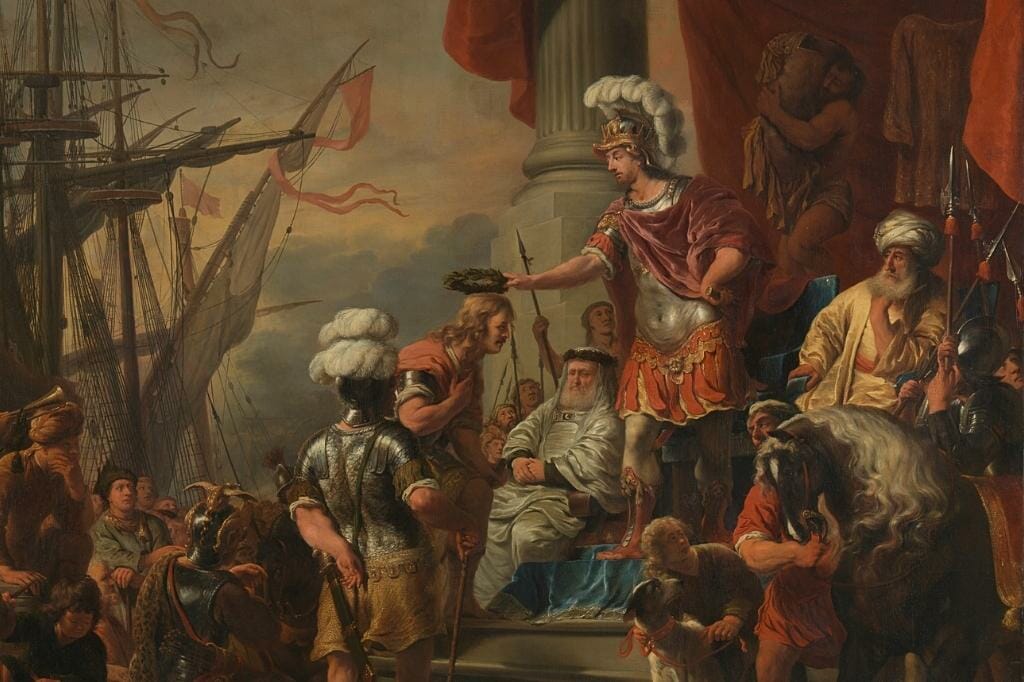
Sthenelus is best remembered for exiling his nephew, Amphitryon, after he killed his brother and king of Mycenae, Electryon. There are varying tales about how Amphitryon killed Sthenelus' brother but the most popular one goes this way.

Electryon, king of Tyrins, had just returned from war with some loot which included cattle. Amphitryon, who was married to Electryon's daughter, Alcmene, was overseeing the cattle with his father-in-law when all of a sudden one of the animals broke out of the herd.

According to Greek mythology, Amphitryon threw a club at the animal in a bid to make it return to its fold. Unfortunately, the club ricocheted off the horns of the animal and went straight to hit the head of Electryon, killing him instantly.

This angered Sthenelus who drove Amphitryon out of Mycenae forcing him to flee to Thebes with his wife Alcmene. The King of Thebes, Creon, then cleansed Amphitryon of the guilt of murdering his father-in-law.

Meanwhile, Sthenelus took over the reins of the kingdom of Mycenae from his deceased brother, Electryon. After the death of Sthenelus, his eldest son, Eurystheus, succeeded him and was responsible for imposing the Twelve Labors on Heracles. Eurystheus was later killed by Hyllus after he attacked Hyllus and his brothers in Athens.

However, there is different evidence from other versions that narrate how Eurystheus died in the battle involving him against Hyllus and his brothers but do not specify at whose hands he died.

Sthenelus of Achaea

Sthenelus in the Iliad

Sthenelus Iliad, also known as Sthenelus of Achaea, was part of the commanders that led the expedition to Troy to back the kidnapped Helen of Sparta. As part of his contribution to the Trojan War, Sthenelus brought 25 ships and he fought with the Argives.

He was great friends with Diomedes and the two ruled the divided land of Iphis and Argos together with Sthenelus ruling the former and Diomedes the latter. According to the Iliad, he was insulted by Agamemnon but Diomedes advised him to keep his calm which he did.

The two warriors fought alongside each other indicating their close relationship. During the latter stages of the war, he was chosen as one of the elite soldiers to enter the Trojan horse. Sthenelus was also part of the Greek army that survived the Trojan war and helped to return Helen.

He was the son of the famous Achaean warrior Capaneus and his wife Evadne. Capaneus had a huge body frame and immense strength which made him so proud and arrogant that he challenged Zeus.

During the war against Thebes, Zeus struck him with a thunderbolt killing him instantly while he was climbing a ladder to scale the Theban wall. At his funeral, Sthenelus' mother, Evadne, threw herself into the funeral pyre of Capaneus as she couldn't contain the loss and she died.

Sthenelus and the sons of the Greek commanders who died in the war decided to avenge the death of their fathers. After ten years, they attacked Thebes once again and this time they brought the city to its knees.

The Meaning and How to Pronounce It

Sthenelus means the strong one or an enforcer from the ancient Greek word "Sthenolos". The Sthenelus pronunciation is as follows: S-thi-ne-lus

The name is a derivate of the Greek word Sthenos which means might, strength, or force.

Since there is little information about Sthenelus, we can't tell why the Greek mythographers gave him that name. It would also be impossible to tell whether he lived up to the meaning of his name or not.

Conclusion
In this article, we've looked at the myth of Sthenelus from Mycenae and Sthenelus of Achaea and their families, roles and accomplishment in Greek mythology. Here is a summary of all that we've read so far:

  • Sthenelus from Mycenae was the son of Perseus, founder of the same city, and Princess Andromeda of Ethiopia.

  • He exiled Amphitryon after Amphitryon accidentally killed Sthenelus' brother, Electryon, who was the king of Mycenae.

  • After exiling Amphitryon, Sthneleus became king of Mycenae and was later succeeded by his son Eurystheus; the same who gave Heracles his Twelve Labors.

  • Sthenenlus in the Iliad was from Achaea and the son of the great warrior Capaneus who died after he was struck by a thunderbolt from Zeus for challenging him.

  • Sthenelus was known as a skillful and brave soldier who contributed 25 ships to Greece during the Trojan War and helped to return the abducted Helen to her rightful husband.

Both Sthenelus from Mycenae and Sthenelus of Achaea epitomize strength and power as the meaning of their name suggests. However, Sthenelus of Achaea is the most popular for his contributions to the defeat of Troy and the return of Helen to Menelaus, the King of Sparta.

By Ancient Literature

Created: February 16th, 2024

Modified: January 11th, 2025

Megapenthes: The Two Characters That Bore the Name in Greek Mythology

Megapenthes: The Two Characters That Bore the Name in Greek Mythology

In ancient Greek mythology, there were two Megapenthes; a son of King Proetus of Argos and Tiryns and a son of Menelaus, the King of Mycenae. Each Megapenthes was a minor character thus there is little information about them. However, one played a...

February 16th, 2024 • Ancient Literature
Stymphalus

Stymphalus

Stymphalus was a city in north-eastern Arcadia. Stymphalus was founded by Stymphalus, son of Elatus and Laodice. Stymphalus successfully resisted Pelops and his Pisan army, until he was treacherously murdered by Pelops during a truce. Stymphalus w...

August 8th, 1999 • Jimmy Joe
Menelaüs

Menelaüs

Husband of Helen of Sparta. Menelaüs (Menelaus or Μενέλαος) was the son of Atreus and Aerope, daughter of Catreus. He was the brother of Agamemnon, who became the king of Mycenae. Menelaüs seemed to be slightly less distinguished than his brother....

August 17th, 2002 • Jimmy Joe
Pylus

Pylus

Pylus or Pylos was founded by Pylas, exiled king of Megara. Pylas came to Messenia, and established a city on the southwest coast of the Peloponnesus. An Aeolid named Neleus drove Pylos out of his city, and became Pylus' second king. The city enjo...

August 8th, 1999 • Timeless Myths
Eurystheus

Eurystheus

Perseus' son Electryon ruled Mycenae until he was probably killed accidentally by his nephew and son-in-law, Amphitryon. Sthenelus took the throne that should have belonged to Amphitryon. When the god Zeus was expecting the birth of his son Heracl...

April 24th, 1999 • Jimmy Joe
Nestor in the Iliad: The Mythology of the Legendary King of Pylos

Nestor in the Iliad: The Mythology of the Legendary King of Pylos

Nestor in the Iliad was the king of Pylos who was known for his wisdom and insight which helped several characters in the epic poem, though some of his counsel was controversial. He was known to be motivating and an inspiring human who gave speech...

February 16th, 2024 • Ancient Literature
The Aeolids in Argos

The Aeolids in Argos

At first, Proëtus (Προιτος) ruled in his kingdom at Tiryns, when his twin brother was still ruling in the city of Argos. Proëtus and Acrisius were bitter rivals, both seeking power in Argos. Proëtus only received Argos from his great-nephew, Perse...

April 24th, 1999 • Jimmy Joe
Theseus

Theseus

Theseus, or Θησεύς, was the greatest hero from Athens. In many aspects he was like his more famous cousin Heracles, strong and extremely brave. Yet his courage and strength were matched with wisdom and compassion. Early Adventures War of the Lapit...

May 22nd, 1999 • Jimmy Joe
House of Pelops

House of Pelops

Children of Pelops House of AtreusChildren of Pelops The family tree of Pelops displays his descendants, such as Agamemnon, Menelaus and Orestes. Several of his daughters were married into Perseus' family, so also see the House of Perseus. You wil...

July 28th, 1999 • Jimmy Joe
Heracles vs Hercules: The Same Hero in Two Different Mythologies

Heracles vs Hercules: The Same Hero in Two Different Mythologies

Heracles vs Hercules is a debate that has been very popular among the Greeks and the Romans. The reason for this debate is that both characters are famous in their respective mythologies as they are demigods born to the most famous gods, have an e...

February 16th, 2024 • Ancient Literature
Timeless Myths

Exploring mythology and legends from around the world.

Explore Myths

All Stories Characters All Articles Search Site Map

Mythologies

Norse Mythology Classical Mythology Celtic Mythology Arthurian Legends Mythology Gods Ancient Literature

About Us

Introduction About Jimmy Bibliography FAQs Retro Version

Resources

Timeless Myths All Stories All Articles Characters
© 1999-2026 Timeless Myths • Copyright • Privacy Policy • Cookie Policy • Contact
Follow us: