Empousa: The Story of the First Vampire in Greek Mythology
Empousa is a demonic creature who is believed to be the foundation of the characteristics of modern-day vampires. She was a descendant of a spirit infamous for targeting wayward children and the goddess of magic, divination, and witchcraft. With her family background, her dark nature is understandable. Continue reading to learn more about this ancient creature whose terrifying acts still influence stories today!
Empousa
Greek mythology describes the female demonic being known as Empusa or Empousa as having the ability to change its shape. She is said to be the progeny of the titan and goddess Hecate, whose powers transcend the realms of the earth, the heavens, and even the underworld. This vampiress is said to have been given the order by her mother to roam the earth and devour hapless travelers.
The transformation of her appearance between her several incarnations is seen as her strength. She utilizes this to deceive people, especially attractive and well-built young guys. To entice them, she frequently assumes the look of a beautiful young woman.
Origins
With the exception of the original Greek story, Empousa remained a common figure throughout prehistoric Mediterranean communities. They are thought to be the origin of the characteristics that illustrate modern vampires and have had a considerable impact on how these villains have evolved.
Physical Appearance
Being a creature hailing from the underworld, and despite being able to shape-shift, her true form is pretty unique. They had a fire on their heads instead of hair, and they also had different legs: one leg was that of a donkey, whereas the other one was made of brass. Completing the dark aura of their looks, they have white skin, bright red eyes, fangs, and wings.
While she was described in numerous sources as a female figure with fire wreaths on her head, red eyes, white skin, fangs, and a leg made of copper and the other identical to a donkey’s, other literary works refer to her as the lovely daughter of a titan goddess and spirit. She also has a head with a wreath of fire instead of hair.
Given that they have the ability to change their form, they usually appear as a young, attractive, and alluring woman to seduce and lure in their targeted prey. In addition, they can change into animal forms.
However, the belief about their appearance has also evolved. In modern times, the description of an Empousa changed from having only one leg to having multiple legs: ones like the original description of a donkey leg and one made of brass.
Nonetheless, today, it is described as having additional legs like an ox’s, one like a goat’s, and another one that is a human leg. Although the creature has multiple legs, it walks in a manner similar to a Lamia who was a female with a half-human and half-serpent body.
Family Background
She is believed to be the daughter of the goddess of magic and witchcraft and Mormo, a spirit who is known for biting small children who are misbehaving being the daughter of a goddess she was regarded as a demi-goddess.
As a result of their union, the goddess gave birth to a group of beautiful, seductive, and bloodthirsty sisters known as the Empousai. Empousai refers to a group of ghosts under the control of the goddess of magic and witchcraft. This group was led by their sister, Empousa.
Name and Background
The Greek version of her name is even written as Empusa is the translation of the Latin term “lamia,” which refers to a female demon or monster. In other words, creatures fell from magic and even through curses.
The name is also translated to mean “one-footed,” as this vampire is known to have one prosthetic leg made of copper. Some historians assert that she later underwent reincarnation and became a group of monsters, specters, or ghosts known as the Empousa plural or “Empousai” and “Empusae,” who are supposed to belong to the Laimai. There are also other written works associating them with Mormolykeia.
The Connection with Lamia
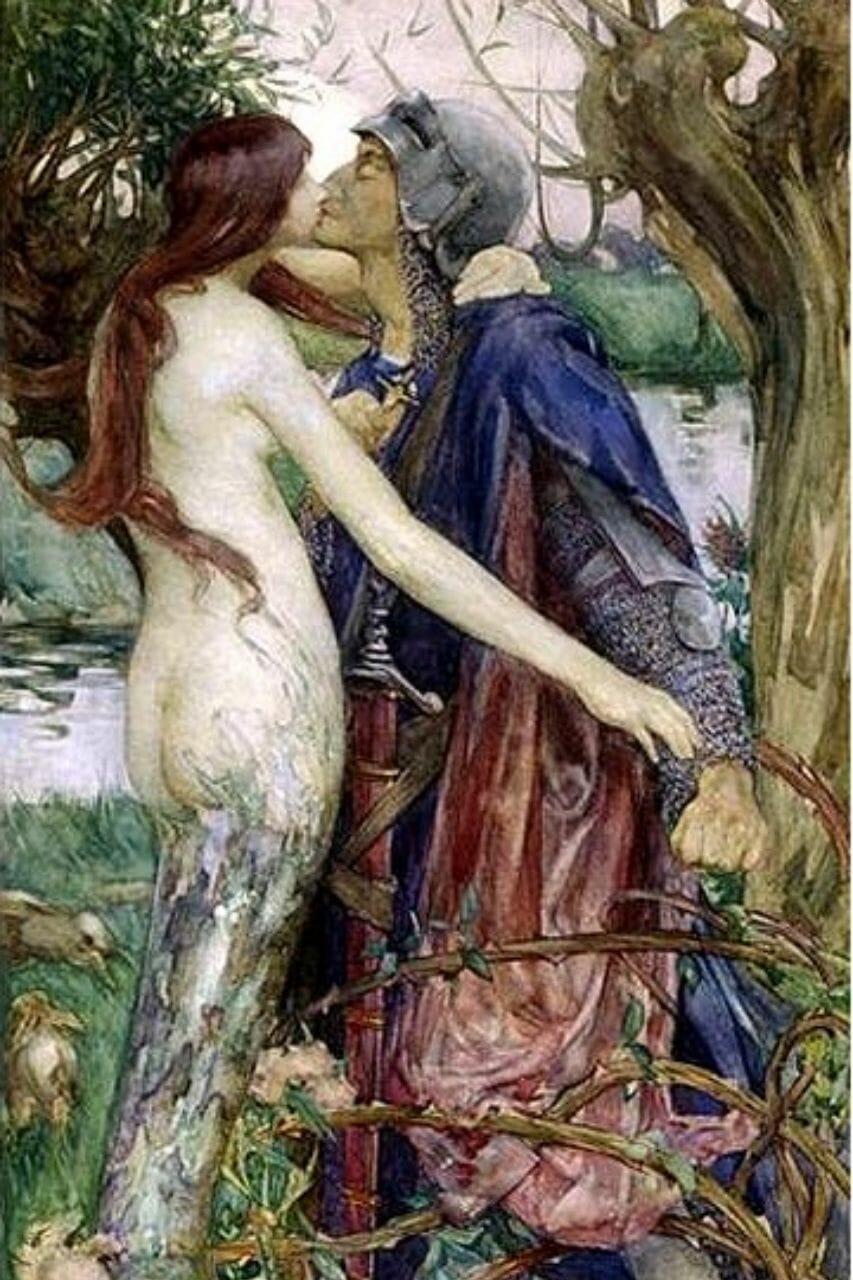
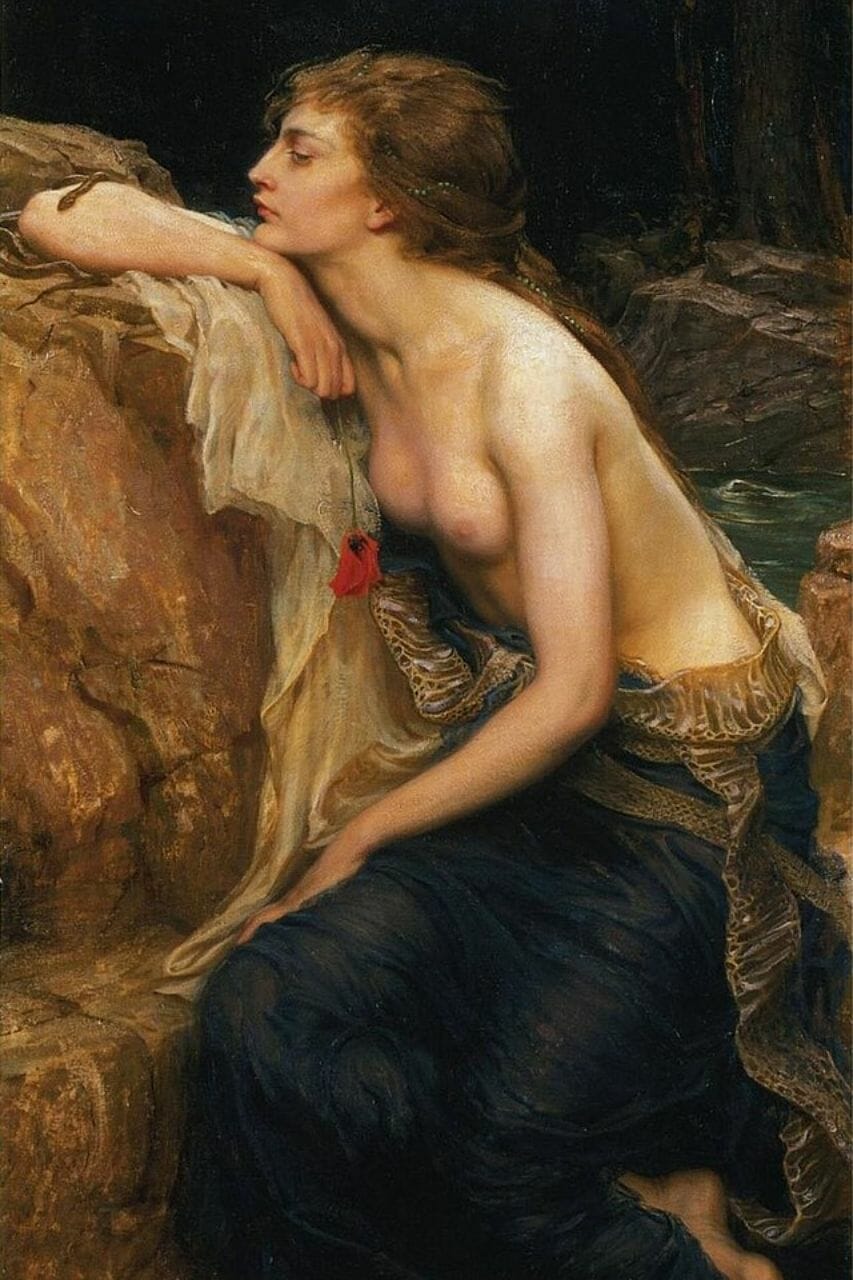
Lamia - another vampiric creature of Greek mythology closely connected to Empousa
Empousa and Lamia had the same dark nature of consuming their human victims. They were both demonic beings who often took the form of seductive young women to lure their targets before feeding on their blood and flesh. The only difference might be in their true form and background stories.
Despite the fact that they both have animal body parts, they differ in severity. Lamia’s upper body is that of a woman, but her half lower portion is that of a serpent, whereas she only has one of her legs resembling the legs of a donkey.
Another difference is in their backgrounds. While Empousa is believed to have been the way she is from the beginning, it was not the case for Lamia. Lamia was born to an Egyptian king. She was once a very beautiful princess with whom Zeus fell in love. She even became one of Zeus’ favorite lovers. However, this resulted in Lamia incurring the wrath of the very jealous Hera.
It was said that Hera’s rage toward Lamia was arguably the strongest. She made sure that Lamia’s children would be killed right after being born, regardless of whether they were Zeus’ children or not. Hera even went further and inflicted Lamia with madness, which made Lamia kill her own children.
As a result, Lamia began snatching babies and eating them from head to toe. Engulfed by rage and madness, she became more monstrous than human. Her story became the equivalent of a Greek bogeyman and was later associated with her who was a vampire and hurt everyone, just like Lamia.
The Ancient Vampire
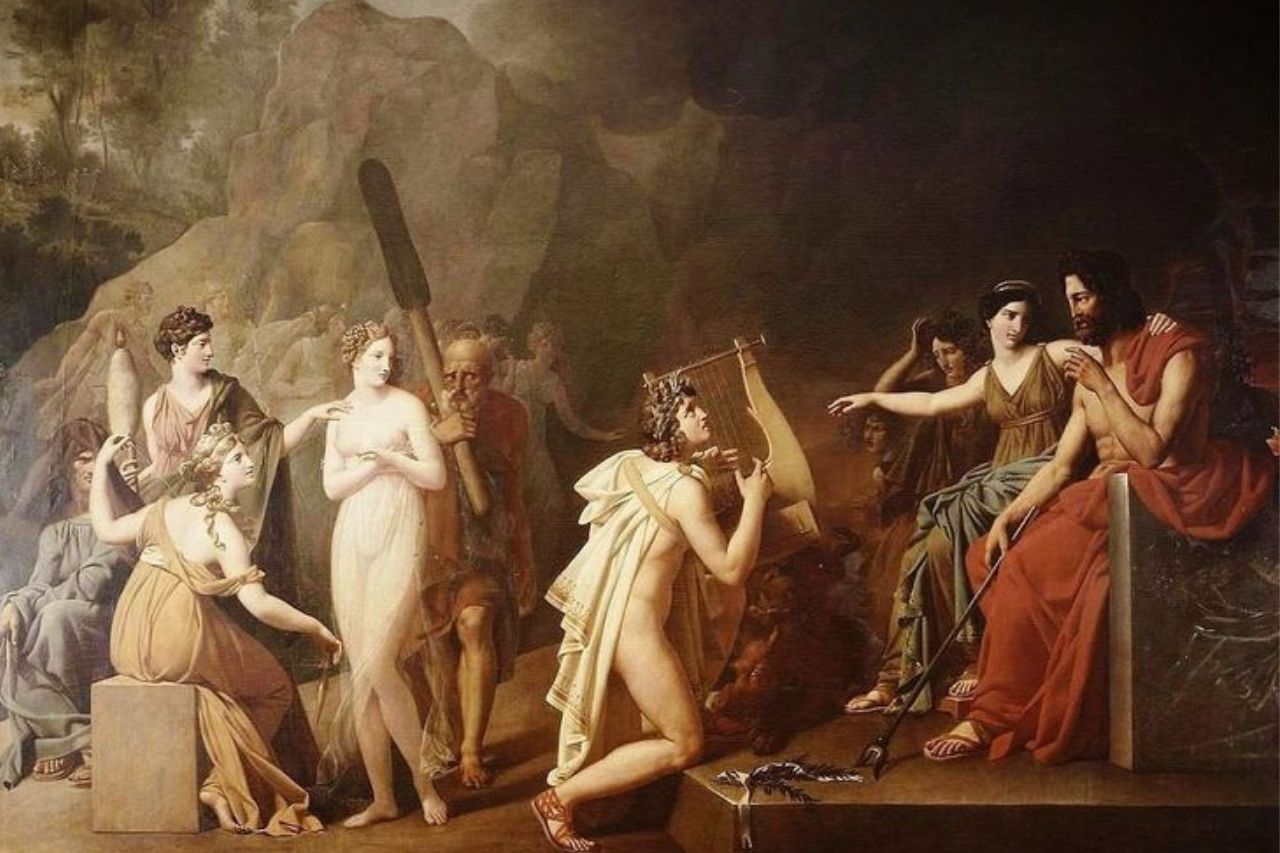
The Greek underworld - realm of Hecate, mother of Empousa
The female vampire is thought to be the origin of vampires. This is due to the fact that many legends about them and how they entice young men, particularly those in their teens, led to the belief that she was a demonic vampire who drank the blood and ate the flesh of her victims. It is said that teens were preferred because they possessed young and clean blood.
Furthermore, she usually resides along the seaside as they can survive both on water and on land. They would usually take the form of a beautiful maiden who seems to be lost and needs help, thus compelling young men to comfort her.
She would slyly provide their visions of their beauty and soft voices before ravenously sucking and lapping their blood and devouring and digging their teeth into their soft flesh. Overall, ancient Greeks were terrified of them, and their stories were used to scare people, especially younger ones this is why they won’t wander alone at night, hence this was one of those scary stories that would be told to kids for a greater moral in their lives.
Basis of the Modern Vampire
Both, Empousa and Lamia were the creatures from Greek and Roman mythology on which the modern-day character of vampires was based. Even though these terms were used interchangeably to refer to witches and demons, she was the first demonic being known to feast on blood by disguising herself as a young woman and seducing men. Nevertheless, while their victims were sleeping, they would kill them by sinking their long, razor-sharp fangs into the jugular vein and drinking their blood.
The iconic red eyes, fangs, white skin, seductive appearance, and the manner in which these blood-sucking creatures kill their victims have been passed down through generations as representations of these blood-sucking creatures. However, the key difference between them is that modern-day vampires are more civilized and do not eat the flesh of their victims.
Another differentiating factor is the way to defeat them. For her, it is easy to get rid of them just by throwing insults (although they won’t be killed; they will instead flee), but for the vampires of modern times, it can either be by using garlic, items laden with silver, or just plain sunlight that can make the vampire take off.
Stories Featuring Empousa
Being regarded as the foundation on which the characteristics of vampires were based, there are a lot of stories related to this vampire. Different characters of the mythology had been subjected to incidents with her which lead to a story.
Onoskelis
There is a story about Empousa that directly relates to the origin of her appearance. This was from the first century when new religions, such as Christianity and Judaism, were starting to be known. Her character was mentioned as a representation of a female demon.
It was from The Testament of Solomon, where Solomon challenged the devil to show him a female demon. The demon obliged and summoned one from hell. What appeared was a female being who was incredibly beautiful, but her legs were different and looked like those of a donkey, in this case, it was the vampire herself.
She introduced herself as Onoskelis, who dwells in caves, cliffs, and ravines. She says her ways of killing men vary; sometimes, she chokes them, but other times, she changes them from their natural form.
The origin story of Onoskelis states that she is the daughter of a man named Aristonymus from Ephesus. This man has a lot of hate for women, and instead of having a wife or partner, he relieves his sexual desires on a donkey. As a result of this disturbing union, Onoskelis was born. It is believed to be the reason why Onoskelis has a half-human and donkey-leg appearance, similar to the Greek Mythology’s vampire.
Aristophanes
One of the authors of classical comedy, Aristophanes, made frequent references to Empousa in his writings. The play “The Frogs” is among the most well-known. It tells the story of the time when Dionysus and his servant, Xanthias, were on their way to the underworld.
This was when she appeared in front of them, which changed their appearance several times, from being a bull, a mule, a beautiful woman, and then to a dog.
However, since it was only the servant who saw her, it was not sure if it was just Xanthias pulling a prank and trying to frighten his master, Dionysus. However, the servant added that it was indeed a vampire as he was sure that he saw a copper leg and a cow’s leg on another.
Menippus
Given that this vampire preferred and targeted young men, Menippus is a perfect candidate. When Menippus of Lycia was only 25 years old, he encountered Empousa. During that time, he was fine-looking and intellectual, with a well-built body like an athlete.
One day, when he was out strolling the streets, he met Empousa, who was disguised as a young Phoenician woman who was also good-looking and rich, not forgetting that they had the ability to shape-shift. Although the philosophy student Menippus was an intelligent man, he was tricked into falling in love with a woman, not realizing what she really was. He even planned to marry her.
On their wedding day, one of the guests was Apollonius of Tyana, who was a former mentor of Menippus. He was skeptical of the woman whom Menippus wanted to marry. During the banquet, Apollonius announced that this woman was not who she claimed to be but was only an apparition.
While Apollonius was stating these truths, his words broke the enchantment, and the servants, the riches, and everything else the woman presented slowly vanished. This was the time when she pretended to weep at the insults thrown at her and begged him to stop. However, he continued to reveal the truth that the woman was actually a vampire who enjoyed consuming her victims and demanded that she would confess.
This is when she was forced to admit her true identity, revealing that she was looking for Menippus to devour because he was young and attractive, the type of victim she usually chooses. Upon hearing this, Menippus seemed to be awakened from a spell that made him fall for this woman.
Apollonius
Another written story of the vicious vampire involving again with Apollonius is of the time when the philosopher was traveling through the Caucasus on his way to India, coming from Persia. Along with his fellow travelers, he encountered this vampire.
Apollonius realized it was she as the figure kept on flickering and changing, occasionally disappearing completely. Upon discovering that it was indeed Empousa, Apollonius starts to hurl insults at the creature and urges his companions to do the same. As a result, she fled by screaming.
The Weakness
Even if the Empousa is a monstrous, demonic creature that can easily deceive and eat its prey, it is actually pretty simple to fight back and get rid of it according to the ancient Greeks. This was demonstrated by Apollonius when he encountered one and successfully turned it away.
Empusa weakness is unique but pretty straightforward. Throwing insult after insult and verbally abusing them are the only effective ways of making sure they cannot get near you. This will result in them shrieking and fleeing. However, this trick can only get them away for a time and will not permanently get rid of them. But overall, this was a way to hurt them and get to them.
The Death
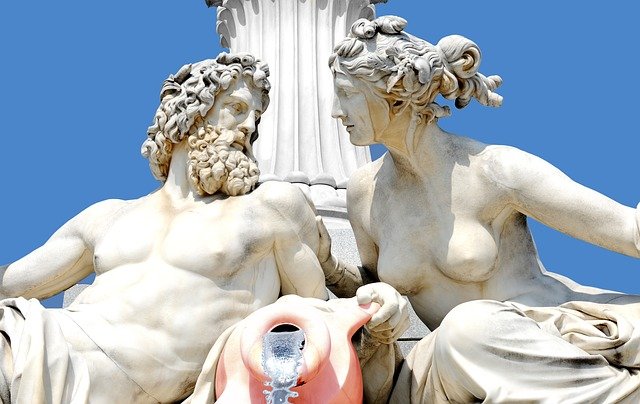
Zeus - the king of the gods who ultimately killed Empousa
Always on the lookout for prey or victims, Empousa attacked a man she thought was dozing out by the side of the road. She had no idea that Zeus, the most powerful god, was there simply taking a nap. Zeus was awakened from his sleep by her onslaught and was furious. He unleashed his fury on her, who was ultimately murdered. Overall, the murder of this vampire was caused by the most almighty Greek god.
Conclusion
Ancient Greeks used the name Empousa, or Empusa, to describe a dark-natured female creature. Let’s review what we have learned about her, a unique creature that is the progeny of a strong titan who ruled over the worlds of heaven, earth, and even the underworld.
- An Empousa is a being who has the capability to change her appearance. She can shape-shift from being an animal to being a young temptress. She uses this ability to get her victims and satisfy her hunger for blood and flesh.
- Empusa’s true form is a combination of human and animal in a terrifying way. She held the body of a woman, but her legs consist of one like that of a donkey, and the other is a prosthetic made of brass. In addition, her eyes are bright red in color, and she has wings and fangs as well.
- The plural of Empousa is “Empousai” or “Empusae,” often associated with the groups of Lamia and Mormolykeia. They were said to form a group of ghosts who hunted at night to terrify and consume wandering travelers.
- There were a lot of stories involving the female vampire, and some of the most notable were those of Apollonius and Menippus, wherein Mennipus, who was still young at that time, almost married this vampire. He was saved by Apollonius on his wedding day.
- The only weakness of Empusa is hearing insults, as seen in its encounter with Apollonius. As soon as Apollonius noticed that the figure was flickering, he suspected that it was her and instructed his fellow travelers to hurl insults at the being, who eventually ran away screaming.
Even to this day, there is still a belief in the influence of this creature. Aside from the notorious vampire characteristics seen in modern-day stories, in some regions, shepherds accuse and blame her whenever their animals are harmed or suddenly disappear.