Eosphoros: The Morning and Night Star in Greek and Roman Mythology
Eosphoros is the morning star or the light bringer in Greek mythology and has some remnants in Roman mythology as well. In reality, the god of the planet Venus appears as the morning star to wake up people from their slumber and give nutrition and life to the plants and animals. So Eosphoros is one of many faces of the god of the planet Venus and he is sometimes also called Phosphorus. Here we bring you all the information on the god of the planet and his epithets.
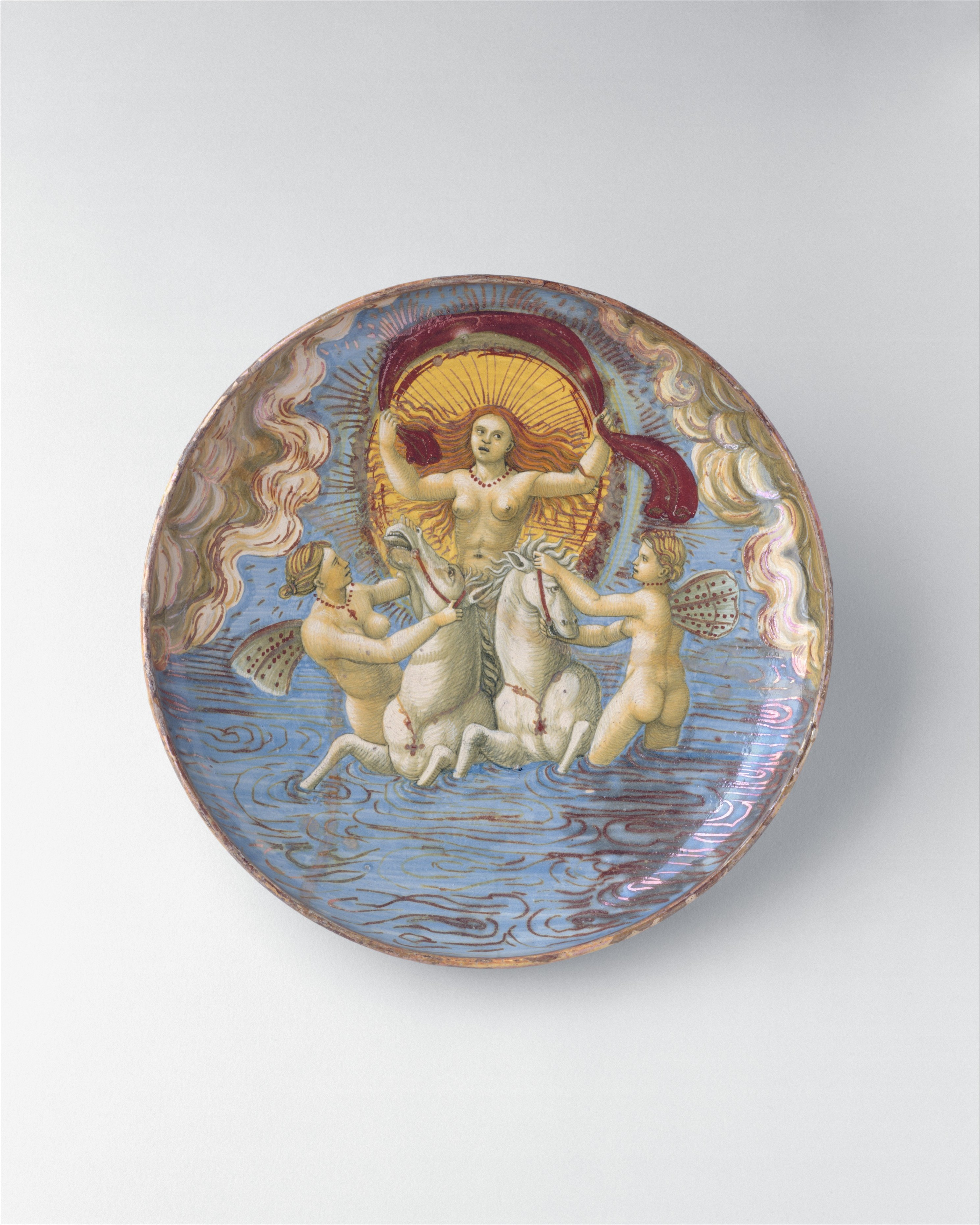
Aurora, goddess of dawn - Italian maiolica plate from 1528
Eosphoros Origin
In Roman mythology, the goddess Venus was the embodiment of love and sex. Her Greek counterpart was the goddess Aphrodite and they both were of great importance in their separate mythologies. They might have been the most famous goddesses of their time as well. These two goddesses are highly associated with the morning star and are thus referred to as the light-bringers or beacons of light.
The morning star is the first star at dawn that lights up the world and gives it meaning. It is the reason that people leave their sleep and wake up. Aphrodite was the daughter of Zeus and Dione, according to Homer's Illiad while Venus was the daughter of Jupiter and Dione.
So these two goddesses had a lot in common and basically were mirror images of each other in the two mythologies. While Eosphoros was one of the five children of Eos and Astraeus.
In Greek mythology, Helios was the god of the sun. He was a Titan and was the personification of the bright yellow sun that was shown all over the world. Before he would rise in the sky, Eosphoros would rise first and that is what made her famous. Eophoros was part of the Astra Planeta in Greek mythology and which is without a doubt a very interesting feature of Eosphoros.
Physical Appearance
The best explanation of the appearance of Eosphoros is the morning star. The very first rays of the morning do not come from the sun or the god of the sun, Helios but from the Eosphoros. If we look at the gods who personify the morning star then they are Aphrodite and Venus. Both of these goddesses were among the most beautiful goddesses in their mythologies.
As they were each other's counterparts, they also had very similar appearances. They both had long hair with beautiful facial features. They both were the daughters of Zeus and Jupiter, the kings of the gods and goddesses, so there was no comparison of their beauty.
The Eosphoros and his four brothers, make up the universe and the planetary system as we know it. All the personifications were required to roam in their own orbit and would not go astray from them. If the planets would orbit in any other trajectory than their own, there would be chaos as the planets will fall into the sun and this would mean that the world and the solar system as we know it would come to an end.
Symbolism
In Greek art, the morning start god was drawn and shown in different ways, because the concept of seeing a star in the morning light was a little conceptual for the Greeks. The idea was very divine, hence it was drawn and shown in art as well.
It is key to know that this god was drawn and portrayed with a slight aureole around his head, and in one piece of painting, he was seen as the process of the day moving it on with chariots. In this painting, the sequence goes as Helius, Eos, and Eosphoros are one after the other, representing or symbolizing the time period of the day.
He was also known as phosphorus in other terms, and sometimes even as Lucifer, the person who changed the night time into day, and shone so bright from far above.
Direct Translation
Since Eosphoros was the personification of the planet Venus who was always the one shining in the morning as seen from the Earth. The terminology of the name when directly translated, would mean "dawn bringer" because this star was the one who brought the dawn back into the day.
Eosphoros and Hesperus
Eosphoros was the morning star in Greek mythology and everyone knew about him. He was the personification of the planet Venus. But at night another bright star was seen in the night called the night star. This night star was thought of as a different god and was named Hesperus.
It was believed that the two stars come from different gods and they do not intertwine in their paths. One comes in the morning and is known as the dawn bringer while the other comes at night and is known as the night bringer. It was revealed later on that the morning star Eosphoros and the night star Hesperus are actually the same stars just at different times of the day.
This meant that Phosphorus and Hesperus are the same personifications of the planet Venus. So the two stars were combined into one and the name Hesperus was lost in literature. But for what it's worth, Hesperus was the night star and the personification of the planet Venus at night time.
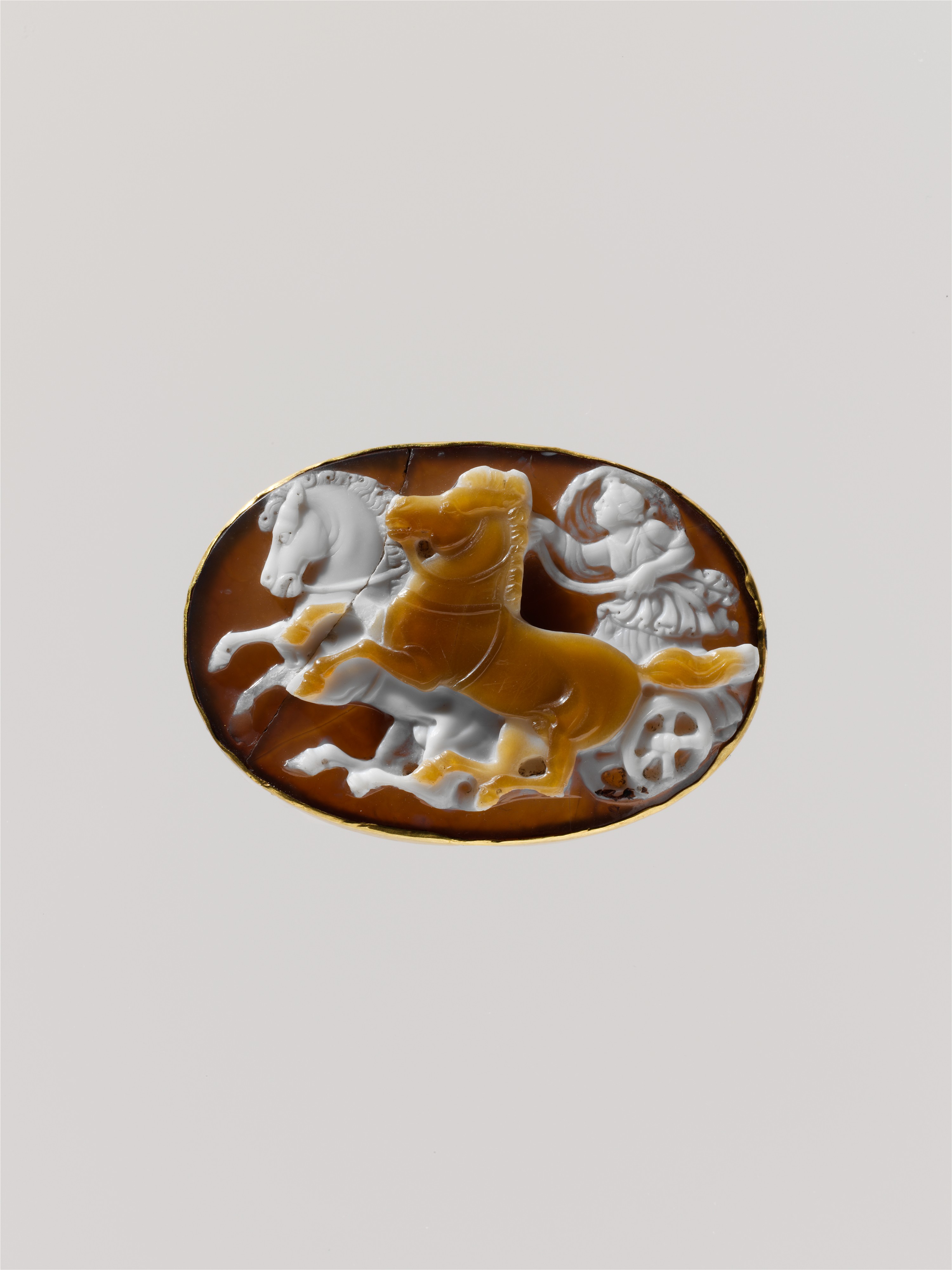
Ancient sardonyx cameo of Aurora driving her chariot, Greek or Roman, 1st century BCE
Astra Planeta
Astra Planeta is a group of five children of Eos, the goddess of dawn, and Astraeus, the god of planetary winds. The Astra Planeta represents the five planets excluding the Sun, the Moon, and the Earth, and is known as Gaia. Eos and Astraeus were also parents to the Anemoi, the wind gods, in Greek mythology. So together the Astra Planeta make up the celestial universe.
The five planets in Astra Planeta are Mercury, Venus, Mars, Jupiter, and Saturn. These five planets had personifications in Greek mythology and those personifications were either Greek gods or goddesses. Together they formed the solar system as we know it today, they were the ones who formed astrology and kept the running of the days and nights and the harmony of the planets.
FAQ
Who Is the God of Astrology?
The god of astrology in Greek mythology was Astraeus, the Titan god. This god was responsible for all the planets, stars, constellations, meteors, asteroids, moons, and for sure the sun. He was one of the primordial gods and according to some accounts, he did not take part in the Titanomachy because he was unassociated with the Titans and the Olympians.
Why Are the Planets Uranus, Neptune, and Pluto Not in Astra Planeta?
The reason that the planets Uranus, Neptune, and Pluto are not a part of the Astra Planeta is that they were not visible to the naked eye. In ancient times, all planetary information was gathered by looking through the naked eye because no telescopes or machines were present for humans to look at the sky with. When the Astra Planeta was formed, the same was the case which is why only the planets visible to the naked eye were added to the Astra Planeta.
Who Is the Goddess Sunrise?
In Greek mythology, the sunrise goddess was known as Aurora, who was the goddess of sunshine and the rising of the sun. She was forever young and immortal.
Conclusion
The Eosphoros is of utmost uniqueness and wonder because a very limited number of gods are given the personification of celestial bodies in Greek mythology. Here we summarize the article in a few points:
The Astra Planeta represents the five planets excluding the Sun, the Moon, and the Earth, and is known as Gaia. The five planets in Astra Planeta are Mercury, Venus, Mars, Jupiter, and Saturn.
The very first rays of the morning do not come from the sun or the god of the sun, Helios but from the Eosphoros also known as Phosphorus.
The Greek goddess Aphrodite and the Roman goddess Venus were counterparts of each other. These two goddesses are highly associated with the morning star and are thus referred to as the light-bringers or beacons of light.
This night star was thought of as a different god and was named Hesperus. The morning star Eosphoros and the night star Hesperus are actually the same stars just at different times of the day.
Eosphoros was the morning star in mythology and the personification of the goddess Venus and Aphrodite as the morning star was associated with the planet Venus. The tale of Eosphoros and the Astra Planeta is one of the most interesting tales in all of Greek mythology.
The dawn bringer that brings the first ray of light in the morning and lights up the nights is surely an important power to have and handle. Here we come to the end of the article about Eosphoros, Phosphorus, and Hesperus.