God vs Deity: Synonyms of Supreme Entities of Power
God vs Deity is a comparison of broadly monotheism and polytheism but in reality, the two words go hand in hand and are synonyms of each other. Both words describe an entity with supreme power to rule over its objects. In Greek mythology, the words are also used as synonyms for each other but in some monotheistic religions, God refers to the one and only deity with supreme power over everyone and everything. Here we bring you all the information on the two terms but keep in mind that in Greek mythology, they are basically referring to the same entities.
God vs Deity Comparison Table
Features | Gods | Deity |
|---|---|---|
Origin | Polytheism | Polytheism |
Prime God | ||
Abode | Mount Olympus | Celestial Abode |
Powers | Various | Various |
Type of Creature | God | Gods |
Meaning | Powerful Gods | Worthy of Worship |
Form | Physical and Celestial | Physical and Celestial |
Death | Cannot be Killed | Cannot be Killed |
Demigods | Various | Various |
Major Myth | Various | |
Important Gods | Hera, Hades, Poseidon, Hestia, Artemis, Apollo, Hermes, Athena, and Ares | Hera, Hades, Poseidon, Hestia, Artemis, Apollo, Hermes, Athena, and Ares |
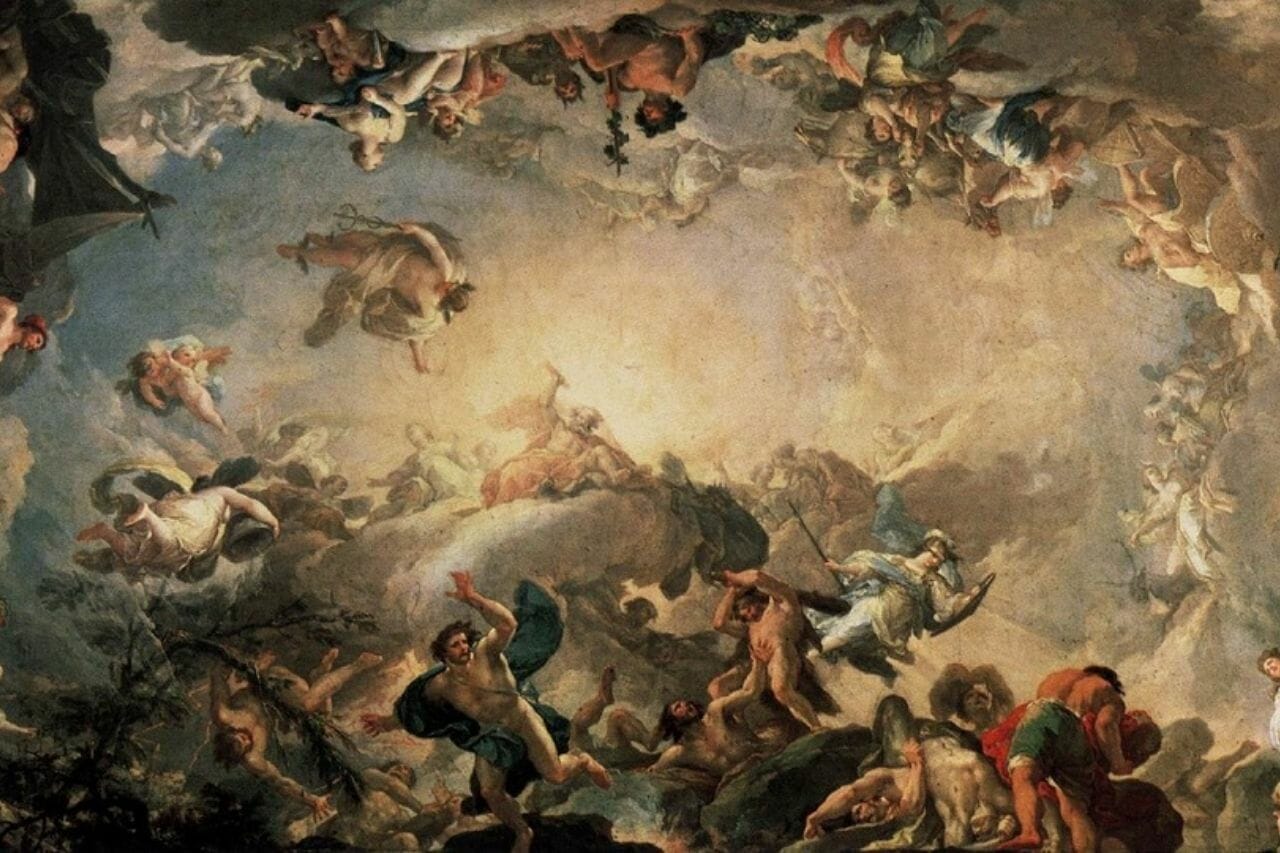
The Olympian gods and Titans – the divine beings of Greek mythology
What Are the Differences Between God vs Deity?
The main difference between God vs Deity is that God is taken in a singular superemity sense whereas Deity is taken in a plural sense. In Greek mythology, however, both words go hand in hand and mean the same thing.
What Are Gods Best Known For?
The Gods are best known for their leader and prime god, Zeus, and also for their victory in the Titanomachy. The Gods are referred to as the Olympian gods which is the third generation of gods after the first being Gaia and Uranus and the second being the Titan gods.
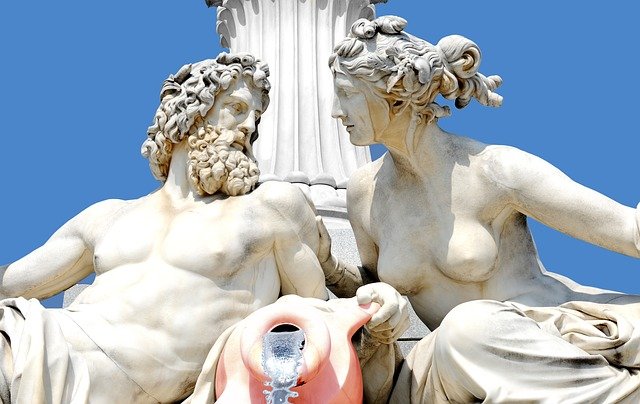
Zeus, the king of the Olympian gods and ruler of Mount Olympus
The Names
Most of the Olympian gods were the children of Cronus and Rhea, the Titan siblings. They were also 12 in number namely Zeus, Hera, Poseidon, Demeter, Athena, Apollo, Artemis, Ares, Hephaestus, Aphrodite, Hermes, and Hestia.
These gods and goddesses were bestowed with specific powers over an element on Earth and in the skies. Most of these Olympian gods married amongst themselves and produced the fourth generation of gods which also came under the Olympian gods.
These gods were also very active on Earth and produced many demigods and different creatures on the land. Their stories are very interesting and have a cult following.
In addition, these gods became the reason why Greek mythology is so famous till this very day. Their storylines, powers, wars, and near-human emotions have made this mythology one of the most famous ones of all, moreover, they are very familiar with the same aspects as we go through today in terms of love, betrayal, jealousy, greed...
Location Where They Lived
The Olympian gods lived on Mount Olympus which is the most famous mountain in Greek mythology. This mountain was not located on Earth but it was a celestial being. This mountain housed all the generations of Olympian gods starting from the third generation of gods overall. Zeus was the prime god and king of Mount Olympus and its inhabitants.
Physical Features
The Olympian gods and goddesses were blessed with the most beautiful facial features. They were even more beautiful than the Titan gods and goddesses. They each had their specific symbols that were incorporated into their clothing.
For example some were seen with strong physical features, however, others had to have a more gracious stance as their believers worshipped them in a kinder manner. Overall, all of them were somehow human-looking but of course, their powers differed.
Their Role in the Titanomachy
The Olympian played the most important role in Titanomachy. These gods were against the tyranny of the Titan gods and goddesses which is why Zeus waged the war against them. Zeus saved all of his siblings from a dire fate inside Cronus. In addition, they all were older than Zeus and yet they chose him as their leader and did everything and anything in their might that were asked to do.
The Olympian gods won the Titanomachy and ousted the rule of the Titan gods. They gained control of every celestial and non-celestial being since the victory was theirs. The three main Olympian gods which mean Zeus, Hades, and Poseidon became the gods of the Universe, the Underworld, and the water bodies.
Their victory shows the important role that the Olympian gods played in Titanomachy because they were now going to be the rulers. Without the Olympian gods, there would have been no Titanomachy, the Titans would have stayed in power, and Zeus and his siblings would have been inside Cronus forever.
In Greek mythology, God refers to a group of gods and goddesses, either from the Titan generation or the Olympian generation. This is interesting to know because Greek mythology is solely based on polytheism and uses the word god multiple types throughout the literature. It will not be wrong to say that the word god and deity in Greek mythology and many other mythologies that do not practice monotheism, mean the same.
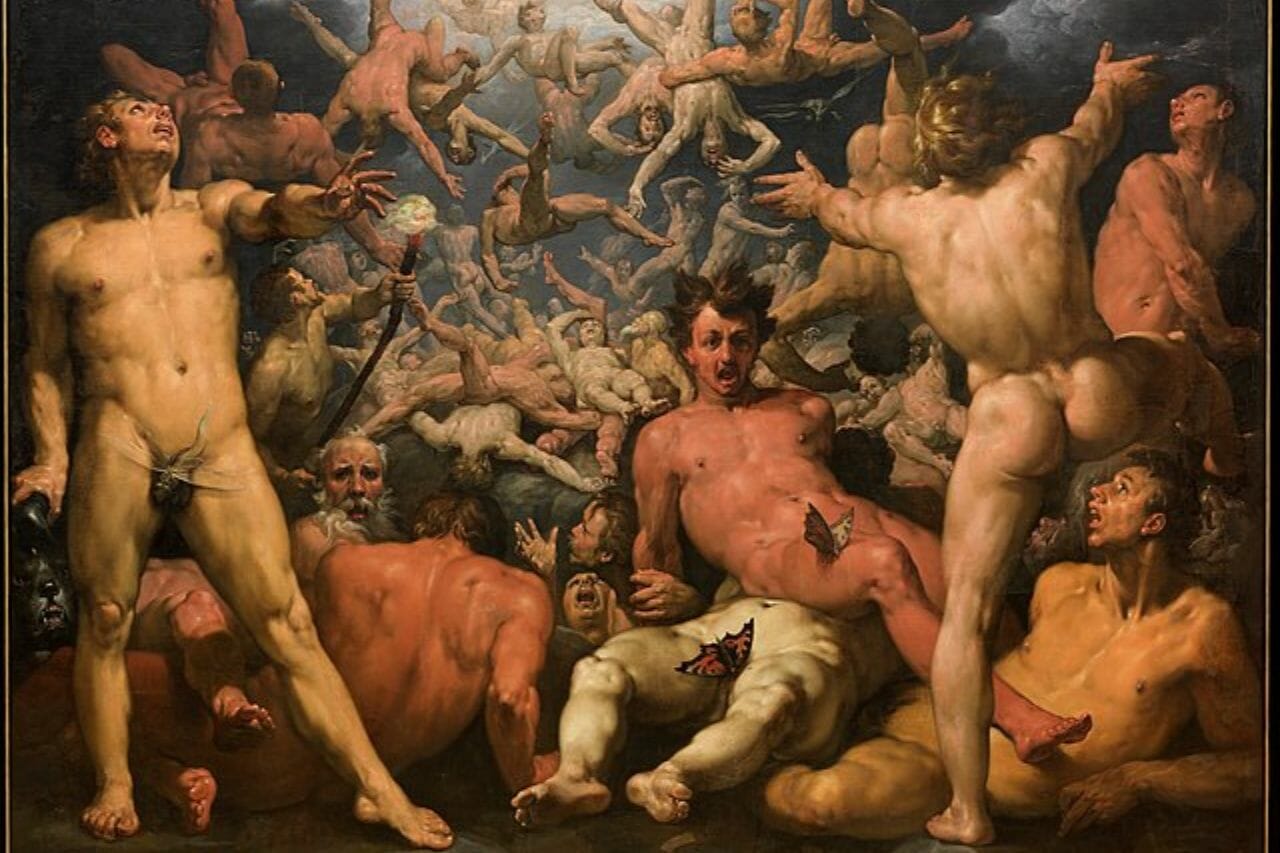
The Titans and Olympian gods – two generations of Greek deities
What Is a Deity Best Known For?
Deity is best known for its specific powers and control over an element or a part of the universe or over a certain amount of people. There are male deities, various female deity, deities with no gender, deities that are creatures of all sorts, and monsters of course.
Literary Approach
The list of deities is long and unfinished for sure because from the start of times till now, people have worshipped uncountable deities all around the world.
People worshipped what they thought needed worshipping. It could be a rock, a tree, a fish, a cat, anything literally. If the people found some attachment with the subject they would worship and spend their whole lives worshipping it. It is often seen as a sign of loyalty and determination that a single god is being worshiped over and over again by the same person.
Different Types
There are many different types of deities because they are the sons and daughter of many different types of gods and goddesses. These deities can be from any sort of mythology, even Asian, European, or African. Deity is just another word for God so there are countless possibilities for the two.
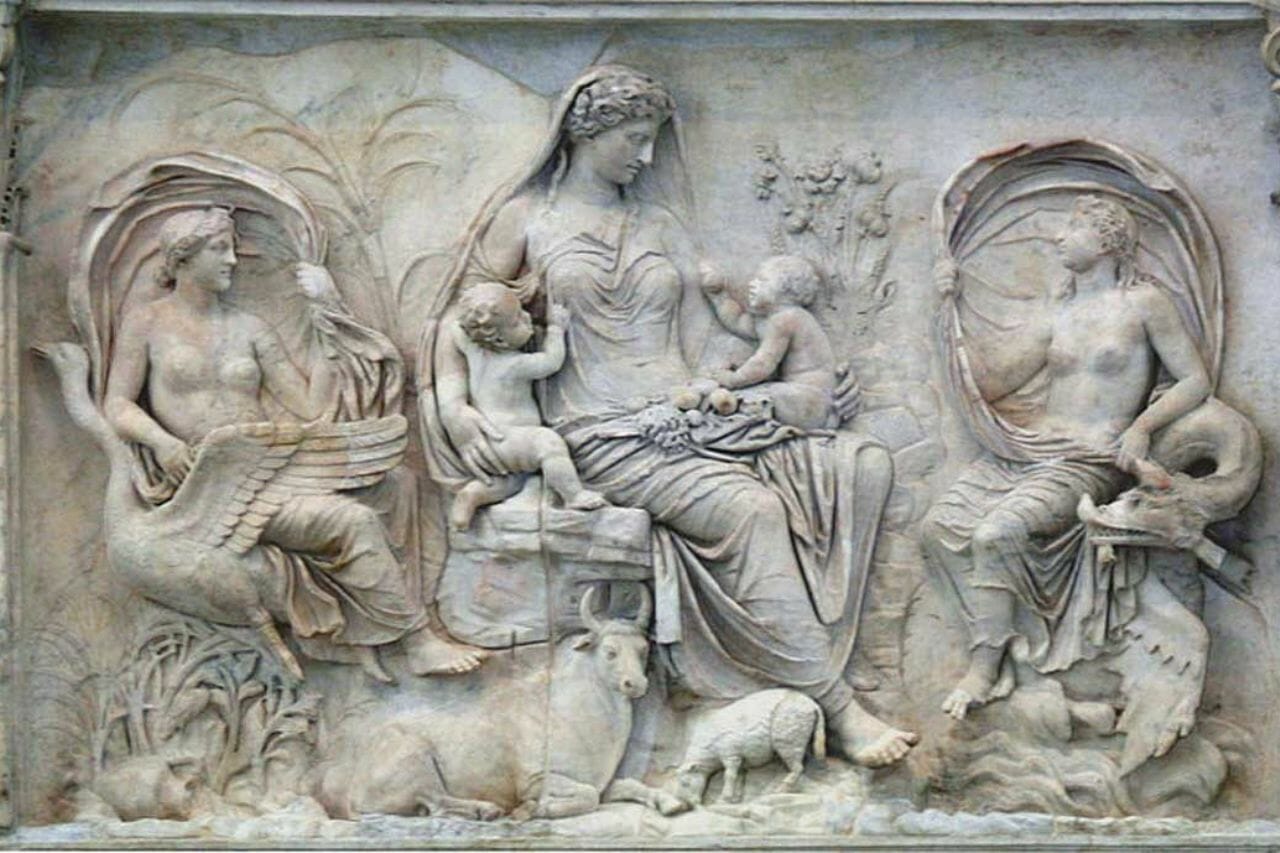
Gaia, the primordial deity and personification of the Earth in Greek mythology
FAQ
What Is Monotheism?
The word "god" is used to refer to a single entity that rules the world and everything in it, meaning one ruling power. God is thus used as the basis of Monotheism and it has strict rules and followers. Such religions and their sect take the word god very seriously and do not approve of using it in a plural sense because that would deny their monotheism faith.
Conclusion
God and deity are the same names for any entity that exists in a polytheistic settlement of religion or mythology. Such mythologies can be Greek, Roman, Japanese, Chinese, or Scandanavian. The actual number of all the gods, goddesses, and deities is uncountable because, from the start of time, people have had their own entities to worship.
There has been a lot of debate on the subject but it is important here to know that, god and deity are the same names in Greek mythology. The story changes when we talk about other religions or sects. Since Greek mythology is a polytheistic religion so gods, goddesses, and deities mean the same.