Male Nymph: The Wild Minor Male Deities of the Greeks
The male nymph would have similar functions as the well-known female nymphs; they are also connected to a particular location and are generally believed to be nature spirits. Even though they also exhibit a huge difference from these beautiful nymphs, these male minor deities were the favorite company of some of the Olympian gods. Continue reading to learn more about them!
Male Nymph
Male nymphs are generally believed to be nature spirits. These male counterparts of the nymphs are also grouped and categorized according to which part of nature they are closely associated with, and they bear different nymph names as well. Oftentimes, these nymph names and meanings are quite similar, as they belong to the same lineage.
Given that the term “nymph” refers to female minor deities in Greek mythology, the Satyrs, Panes, Potamoi, and Tritons can be considered their male equivalents. As there are three or four different types of nymphs: those of pastures, springs, streams, water meadows, and trees and woods, all of them have their equivalent minor male gods.
Satyrs
Generally speaking, the male counterparts can be called satyrs. In contrast to the nymphs, who are young females with mesmerizing beauty, the satyrs were often represented as animalistic males, usually appearing as half-human and half-animal, having idiotic ears, pug noses, drooping hair-lines, the tails of horses, and erect members, overall they were male nymphs as well.
Satyrs were a primitive group of untamed spirits who were usually shown drinking, dancing, and playing flutes. They are known to be followers of the Greek god Dionysus and often have overpowering sexual desires and wine addictions.
These creatures are party friends with the gods and constantly chase nymphs to have intercourse with them. Simply put, they are untamed, rugged creatures who live according to how they please. However, not all traits of the satyrs are bad. They also possessed several good traits; they are clever and musically talented.
Origins of Satyr
The term “satyr” was used by ancient Greeks in the Peloponnese region, whereas people from the Attic Peninsula used the term “silen” to refer to these creatures. By the sixth century BC, these two terms were used interchangeably in Greek literature.
They are occasionally mistaken for the gods known as Panes, who had goat-like legs and horns, although satyrs seem more like horses or donkeys.
Types of Satyrs
The Satyrs were divided into numerous groups, even though they were all members of the same basic species, much like the nymphs who have Nereids (sea nymphs), Lampad (nymphs of the underworld), and Hesperides (the nymphs of evening and sunset). Collectively, the group is called satyroi. The names of each of their categories are listed below.
- Sileni are beings that resemble Silenus, a forest-dwelling deity who is also Dionysus’ foster father and loyal follower. Silenus is represented by these Sileni. They are frequently shown as balding and fat, with long beards and white fur all over their bodies, and they are thought to be the older satyrs. There is even a legend that says Silenus had to be dragged into combat because he was too drunk and too old to do so on his own.
- Satyriski refers to the young satyrs.
- The flute-playing satyrs are known as tityroi. They are given names based on the sounds that their instruments produce.
Evolution
Throughout Greek history, satyrs were gradually represented as more human and less beastly. Their horse legs were replaced with male legs. In addition, the untamed behavior they are most known for slowly faded, and they became more domestic figures after the 20th century.
Portrayals of them also changed, as they began to be represented as engaging in more civilized pastimes like playing the flute. Oftentimes shown as nude men, satyrs were eventually shown as gorgeous young men in their underwear, and even their sculptures show them having short tails just to indicate their species.
Even the Romans associated their native nature spirits, the fauns, with satyrs. The distinction between these two eventually vanished, and since the Renaissance, they are most frequently shown as having goat’s legs and horns. They are frequently included in fantasy and children’s books, where they are called “fauns” later on.
Panes
Another male equivalent of the nymphs is the Panes. The descendant of the Arkadian god of the countryside, Pan, Panes is another group of the wild spirit of the highlands who guards sheep and goat herds.
Pan is a goat-legged god who enjoys nature, music, and women, whereas the Panes show men with goat-like legs, a tail, a beard, a snub nose, and goat-like ears. Others, though, are shown to have complete goat heads. They are typically shown as lustful fertility spirits with erect phalli, similar to Satyrs.
Satyrs and Panes
Satyrs and Panes are two different half-man, half-animal nature gods who were frequently confused with each other. This is because to the fact that they were frequently depicted together, with a similar illustration of Dionysus’ entourage following the nymphs. As a result, save for well-known figures like Silenus and Pan, both members of their group were referred to interchangeably as Satyrs or Panes.
Potamoi
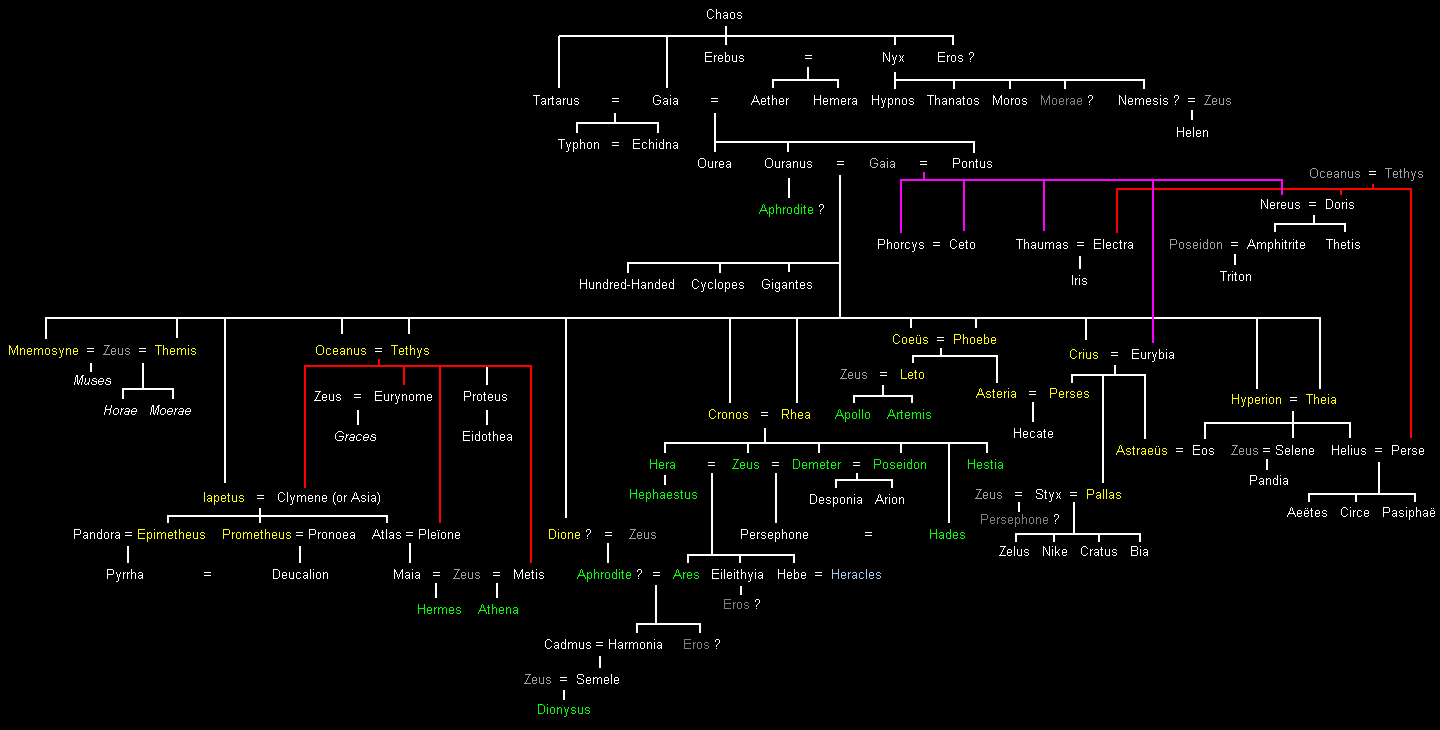
The Potamoi are the 3000 sons of the earth-encircling river, Oceanus with his wife Tethys, the primal goddess of the freshwater. Potamoi were the gods of the river and streams of the earth, and they are the brothers of the 3000 Oceanids. Potamoi were frequently portrayed as the fathers of Naiads, the younger male water nymph of springs and fountains.
Contrary to the appearance of the Panes, Potamoi were equally as good-looking as their sisters. However, other writings cite that they could appear as a bull with a man’s head, a guy with bull horns and fish tails for legs, or a man who was lying down with an arm resting on a pitcher of water, among other things.
Given that they are numerous, the Potamoi participated in some of the most important events in Greek mythology, such as the Trojan War. Among all the Potamoi, a few would be in charge of running things, some would look after the group, and some would be off by themselves.
Many of them left their rivers and traveled the Earth, even though they were gods of the rivers and were born there, which is how they were nymphs. They appear in some way in all Greek mythology tales because of this.
Tritons
Tritons were represented to be the Satyrs of the sea and plurality of Poseidon’s son, the sea god himself, Triton, they were male nymphs who were part of the sea, at the end. There are different breeds of Tritons, and one of them would be the sea centaurs, who have male upper bodies but have fish-tailed sea horses.
FAQ
Are Male Dryads Nymphs?
No, While all nymphs are known to have longevity and are bound to their homes, dryads are inextricably linked to their trees. An example of this is the hamadryad, a specific kind of dryad, which in turn is a specific kind of nymph. The hamadryad connected to a tree would also perish if the tree were to perish. Dryads and gods would both punish those who harm trees because of this.
In Greek mythology, dryads are tree spirits who take the form of beautiful young women. Based on the Greek word “drus,” which means oak, dryads are associated specifically with oak trees. However, they often consist of only the mother and child, with the absence of the father from their family. Dryads are always believed to be female. Male dryads are so rare that even female dryads would think that males only exist in male dryad mythology.
Conclusion
The male equivalents of the well-known female nymphs share the same origins and are linked to a certain region and personification of nature. The Satyrs, Panes, Sileni, Potamoi, Fauns, and Tritons are their equivalents, or what might be regarded as male nymphs, as the term “nymph” in Greek mythology refers to female minor deities. Let us briefly recap what we have learned about them:
- Satyr is the general term when referring to the male nature spirits that can be considered the counterparts of the nymphs. They are fond of alcohol, dancing, and women.
- In contrast to the beautiful, charming nymphs, satyrs are unattractive, wild, and untamed creatures, often shown as having the appearance of half-man and half-animal.
- They are grouped into several types: the sileni, or the older satyrs with long beards and white fur; the satyriski, or the young satyrs; and the tityroi, or the flute-playing satyrs.
- There is an equivalent minor male god to every type of nymph associated with pastures, springs, streams, water meadows, trees, and woods.
- These are called panes (wood and forest), potamoi (water), tritons (satyrs of the sea), and dryads (tree).
The Greek pantheon has a vast list of major and minor deities. While nature deities are most commonly nymphs, who are all female, there is a considerable list of their male counterparts as well. Even though they are not as pleasant creatures as the charming and beautiful nymphs, the existence of these satyrs creates balance and deserves to be acknowledged, too.