The Trojan Horse, Iliad Superweapon
Typically, Trojan horse history is considered mythological. While it seems a bit far-fetched that a giant wooden horse could have been used to trick an entire city into opening its gates to an invading army, new evidence suggests that Homer”s epic might have included some historical accuracy. The story of the Trojan horse is not actually included inThe Iliad. The event is referred to in Homer’s Odyssey, but the main source for the story is Virgil’s Aeneid.
Homer ends The Iliad with the funeral of Hector, the Trojan prince. The Odyssey references the Trojan horse, but Homer does not tell the full story. Virgil picks up the story in the Aeneid, a sort of fan-fiction of Homer’s work. The Aeneid was written between 29 and 19 BC. It follows Aeneas, a Trojan who travels to Italy. Aeneas is also a character in The Iliad, and so is familiar to readers. The Aeneid takes the themes of travel and war expounded upon in the Iliad and the Odyssey and attempts to combine them into something new. It is in Books 2 and 3 that the story of the Trojan horse begins.
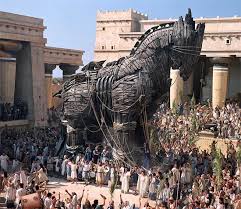
Wooden model of the Trojan Horse
Was the Trojan Horse Real?
Like Troy’s** war**, the question was the Trojan Horse real is a matter of debate. In 2014, excavations of the hillside known as the Hisarlik may have provided new evidence. Turkish archeologists have been excavating the hills for some time, seeking evidence of what is now known as Troy. While there is not enough evidence to be certain of a big wooden horse’s existence, the City certainly existed. In fact, a series of cities were in the area and is now known as Troy.
Famous archeologist Heinrich Schliemann started excavating the site in 1870. Over the decades, other historians and archeologists came to the site until it was declared a national treasure and brought under the Turkish government’s protection. For more than 140 years, over 24 excavations have taken place. Twenty-three sections of defensive walls have been found, eleven gates, a paved stone ramp, and five bastions, as well as a citadel. There is a clear division between Troy proper and the Lower City. The denizens dwelling in that area likely would have taken refuge inside the City walls during Troy’s siege.
The Republic of Turkey has recognized the site as a significant historical site since the early 1980s, granting the site important protections.
So, what is the story of the Trojan horse? Is it possible that such a structure ever existed? Until quite recently, the universal response was no. The Trojan Horse has long been thought to be a myth, as fictional as Homer’s stories of gods and goddesses and semi-immortals and warrior heroes. However, recent excavations may have provided new insight into the sack of Troy.
In 2014, Turkish archeologists made a discovery. A large wooden structure has been found on the site of the historic City ofTroy. Dozens of fir planks have been unearthed, including beams of up to 15 meters, or approximately 45 feet, in length. The pieces were found inside the City, even though such fir planks would ordinarily only be used to build ships.
A Land Ship?
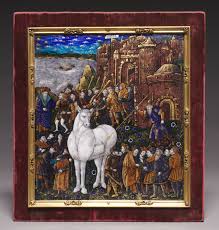
The Trojan Horse - a giant wooden structure used by the Greeks
What is this strange structure found within the walls of Troy? Ships would have been built nearer shore, not inside the City walls. There seems to be little explanation for such a structure, except for the one offered in the Aeneid: the Trojan Horse.
While historians have speculated for years on the Horse’s actual nature, this is the first time evidence has been found of the structure itself.
Historians have speculated in the past that the “Trojan Horse” may have referred to war machines, which were often covered with horse hides soaked in water to prevent them from being burnt by the enemy. Others thought the “horse” might have even referred to a natural disaster or an invading force of Greek warriors. The idea of a structure built to resemble a horse, built for the sole purpose of slipping warriors past the Trojan defenses, seemed ludicrous. The new evidence, however, suggests that the story may have had its foundations in truth.
The structure that has been found fits descriptions given byHomer, Virgil, Augustus and Quintus Smyrnaeus. In the epic poem, Posthomerica by Quintus Smyrnaeus, a reference is made to a bronze plaque inscribed with the words, “For their return home, the Greeks dedicate this offering to Athena.”
A plaque, with those words inscribed, was found in the ruins, among the other ruins. Carbon dating and other analyses show the wooden planks to date back to the 12th or 11th century BC, which would place the find at the approximate time the war is thought to have taken place.
As related in the Aeneid, the Trojan Horse story is that the horse was wheeled by the clever Greeks to the gates ofTroy and left abandoned. One Greek soldier was left behind to present the gift to the Trojans. He convinced the Trojans that he was abandoned as a sacrifice to the goddess Athena, whom the Greeks had slighted in their initial invasion. Her temple’s desecration was a serious slight, for which the Greeks hoped to make up with the gift. The volunteer soldier who remained behind, Sinon, convinced the Trojans that the Greeks had deliberately built the horse to be too large for the Trojans to readily bring into the City, preventing them from offering the sacrifice themselves subverting Athena’s favor.
The Trojans, convinced, promptly moved the offering inside the gates, eager to gain Athena’s favor for themselves.
Laocoon, the Trojan priest, was suspicious. In Virgil’s recounting of the tale, he spoke the famous line, “I fear Greeks, even those bearing gifts.” The Trojans ignored his suspicions. The writer Apollodorus related the story of Laocoon’s fate. It seems that Laocoon had angeredgod Apollo by sleeping with his wife in front of the god’s “divine image” in the Odyssey. Apollo sends large serpents to devour Laocoon and his two sons in retribution before his suspicions of the gift can be heeded.
King Priam’s daughter, Cassandra, is a soothsayer. Cassandra is doomed to make true predictions that will go unbelieved and unheeded. She predicts that the horse will be the downfall of Troy but is, predictably, ignored. Finally, Helen of Sparta, the victim kidnapped by Paris and the woman for whose return the war was fought, suspects the trick. She walks around the outside of the horse, calling to the soldiers by name, even imitating their wives’ voices.
The ploy nearly works, tempting some of the soldiers to cry out. Odysseus, a Greek warrior, puts his hand over the mouth of Anticlus just in time, preventing the man from giving them away.
The End of the Horse and of Troy
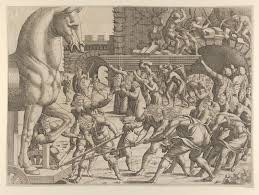
The Trojans dragging in the Trojan Horse
Accounts vary as to the actual opening of the Trojan Horse. Some say that only a few soldiers were enclosed inside the structure. They came out after all the Trojans had gone to their beds to open the gates and let the rest of the army in. In other accounts, the horse contained a large force loosed upon the City after the horse was opened.
The Odyssey Recounts the Story
“What a thing was this, too, which that mighty man wrought and endured in the carvin horse, wherein all we chiefs of the Argives were sitting, bearing to the Trojans death and fate! But come, now, change thy theme, and sing of the building of the horse of wood, which Epeius made with Athena’s help, the horse which once Odysseus led up into the citadel as a thing of guile, when he had filled it with the men who sacked Ilios.”
Epeius was a shipbuilder and famed Greek fighter. His strength was well known, and his skill in shipbuilding lent him the skill and knowledge to craft a hollow statue to house a force. Accounts vary, but between 30 and 40 men were ensconced inside the horse. They waited patiently for the Trojans to examine the gift and bring it inside. The Greeks had burnt their tents and pretended to sail away. Despite the suspicions of Laocoon, Cassandra, and even Helen herself, the Trojans were tricked and brought the horse into the City.
The Greeks inside the structure, under the cover of night, slipped out into the City, opening the gates and allowing the rest of the armies to enter. The City was surprised by the invading force, and it wasn’t long before proud Troy was reduced to rubble.
What Came After?
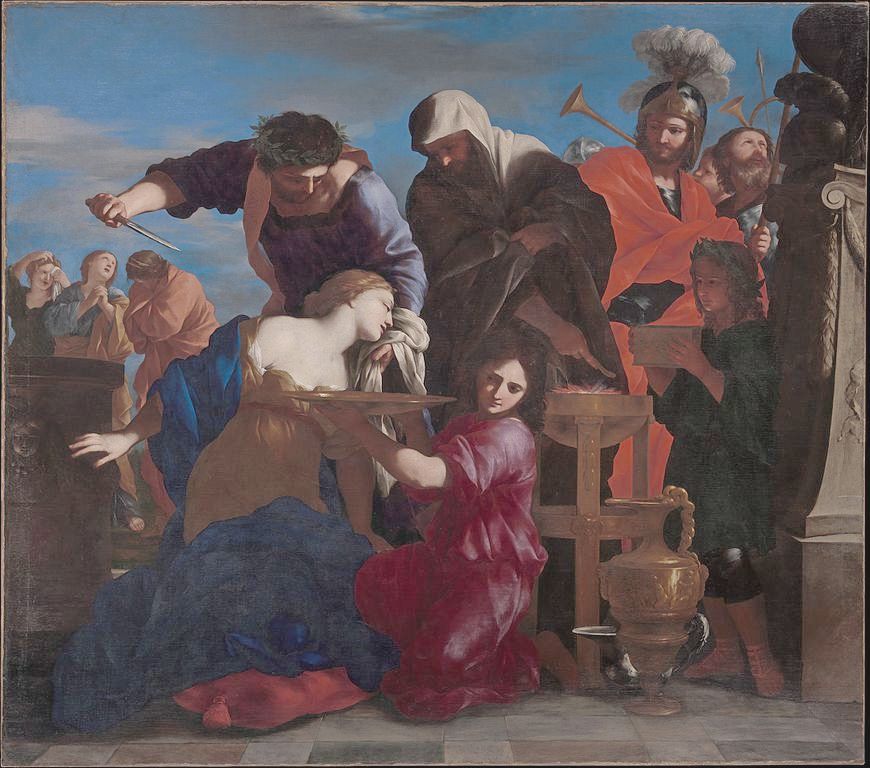
As the Greeks invaded the City walls, the royal family was decimated. The son of Achilles, Neoptolemus kills Polites, son of King Priam and brother to Hector, as he clings to an altar of Zeus, seeking protection. King Priam rebukes Neoptolemus, and in turn, is also slaughtered on the same altar. Astyanax, the infant son ofHector**, is murdered in the fray and **Hector’s wife and most of the royal family. A few Trojans escape, but Troy’s city is, for all intents and purposes, destroyed.
With the 10 years of war at an end, the Greeks made their way home. Odysseus** took the longest, taking ten years to make his way home again following the war**. His journey makes up the epic poem, The Odyssey. Helen, the reported cause of the war, returned to Sparta to rejoin her husband, Menelaus. After his death, some sources report that she was exiled to the island of Rhodes, where a widow of the war had her hanged, thus ending the reign of the “face that launched a thousand ships.”