Why Did Zeus Marry His Sister? – All in the Family
Why did Zeus marry his sister? Unlike the God of Western monotheistic religions, Zeus and all of the Greek gods and goddesses are much more symbolic of the emotions, traits, and excesses of humanity than any ideal of perfection. The divine family of Mount Olympus was filled with drama, betrayal, and complex relationships that reflected the very nature of humanity itself.
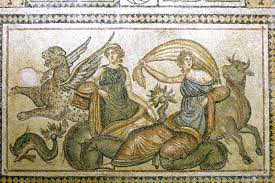
Zeus and Hera, the king and queen of the Olympian gods
The Origin of Zeus
The story of Zeus begins with his father Cronos, the king of the Titans. Cronos feared a prophecy that foretold his offspring would one day overthrow him, just as he had overthrown his own father Uranus. Driven by this fear, he swallowed each of his children at birth to prevent the prophecy from coming true.
Rhea, Zeus's mother and Cronos's wife, was devastated by the loss of her children. When Zeus was born, she devised a plan to save him. She substituted a stone wrapped in swaddling clothes for her infant son and presented it to Cronos, who swallowed it without suspicion. The real Zeus was secretly transported to the island of Crete, where he was nursed by a nymph and defended and kept hidden by young warriors known as Curetes.
Upon reaching maturity, Zeus returned to confront his father. He allied with his brothers Poseidon and Hades to defeat Cronos and the Titans. After their victory, the three brothers divided the cosmos among themselves: Zeus took control of the sky, Poseidon governed the sea, and Hades ruled the Underworld. Mount Olympus served as neutral meeting ground for all the deities.
Who Was Zeus Married To?
The question of Zeus's marriage is complicated by his notorious infidelity. Indeed, what female did Zeus not either rape or seduce? His list of lovers, both mortal and divine, was extensive and legendary. Yet among all his conquests, one goddess stood out as his official queen: Hera, his own sister.
Zeus pursued Hera relentlessly, but she proved resistant to his advances. Unlike many of his other conquests, Hera was not easily won. Zeus, ever resourceful in his seductions, employed deception to win her heart. He transformed himself into a cuckoo bird and deliberately made the bird appear bedraggled and pathetic to win Hera's sympathy.
When Hera saw the pitiful creature shivering in the rain, her maternal instincts overcame her caution. She took the bird into her bosom to comfort and warm it. At that moment, Zeus revealed his true form and violated her. To conceal her shame in an age where a woman's honor was paramount, Hera agreed to marry him.
A Godly Wedding
The wedding of Zeus and Hera took place on Mount Olympus with all the gods in attendance. Each deity brought gifts to celebrate the union of the king and queen of the gods. According to mythology, their honeymoon lasted an extraordinary 300 years. However, even such an extended period of marital bliss failed to satisfy Zeus's compulsive need for new conquests.
The marriage was a violent one at best. Zeus's countless affairs drove Hera to jealous fury time and again. As the goddess of marriage and childbirth, Hera found particular irony in her husband's complete disregard for marital fidelity. Rather than directing her anger solely at Zeus, whom she could not truly punish, Hera sought out her husband's victims and lovers, punishing them indiscriminately.
Her vengeance was legendary. When Leto became pregnant with Apollo and Artemis by Zeus, Hera prevented her from finding a place to give birth. She tormented Io, another of Zeus's lovers who had been transformed into a cow, by sending a relentless gadfly to torment her across entire continents.
Demeter: A Story of a Mother's Triumph
Zeus's relationship with his sister Demeter produced another significant myth. Together they had a daughter named Persephone, though there is no mythology to answer whether Demeter married Zeus. Unlike his attention to Hera, Zeus showed minimal paternal interest in his daughter by Demeter.
Hades, Zeus's brother and ruler of the Underworld, became enamored with Persephone. Rather than court her properly, Hades sought Zeus's permission to take her. With Zeus's approval, Hades violently kidnapped Persephone while she was gathering flowers in a meadow, carrying her down to his dark realm to be his unwilling bride.
Demeter's grief at the loss of her daughter was transformative and world-shaking. As the goddess of the harvest and seasons, her sorrow affected the entire earth. She halted all natural cycles—no winter dormancy could end, no spring renewal could begin. The earth became barren, and humanity faced starvation.
Facing an apocalyptic world of his own making, Zeus finally relented. He ordered Hades to release Persephone and return her to her grieving mother. However, before relinquishing his captive, Hades convinced Persephone to consume a pomegranate seed. By eating food from the Underworld, she became magically bound to return there.
A compromise was reached: Persephone would spend part of each year in the Underworld as Hades' queen, and the remainder with her mother on earth. This myth explained the cycle of seasons—when Persephone dwelt below, Demeter mourned and winter gripped the land; when she returned, her mother's joy brought spring and summer.
Zeus's Conquests and Consequences
While the idea of seducing the willing and raping the unwilling is distasteful in today's modern world, these myths served important purposes in ancient Greek culture. They represented lust and its relationship with both power and fertility. Zeus's behavior symbolized how sex operated to gain power within patriarchal systems.
Interestingly, Zeus's offspring often opposed him, creating narrative consequences for divine misconduct. This theme runs throughout Greek mythology—the children of the gods frequently became agents of change, challenging the established order their parents represented.
Ancient writers like Sophocles and Homer used these myths to lay starkly bare the evils of a patriarchal society. The stories functioned as cautionary tales about the abuse of power, the suffering of the innocent, and the limits even divine authority might face.
The Resistance of Divine Women
Despite their victimization, goddesses like Hera and Demeter were not passive sufferers. Hera was not one to stand idly by while her husband pursued other women. Her revenge against Zeus's lovers, while misdirected, demonstrated her refusal to accept her situation meekly.
Demeter's response to Persephone's abduction proved even more powerful. Her maternal determination was more powerful than the will of an impulsive god. When she brought the world to the brink of destruction, even Zeus had to acknowledge her power and grant her demands.
These narratives revealed that even within the confines of mythological patriarchy, maternal love and female resistance could challenge divine authority and force even the king of the gods to compromise.
Conclusion
So why did Zeus marry his sister? The answer lies in the nature of Greek mythology itself. The gods of Olympus were not meant to be perfect moral exemplars but rather reflections of human nature writ large. Their relationships, including the incestuous marriages among siblings, reflected both the isolation of divine beings and the complex dynamics of power, desire, and consequence.
Zeus's marriage to Hera, born of deception and maintained through constant conflict, serves as one of mythology's most enduring explorations of the relationship between power and partnership. Through their tumultuous union and the stories of Zeus's other divine sisters, Greek mythology offers timeless insights into human nature disguised as tales of the gods.