Timeless Myths Logo
Aphrodite Apollo Ares Artemis Athena Atlas Coeus Crius Cronus Demeter Dionysus Gaia Hades Hephaestus Hera Hermes Hestia Hyperion Iapetus Mnemosyne Oceanus Phobos Phoebe Poseidon Prometheus Rhea Tethys Themis Uranus Zeus
Bacchus Ceres Diana Juno Jupiter Mars Mercury Minerva Neptune Pluto Venus Vesta Vulcan
Amun Anubis Aten Atum Babi Bastet Bes Geb Hapi hathor heqet Horus Isis Khepri Khnum Khonsu Maat Nephthys Nut Osiris Ptah Ra Seshat Seth Shu Sobek Thoth
Alfheim Baldur Freya Freyr Frigg Heimdallr Helheim Idun Jotunheim Loki Nerthus Njord Odin Thor Tyr
Aengus Arawn Badb Brigid Cailleach Ceridwen Cernunnos Cu Chulainn Dagda Danu Gwydion Herne the Hunter Lugh Medb Morrigan Neit Nuada Taliesin Taranis
Chalchiuhtlicue Coatlicue Huitzilopochtli Mictlantecuhtli Mixcoatl Ometeotl Quetzalcoatl Tezcatlipoca Tlaloc Tonatiuh Xipe Totec Xochiquetzal Xolotl
Amaterasu Ame no Uzume Benzaiten Bishamonten Daikokuten Ebisu Fujin Fukurokuju Inari Izanagi Kagutsuchi Raijin Susanoo Tsukuyomi
Caishen Cangjie Dragon King Eight Immortals Erlang Shen Fuxi Guanyin Hou Yi Huxian Jade Emperor King Yama Leizi Lu-ban Mazu Nezha Nuwa Pangu Shennong Sun Wukong Xiwangmu Yue Lao Zhong Kui
Norse Classical Celtic Arthurian
Literature Stories Names
Aphrodite Apollo Ares Artemis Athena Atlas Coeus Crius Cronus Demeter Dionysus Gaia Hades Hephaestus Hera Hermes Hestia Hyperion Iapetus Mnemosyne Oceanus Phobos Phoebe Poseidon Prometheus Rhea Tethys Themis Uranus Zeus
Bacchus Ceres Diana Juno Jupiter Mars Mercury Minerva Neptune Pluto Venus Vesta Vulcan
Amun Anubis Aten Atum Babi Bastet Bes Geb Hapi hathor heqet Horus Isis Khepri Khnum Khonsu Maat Nephthys Nut Osiris Ptah Ra Seshat Seth Shu Sobek Thoth
Alfheim Baldur Freya Freyr Frigg Heimdallr Helheim Idun Jotunheim Loki Nerthus Njord Odin Thor Tyr
Aengus Arawn Badb Brigid Cailleach Ceridwen Cernunnos Cu Chulainn Dagda Danu Gwydion Herne the Hunter Lugh Medb Morrigan Neit Nuada Taliesin Taranis
Chalchiuhtlicue Coatlicue Huitzilopochtli Mictlantecuhtli Mixcoatl Ometeotl Quetzalcoatl Tezcatlipoca Tlaloc Tonatiuh Xipe Totec Xochiquetzal Xolotl
Amaterasu Ame no Uzume Benzaiten Bishamonten Daikokuten Ebisu Fujin Fukurokuju Inari Izanagi Kagutsuchi Raijin Susanoo Tsukuyomi
Caishen Cangjie Dragon King Eight Immortals Erlang Shen Fuxi Guanyin Hou Yi Huxian Jade Emperor King Yama Leizi Lu-ban Mazu Nezha Nuwa Pangu Shennong Sun Wukong Xiwangmu Yue Lao Zhong Kui
Norse Classical Celtic Arthurian
Literature Stories Names

Campe: The She Dragon Guard of Tartarus
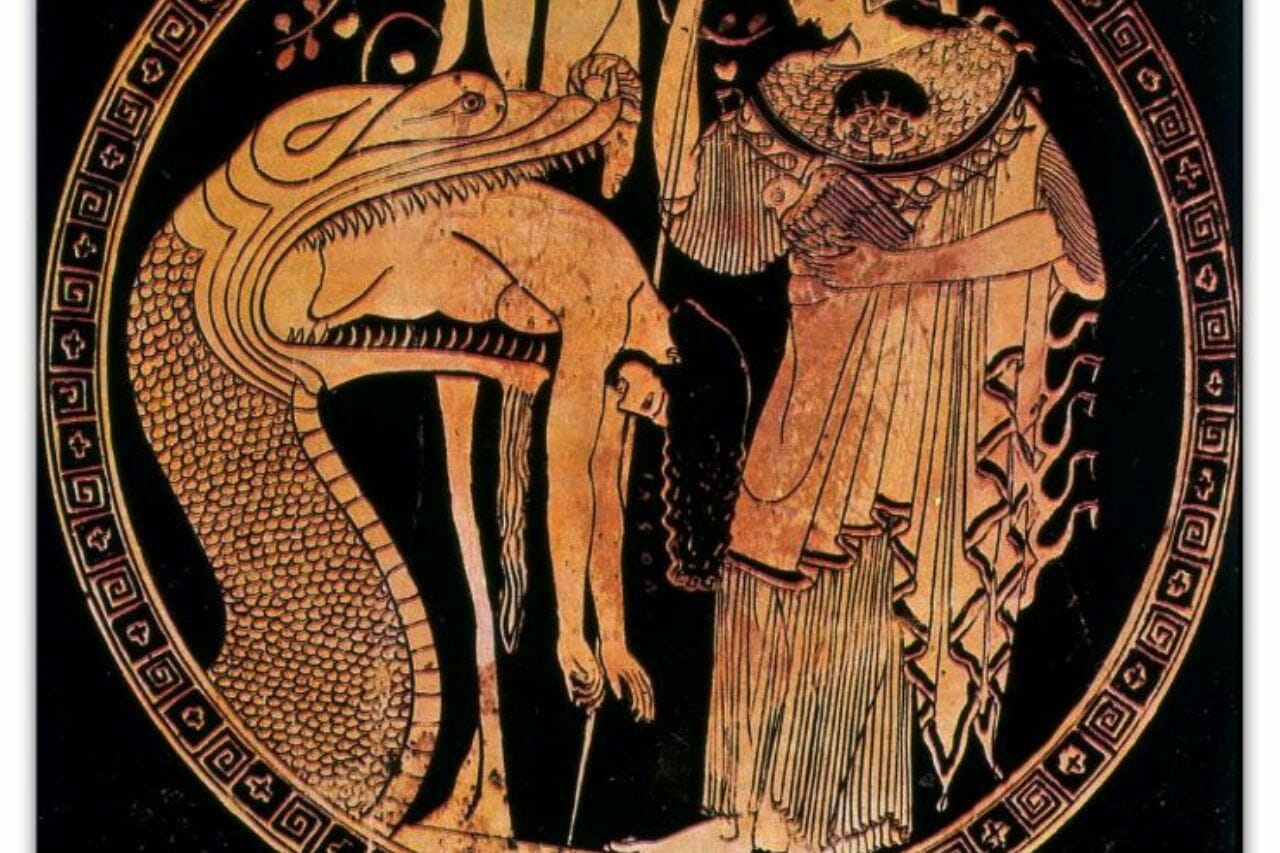
greek-mythology
Campe in greek mythology

Campe was a vicious fire-breathing female monster that had only one purpose in life. She is a famous character in Greek mythology. Interestingly, the death of Campe plays a very important role in the infamous Titanomachy. Here we have gathered all the information on this monster.

Who Is Campe?

Campe mythology includes the story of Campe being a guard. She guarded some of the most troublesome and chaotic creatures. In Greek mythology, there exists a place known as Tartarus. Tartarus is a dark abyss used as a dungeon to punish, creatures that cannot exist in the normal world because of their powers and intentions.

Campe in Tartarus

Campe guarded Tartarus. She was created and appointed by Cronus, the first Titan. She guarded Tartarus day and night and inside the dungeon were Cyclops and the Hundred-Handers. Both of these characters are described with great warning as they possessed powers that could overthrow Cronus.

She dragons are very rare to come by in any mythology. Campe or Kampe is therefore a treasured creature, one that brings out the beauty of Greek mythology and its writers.

Physical Features of Campe

Campe is a humongous creature that is unmatched. A dragon which would breath fire and has wings to fly. She was called the nymph of Tartarus and also was the female counterpart of Typhon.

Some also explain the appearance of Campe as half human and half dragon. She had a beautiful upper body of a female with luscious hair and bold eyes whereas the lower part of her body was that of a dragon with wings attached from behind.

Titanomachy

Zeus was the son of Cronus who had appointed Campe at Tartarus. There was a huge unsettlement between Zeus and Cronus. Cronus came across a prophecy that one of his sons would overthrow him and take his throne. This paranoid Cronus so any child that was born to him, he ate it.

Rhea, Cronus' wife, was heartbroken because Cronus ate all of her children. One time Rhea managed to save one of her sons, Zeus. She hid Zeus from Cronus until Zeus grew up. He went on to take revenge on Cronus and free his siblings. The war between Cronus, a Titan, and his son, Zeus, an Olympian is known as Titanomachy.

For the fight against the first god of the Titans, Zeus needed every possible help he could get. He firstly freed his siblings from Cronus with the help of Rhea. Secondly, he went to gather all the creatures that were against Cronus and would help him take down his own father.

Campe and Zeus

Zeus went to Tartarus where Campe was guarding the gates. Inside the gates were Cyclops and the Hundred-handers. Zeus wanted to free them so that they can help him win against the Titans. Zeus was against a literal fire-breathing chthonic dracaena, whose one blow would burn the life out of Zeus.

He worked his way around the she-dragon very slowly when she was sleeping. He swung his throat at the dragon with all his might and power. He slew her head off and the dragon lay their life-less. Zeus hurried towards the gates and freed Cyclops and the Hundred-handers.

Both of the now free prisoners agreed to help Zeus kill his father. Unfortunately, there is no more information about the Campe other than the fact that Zeus killed her because of her own advantage.

FAQ

What Are Some of the Most Famous Monsters in Greek Mythology?

Greek mythology is filled with monstrous characters that have vile stories and are exceptionally deadly. Some of the most famous Greek mythology monsters are Medusa, Typhon, Campe, Scylla, Echidna, and Hekatonkheires Greek mythology.

Conclusion

Campe or Kampe was a she-dragon that was appointed by Cronus for some important work at the Tartarus. She was in the way of Zeus and his way to victory. Here are some of the most important points about Campe in Greek mythology:
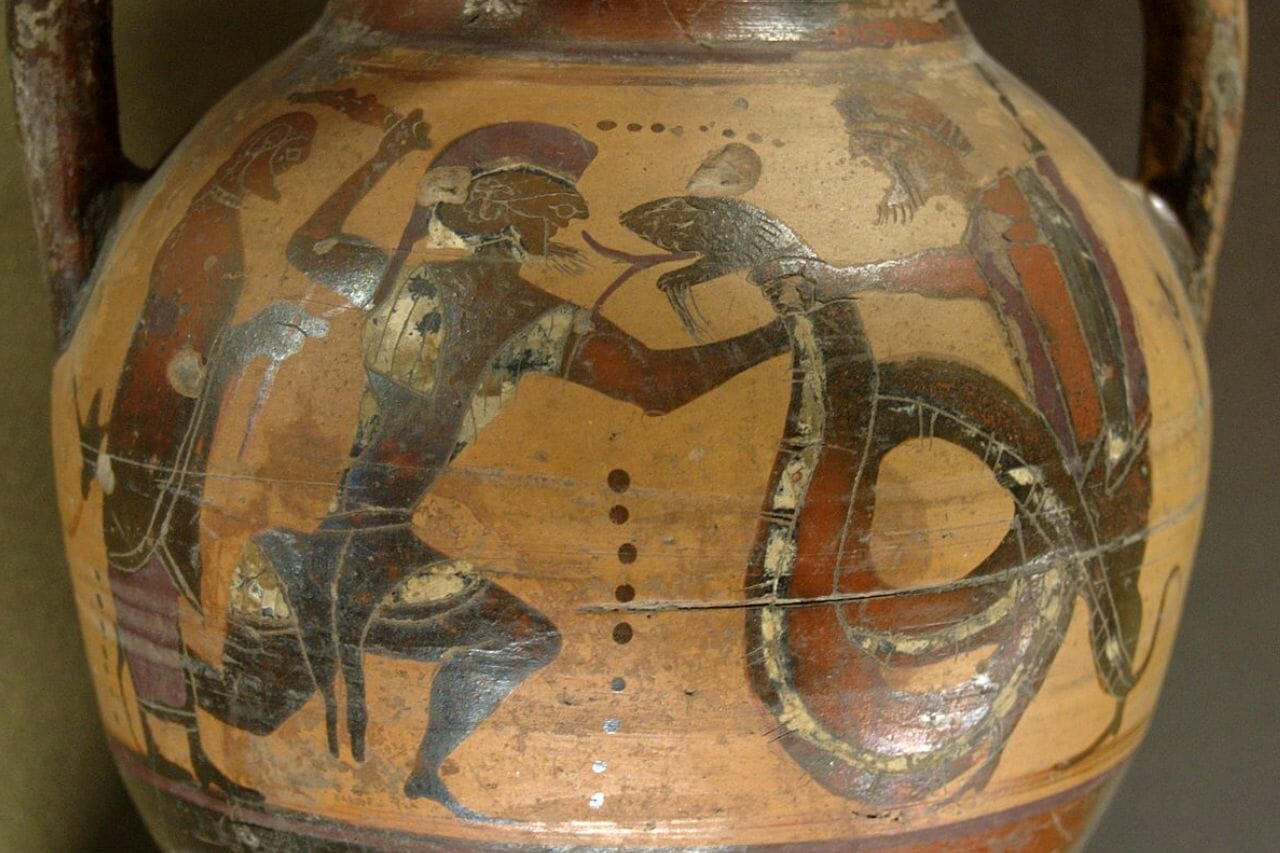
Campe the vicious dragon

  • Campe was a fire-breathing dragon guarding the Tartarus.

  • Tartarus is a deep abyss that imprisons creatures that are not safe for the world. Cronus had captured and imprisoned Cyclops and the Hundred-handers in Tartarus.

  • Zeus wanted to destroy Cronus for eating his siblings and wanted the throne for himself. For this purpose, he wanted the prisoners of Tartarus with him.

  • Zeus killed Campe and freed Cyclops and the Hundred-handers. They helped him win Titanomachy and brought Cronus to his death.

The dragon, Campe is surely an amazing creature of Greek mythology but was sadly put down by Zeus for his own benefits. Here we come to the end of the article about Campe. We hope it was a pleasant read for you.

By Ancient Literature

Created: February 15th, 2024

Modified: January 10th, 2025

Campe

Campe

In the Creation myth, Campe was a monster whom Cronus set to guard the Hundred-Handed and the Cyclops in Tartarus. In order to free the Hundred-Handed and the Cyclopes, Zeus had to kill Campe. Apollodorus was the only author who gave a name to Cam...

June 1st, 2000 • Jimmy Joe
Delphyne

Delphyne

According to Apollodorus, when the monster Typhon severed Zeus' sinews and confined the god in a cave, Typhon set the she-dragon Delphyne to guard Zeus, to prevent his escape. But Hermes and Aegipan managed to recover Zeus' sinews and rescue Zeus ...

June 1st, 2000 • Jimmy Joe
Typhon

Typhon

Typhon was a giant winged monster with a hundred heads. Typhon (Τυφών) was an offspring of Gaea ("Earth") and Tartarus, and according to Apollodorus, the creature was born in Cilicia. Typhon was a gigantic winged monster that was part man and part...

June 1st, 2000 • Jimmy Joe
Camilla

Camilla

Camilla was the queen of the Volscians. Camilla was the daughter of Metabus and Casmilla. Camilla was the leader of the Voliscans in the Italian war against the hero Aeneas and the Trojans. It is not known whether Casmilla died during childbirth o...

June 22nd, 2003 • Jimmy Joe
Tartarus

Tartarus

Tartarus was born together with Nyx, Erebus, Gaea, and Eros ("Love"), out of Chaos. Tartarus was the personification of the darkest and deepest region of the Underworld. This was the region where Uranus had thrown the Hundred-Handed giant and the ...

April 19th, 1999 • Jimmy Joe
Chimaera

Chimaera

Chimaera was a fire-breathing monster that lived in the mountains around Lycia. Chimaera was another monstrous offspring of Typhon and Echidna. Chimaera had the head and body of a lion, the legs of a goat, and had a snake instead of a tail. Some i...

June 1st, 2000 • Jimmy Joe
Ladon

Ladon

Ladon was the dragon with a hundred heads which guarded the golden apples of Hesperides. Ladon could also speak with countless different voices. Ladon was an offspring of Typhon and Echidna, or of Phorcys and Ceto. In his eleventh labour, Heracles...

June 1st, 2000 • Jimmy Joe
Tartarus

Tartarus

Tartarus was the deepest region of the Underworld. It was said that it took nine days and nine nights for an anvil to fall from the earth's surface to the very bottom of Tartarus. Tartarus was the area where Zeus and the Olympians had confined Cro...

September 29th, 2002 • Jimmy Joe
Giants (Gigantes)

Giants (Gigantes)

The Giants or Gigantes were offspring of Uranus and Gaea. When Cronus severed his father's genitals and threw them into the sea, some of the blood landed on earth, and the giants sprang out of the earth. The Gigantes were more than just giants. Th...

June 1st, 2000 • Jimmy Joe
Lampades: Torch-bearing Nymphs of the Unseen World

Lampades: Torch-bearing Nymphs of the Unseen World

Lampades in Greek mythology are torch-bearing nymphs who accompany a goddess on her night wanderings. They are trained followers of Hecate residing in the underworld. Let us read through below to learn more information about who the Lampades are a...

February 16th, 2024 • Ancient Literature
Timeless Myths

Exploring mythology and legends from around the world.

Explore Myths

All Stories Characters All Articles Search Site Map

Mythologies

Norse Mythology Classical Mythology Celtic Mythology Arthurian Legends Mythology Gods Ancient Literature

About Us

Introduction About Jimmy Bibliography FAQs Retro Version

Resources

Timeless Myths All Stories All Articles Characters
© 1999-2026 Timeless Myths • Copyright • Privacy Policy • Cookie Policy • Contact
Follow us: