Timeless Myths Logo
Aphrodite Apollo Ares Artemis Athena Atlas Coeus Crius Cronus Demeter Dionysus Gaia Hades Hephaestus Hera Hermes Hestia Hyperion Iapetus Mnemosyne Oceanus Phobos Phoebe Poseidon Prometheus Rhea Tethys Themis Uranus Zeus
Bacchus Ceres Diana Juno Jupiter Mars Mercury Minerva Neptune Pluto Venus Vesta Vulcan
Amun Anubis Aten Atum Babi Bastet Bes Geb Hapi hathor heqet Horus Isis Khepri Khnum Khonsu Maat Nephthys Nut Osiris Ptah Ra Seshat Seth Shu Sobek Thoth
Alfheim Baldur Freya Freyr Frigg Heimdallr Helheim Idun Jotunheim Loki Nerthus Njord Odin Thor Tyr
Aengus Arawn Badb Brigid Cailleach Ceridwen Cernunnos Cu Chulainn Dagda Danu Gwydion Herne the Hunter Lugh Medb Morrigan Neit Nuada Taliesin Taranis
Chalchiuhtlicue Coatlicue Huitzilopochtli Mictlantecuhtli Mixcoatl Ometeotl Quetzalcoatl Tezcatlipoca Tlaloc Tonatiuh Xipe Totec Xochiquetzal Xolotl
Amaterasu Ame no Uzume Benzaiten Bishamonten Daikokuten Ebisu Fujin Fukurokuju Inari Izanagi Kagutsuchi Raijin Susanoo Tsukuyomi
Caishen Cangjie Dragon King Eight Immortals Erlang Shen Fuxi Guanyin Hou Yi Huxian Jade Emperor King Yama Leizi Lu-ban Mazu Nezha Nuwa Pangu Shennong Sun Wukong Xiwangmu Yue Lao Zhong Kui
Norse Classical Celtic Arthurian
Literature Stories Names
Aphrodite Apollo Ares Artemis Athena Atlas Coeus Crius Cronus Demeter Dionysus Gaia Hades Hephaestus Hera Hermes Hestia Hyperion Iapetus Mnemosyne Oceanus Phobos Phoebe Poseidon Prometheus Rhea Tethys Themis Uranus Zeus
Bacchus Ceres Diana Juno Jupiter Mars Mercury Minerva Neptune Pluto Venus Vesta Vulcan
Amun Anubis Aten Atum Babi Bastet Bes Geb Hapi hathor heqet Horus Isis Khepri Khnum Khonsu Maat Nephthys Nut Osiris Ptah Ra Seshat Seth Shu Sobek Thoth
Alfheim Baldur Freya Freyr Frigg Heimdallr Helheim Idun Jotunheim Loki Nerthus Njord Odin Thor Tyr
Aengus Arawn Badb Brigid Cailleach Ceridwen Cernunnos Cu Chulainn Dagda Danu Gwydion Herne the Hunter Lugh Medb Morrigan Neit Nuada Taliesin Taranis
Chalchiuhtlicue Coatlicue Huitzilopochtli Mictlantecuhtli Mixcoatl Ometeotl Quetzalcoatl Tezcatlipoca Tlaloc Tonatiuh Xipe Totec Xochiquetzal Xolotl
Amaterasu Ame no Uzume Benzaiten Bishamonten Daikokuten Ebisu Fujin Fukurokuju Inari Izanagi Kagutsuchi Raijin Susanoo Tsukuyomi
Caishen Cangjie Dragon King Eight Immortals Erlang Shen Fuxi Guanyin Hou Yi Huxian Jade Emperor King Yama Leizi Lu-ban Mazu Nezha Nuwa Pangu Shennong Sun Wukong Xiwangmu Yue Lao Zhong Kui
Norse Classical Celtic Arthurian
Literature Stories Names

Cyparissus: The Myth Behind How the Cypress Tree Got Its Name
greek-mythology
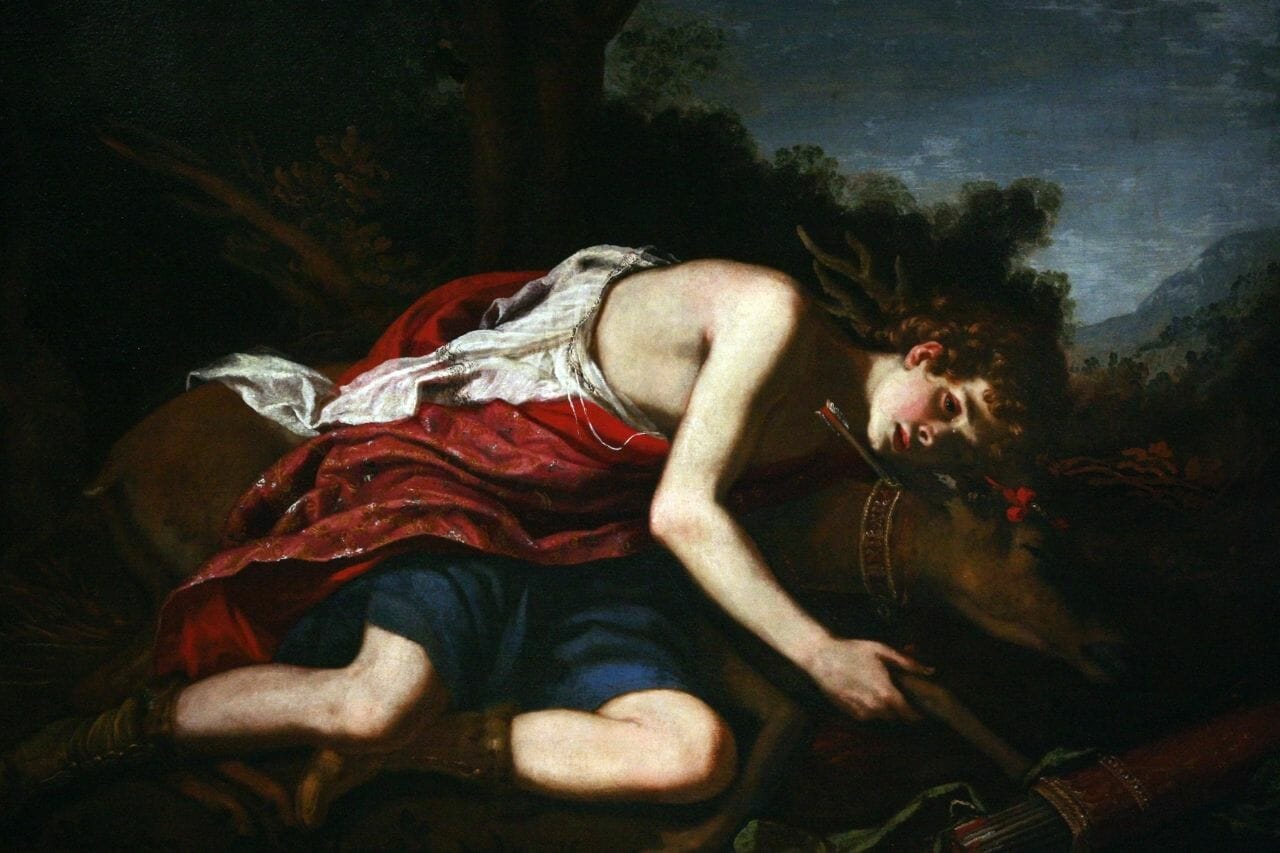
Cyparissus with his beloved stag in Greek mythology

Cyparissus with his beloved stag

Cyparissus was a story told to explain why the cyparissus plant had its sap run down its trunk. It also illustrated the tradition of pederasty in ancient Greece. Pederasty was a romantic relationship between a young man and an adult male which was regarded as a form of initiation into adulthood. The adult male was known as an erastes and the young boy was called an eromenos. To understand the myth of Cyparissus and its cultural significance, continue reading.

The Myth of Cyparissus

Cyparissus and Apollo

Cyparissus was an attractive young boy from the island of Keos who was the toast of all the gods. However, Apollo, the god of prophecy and truth, won his heart and the two developed strong feelings for each other. As a symbol of his love, Apollo presented a stag to Cyparissus.

The stag had huge antlers that gleamed with gold and provided shade for his head. Around his neck hung a necklace fashioned out of all sorts of gems. He wore a silver boss on his head and gleaming pendants hang from each of his ears.

Cyparissus and the Stag

Cyparissus grew so fond of the stag that he took the animal everywhere he went.

According to the myth, the stag also liked the young boy and became tame enough for him to ride. Cyparissus even made bright garlands with which he decorated the antlers of his pet stag and fashioned purple reins to guide the animal.

Cyparissus Kills His Pet Stag

One time Cyparissus took the stag along as he went hunting and since the sun was scorching, the animal decided to rest under the cool shade provided by the forest trees. Unaware of where his pet was lying, Cyparissus threw a javelin in the direction of the stag which accidentally killed it. The stag's death grieved the young boy so much that he wished he died in place of his pet. Apollo tried consoling his young lover but Cyparissus refused to be consoled and rather made a bizarre request; he wanted to mourn the stag forever.

Initially, Apollo was reluctant to grant his request but the boy's incessant pleas proved too much for Apollo to take so he gave in and granted his wishes. Apollo then turned the young boy into the cypress tree with its sap flowing along its trunk.

That was how the ancient Greeks explained the sap that flowed along the trunk of cypress trees. Furthermore, as stated, the Cyparissus myth also illustrated the romantic relationship between a young male and an adult male that existed at the time.

Cyparissus Symbol in Ancient Greek Culture

The myth of Cyparissus was a symbol of initiation for young males into adulthood. Cyparissus signified all male boys while Apollo represented the elderly males. The period of initiation symbolized the "death" and transfiguration of the young male (eromenos).

The stag gift from Apollo symbolized the common practice where the elderly males (erastes) gifted animals to the eromenos. The hunt of Cyparissus in the myth signified the preparation of the young males for military service.

Cyparissus According to Ovid

According to this version, Cyparissus Ovid becomes so sad after the death of the stag that he pleads with Apollo to never let his tears cease flowing. Apollo grants his request by turning him into a cypress tree with its sap flowing on its trunk.

Ovid's version of the Cyparissus myth is embedded in the story of Orpheus the Greek poet and bard who went into Hades to recover his wife Eurydice. When he failed to achieve his goal, he forsook the love of women for young boys.

Orpheus produced great music on his lyre which caused the trees to move in a cavalcade with the last cypress tree transitioning to the metamorphosis of Cyparissus.

The Myth of Cyparissus as Recorded by Servius

Servius was a Roman poet whose commentary on the myth of Cyparissus substituted the god Apollo for Sylvanus, the Roman god of the countryside and woods. Servius also changed the stag's gender from male to female and made the God Sylvanus responsible for the stag's demise instead of Cyparissus. However, all other aspects of the story including Cyparissus Roman name remained the same.

The myth ended with Cyparissus god (Sylvanus) turning him into a cypress tree which he carried as consolation for losing the love of his life.

Another version by the same poet has the West Wind god, Zephyrus, as the lover of Cyparissus instead of Sylvanus. Servius also associated the cypress tree with Hades probably because the people in Attica decorated their homes with cypress whenever they were mourning.

Cyparissus of Phocis

There is another myth involving a different Cyparissus who was considered the mythical founder of the port of Anticyra formerly called Kyparissos in the region of Phocis.

Cyparissus Pronunciation

Cyparissus is pronounced as 'sy-pa-re-sus' which means cypress or cypress wood.

Conclusion
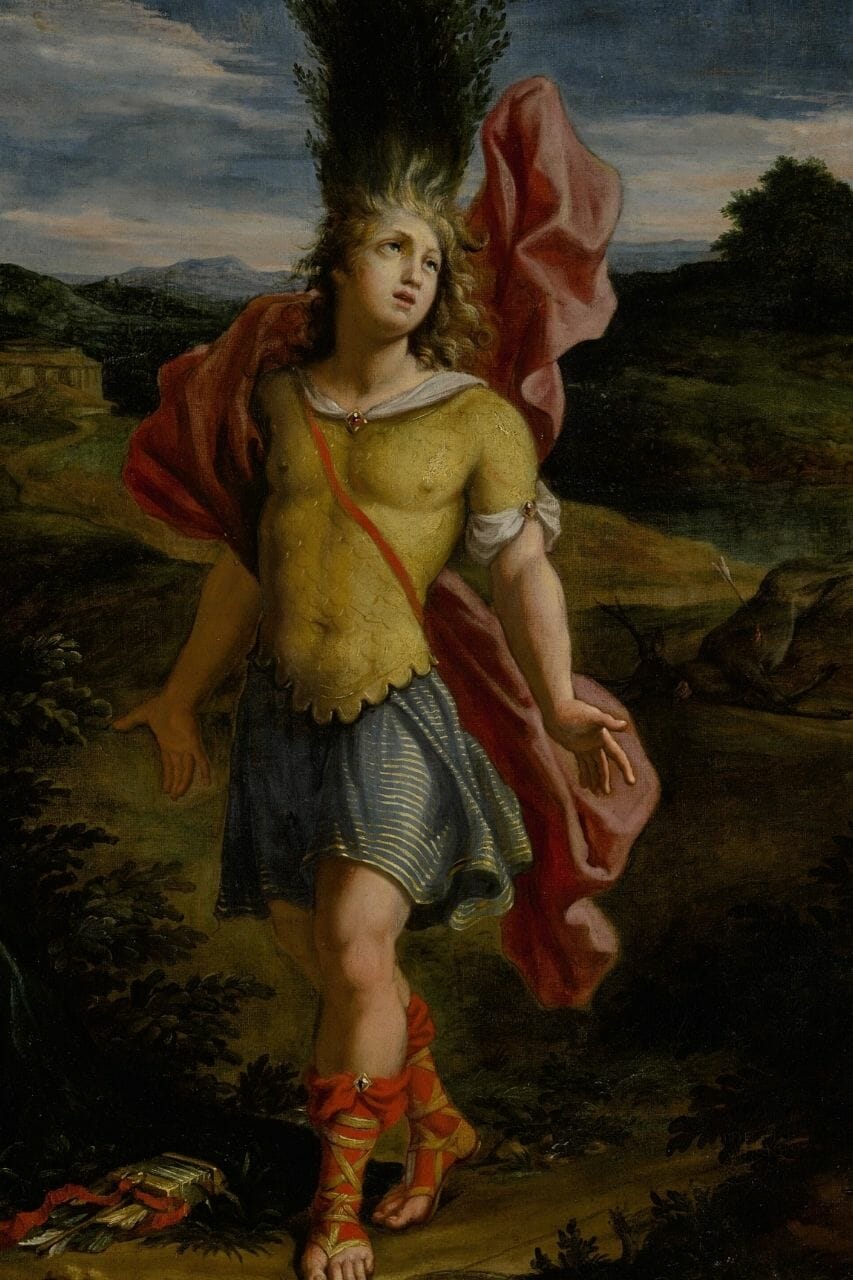
The myth of Cyparissus - transformed into a cypress tree

Cyparissus transformed into a cypress tree

The myth of Cyparissus is known as an aition (origin myth) that explains the origins of the cypress plant. Here is a recap of all that we've covered in this article:

  • Cyparissus was a very handsome boy from the island of Keos who was dearly loved by the god Apollo.

  • As a symbol of his love, Apollo gifted the young lad a beautiful stag adorned with jewels and gems which the boy loved.

  • Cyparissus went everywhere with the stag and the stag even allowed Cyparissus to ride on his back because he had grown fond of the boy.

  • One day, Cyparissus took the stag for hunting and accidentally threw a javelin in his direction killing the animal.

  • The stag's death brought a lot of sorrow to Cyparissus who decided he wanted to die in the stead of the animal.

Apollo tried to console Cyparissus but to no avail and instead, Cyparissus made a weird request which was to perpetually mourn the death of the stag. Apollo granted the request by turning the boy into a 'crying' cypress tree and that explains why the sap of the cypress tree runs along its trunk.

By Ancient Literature

Created: February 16th, 2024

Modified: January 10th, 2025

Cyparissus

Cyparissus

Here is another tale of a god loving a mortal youth that went tragically wrong. Apollo was known to love several young men, most notably Hyacinthus, but here you will find a very short tale of Cyparissus (Κυπάρισσος). Cyparissus was a boy in livin...

June 22nd, 2000 • Jimmy Joe
Daphne

Daphne

Daphne was a nymph and a follower of the huntress-goddess Artemis (Diana). Depending on the two versions of the myth, Daphne was either the daughter of the river-god Peneius or Peneus in Thessaly, or she was the daughter of the river-god Ladon in ...

August 31st, 2002 • Jimmy Joe
Myrrha or Smyrna

Myrrha or Smyrna

There are two complete versions of the tragedy of Myrrha or Smyrna, told by the Greek Apollodorus or by Ovid, the Roman poet in his Metamorphoses. Ovid, as usual, is more descriptive than Apollodorus. However, Apollodorus cited several different v...

March 17th, 2001 • Jimmy Joe
Ampelus Greek Mythology: Discover the Reckless Lover of Dionysus

Ampelus Greek Mythology: Discover the Reckless Lover of Dionysus

Ampelus in Greek Mythology is a satyr that has been seen, written about, and spoken of in various ways, as he has even appeared in other mythologies as well. This satyr was the one who fell in love in a reckless way, with a goddess, more specifica...

February 15th, 2024 • Ancient Literature
Narcissus and Echo

Narcissus and Echo

Echo (Ἠχώ) was a mountain nymph from Mount Helicon. She appeared in the Homeric Hymn to Pan, where her wails could be heard from the mountain-top. Echo was an attendant of the goddess Hera in Ovid's Metamorphoses. Echo helped Zeus to hide his freq...

June 22nd, 2000 • Jimmy Joe
Adonis

Adonis

According to the earliest mention of Adonis (Ἄδωνις) in the Catalogues of Women (attributed to Hesiod), as well as in Apollodorus' Library, Adonis was the son of Phoenix and Alphesiboea. But the Catalogues of Women didn't speak of his life and dea...

June 22nd, 2000 • Jimmy Joe
Cephalus and Procris

Cephalus and Procris

Procris (Πρόκρις) was the daughter of King Erechtheus of Athens. Procris was the sister of Cecrops, Butes, Creusa, Oreithyia and other unnamed sisters. Cephalus (Κέφαλος) was the son of Deion, the king of Phocis, and Diomede, daughter of Xuthus. C...

June 22nd, 2000 • Jimmy Joe
Aristaeüs

Aristaeüs

A minor pastoral deity and protector of the beekeepers. Aristaeüs (Aristaeus) was the son of Apollo and the nymph Cyrene, the daughter of Hypseus, king of the Lapiths in Thessaly. Aristaeüs had a brother named Idmon, a warrior seer who was an Argo...

April 24th, 1999 • Jimmy Joe
Cyrene

Cyrene

Cyrene (Κυρήνη) was the daughter of Hypseus, a Lapith king in Thessaly. Cyrene was renowned for her beauty and strength. Cyrene was probably an attendant of Artemis, and she was renowned for her skill in hunting. She was hunting in the region of M...

June 22nd, 2003 • Jimmy Joe
Cupid and Psyche

Cupid and Psyche

Originally this myth was placed under the Roman Deities, under the article of Cupid (Eros, Ἔρως), but I have now moved the article to this page. I have completely revised and rewritten this myth so it can be told more fully. The only source for th...

June 22nd, 2000 • Jimmy Joe
Timeless Myths

Exploring mythology and legends from around the world.

Explore Myths

All Stories Characters All Articles Search Site Map

Mythologies

Norse Mythology Classical Mythology Celtic Mythology Arthurian Legends Mythology Gods Ancient Literature

About Us

Introduction About Jimmy Bibliography FAQs Retro Version

Resources

Timeless Myths All Stories All Articles Characters
© 1999-2026 Timeless Myths • Copyright • Privacy Policy • Cookie Policy • Contact
Follow us: