Ereshkigal: Standing Beyond the Gate of the Underworld
To know the truth about the afterlife is beyond human power, but Ereshkigal stands in between to guard the Gates of the Underworld from man’s steps and keep them from crossing the line between life and death.
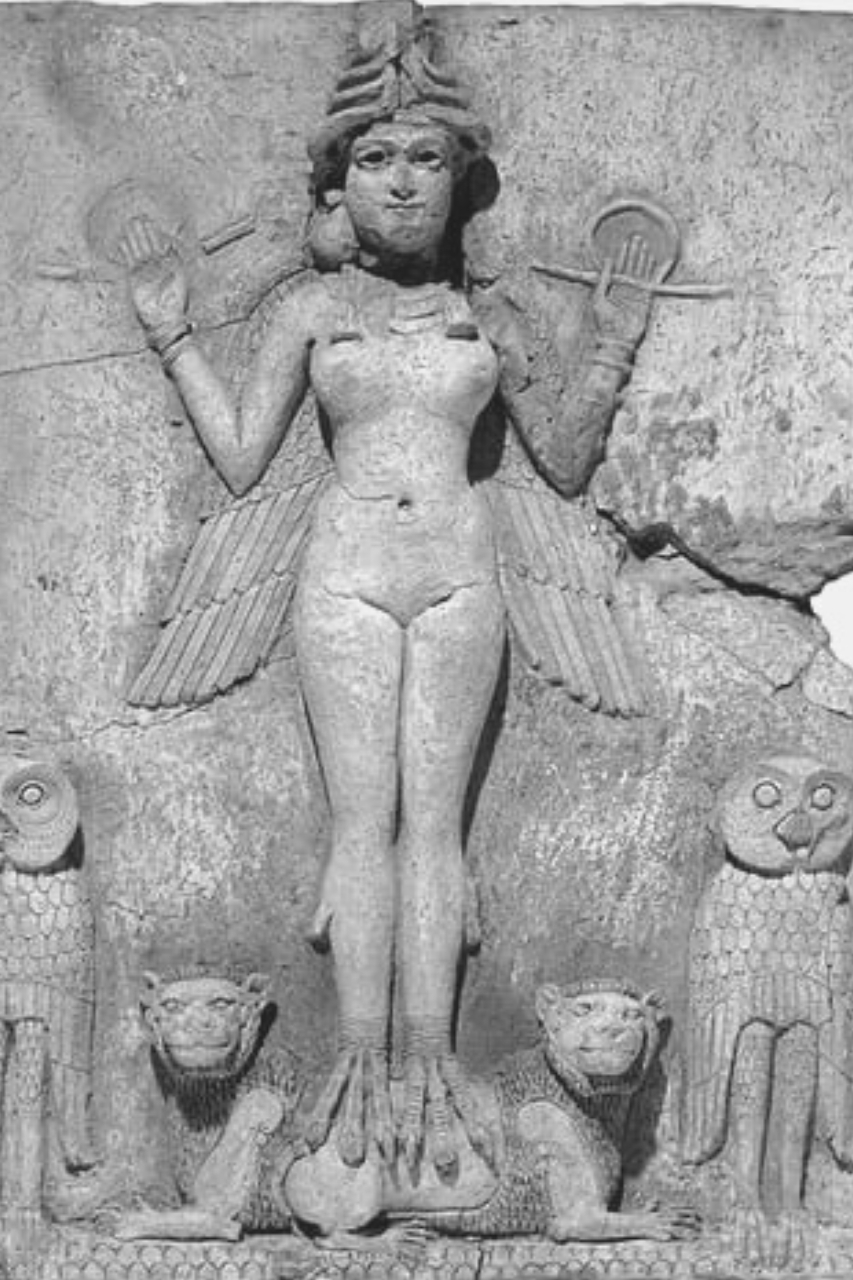
Known as the Lady of the Great Earth or the Mesopotamian Queen of the Dead, she was destined to guard the underworld with her might and power.
Ereshkigal was not a brutal goddess because she was only performing her tasks which, most of the time, were making her weep for the death of men who would be going to the underworld. Find out more about the origins and legends regarding this Mesopotamian goddess.
Who Is Ereshkigal?
Venerable for her many titles, Ereshkigal has many names and titles associated with her. Also called Irkalla and Allatu in Akkadian, she is regarded as the Queen of the Great Below or the Netherworld.
Mesopotamian mythology provides a vast literature on the culture and life of the ancient gods of Mesopotamia, but the presence of Ereshkigal, the Goddess of the Underworld, is highly respected because of her kindness to man.
Considering her role in Mesopotamian mythology, Ereshkigal is revered for her enormous power as the Queen of the Dead. Merely hearing her name could make you crumble because her presence would always mean one’s demise or judgment in the afterlife.
It was her responsibility to secure the dead in the underworld and forbid the living from knowing the mystery of the afterlife. Such duty is lofty and grave, and Ereshkigal seriously fulfilled it. You can tell that she was feared for her relationship with death, despite being also associated with birth-giving.
Ereshkigal’s Relationships
Ereshkigal was married to Gugalanna, the Great Bull of Heaven, with whom she bore the god Ninazu. When Gugalanna was killed, Ereshkigal married the god Enlil, and they had a son, Namtar. His name meant fate or destiny.
Aside from these relationships, Ereshkigal also had a third consort with whom she bore her daughter, Nungal or Manungal. Lastly, her fourth consort, Nergal, was the only one who committed to live with her in the death’s realm. You might notice that she lived through a complicated series of relationships, but that’s how Ereshkigal was portrayed in Mesopotamian mythology.
One of her sons, Namtar, was loyal to her and served as her minister. Her younger sister, Inanna or Ishtar, was regarded as one of the most significant deities who ruled Mesopotamia.
Although siblings, Ishtar and Ereshkigal led a relationship filled with animosity and drama. The elder sister, Ereshkigal, is the patron of the dead. Meanwhile, the younger sister, Ishtar, is the goddess of love and fertility and is a heavenly mistress.
It is safe to conclude also that their opposing powers, covering the opposites of life and death, bring forth a great divide between the two. In the end, after all the heartaches and death, the goddesses settled their feud, just like an ordinary mortal family.
Ereshkigal’s Abode
Ereshkigal is the goddess who rules the underworld in Mesopotamian mythology. Ganzir, her main palace, is located at the entrance of the underworld and is heavily guarded by her servant, Neti.
There are seven gates to her realm, and the entire domain is her responsibility together with Negal, her consort who agreed to rule the underworld for six months each year. You can reckon that she is also acknowledged as the Queen of the Night Relief, which represents Inanna and Lilith, the demon.
Kur, Ereshkigal’s abode, is found in a deep, dark region below the ground, which is also known as Irkalla. It is the place where dead people reside, cognizant of the new life that they must lead under the rules of Ereshkigal.
First and foremost, their stay at Kur means living an eternal shadow of their life while on earth. They are not condemned at Kur, but their status in the underworld depends on the condition of their burial.
You could probably say that they do not have a joyful stay at Kur because they only eat and drink dry dust there, except when their living family members remember them by pouring prayers and libations for their sustenance.
Kur: The Heart of the Underworld
Kur is a despised region in the Mesopotamian underworld. Its entrance is known to be in the mountains of Zagros, where there is a staircase leading to the deep, dark, and cold gates of the underworld. You may even be surprised to know that these stairs down to Kur are even deeper than Abzu or the body of water found beneath the earth.
Some speculations emerged that Kur is associated with a desert or a fearful region unknown to the living. Because no living individual has ever visited Kur, ancient people could not provide a specific definition of the underworld. You could only rely on hearsays and clues that have been handed down from one generation to another.
With its seven gates guarded by secured bolts, all souls must walk a long journey and be respectful of the place. Neti, the gatekeeper, is in command in Kur to guide the souls to their rightful place in the underworld.
The Underworld and Its Deities
The region is a place of total darkness. However, at night, Utu, the sun god, would travel through the entire place to illuminate the inhabitants as he traveled back to the east to wait for his daily duty at sunrise.
You could speculate that it was not only his responsibility in Kur. Many believed that he was also tasked to travel through the region to announce his judgment for the dead. It was a job he shared with Anunnaki, the deity in charge of announcing the fate of humans living in the underworld.
You need to know that the daily travel of Utu through the underworld passed from the garden of the sun god. This garden is believed to be the place where trees with precious stone gems as fruit were found.
Utu’s sister, Inanna, really wanted to go to that garden and taste the gem fruit. Once she tasted the fruit, her mind was filled with confidential thoughts on sex, which made her the goddess of sexual love.
Ereshkigal and Her Symbols
Recognized as the goddess of death, Ereshkigal is also known for her symbols. First, she is represented by wood because this material symbolizes decay or lack of permanence. Wood represents the reality that everything grows and degenerates.
It reminds everyone that we spring to life but wither in the end. She is also symbolized by a lion or lioness cub to show her power in the underworld. Her temple is made of lapis lazuli, which is her sacred stone.
She was depicted as a naked goddess to show that you are born naked in this world, and you will be judged naked after your death. The Ereshkigal statue is presented as standing on two lions with two owls on her sides. She is shown with her nakedness and thick curly hair flowing on her chest.
Her symbolic number is seven, which signifies wholeness in Akkadian literature. In addition, she is represented by a horse of death, which many feared to be a direct announcement of someone’s demise. Many feared the image of the horse of death because they knew it was Ereshkigal summoning them to enter her world of no return.
The River of Death and the Rainbow Garden
People also feared the river of death, which was her way of transporting a dead person to the underworld. There was a clear picture in the minds of the Babylonians that a river of death was demanding a person to accept his death because, once invited, a way out can never be found. The boat was also a symbol of transporting the dead person to his next life in the underworld.
Finally, the rainbow garden symbolized an inviting place for the dead. It looks like a rainbow garden to avoid insinuating fear, although it generally creates a premonition that this rainbow garden is a place for everyone in the afterlife.
The Ereshkigal sigil or symbol was a person kneeling on a horse of death, which indicated a clear message that someone had reached his or her time to die.
Irkalla
Irkalla was Ereshkigal’s abode in the underworld, which was also known as Kur. It was the point from where nobody, not even the gods, could return. You should also reckon that Irkalla is another name for Ereshkigal because she was the sole goddess of the underworld.
However, this changed since her relationship with Nergal, the god of death, started. Since then, he shared the command of Irkalla for six months every year.
This lonely region in the underworld served as the place for the dead, where they resided without condemnation, punishment, or reward. It is different from what might be your idea of hell, where souls live in eternal punishment and suffering.
Irkalla could be reached through its seven gates, and dead people needed to pass through by leaving an article of clothing or adornment, as prescribed by the gatekeeper at each gate. This gatekeeper also leads the dead toward the right way to eternity in Irkalla.
Ereshkigal and Her Love for Nergal
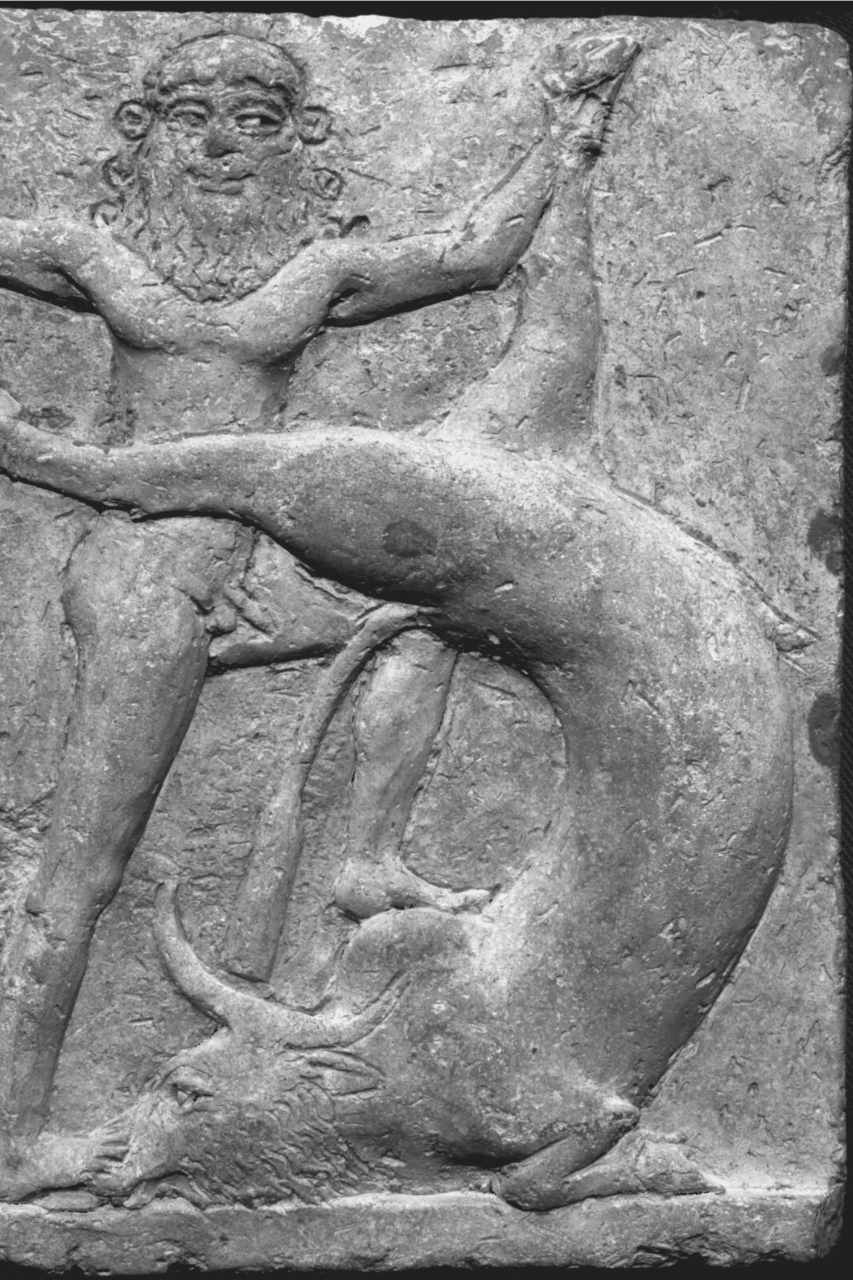
You may wonder about Ereshkigal’s many relationships with gods, but one worthy of attention was her love story with Nergal. This love affair commenced when she realized her seclusion from other gods related to her, including Anu, Enlil, and Ea.
The heavenly deities decided to send her an emissary, asking her to send her attendant to claim her part in the banquet in heaven.
As expected, she dispatched her trusted messenger, Namtar, to heaven. It took him a long time to climb the long stairway to the gates of heaven, and he was graciously welcomed by other gods, except for Nergal, the god of war and diseases. It was a disrespectful act on the part of Nergal, which other gods condemned.
The other gods commanded Nergal to go down to the underworld to comply with the reparation of his misdemeanor. Ea sent along seven demons to guard him, together with instructions to refuse any hospitality or generosity of Ereshkigal.
The most important instruction was to avoid any sexual attempt with the goddess Ereshkigal.
Filled with hope to simply comply with his tasks, Nergal succumbed to Ereshkigal’s allure when he saw her stripping for her bath. Captivated by her naked body, Nergal started passionate lovemaking that lasted for six days, until he left her asleep to go back to his heavenly throne. When Ereshkigal found herself deserted, she was desolated and furious.
The Punishment of Nergal
Her desperate wailing reached the heavens as she narrated her unfortunate fate as the young gatekeeper of the underworld, away from her loved ones. You could feel her grief and shattered spirits as she groaned with heartache.
Still unsatisfied with her message to the gods, she revealed her threatening words to bring back all the dead to life and surmount the living.
Nergal, on his part, fled to the heavens only to find that the gates were closed for him. He finally returned to the underworld, but he seized the throne from Ereshkigal, making himself the king of the entire dark kingdom, while Ereshkigal became the queen.
This encounter ended in passionate lovemaking, which Ereshkigal embraced with her deepest love for Nergal. She promised to send him back to the upper world with his demons with a vow that he would return to her and stay for the next six months.
The presence of Nergal is an allegory of pride and humility. His pride encompasses disgust of those who are lower in rank, but he also displays humility as he accepted his defeat and returned to the underworld.
His attitude was very human-like, and you could see this behavior in the real world. Many want to stand out at the expense of others, but not many would like to accept defeat. You can discover more about humanity in the life of Ereshkigal in her succeeding encounter with Inanna.
Ereshkigal and Inanna
Ereshkigal had given so much time and effort in the underworld, yet nobody could help her because she lived in a place of no return. Other gods, even those who were intimately related to her, could not visit her either.
This is the reason why she had multiple relationships with other gods. You could probably understand her severe boredom in the underworld!
Although ancient people feared her presence, she received countless compliments for her virtues, as opposed to her sister, Inanna or Ishtar, the goddess of sexual love and war.
You can unravel the works of Ishtar as many regarded her as selfish and a goddess of contradictions. She is presented with a complex personality, which revolved around death, disaster, and enmity.
First, she was the mastermind behind the death of Ereshkigal’s first husband, Gugalanna. This event caused much havoc in the relationship with her elder sister, causing Ereshkigal to kill her. However, she was resurrected with the help of her uncle, Ea, as she already preplanned that meeting with the help of other demigods and her demons.
Similar to Venus in Greek mythology, who instilled longing for love, Ishtar was delighted with physical love. Hence, she protected the prostitutes in her cult worship.
As the Queen of the Universe, she is presented as self-serving. She is always fulfilling her desires even at the expense of others. She didn’t care much whether her actions would mean chaos. And indeed, her actions brought chaos to humankind.
The Plague of Infertility
For example, the negligence in her duties caused chaos in the living world. There was a formidable plague of infertility among living things, both animals and humans. Animals refrained from procreating, and even humans stopped having children.
The gods in heaven were worried about this situation, but they believed Ishtar had to be responsible for her misdeeds. They were unwilling to settle the feud without punishing the careless goddess. However, you would wonder who bravely broke the silence. It was her uncle, Ea, who interceded to settle the bitter hostility between the two goddesses.
Ishtar was released, but she had to go with a replacement. Upon her return to her abode, she found her husband, Dumuzid or Tammuz, the god of grain, sitting complacently on her throne. Infuriated, she suddenly grappled him and pulled him down to the underworld as her replacement for six months.
You now understand why there is winter for six months: it was the aftereffect of her rage. In the end, Ereshkigal won the battle as she kept her throne in the underworld and saved the land of no return.
Some mythology experts explain that the sisters were a perfect example of opposing poles. You can recall Ishtar as the Goddess of Heaven, whereas her elder sister, Ereshkigal, is the Goddess of the Underworld.
They fought hard out of jealousy and greed, which paved the way to the death of Ereshkigal’s husband, Gugalanna, and the exile of Ishtar’s husband, Dumuzid, to the underworld for six months every year. This tragic story would symbolize the natural attitude of man. Although we have everything, we still want more in a way that sometimes harms others.
Ereshkigal’s Legacy
Ereshkigal presented a significant lesson to the Mesopotamians, whose faith in gods and deities was sincere. She is an embodiment of the truth about the afterlife. Her story was an affirmation that people will die at the right time and pass through a long journey in the underworld.
Death, as you have known since the beginning of the world, is not something to be afraid of. It is a natural phenomenon of generation and degeneration of living things. Ereshkigal was not a horrifying goddess of death.
Everyone recognizes her as the symbolic representation of life and death, closely intertwined. Her feud with Ishtar was another allegory that explains the changing of seasons. The six-month stay of Dumuzid in the underworld represented winter.
Meanwhile, Ereshkigal’s son with Enlil, the god Namtar, was her divine attendant in the underworld. He propagated diseases and demons and was in control of the pests that could wreak havoc on humans.
He could command evil deeds that influence humans. You must also know that the underworld was not only the place of Ereshkigal. According to Mesopotamian mythology, countless demons also settled there.
Conclusion
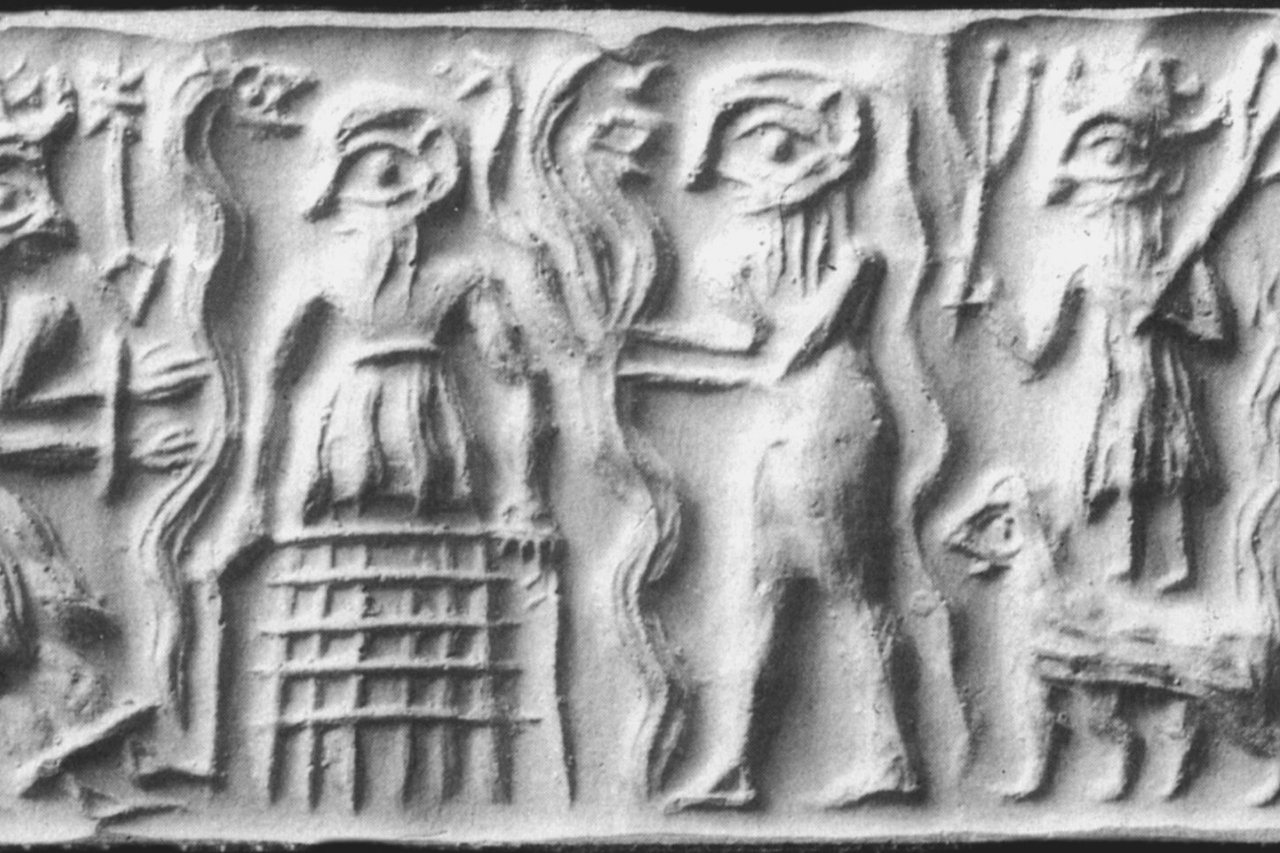
Ereshkigal was the renowned goddess of death in Mesopotamian mythology. Her influence on the life of the ancient people was enormous, considering her power over the people’s final destiny.
She was symbolized by wood, lioness, and lion-cub, alongside the horse of death, the river of death, boat, and a rainbow garden, which all represented the message that you would finally meet your end on earth at the appointed time. Her symbolic number was seven, and this was a symbol of wholeness for the ancient Mesopotamians.
After several relationships, Ereshkigal found her real love with Nergal, the God of War and Diseases, who came to her realm and abandoned her in the first part of their affair. He deserted her only to find himself blocked at the gates of the heavens. Knowing that he couldn’t enter the world of gods for his misdeeds, he came back to Ereshkigal, but he demanded to be the king of the underworld.
Nergal and Ereshkigal jointly controlled the underworld with their power. You should not forget the presence of Inanna, the younger sister of Ereshkigal, who was in constant battle with her.
Inanna or Ishtar was the goddess of war and sexual love, such that she was favored by the ancient purveyors of prostitution. She had a strong following in Mesopotamia, which was probably the reason why she was crowned the Queen of the Universe.
Ereshkigal had a fearful image because she symbolized death, but her real personality was an embodiment of kindness, as represented by her weeping each time she would take someone’s life to face his death.
Her patience while living in the underworld was another virtue to let you know that the afterlife was not a place of condemnation and eternal suffering. Isn’t it worth realizing that your knowledge about the truth behind the afterlife would give you peace with death?