Giant 100 Eyes – Argus Panoptes: Guardian Giant
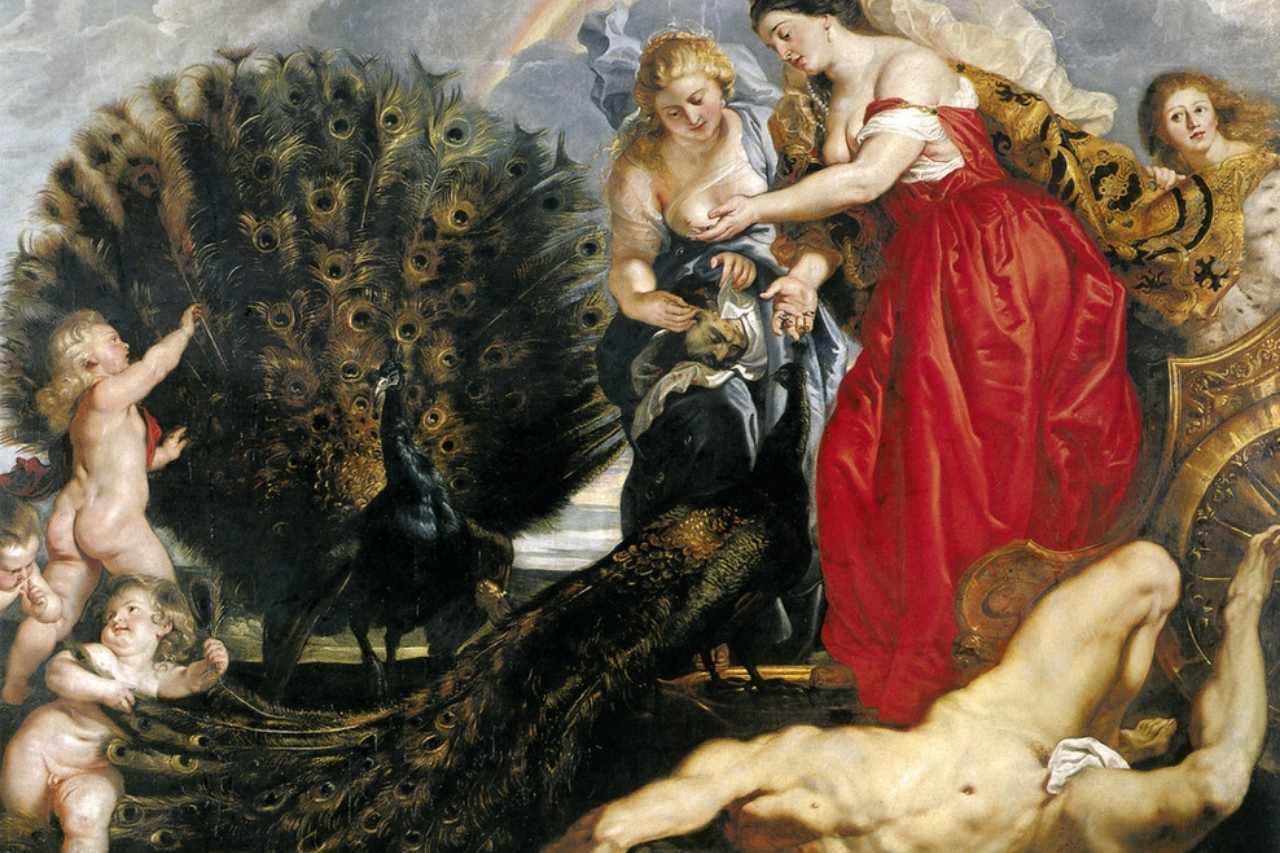
Giant 100 Eyes – Argus Panoptes, as stated was a giant with 100 eyes in Greek mythology. The mythical giant with 100 eyes was also very famous because he was the servant of Hera and the guardian of Io, the love interest of Zeus.
In the end, Hermes slew Argus and that is the end of his story. In the following article, we bring you all the information on this giant leading up to his death and its relation to the Olympian gods and goddesses.
Who Was Giant 100 Eyes – Argus Panoptes?
Giant 100 Eyes – Argus Panoptes was a giant with unique qualities, he had 100 eyes. It is impossible to imagine the view with 100 eyes but Argus Panoptes was not a human, but a giant with 100 eyes and a beastly body and gait. He was the servant of Hera.
Origin of Argus Panoptes
Argus Panpotes was a giant with 100 eyes in ancient Greek mythology. The word Panoptes means the all-seeing which refers to his 100 eyes. According to the literary pieces of evidence, Argus was the son of the Argive prince, Arestor, and the Mycenae princess, Mycene. Mycenae was the daughter of Inachus who was the first king of Argos and also after which the river Inachus was named.
Arestor was a prince of Argos and the son of Phorbus. He was a legendary prince of the city and a beloved warrior of the city. His marriage to Mycene was a celebrated one where the people of Argos rejoiced for many days and nights. Everything was going great until they had their son, Argus Panoptes who was unlike anything that the people had ever seen.
Argus was born with 100 eyes on his head. This extraordinary baby was born to the royalty of Argos who did not want him as he was not a normal-looking baby. Arestor and Mycene were convinced to give up Argus and leave him to the gods, so they did. Remember that Argus was left by his parents, and after which he was taken by Hera, the queen of the Greek gods and goddesses.
Argus Panoptes: Servant of Hera
Argus Panoptes is well known for his relationship with Hera and also with Io. He was ultimately killed by Hermes in a deadly fight over a nymph. Furthermore, the extraordinary characters in Greek mythology do not have a happy ending like some of the gods and goddesses.
Hera was the wife of Zeus and the queen of Mount Olympus. She was well known all around the universe. When she heard of a baby with 100 eyes being given up by his parents, she wanted him for herself. Hera bought Argus and took him to Mount Olympus. Argus grew on the mountain in between the gods.
Hera gave him everything and in return, Argus pledged to live his life as the servant of his master, Hera. He did everything she asked him to do. He never questioned her integrity nor did he ever say no to her. He was the most obedient and trustworthy servant in Hera's life.
Hera and Zeus were a couple of siblings and also partners. Due to Zeus' infidelity and unfulfilled lust, there was always an ongoing fight and war between the two. Argus saw that and always wanted to help Hera in whatever he could because he felt bad for her. Nonetheless, it is key to keep in mind that Zeus on the other hand had no shame about what he was doing and how he was treating Hera, he only wanted to water his lust.
Physical Appearance of Argus Panoptes
Argus Panoptes was a giant so all of his features and body parts were bigger than a normal human being. His arms and legs were humongous and his voice was very loud and scary. He had no hair, just a bald head. His features were very worn out and saggy even though he was not of much age. He did not wear many clothes as he was a giant.
The most interesting thing about his physical appearance is the group of eyes on his head, 100 to be exact. Argus was born with 100 eyes all of which are fully functional and working. Now we cannot be sure how he manages to keep them but in the whole of Greek mythology, no other giant or creature has had this many eyes and was adopted by the queen of the Olympian gods.
As most giants have horns on their heads, it is quite unclear if Argus Panoptes had them too. The possibility of Argus having horns might be less because of the 100 eyes.
Characteristics of Argus Panoptes
Argus Panoptes the giant was fairly feared among the people but on Mount Olympus, he was just a servant of Queen Hera with 100 eyes. His main job was to do anything and everything that Hera asked him to do. He did however have a normal and luxurious life as compared to the other giants who were not in service of Hera. Hera treated him like a servant but cared deeply for Argus Panoptes as she had seen him grow up in front of her eyes.
Argus was known to be helping and caring which opposes the normal characteristic behavior of his kind but he was different. He lived in gratitude to Hera and never stopped thanking her for what she did for him. After Argus' family gave him up, Hera was his family and he knew that. So before questioning or arguing about any of Hera's decisions, Argus just obeyed.
Giant 100 Eyes – Argus Panoptes: A Hero
Argus Panoptes is frequently mentioned in the Homeric poems that include the Iliad and the Odyssey. We have now established that Argus was the servant of Hera but there is more to his relations and stay on Mount Olympus. He was a known hero up there because of his unbreakable strength and bravery.
As Argus lived among gods and goddesses, he was a known friendly giant to them. They were like his people and he loved and respected them and surely would do anything for them. So when there was a need for someone to slay the giant serpent, Argus stood up. Argus slew the ferocious monster, Echidna.
Echidna was the wife of Typhon and was a serpent that was terrorizing Argos. The gods were impressed by the sheer will of Argus to defeat the monster. He killed the monster successfully and freed Argos of the calamity. Therefore, he was regarded as a hero not only among the mortals but also the immortals.
Giant 100 Eyes – Argus Panoptes With Hera and Zeus
Hera was the wife of Zeus and the queen of the Olympians. Zeus was a known infidel. He would casually and frequently impregnate mortals and immortals for his own pleasure because no one could fulfill his lust. There had been countless times when Hera had caught Zeus with other women and men but every time she let him go and punished the other party. Moreover, at the time, Zeus had mingled with almost every sort of creature in the universe.
Nonetheless, it is key to remember his latest endeavor was to create a new order by getting heirs from mortal women. One of such women was Io, a princess from Argos. Zeus was attracted to her to the point of no return. He covered the whole world with a blanket of thick clouds so that Hera could not see what he was up to or where he was.
Hera cleared the clouds and could see Zeus with a woman. She appeared before them and as soon as Zeus saw her, he turned Io into a heifer. In addition, he swore to Hera that it was just a heifer and not Io as she claimed but Hera knew better. She chaired the heifer and asked Zeus to leave so he did.
Guardian of Io
Hera knew she was the love interest of Zeus, which is why she could not leave her in the charge of just anyone. She appointed Argus Panoptes as the guard of Io. Without questioning Hera or any regard for his own safety, Argus stood as a guard for Io. Hera had chained Io to a branch of a sacred olive tree at the Argive Heraion.
The other reason Hera appointed Argus Panoptes as the guard for Io was because of his eyes. As Zeus was the king of Olympian gods, he had many helping hands of the other gods and goddesses.
Nonetheless, Hera wanted someone who would stay awake even when he was asleep, someone with a wide view of sight so he can look in all directions at one time. However, it is key to note that there was certainly no better choice than Argus Panoptes for such a job.
Argus Panoptes decided that he will not let Hera down and would stand guard if it was the last thing he did in his life. He would stand still right beside the heifer and would not move. He would keep his eyes wide open to look for any enemy that might be approaching them. With time, the heifer changed back into Io, and Hera's claim was proved.
Io and Zeus
After the capture of Io, Zeus was in great despair. He blamed himself for what had happened to her and because of that, he couldn't sleep well at night. In all of this, not once did he feel ashamed for the infidelity that he was committing, which was a turning point. In addition, he was so repulsed by Hera that her misery meant nothing to him anymore.
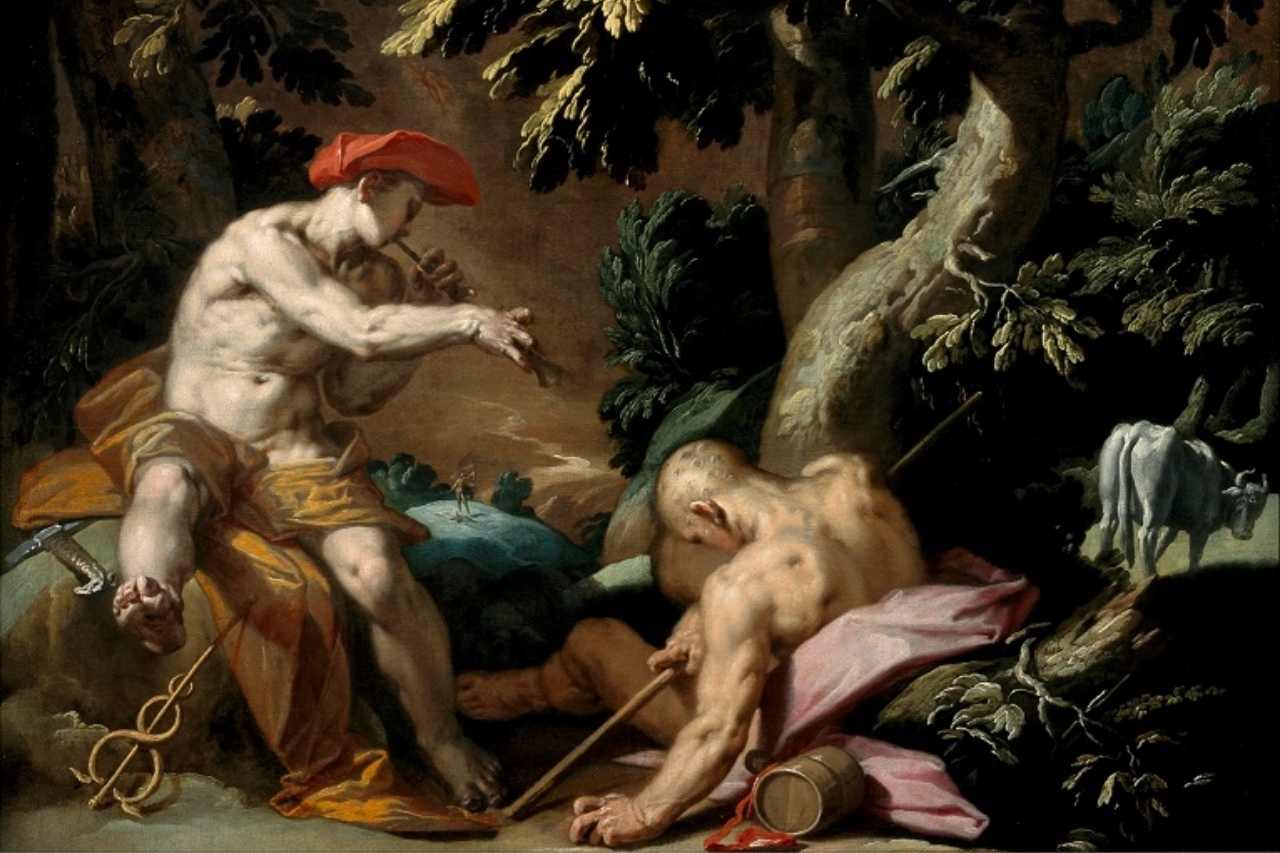
Zeus planned on freeing Io from the olive tree. He knew Argus was guarding Io and he had no choice but to kill him. For this Zeus asked his trusted ally, Hermes who was also the messenger of the gods. Hermes disguised himself as a sheep and put Argus to sleep with his magical charms.
As soon as Argus went to sleep, Hermes cut his head off with a rock. Argus died there and then. This was the last service he provided to Hera. Hermes took the head of Argus Panoptes back to Zeus who rejoiced.
Who Killed Argus?
The death of Argus is also very vital in Greek mythology because this bloodshed was the first blood spilled in the time of the generation of the new gods, the Olympian gods. Argus died under a magical spell. If Hermes had come in front of him by fair means, he would not have had any chance to win. Hence, things would have been different, and the consequences would have been different.
After learning what had happened to her servant, Argus, Hera screamed in pain and anger. He was more than a servant to her, and Zeus knew that. He could have spared Argus but he wanted to inflict pain on Hera as she did when she took Io away and chained her. Hera and Zeus played a treacherous blame game with each other and in this game, a lot of innocent souls lost their lives.
With the death of Argus, Io was now free. She was transferred to the Ionian sea, a sea that Zeus named after her beloved. Ther Io spent her remaining days and bore Zeus' child. Both the child and the mother, Io lived there and Zeus visited them whenever he wanted.
The Lineage of Giant 100 Eyes – Argus Panoptes
While being Hera's servant, Argus Panoptes fell in love with the naiad, Ismene. Ismene was from Argos and was a beautiful maiden. Together, Argus and Ismene gave birth to Iasus, who later became the king of Argos.
There are many different Iasus in Greek mythology so there is a slight conflict of agreement on whether this Iasus is the son of Argus and Ismene or there is another Iasus who is their rightful son. Nevertheless, Argus Panoptes, the giant with 100 eyes on his head, had a lover and a son.
The untimely death of Argus indeed left Ismene in despair. Apart from Iasus, no other son or daughter of Argus is known. Some theories of siblings of Argus do exist but they were not giants but normal human-shaped creatures.
FAQ
What Is the Importance of Argos in Greek Mythology?
Argos was one of the most important cities of Greek mythology because of its capacity and also the storylines that always had an important character from Argos. Furthermore, Argos is known for its horses used by the mortals and the immortals in mythology.
Who Was the Queen of the Titans?
Rhea, the wife of Cronus and the mother of Zeus, Hera, Hestia, Hades, Demeter, and Poseidon, was the Queen of the Titans. She was also the goddess of fertility, generation, and motherhood. So she was the first queen of the gods and goddesses before Hera.
Conclusions
Argus Panoptes was a giant who worked under the orders of Hera, the queen of the Olympian gods and goddesses. Hera was always in a fight with Zeus over his infidelity and this fight took the lives of many innocent souls just like Argus Panoptes. Greek mythology has never been kind to the creatures it created. Following are some of the points that will conclude the story of Argus Panoptes, the giant with 100 eyes on his head:
Argus was born to the Arestor and Mycene, the royalty of Argos. His parents had to give him up because he was born with 100 eyes and as the King of Argos, Arestor could not have a deformed heir to the throne.
Hera took in Argus after Arestor and Mycene gave him up. She took him to Mount Olympus and Argus started living among the Olympian gods and goddesses.
Zeus was in a relationship with Io and Hera found out. Io turned into a heifer and Hera chained her to a sacred olive tree. She asked Argus to stand guard there and so he did.
Zeus asked Hermes to free Io. He killed Argus by disguising himself as a sheep and freed Io. Io was then taken to the Ionian sea where she lived the rest of her life.
Argus had left his wife, Ismene, and a son, Iasus behind, who later became the king of Argos.
Here we come to the end of the story of Argus Panoptes. His character is among the most peculiar ones in Greek mythology largely because of his unique appearance and origin. We hope you found everything that you were looking for.