Greek Goddess of Nature: The First Female Deity Gaia
Greek goddess of nature Gaia
The most widely known Greek goddess of nature is Gaia. She might be the most known but she is not the only one. There are many gods and goddesses of nature but here we discuss Gaia and her supremacy. Read ahead as we take you through the life of Gaia, the goddess of nature in Greek mythology.
Greek Goddess of Nature
Greek mythology describes more than one goddess of nature. Furthermore, the term nature has many different domains in it like water, Earth, horticulture, agriculture, etc. This is the reason why many different gods and goddesses come under the banner of nature but the one true and most primitive goddess of nature is Gaia.
The other gods and goddesses of nature come under her jurisdiction and also in rank because she is the bore them all. To look at the world and workings of Gaia, we must start from her origin and make our way to her abilities, powers, and even her history.
Gaia's Origin
In Greek mythology, the word Gaia or Ge means land or Earth. Gaia is one of the primordial Greek deities who is widely known as the God of Earth and also as the ancestral mother of all life. Therefore, she is one of the most important deities in mythology.
The origin of Gaia is very interesting. She came into being from Chaos, the god before anything and everything. Soon after she breathed life, she gave birth to Uranus, the sky god. She bore an equal that would cover her from all sides. After Uranus, Gaia and her equal bore all the Titans including the giant one-eyed Cyclopes, Steropes (Lightning) and Arges, then the Hecatonchires: Cottus, Briareos, and Gyges.
Furthermore, Gaia also bore the Greek gods Ourea (Mountains) and Pontus (Sea) without Uranus but with the power of love within her. Gaia had ultimate supremacy over everything. She was the embodiment of Earth, life, and consequently nature. This is how the Greek world of gods and goddesses came into being.
Gaia and Titanomachy
Uranus started hiding their kids from Gaia. He wanted to keep them for himself so that they would only be loyal to him and obey him. When Gaia found out about his plan, she created a grey flint sickle and asked Cronus (titan of time and harvest), her son, to help her.
At this moment, however, Cronus castrated his father, Uranus, but Gaia used Uranus' spilled blood to create giants and Meliae while his castrated parts bore Aphrodite.
As Cronus had learned about his faith that one of his offspring would kill him, he ate all the offspring he had had with his sister, Rhea. However, when Rhea was pregnant with Zeus and Cronus came to eat him too, but through her wisdom, she gave him a rock wrapped in cloth rather than Zeus. In the end, Zeus was saved and grew up to defeat the Titans and free and away from his Olympian siblings.
Therefore, Titanomachy is the battle between the first generation of gods, the Titans, and the next generation of gods, the Olympians. Titanomachy occurred because the goddess of nature bore the Titans and then they bore the Olympians. The battle was unlike anything this world had seen before. In the end, the Olympians won and took control over the Titans.
Gaia's Visual Depiction
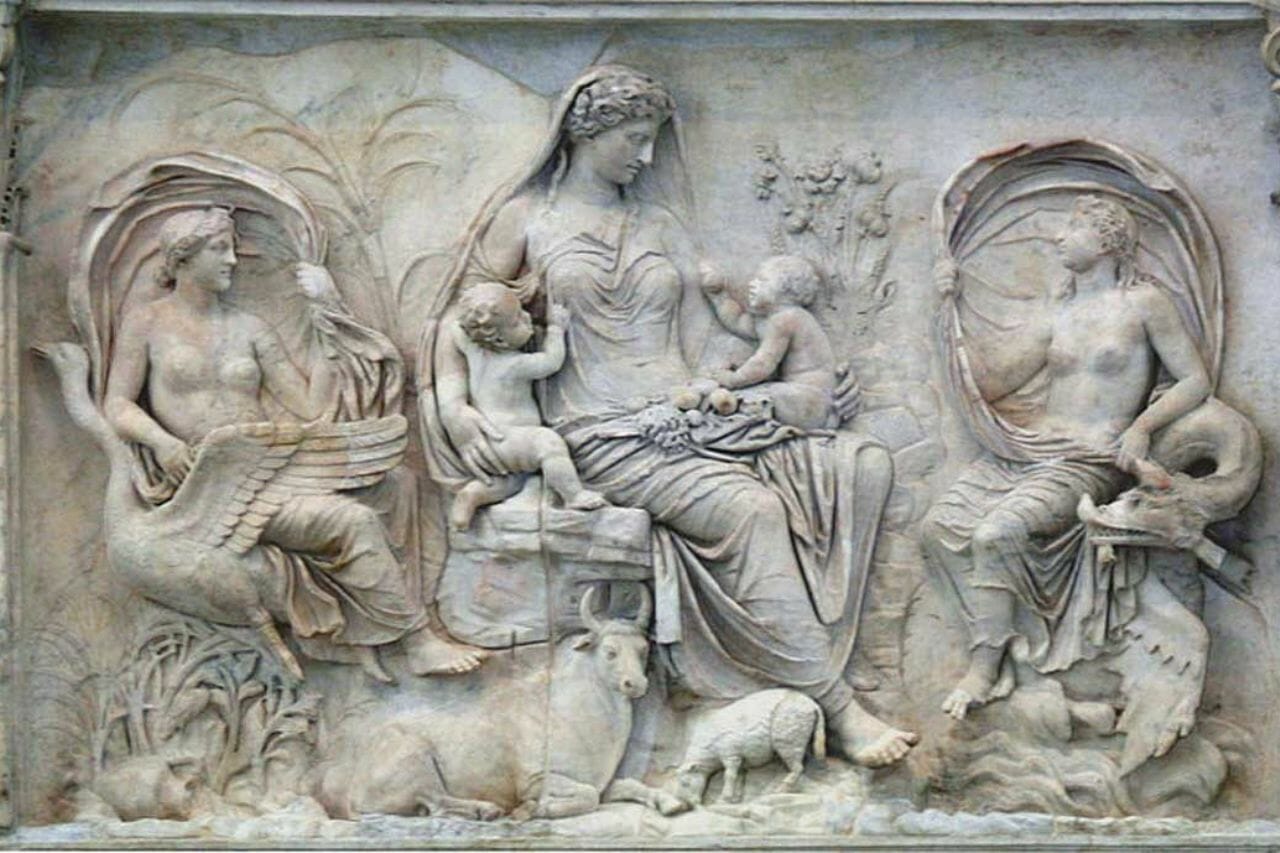
Gaia, the goddess of nature is famously depicted in two ways. In the first way, half of her body is shown above the Earth and the other half below it. She is seen handing over a baby, probably Erichthonius (the future king of Athens), to Athena for foster care. Even though Gaia is the embodiment of Earth, she is shown to have long black hair with very modest features.
The other way Gaia is represented is in an ancient painting by an unknown painter. She is seen sitting surrounded by many infant gods, fruits of Earth, and some primitive humans. This representation is quite positive and shows the ancestral prowess of Gaia in a beautiful manner.
Other than the two ways mentioned of depicting Gaia, it is fair to say that she is always shown to be caring and loving towards her children. Even though her justice is unmatched but it is important to note that it is that justice that has brought many gods and goddesses to their knees. For example, she did not like the way Zeus treated his children so she sent the Giants his way.
Gaia Known as The Mother Nature
Gaia is titled Mother Nature among many of her other names. Many different schools of thought exist about whether Gaia is a goddess of nature or is she only an embodiment of Earth. To make it simpler to understand think of Gaia as the cradle of nature. She is the embodiment of Earth which houses all nature and humans.
Gaia promises wise wealth and health for everyone who is kind to nature and to fellow human beings. She always had motherly instincts which made her one of the most cherished goddesses of all time in mythology.
Gaia had the power of nature. She could change the weather, bring rain, hide the sun, make the flowers bloom, make the birds sing, and much more. Whatever the other gods or goddesses could do separately, Gaia could do it all. That's what made her so incredibly special.
Gaia and Her Worshippers
Gaia was worshipped massively in Greek culture. She was given the title of Anesidora which means giver of gifts. Her other epithets include Calligeneia Eurusternos and Pandoros. The reason for her popularity among worshippers was her primordial goddess status.
They wanted to please and wanted her to be pleased with them. It is clever to note that they prayed and worshipped her in specially built temples all around Greece. Through it all, Gaia's cult was famous for being kind and giving, exactly like their God would have done.
Even to this very day, many different cults exist in Greece that worship and pray to Gaia, as she was the goddess of nature and their ancestral mother. However, some of these cults are hidden and some practice openly due to different perspectives.
Nonetheless, these cults are famous for helping people in need and for sponsoring refugees by showing kindness and generosity. It is fair to say that this may be the reason why many people donate hefty amounts to such cults.
Other Greek Goddess of Nature
As discussed earlier, Gaia is the ancestral mother and goddess of nature but she is not the only one. Many different gods and goddesses of nature came from the Titans and the Olympians she created. Following is a list and details of some of the other famous gods and goddesses of nature:
Artemis
Artemis is one of the most celebrated deities in ancient Greek mythology. She was conceived as a result of the union between Zeus and her daughter, Leto. She is also the twin sister of Apollo. She was highly worshipped and the Temple of Artemis is one of the seven ancient wonders of the world, located in present-day Turkey.
Furthermore, Artemis is the goddess of the dark, hunt, the light, the moon, wild animals, nature, wilderness, fertility, virginity, childbirth, young girls, and health and plague in women and childhood.
She was heavily celebrated also because of her virginity and chastity, since these were why she was symbolic. She was the patron of wild animals which is why she is sometimes depicted standing next to a deer and other ties while wielding a bow and arrow.
Demeter
Demeter is the ancient goddess of harvest and agriculture. Demeter was the second child of Titans Cronus and Rhea along with her siblings Zeus, Hera, Poseidon, Hades, and Hestia. She was very famous in all of Greece and was worshipped thoroughly. People worshipped her because they believed that by worshipping Demeter and keeping her happy, they would have exponential growth and harvest.
Persephone
Persephone is the daughter of Demeter and Zeus. She is also known as Cora or Kore. She became the queen of the underworld after Hades kidnapped her but before that she was the goddess of spring and vegetation. She was full of life and helped the humans in every way possible.
Persephone and her mother, Demeter were part of the Eleusinian Mysteries. It was a cult that worshipped Demeter and Persephone in hopes of an ever-green afterlife and a successful life on Earth. In the city of Athens, the rituals celebrated in the month of Anthesterion were in honor of Persephone. The Roman equivalent of Persephone is Libera.
Pomegranate, seeds of grain, torch, flowers, and deer are the symbols by which Persephone is most frequently visualized as.
Hegemone
Hegemone is derived from the ancient Greek word Hegemon which means leader, queen, and ruler as a direct translation. However, Hegemone was the goddess of plants, flowers, and all things growing from the grown. Her power was to make the flowers bloom, thrive, and produce nectar. In other words, she made the flowers look pretty, beautiful, and fragrant. In addition to her might, she also made the flowers bear fruits and maintain their beautiful shape and color.
Even though Hegemone was the goddess of plants and flowers, some sources also associate the weathers of spring and autumn with her. They believe that Hegemone changed the weather by changing the colors of leaves and flowers. Generally, she is known to be another famous goddess of nature in the Greek platoon of gods and goddesses.
Pan
The mythology of the Greeks considers Pan the god of shepherds and flocks. He is known to have a very close bond with the nymphs and is famously known as their companion. The Greek god Pan is half human and half goat with hoofs and horns. In Roman mythology, Pan's counterpart is Faunus.
Faunus and Pan became significant figures in the Romantic movement in Europe in the 18th and 19th centuries. The god Pan was worshiped throughout Greece. He was most famous among the shepherds who prayed to him for the health of their flock.
Conclusion
Gaia is the most famous Greek goddess of nature but she isn't the only goddess who is associated with nature. This article covered everything there was to know about Gaia and her world. We also described some other important deities which are associated with nature in the mythology of the Greeks. Following are the important points from the article:
Greek goddess of nature the mother earth
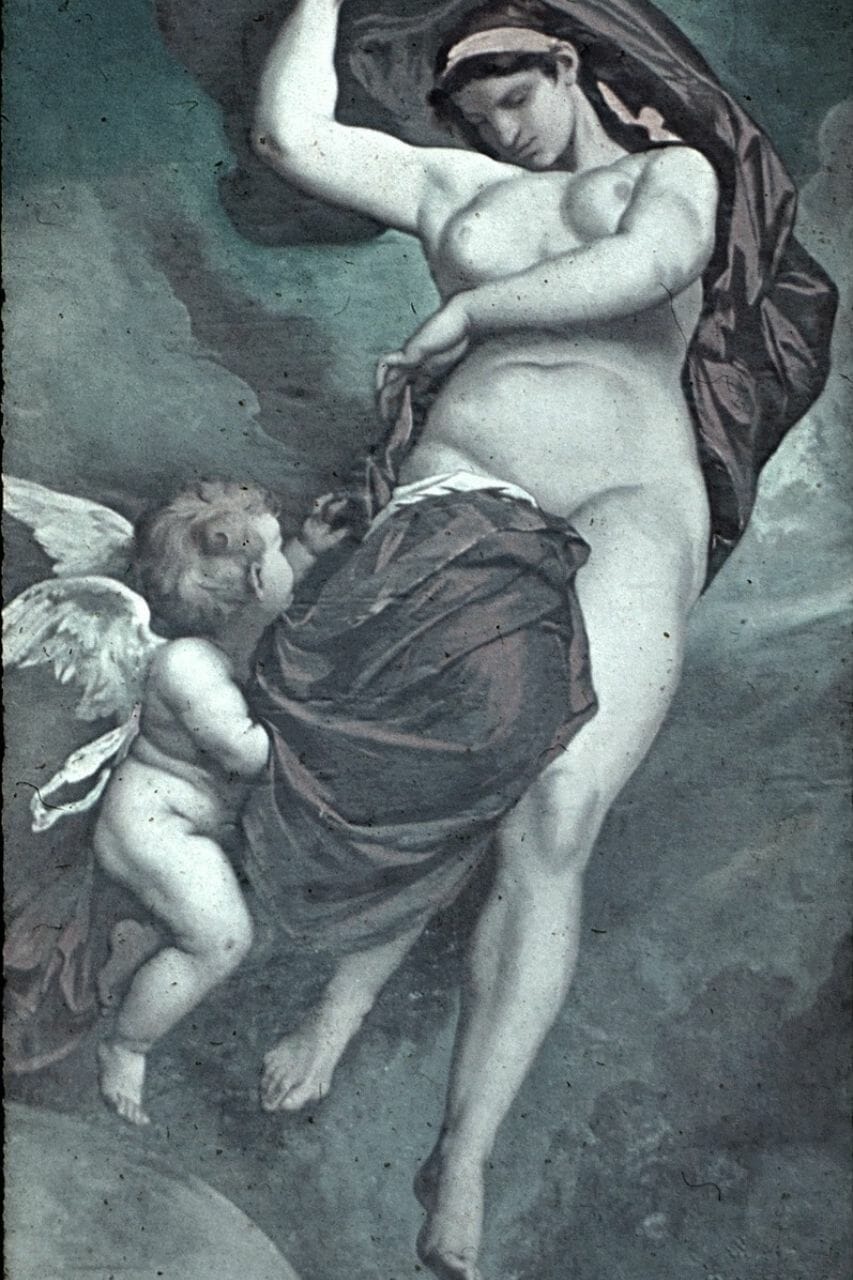
Gaia is one of the primordial Greek deities who is widely known as the God of Earth and also as the ancestral mother of all life. She is also sometimes referred to as mother nature. Her powers are immaculate and no other goddess can be put above her.
Gaia bore the Titans and the Titans bore the Olympians. Titanomachy is the battle between the predecessor Titans and the successors Olympians. The battle can be accredited to Gaia as she created everyone but she had good intentions at heart.
The other important deities that are associated with nature are Artemis, Demeter, Persephone, Hegemone and Pan. These deities were in a separate league from Gaia and had specific nature controlling abilities.
Gaia can be described best as the embodiment of Earth as she was also the Goddess of Earth.
Here we come to the end of the article. We have gone through the extraordinary origin and world of Gaia, the ultimate goddess of nature and also talked about some other gods and goddesses of nature in the mythology. We hope you found everything that you were looking for.