Titans vs Olympians: The War for Supremacy and Control of the Cosmos
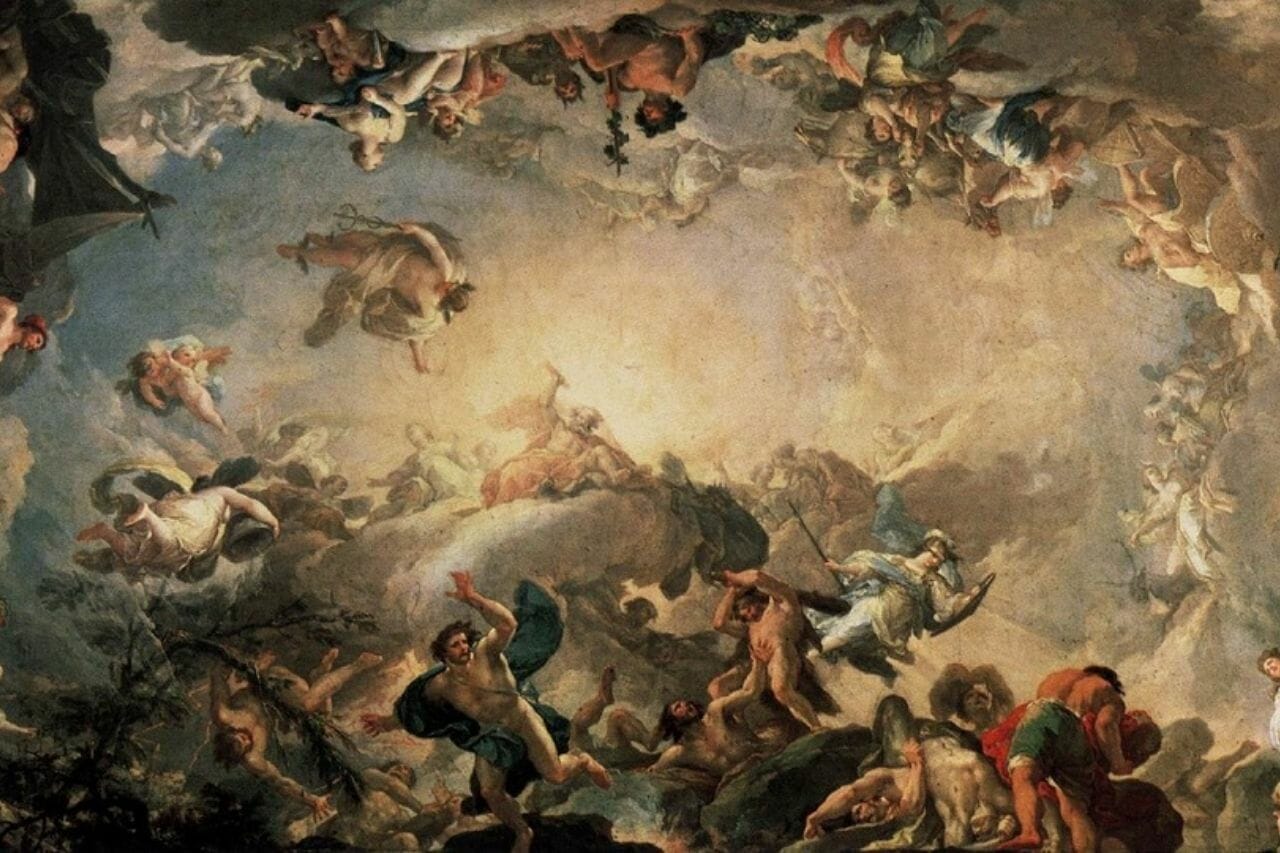
The Titans vs Olympians, also known as Titanomachy, was a war fought to establish supremacy over the cosmos. The Olympians, led by Zeus, attacked the Titans, led by Cronus, which resulted in a series of battles over 10 years.
However, most of the records or poems about the various battles are missing except for one, Hesiod's Theogony. To know what started the Titan battle, how it ended and which of the sides emerged victorious, keep reading.
Titans vs Olympians - all you need to know
Titans vs Olympians Comparison Table
Features | Titans | Olympians |
|---|---|---|
Leader | Cronus | Zeus |
Battle | Lost | Won |
Abode | Mount Othrys | Mount Olympus |
Number | 12 | 12 |
Motive for Titan-battle | Establish dominance | Vengeance |
What Are the Differences Between the Titans and the Olympians?
The main difference between the Titans vs Olympians was in their sizes – the Titans were gigantic compared to the Olympians. The Olympians were third-generation gods who occupied Mount Olympus while the Titans were second-generation deities who lived on Mount Othrys. The Olympians outnumbered the Titans which resulted in their victory.
What Are the Titans Best Known For?
The Titans are famous for succeeding the Primordial gods which were Chaos, Gaia, Tartarus, and Eros. Later, Gaia gave birth to Uranus, who was overthrown by his son, Cronus. The Titans are also famous for birthing the Olympians as illustrated by the Titans and Olympians family tree of ancient Greece.
The Birth of the Titans
The Earth also known as Gaia was among the first generation of gods (primordial deities) also known as protogenoi. Gaia then gave birth to Uranus, the primordial god of the Sky, without male assistance. When Uranus was old enough, he slept with his mother, Gaia, and their union brought forth the Titans, the Hecantochires, and the Cyclopes.
The Titan Gods
According to Titan mythology, they numbered twelve, six males and six females, and they were they ruled the cosmos after the primordial gods. The male Titans were Crius, Hyperion, Coeus, Iapetus, Oceanus, and Cronus while the females were Phoebe, Theia, Rhea, Tethys, Mnemosyne, and Themis.
The Titans Overthrow the Primordial Deities
The Titan god Cronus was the last to be born after whom both Gaia and Uranus decided not to have any more children. However, Gaia became angry when her husband imprisoned her other children six children, the Cyclopes, and the Hecantochires, deep in the earth. Thus, she asked her Titan children to help castrate their father Uranus. All the Titans refused except their last born, Cronus, who agreed to do the evil deed.
The ambitious Cronus decided he wanted to rule the cosmos just like his father, thus he agreed to the plan to overthrow him. Gaia armed her son, Cronus, with an adamantine sickle and hid him awaiting the arrival of Uranus. When Uranus came to Mount Othrys to lay with Gaia, Cronus came out of his hiding and cut off the genitals of his father. Thus, Cronus, the Titan god of time, became ruler of the cosmos.
Soon after he castrated his father, Cronus freed the Hecantochires and the Cyclopes but went back on his word and imprisoned them again. This time he sent them to the depths of Tartarus, the deep abyss of torment. However, before he passed, Uranus prophesied that Cronus would also be overthrown in the same way. Therefore, Cronus took note of the prophecy and did all he could to prevent it from happening.
What Are the Olympians Best Known For?
The Olympians are best known for defeating the Titans during the battle for supremacy of the cosmos. They were the last deities in the succession of Greek gods and they successfully defended their rule when the Titans mounted another attack, according to other versions of Greek mythology.
The Birth of the Olympians
When Cronus castrated his father, he threw his seed into the sea and from that sprung the goddess of love, Aphrodite. Some of his blood also spilled on earth and gave rise to the Erinyes, Meliae and the Gigantes. Cronus took his sister, Rhea, as his wife and son, and the couple started having children (the Olympians). However, Cronus remembered the prophecy and swallowed the children each time they were born.
Rhea got tired of what her husband was doing to their children, so she saved one of her children, Zeus, from their father. When Zeus was born, Rhea hid him and rather wrapped a stone in a blanket and gave it to Cronus to eat. Cronus suspected nothing and swallowed the stone, thinking he was eating his son, Zeus. Rhea then took Zeus to the island of Crete and left him with the goddess Amalthea and the Meliae (ash tree nymphs).
The Olympian Gods
The mythology tells us that there were twelve olympian gods in number, as they were Zeus, Poseidon, Hera, Aphrodite, Athena, Demeter, Apollo, Artemis, Hephaestus, Ares, Hermes and lastly Hestia who was also known as Dionysus.
The Olympian's Battle
Zeus grew up and served in his father's court as a cupbearer and won the trust of his father, Cronus. Once Cronus trusted him, Zeus put into action a plan to emancipate his siblings from the belly of his father. He was aided by his wife, Methis, who gave him a potion that would cause Cronus to vomit his children. Zeus poured the drug into a drink and served Cronus who threw up all the children of Rhea that he had swallowed.
The Olympian's Strength
Zeus then went to Tartarus and set his other siblings, the Hecantochires and Cyclopes, free. He banded his siblings together, including the Cyclopes and Hecantochires, and waged war against the Titans to overthrow them. The siblings of Zeus included Poseidon, Demeter, Hades, Hera, and Hestia.
The war began and the Hecantochires with their 100 hands threw large boulders at the Titans causing severe damage to their defenses. The Cyclopes contributed to the war by forging Zeus' famous lighting and thunder. Cronus convinced all his siblings to join in the fight against the Olympians except Themis and her son, Prometheus. Atlas fought bravely alongside his brother, Cronus, but they were no match for the Olympians.
The legendary war in Greek mythology lasted for 10 years until the Olympians defeated the Titans and wrestled power and authority from them. Zeus sent some of the Titans to prison in Tartarus under the watchful eyes of the Hecantochires. As the leader of the Titans, Zeus punished Atlas to hold up the sky for the rest of his life. However, other accounts suggest that Zeus freed the Titans after he came to power and secured his position as the chief god.
Olympians Defeat
The Olympians succeeded by defeating Cronus, the leader of the Titans and ruler of the cosmos. First, it was Hades who used his darkness to steal the weapons of Cronus then Poseidon charged at him with his trident which distracted Cronus. While Cronus kept his focus on the charging Poseidon, Zeus struck him down with lightning. Thus, the Olympian gods won the war and took charge of the cosmos.
FAQ
What Is the Difference Between Titans vs Olympians According to Hyginius?
The Latin author, Gaius Julius Hyginus, had a different account of the ancient Greek myth and how it ended. He narrated that Zeus lusted after Io, the mortal princess of Argos, and slept with her. From the union was born Epaphus who later became the King of Egypt. This made Hera, the wife of Zeus, jealous and she plotted to destroy Epaphus and overthrow Zeus.
She wanted to restore the rulership to Cronus, thus she rallied the other Titans and they attacked the Olympians, led by Atlas. Zeus, together with Athena, Artemis, and Apollo successfully defended their territory and cast the defeated Titans into Tartarus. Zeus then punished Atlas for leading the revolt by asking him to hold up the sky. Following the victory, Zeus, Hades, and Poseidon then split up the cosmos among themselves and ruled over it.
Zeus took up the reins of the sky and the air and was known as the ruler of the gods. Poseidon was given the sea and all waters on the land as his domain. Hades received the Underworld, where the dead went for judgment, as his dominion and ruled over it. The gods did not have the power to interfere in each other's domain, however, they were free to do as they pleased on the earth.
What Is the Lost Poem of the Titans vs Olympians?
There was another poem that narrated the epic battle between the Titans and the Olympians but it is lost. The poem was believed to be penned by Eumelus of Corinth who belonged to the Bacchidae royal family of ancient Corinth. Eumelus was credited with composing the Prosidon – an anthem of liberation of the people of Messene after their independence. Fragments of Eumelus' Titan battle have been discovered and scholars have noted that it is different from the Titan battle by Hesiod.
Many scholars believe Eumelus' Titans vs Olympians was written in the late 7th Century and was divided into two sections. The first part contained the genealogy of the gods from the primordial deities to the Olympians. One notable difference in the first part was that Eumelus placed the birth of Zeus in the Kingdom of Lydia instead of the island of Crete. The second part of Eumelus' poem then contained the battle of the Titans against the Olympians.
What Is the Modern Adaptation of the Titans vs Olympians?
The most notable adaptation of Greek mythology is the 2011 movie, Immortals, produced by Gianni Nunnari, Mark Canton, and Ryan Kavanaugh and directed by Tarsem Singh. The Titans vs Olympians movie depicted events after the Olympians had defeated the Titans and imprisoned them in Tartarus. It was not based on the original war between the Titans and the Olympians which resulted in the defeat and the imprisonment of the Titans.
In the movie, the Olympians had already imprisoned the Titans but their descendant, Hyperion, searched for the Epirus bow that was powerful enough to break them out of their prison. Hyperion finally laid his hand on the bow, after it was discovered deep inside a labyrinth, and he made his way to Mount Tartarus, where the Titans were held, to set them free. His goal was to use the Titans to defeat all the surrounding villages and expand his kingdom.
Hyperion was able to breach the defense of the mountain and broke the Titans out of their prison. The Olympians descended from heaven, led by Zeus, to fight the Titans, but this time they were no match for them. The Titans killed many of the Olympians except Poseidon and Zeus, who suffered major injuries. While the Titans closed in on Zeus, he caused the mountain to collapse killing Hyperion and his men as he ascended to heaven holding the lifeless body of Athena.
Conclusion
Titans vs Olympians - who won
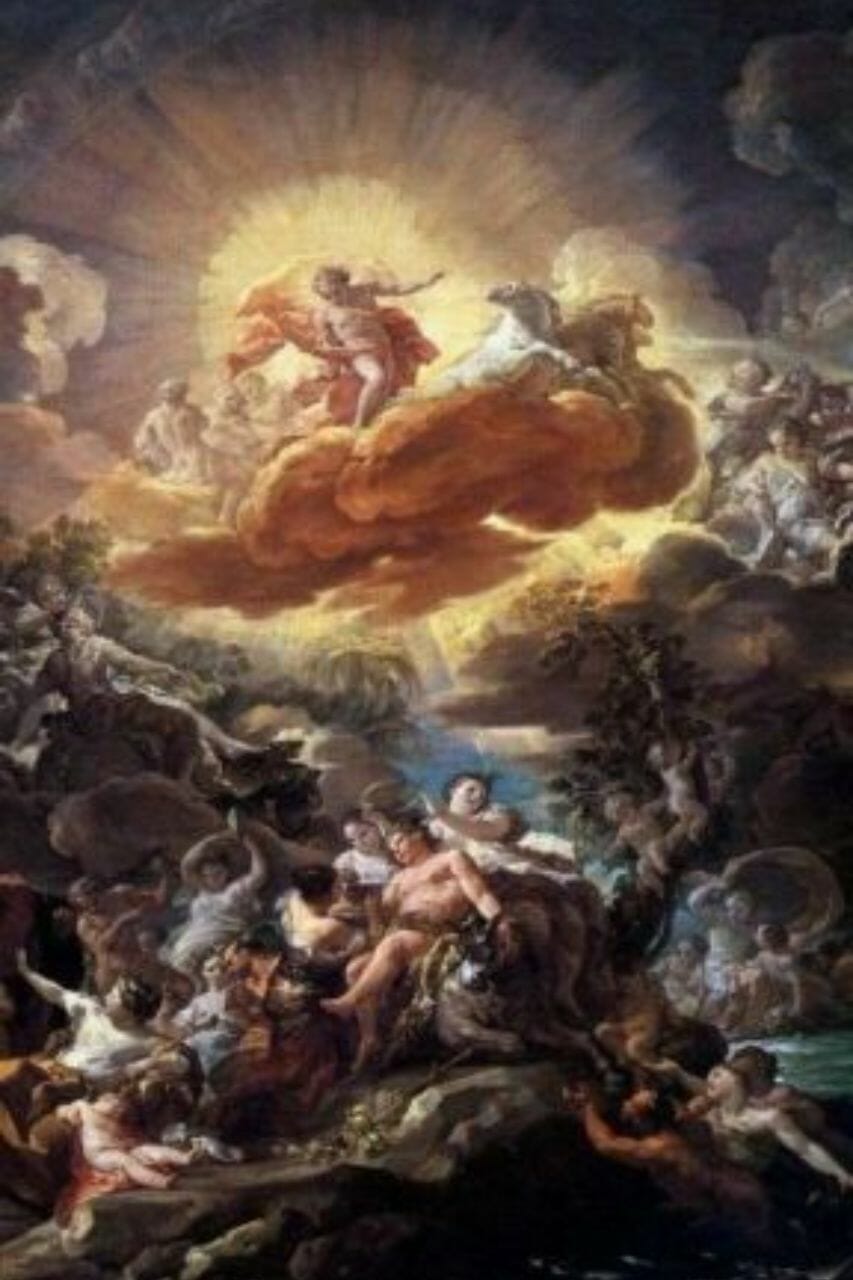
Zeus was on a mission to liberate his siblings from the stomach of Cronus and to avenge the death of his grandfather Uranus – a mission that resulted in the Titan battle. He poured a potion, given to him by the nymph Methis, into the drink of Cronus. Soon after, Cronus vomited the siblings of Zeus and together, they formed the Olympians and waged war against the Titans. The Olympians also called on their other siblings, the Hecantochires and the Cyclopes, who Cronus had imprisoned in Tartarus.
The Hecantochires used their strength to hurl heavy stones at the Titans while the Cyclopes forged weapons for the Olympians. Hades, the brother of Zeus, stole Cronus' weapons while Poseidon distracted Cronus by charging at him with his trident. Zeus then had the opportunity to strike Cronus with his thunderbolts which immobilized him. Thus, the Olympians won the war and gained control of the universe with Zeus as their King.