Hades Daughter: Everything You Must Know About Her Story
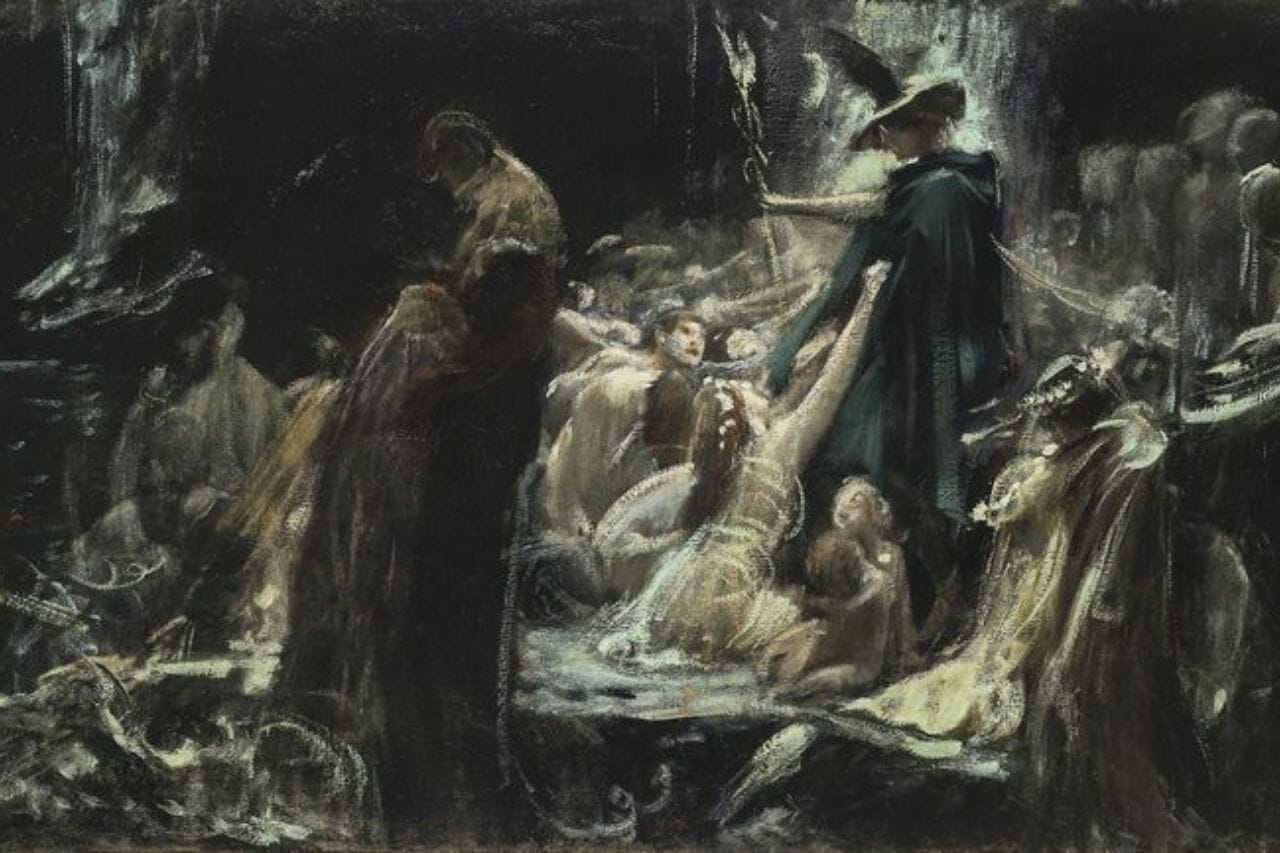
Hades daughter would be Melinoe, the most well-known daughter, but unknown to many, Hades has three children. Two of whom he shares with his wife, while the other's mother is not mentioned in the literature.
Although not usually mentioned compared to other famous Olympian gods in Greek mythology, some gods and goddesses were said to be Hades children. Continue reading to find out who they are.
Who Is Hades Daughter?
Melinoe was Hades daughter. Melinoe was one who poured drinks as offerings to the gods in the land of the dead. Additionally, Macaria was his daughter as well, but she wasn't as famous as Melinoe, she was a merciful daughter, whose mother is unknown.
Melinoe's Origin
Melinoe is believed to be a child of Hades and his consort, the Queen of the Underworld. She was born close to the mouth of the river Cocytus of the Underworld. However, there is a theory that Melinoe was fathered by Zeus as Hades and Zeus occasionally had syncretistic relationships.
It is claimed that when Zeus impregnated the Queen of the Underworld, he assumed the shape of Hades. Nevertheless, Melinoe was always regarded as the daughter of the King and Queen of the Underworld; thus, she was closely associated with the dead.
Melinoe as a Goddess of Propitiation
Melinoe is known to be the goddess of propitiation, which is the act of making an appeal to the spirits of the dead through libations (the pouring of drinks to be offered to the gods) and visiting the cemetery, among others. The Greeks believed that by doing this and paying respect to their dead, they would be protected from evil spirits.
The goddess Melinoe gathers all of these offerings and delivers them to the underworld. As Melinoe is also regarded as the goddess of justice for the dead, when the propitiation was not completed, she brought the spirits of the dead out to seek justice. Her being a goddess of death and justice can be seen in how she was depicted.
Melinoe as a Goddess of Ghosts
Melinoe was also the goddess of those who could not rest. Since the Underworld does not allow passage to those who were not given proper burial rites, these spirits became a part of Melinoe's group to wander forever. Simply put, she is the goddess of ghosts.
Melinoe's Physical Appearance
There is only one surviving source where Melinoe's appearance is described, and this is the Orphic hymn. According to it, the goddess of ghosts wears a saffron-colored veil and appears to have two forms: one light and one dark. It is interpreted as a symbol of her dual nature as a goddess of death and justice. Her right side is pale and chalky as if she had lost all of her blood, and her left side is black and stiffened like a mummy. Her eyes are voids of black emptiness.
Others depict her as very scary because they believe she morphs and twists her form. In fact, the sight of her alone is so terrifying that it is enough to drive a person insane. Whether by accident or intended as the person failed to make propitiation, anyone who saw her and her group of ghosts was driven insane by the sight of them.
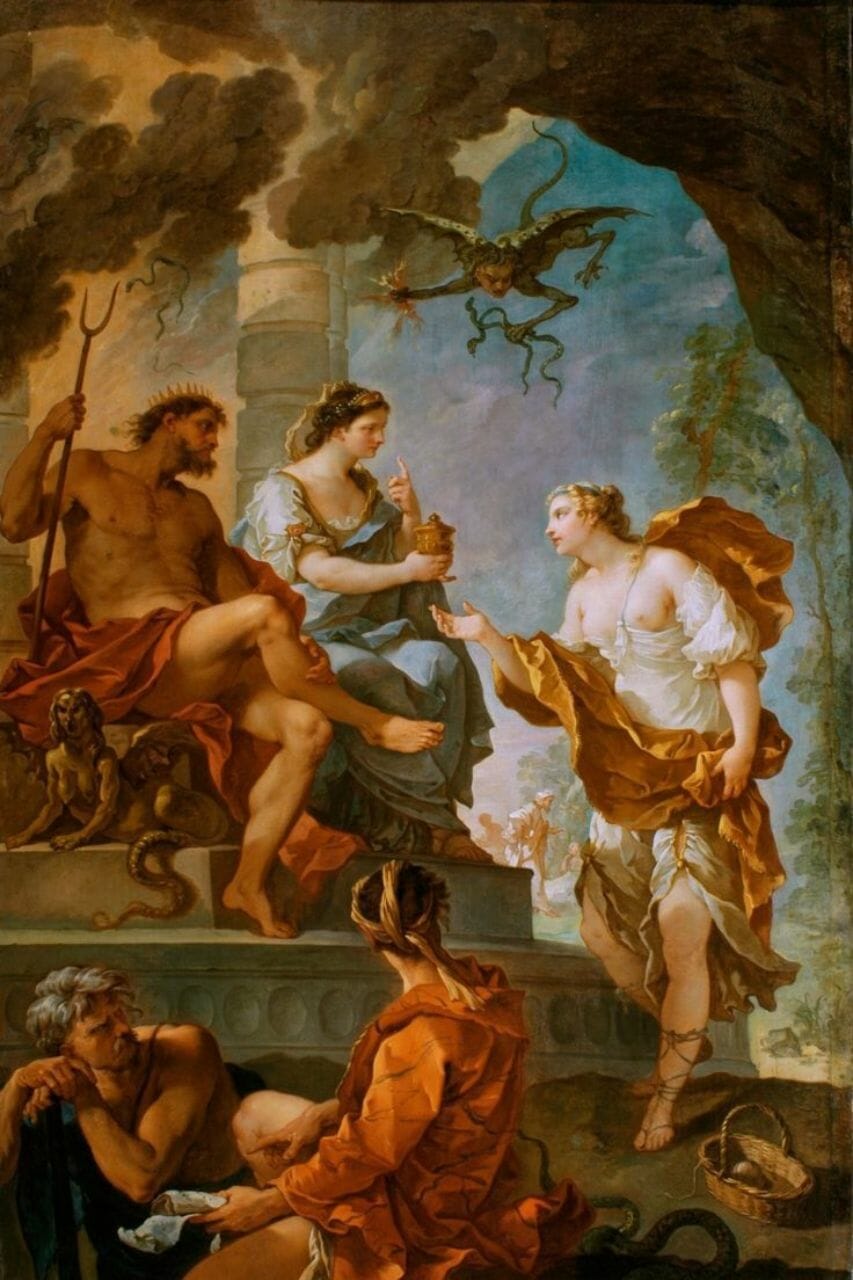
Hades and his wife Persephone in the Underworld
The Orphic Mysteries
The Orphic Mysteries, or Orphism, is a covert Greek religion named after Orpheus, a poet and musician known for his mastery of playing the lyre, or kithara. In the story of Orpheus and Eurydice, he went to the underworld to reclaim his bride. The believers of Orphism regard him as their founder when he left the domain of the dead and came back to explain what he had discovered about death.
Even though the Orphic Mysteries acknowledged the same gods and goddesses as traditional Greeks, they interpreted them in a different way. Their supreme god was the Queen of the Underworld, Persephone, and many of the well-known Olympians paid minimal attention to their hymns and inscriptions. They viewed Hades as another manifestation of Zeus. Hence, all of the children of Hades and his Queen remained connected to Zeus.
The Orphic Mysteries produced the Hymn to Melinoe and several inscriptions that bear her name. They even regarded her as the bringer of terror and madness.
The Relationship between Melinoe and Hecate
The traditional Greek temples and the Orphic Mysteries both acknowledge Hecate, the goddess of witchcraft. Contrary to many Greeks who view her as a frightening character, the cult venerated her and highly regarded her as a goddess who understands the secrets and powers of the Underworld.
According to some stories, Hecate leads a group of underworld nymphs called Lampades. It is similar to how Melinoe was depicted as a leader of a group of restless spirits. Another similarity is their descriptions, which both invoke the moon and feature the saffron veil.
Even though Hecate was not regarded as Hades' daughter, she was occasionally believed to be a child of Zeus. Also, if the Orphic Mysteries beliefs were to be considered, they indicated that Hecate was also a daughter of Hades. Thus, many believed that Melinoe and Hecate were somehow the same person.
Hades' Daughter Macaria
There was another daughter who was lesser known, and it was Hades daughter Macaria. Unlike Melinoe, there were no references as to who her mother was. A lesser image of her father, Macaria is regarded as more merciful when compared to Thanatos.
Thanatos is the Greek personification of death who was tasked with fetching those whose fate expired and bringing them to the underworld. Macaria is connected to the passage of these souls, and she is believed to be the embodiment of a blessed death, which means that death should be treated as a blessed event instead of one of damnation and misery.
FAQ
What Is Melinoe's Name Representation?
Since the Greeks were known to associate the fruit's yellow-greenish tint with ill health or death, Melinoe's name was formed from the Greek terms melinos, "with the color of quince," and melon, "the tree fruit." However, there is a belief that Melinoe's name originated from other Greek words. These were the words "melas" (black), "meilia" (propitiation), and "noe" (mind).
As a result, Melinoe's name is interpreted as "dark-minded" or "propitiation-minded," and the term "Meilia" was widely used to refer to sacrifices given as an act of appeasement to the spirits of the dead.
Who Are the Erinyes?
They are also known as Furies, the three goddesses of vengeance and retribution. Their task is to punish men for their transgressions against the natural order.
Who Are the Children of Hades?
Aside from his two daughters, Zagreus was also a child of Hades. Zagreus is a god who is closely related to Dionysus, the god of wine, the afterlife, and hunting. He is the rebellious son of Hades, while other references say he is the son of Zeus. Nevertheless, he is considered as a sibling of Melinoe.
Conclusion
There are only a few stories that mention Hades, which includes his gift of the invisibility cap to Perseus that helped in slaying the snake-haired Gorgon Medusa, but he is regarded as the ruler of the Underworld, often known as the realm of the dead. However, there are written works illustrating Hades' children and let us summarize what we have learned:
Hades has three children, namely, Melinoe, Macaria, and Zagreus. Melinoe and Zagreus were both believed to be children of Hades and Hades wife. However, for Macaria, there is no mention of who her mother was.
Melinoe is presented as the Goddess of Propitiation and Justice for the dead. She delivers the offerings to the spirits in the underworld, and when a propitiation is unfinished, she allows the spirits to take their revenge on the living persons at fault.
Macaria is known to be the Goddess of Blessed Death. In contrast to Thanatos, who is the personification of death, Macaria is more merciful.
The Orphic Mysteries is a secret religion that views the Greek gods and goddesses differently. They highly regarded the gods and goddesses related to the dead and give little attention to the well-known Olympians. In fact, they viewed Hades as another manifestation of Zeus.
Hecate is the goddess of witchcraft and magic spells. She has many similarities with Melinoe in terms of description and lineage. Hence, some believe that they are the same person.
Even though the Underworld is not a pleasant place to be, several characters in Greek mythology dared to travel to the land of the dead, each with its own reason and motivation, some of them are Theseus, Pirithous, and Heracles. Some succeeded and were able to return, whereas others were not fortunate enough to escape the land of the dead.