Timeless Myths Logo

Explore myths and legends from cultures around the world

Featured

Classical Mythology
Classical Mythology Greek and Roman myths, gods, heroes, and epic tales
Norse Mythology
Norse Mythology Vikings, Asgard, Ragnarok, and the nine realms
Celtic Mythology
Celtic Mythology Irish, Welsh, and Gaelic legends and folklore
Ancient Literature
Ancient Literature Classical texts, translations, and literary analysis

All Mythologies

Arthurian Legends King Arthur, Camelot, the Round Table, and the Holy Grail Egyptian Mythology Pharaohs, pyramids, and ancient Nile deities Japanese Mythology Shinto gods, spirits, and legendary creatures Chinese Mythology Dragons, immortals, and celestial beings Aztec Mythology Mesoamerican gods, rituals, and creation myths

Discover gods and goddesses from every pantheon

Featured

Greek Gods
Greek Gods The Olympians, Titans, and primordial deities
Norse Gods
Norse Gods Odin, Thor, Loki, and the Aesir and Vanir
Egyptian Gods
Egyptian Gods Ra, Osiris, Isis, Anubis, and more
Japanese Gods
Japanese Gods Amaterasu, Susanoo, and Shinto kami

All Gods & Deities

Roman Gods Jupiter, Mars, Venus, and the Roman pantheon Celtic Gods The Tuatha Dé Danann and Celtic deities Aztec Gods Quetzalcoatl, Tezcatlipoca, and Aztec deities Chinese Gods Jade Emperor, Dragon Kings, and celestial beings View All 150+ Deities Browse the complete collection of mythological deities
View all gods & deities

Tales, legends, and character profiles from mythology

Featured

All Stories
All Stories Browse 800+ mythology and history stories
Characters
Characters Profiles of 67 mythological heroes, gods, and villains

All Stories

Mythology Stories Ancient myths and legends retold History Stories Historical tales from ancient civilizations Religion & Culture Religious traditions and cultural beliefs
View all stories

Tools, references, and site information

Featured

Name Generators
Name Generators Generate fantasy and mythology-inspired names
All Articles
All Articles Browse 1,800+ articles on mythology and history

All Resources

About Timeless Myths Learn about this mythology resource Bibliography Sources and references used on this site FAQ Frequently asked questions Contact Get in touch with us
Search
Classical Mythology Greek and Roman myths, gods, heroes, and epic tales Norse Mythology Vikings, Asgard, Ragnarok, and the nine realms Celtic Mythology Irish, Welsh, and Gaelic legends and folklore Arthurian Legends King Arthur, Camelot, the Round Table, and the Holy Grail Egyptian Mythology Pharaohs, pyramids, and ancient Nile deities Japanese Mythology Shinto gods, spirits, and legendary creatures Chinese Mythology Dragons, immortals, and celestial beings Aztec Mythology Mesoamerican gods, rituals, and creation myths Ancient Literature Classical texts, translations, and literary analysis
Greek Gods The Olympians, Titans, and primordial deities Roman Gods Jupiter, Mars, Venus, and the Roman pantheon Norse Gods Odin, Thor, Loki, and the Aesir and Vanir Egyptian Gods Ra, Osiris, Isis, Anubis, and more Celtic Gods The Tuatha Dé Danann and Celtic deities Aztec Gods Quetzalcoatl, Tezcatlipoca, and Aztec deities Japanese Gods Amaterasu, Susanoo, and Shinto kami Chinese Gods Jade Emperor, Dragon Kings, and celestial beings View All 150+ Deities Browse the complete collection of mythological deities View all gods & deities
All Stories Browse 800+ mythology and history stories Characters Profiles of 67 mythological heroes, gods, and villains Mythology Stories Ancient myths and legends retold History Stories Historical tales from ancient civilizations Religion & Culture Religious traditions and cultural beliefs View all stories
Name Generators Generate fantasy and mythology-inspired names All Articles Browse 1,800+ articles on mythology and history About Timeless Myths Learn about this mythology resource Bibliography Sources and references used on this site FAQ Frequently asked questions Contact Get in touch with us
Search Search the entire mythology archive

Alope: The Granddaughter of Poseidon Who Gave Her Own Baby

Mythology

Alope was an ancient Greek woman from the town of Eleusis famous for her ravishing beauty.

She was so beautiful that her grandfather, Poseidon, fell for her.

As was common with the Greek gods, Poseidon seduced and raped the young lady and had a child with her. All these happened without Alope's awareness so she was bemused and took a decision that would change her life forever.

Read on to find out what decision she took and the ripple effects of her actions.
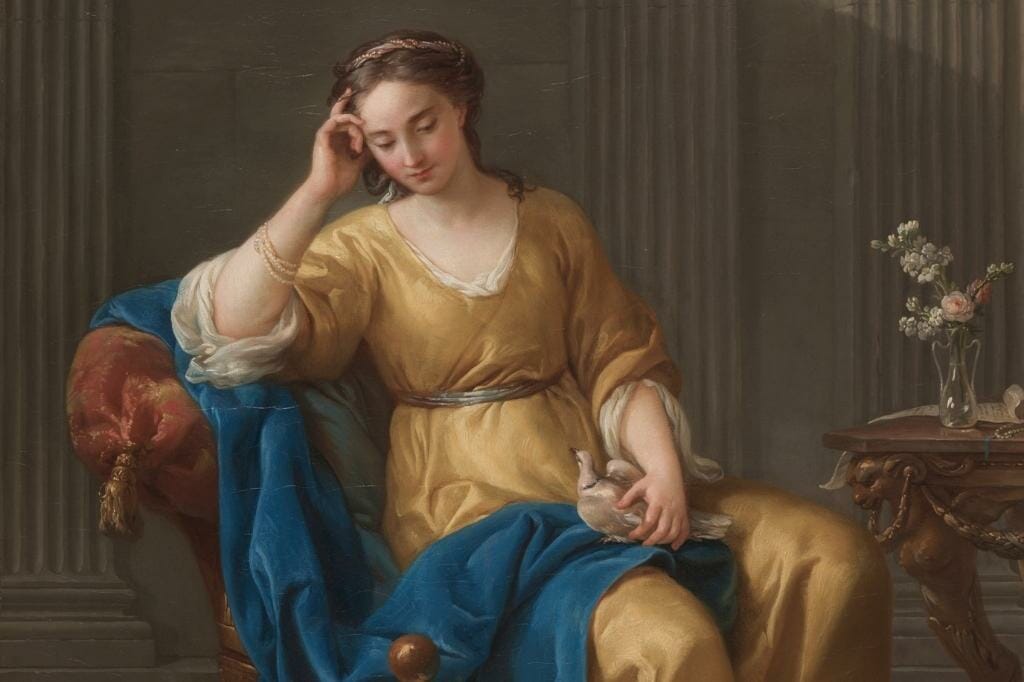
alope

The Myth of Alope

Alope and Poseidon

Alope was a beautiful princess born to King Cercyon of Eleusis who was a wicked king even to his own daughter. Poseidon, the god of the sea, transformed into a kingfisher bird and seduced the young lady who happened to be his granddaughter.

According to the myth of Cercyon, Poseidon had Cercyon with one of the princesses of King Amphictyon of Thermopylae, making Alope his granddaughter. Alope became pregnant and fearing what her father would do once he found out she had given birth, she decided to kill the innocent baby.

Alope Exposes Her Baby

She knew that her father, King Cercyon, would definitely kill the boy and punish her once he found out the truth. Therefore, she hid the baby from her father, wrapped him in royal clothes, and gave him to her nurse to go and expose.

The nurse did as she was told and left the baby in the open to the danger of the harsh weather, wild beasts, and starvation. Infanticide was a common practice around that time when mothers got rid of babies they did not want after giving birth.

The Shepherds Discover Her Baby

The baby was found by a kind mare who suckled him until some shepherds discovered him. The shepherds, however, began disputing over the beautiful royal clothes in which the baby was wrapped.

Unable to reach an agreement as to who should have the clothes, the shepherds took the case to King Cercyon's palace for him to pass judgment on the matter. The king recognized the royal clothes and launched an investigation to find out the mother of the baby.
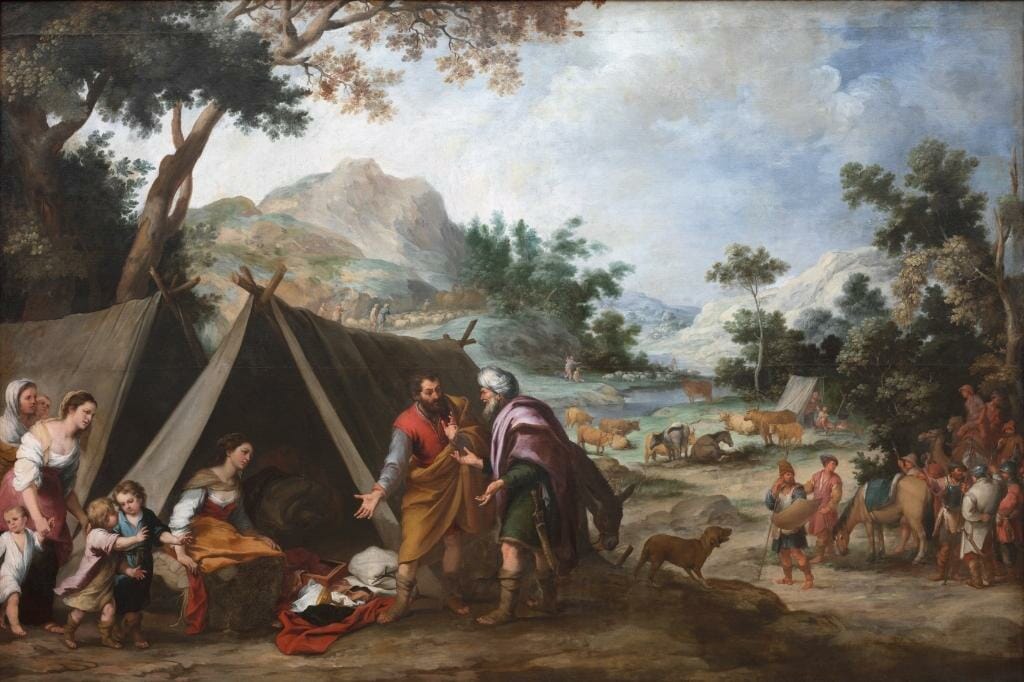
Shepherds discover Alope's baby

Shepherds discover Alope's baby

He called the nurse and threatened her until she revealed that the baby was for Alope. Cercyon then summoned Alope and instructed his guards to imprison her and later bury her alive.

As for the baby, the wicked Cercyon had him exposed again. Luckily, once again, the baby was discovered by a mare, and again he was suckled till some shepherds found him.

The shepherds then named him Hippothoon and took care of him. As for his mother, Poseidon pitied her and turned her into a spring which was named Hippothoon, just like her son. Later, a monument was erected in her honor called the Monument of Alope between Megara and Eleusis on the spot where they believed her father, Cercyon, killed her.

How Alope's Son Succeeded King Cercyon

According to the myth of Alope, her son eventually became king after the death of his grandfather, Cercyon, and this is how it happened. King Cercyon was known as a strong wrestler who stood on the roads in Eleusis and challenged anyone who passed by to a wrestling match.

Even people who were not interested in dueling with him were forced to partake in the match. He promised to hand over the kingdom to anyone who defeated him and if he won the vanquished must be killed.

Cercyon was tall and heavily built and exhibited immense strength and power, thus no traveler was able to match his power. He easily dispatched off each challenger and had them killed according to the terms of the match. His cruelty was widespread throughout Greece and people feared using the roads in Eleusis. However, Cercyon's waterloo moment came when he met the hero Theseus, son of Poseidon, who, like Hercules, had six labors to complete.

Theseus's fifth task was to kill Cercyon which he did with skill instead of power as Cercyon was more powerful. According to the Greek lyric poet Bacchylides, Cercyon's wrestling school on the road to the town of Megara was closed as a result of his defeat at the hands of Theseus.

Hippothoon, the son of Alope, heard about his grandfather's death and came to Theseus to ask that the kingdom of Eleusis be handed over to him. Theseus agreed to give the kingdom to Hippothoon when he learned that, just like him, Hippothoon was born of Poseidon.

The Town Named After Alope

Many historians believe that the ancient Thessalian town, Alope, was named after the daughter of King Cercyon. It was located in the region of Pththiotis between the towns Larissa Cremaste and Echinus.
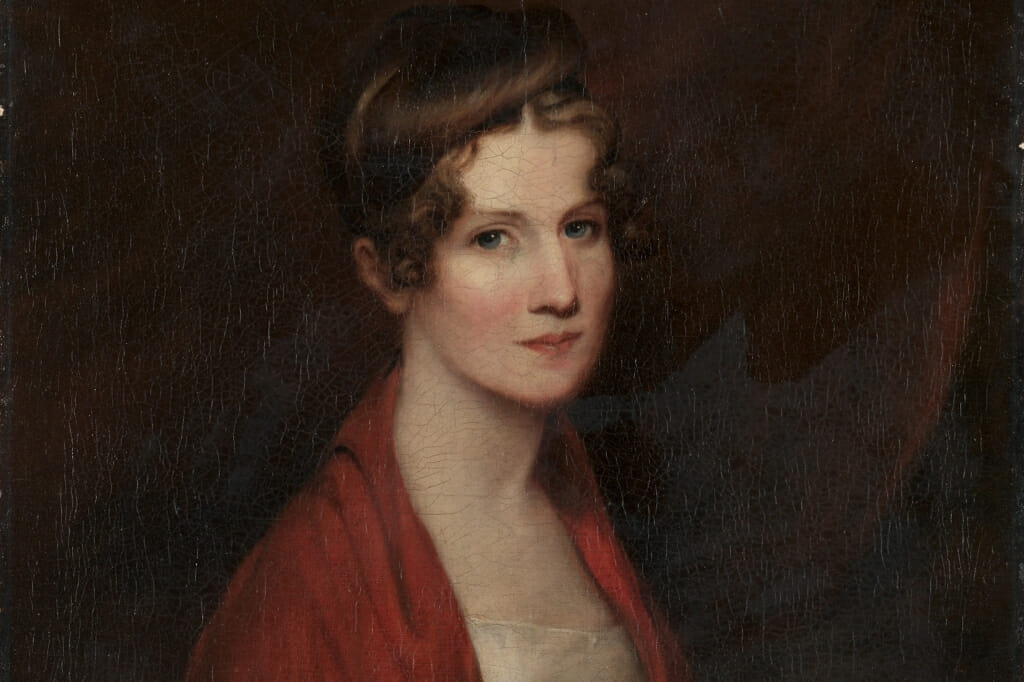
myth of alope

Conclusion

So far we've read the myth of Alope and how tragically she died under the rule of her wicked father King Cercyon of Eleusis.

Here is a summary of what this article has covered:

  • Alope was the daughter of King Cercyon whose beauty was enchanting that men and gods found her irresistible.

  • Poseidon, the god of the sea, transformed into a kingfisher bird, seduced and raped her which got her pregnant.

  • Not knowing who the father of her baby was and what her father would do if he found her pregnant, Alope wrapped her baby boy in royal clothes and gave it to her nurse to go and expose.

  • Two shepherds discover the boy but could not agree on who should have the beautiful clothes on the baby so they took the matter to King Cercyon to settle it.

  • King Cercyon soon discovered all that had happened and ordered the baby to be exposed again and his daughter be put to death.

The baby, however, survived and eventually came to take over the reins of the kingdom after the death of King Cercyon. Later, a town between Larissa Cremaste and Echinus was named after Alope with a monument erected on the spot that was believed to be where her father killed her.

By Ancient Literature

Created: January 1st, 2025

Modified: November 18th, 2024

Melanippe

Melanippe

Heroine of two lost plays of Euripides. Melanippe (Μελανίππη) was the daughter of Aeolus, king of Thessaly, and of Hippo, daughter of the Centaur Cheiron. However, Hyginus also wrote that Melanippe's father could be Desmontes. Melanippe grew into ...

April 27th, 1999 • Jimmy Joe
Daughter of Poseidon: Is She as Powerful as His Father?

Daughter of Poseidon: Is She as Powerful as His Father?

Daughter of Poseidon, who is she? Eirene, Lamia, Herophile, and Despoena are some of the names of Poseidon's daughters. However, as Poseidon is infamous for being an adulterer, he had many children, consisting of different origins and creatures. R...

February 16th, 2024 • Ancient Literature
Tyro

Tyro

King of Salmonia, in Elis, Salmoneus (Σαλμωνεύς) was the father of Tyro (Τυρώ) by Alicidice, daughter of Aleüs (Aleus), king of Arcadia. Not long after taking his second wife, Sidero (Σιδηρύ), Salmoneus' daughter bore twin sons, Neleus (Νηλεύς) an...

April 27th, 1999 • Jimmy Joe
Perse Greek Mythology: The Most Famous Oceanid

Perse Greek Mythology: The Most Famous Oceanid

Perse Greek mythology is one of the most famous characters because of her abilities and connections. She was a naiad, the daughter of a power couple, and later married a vital god, boring several children for him. Here we bring a detailed analysis...

February 16th, 2024 • Ancient Literature
Alcyone, Celaeno and Asterope

Alcyone, Celaeno and Asterope

The other Pleiades' seduction by Poseidon and Ares was less interesting.Alcyone Poseidon seduced Alcyone (Ἀλκυόνη) who became the mother of Hyreis, Hyperenor and Aethusa.Celaeno Celaeno (Κελαινώ) had Poseidon as her lover as well, and became the m...

August 31st, 2002 • Jimmy Joe
Hades Daughter: Everything You Must Know About Her Story

Hades Daughter: Everything You Must Know About Her Story

Hades daughter would be Melinoe, the most well-known daughter, but unknown to many, Hades has three children. Two of whom he shares with his wife, while the other's mother is not mentioned in the literature. Although not usually mentioned compared...

February 16th, 2024 • Ancient Literature
Lamia: The Deadly Infant-eating Monster of Ancient Greek Mythology

Lamia: The Deadly Infant-eating Monster of Ancient Greek Mythology

Lamia started as a beautiful young queen who fell in love with Zeus, according to Greek folk traditions. However, certain circumstances changed her appearance into an ugly monster who tormented both children and adults. She was powerful and was kn...

February 16th, 2024 • Ancient Literature
Leto

Leto

Leto was the daughter of the Titans Coeüs (Coeus) and Phoebe. Leto was the sister of Asteria. It is uncertain what attributes that this goddess had, but she may have been a mother goddess or a goddess of fertility. Leto was also the mother of two ...

April 19th, 1999 • Jimmy Joe
Aegina and Aeacus

Aegina and Aeacus

The story of Aegina (Αἄγινα) and her son has already been briefly told in the Aegina, Islands (Geographia) and in the Myrmidons, Mythical Creatures sections. Hera persecuted them because of Zeus' dalliance with yet another mortal girl. Asopus was ...

March 17th, 2001 • Jimmy Joe
Aetna Greek Mythology: The Story of A Mountain Nymph

Aetna Greek Mythology: The Story of A Mountain Nymph

Aetna Greek mythology is an interesting character because of her origin and connections. She was a nymph and a goddess of the mountains at the same time. Most famously she is related to Mountain Aetna in Sicily which is a very famous tourist spot ...

January 1st, 2025 • Ancient Literature
Timeless Myths

Exploring mythology and legends from around the world.

Explore Myths

All Stories Characters All Articles Search Site Map

Mythologies

Norse Mythology Classical Mythology Celtic Mythology Arthurian Legends Mythology Gods Ancient Literature

About Us

Introduction About Jimmy Bibliography FAQs Retro Version

Resources

Timeless Myths All Stories All Articles Characters
© 1999-2026 Timeless Myths • Copyright • Privacy Policy • Cookie Policy • Contact
Follow us: