Why Did the Akkadian Empire Fall: The Collapse of History's First Empire
The fall of the Akkadian Empire occurred during the 22nd century BCE due to constant invasions, weak leadership, and devastating climate changes. The world's first empire—founded by Sargon of Akkad around 2334 BCE—collapsed after just 180 years. Although this happened some 4,000 years ago, the tragic fall of the Akkadian Empire offers lessons that resonate to this day.

It is important to understand that Mesopotamia was a geographic region—the land between the Tigris and Euphrates rivers—not a single empire. Many empires rose and fell within this region over millennia: the Sumerians, the Akkadians, the Babylonians, and the Assyrians. This article focuses on why the Akkadian Empire—the first of these great empires—collapsed.
Read on to find the details on why the Akkadian Empire collapsed.
How Did the Akkadian Empire Fall?
The Rise and Fall of the Akkadian Empire
The Akkadian Empire came to prominence following the conquests by its founder, Sargon of Akkad, around 2334 BCE. Sargon rose from humble origins—legend says he was found as a baby floating in a basket on the river—to become history's first empire-builder. His conquests united the Sumerian city-states under one rule, creating an empire that stretched westward as far as the Mediterranean Sea and perhaps Cyprus, northward as far as the mountains of Anatolia, eastward over Elam, and as far south as Magan (modern Oman).
However, around the 22nd century BCE, the empire entered its dark ages and began to unravel. The complicated situation culminated around the incompetence of leadership, incessant invasions, and even climate changes. All these events ultimately snowballed into the fall of the Akkadian Empire around 2154 BCE.
The Administrative Strains in the Akkadian Empire
As in most kingdoms, the onset of the decline of the Akkadian Empire started with several administrative issues. Amongst these were plagues of incompetence by the government. Clearly, the empire lacked a strong structure of rule after the demise of Sargon and his immediate successors.
As a result, the empire steadily deteriorated into a territory with no central imperial authority until the Third Dynasty of Ur. After that, the region's political structure may have reverted to the status quo of local governance by city-states.
It was during this period that the weakened Akkadian territories became expeditiously vulnerable to foreign threats. The main threats were the Gutians, who took advantage of the weak state and eventually established their own reign over the region.
The Fall of the Akkadian Empire: Climate Changes
Accompanying their internal problems were nature's disasters. In the 22nd century BCE, harsh climatic conditions affected the region of northern Mesopotamia. Modern scientists have identified this as the "4.2-kiloyear event"—a period of severe drought that devastated agrarian societies across the ancient world.
The cause of this collapse remains debated among experts to this day. One of the experts, Harvey Weiss, heralded his views on the subject which supports the notion that a sudden tide of drought led to the empire's collapse, which crippled the productive regions in northern Mesopotamia.
Further evidence uncovered in northern Syria by Harvey Weiss indicates that the once-prosperous region became abruptly deserted about 4,000 years ago; this is reflected by the absence of pottery and other archaeological residues.
Interestingly, the rich soils of earlier periods were displaced by a great deal of wind-blown dust and sand, which initiated the drought that later consumed the land. Afterward, marine cores from the Red Sea and the Gulf of Oman, which connected the input of dust into the aquatic bodies to distant sources from ancient Mesopotamia, acted as more indications of a regional drought in ancient times.
Direct Effects of the Climate Change
Various accounts on the Mesopotamian climate and that of the world displayed a sudden weather change event. Periods of intense cooling and drought dominated the environment for about the next 300 years. Then, as the cold and famine hit the region, rainwater was no longer sufficient to support agricultural activities in northern Mesopotamia.
The collapse was followed by mass migration from north to south which was met with resistance by the local populations. A 111-mile wall—the "Repeller of the Amorites"—was built between the Tigris and Euphrates to control this sudden immigration.
Around 2150 BCE, the Gutian people, who originally inhabited the Zagros Mountains, defeated the demoralized Akkadian army, took the city of Akkad, and destroyed it around 2115 BCE. Hence, widespread agricultural change in the Near East is visible at the end of the third millennium BCE.
The Bareness of Ancient Mesopotamian Land

The Euphrates and Tigris rivers allowed for the cultivation of wheat on the Mesopotamian savannahs. However, the dry weather in ancient Mesopotamia ultimately overwhelmed the manufactured irrigation systems, which flooded the fields faster than the water drained out.
Then, the amount of salt accumulated from irrigated water made fertile land into salt deserts. Continuous irrigation elevated groundwater levels, and capillary actions increased the soil salt concentration, which poisoned the soil and rendered it impractical for wheat growth. Barley, which is a more salt-resistant crop than wheat, was cultivated in the less damaged regions.
The fertile soil later turned to sand by drought, resulting in the shift of the Euphrates River to its present course, which is situated some miles away from the ancient cities of Ur and Nippur.
About 2,000 years from this event, the formerly fertile region of Mesopotamia became barren. This heralded the transformation of the lands that were no longer viable for large-scale agriculture.
Minor sedentary populations later resettled the northern savannahs. These resettlements took place around 1900 BCE, about three centuries after the collapse of the Akkadian Empire.
Moreover, fossil corals studied in Oman have shown evidence of prolonged winter Shamal periods. Such periods led to high salt concentrations in Mesopotamian irrigated fields around 4,200 years ago, and ultimately caused the drastic fall in crop production. These conditions triggered widespread famine and were also another reason for the downfall of the Akkadian Empire.
The Fall of the Akkadian Empire: The Gutian Invasion
The Damaging Reign of the Gutians
The Gutians were a horde of tribes that descended from the Zagros Mountains, possibly drawn to the Mesopotamian plains for its prosperity. The ancient Mesopotamians treated them as subnormal beings for their unwillingness to conform to the customs and laws of civilizations. Mesopotamian chronicles described them as barbarians, having the intelligence of dogs and the appearance of monkeys.
Fair to say, the hatred was mutual between both cultures. However, the Gutians raided the Akkadian territories with the use of hit-and-run tactics, and so these raids eventually crippled the economy of Mesopotamia. Travels became unbearably unsafe, as did farming activities, which escalated into famine. The Gutians finally swept down and took the Akkadian kingdom, destroying it around 2083 BCE.
A bit of the old Akkadian order did remain in the form of several independent city-states where local dynasties thrived. Moreover, the Gutians inevitably took over the rule of the region, marking another point in the decline of Mesopotamian civilization.
Perhaps, as expected, the Gutians proved to be incompetent rulers. Under their crude reign, prosperity declined as they were too unaccustomed to the complexities of civilization to organize matters properly. As a result, impactful issues, such as the Mesopotamian canal network, were neglected and allowed to sink into disrepair, leading to famine and death.
The Gutians became more cultured with time, but they were ultimately forced out by a coalition of rulers of Uruk and Ur. Utu-Hengal of Uruk is known to have defeated the last of the Gutian kings, Tirigan. This victory revived the political and economic life of Mesopotamia.
After the Akkadians: The Third Dynasty of Ur
As the curtains closed on the reign of the Gutians, the triumphant Ur dynasty took center stage. The Third Dynasty of Ur (Ur III) was founded by Ur-Nammu, a general of Utu-Hengal, the king who broke the Gutian rule.
The warrior king, Ur-Nammu, became famous after he caused a crushing defeat to the ruler of Lagash in battle, slaying the king himself.
This particular battle earned Ur-Nammu the prestigious title, 'King of Sumer and Akkad.' The kingdom of Ur consolidated its supremacy over the entire country by incorporating the famous Code of Ur-Nammu, the first set of laws in Mesopotamia since Urukagina of Lagash's laws in earlier times.
The Ur III dynasty oversaw several monumental innovations and improvements. They took steps to centralize and standardize the procedures of the empire. What's more, their dynasty helped consolidate administrative processes, archival documentation, the tax system, and the national calendar. This period is sometimes called the "Sumerian Renaissance."
The city of Susa and its surrounding region also got captured during this period, and this capture effectively toppled King Kutik-Inshushinak's reign of Elam. The rest of Elam was controlled by the Shimashki dynasty.
The Fall of Ur
Under the reign of Ur's final ruler, Ibbi-Sin, the power of this new Mesopotamian empire once again waned. In the 21st century BCE, Ibbi-Sin launched military campaigns into Elam but did not manage to penetrate far into the country.
Finally, in 2004 BCE, the people of Elam sacked Ur and captured Ibbi-Sin. The attack was executed by an alliance of Elamites and the people of Susa, under the leadership of King Kindattu of the Elamite Shimashki dynasty, effectively ending the Ur III dynasty.
Elamite and Amorite Rule Over Mesopotamia
The Elamites' victory vanquished the Ur III dynasty and governed the fallen kingdom by martial force for the next 21 years.
By the turn of the 19th century BCE, Amorites had occupied much of the Mesopotamian territories in the south. At first, the Amorites did not practice agriculture; unlike the more advanced Mesopotamians, they preferred a more sedentary lifestyle of herding sheep.
As time went on, Amorite grain merchants became more prominent and established their sovereign dynasties in several Mesopotamian city-states such as Isin, Larsa, Eshnunna, Lagash, and later on, founded their own state of Babylon.
The Amorite Dynasty of Isin effectively succeeded Ur III as the ruler of the region, starting the Isin-Larsa period. They drove the Elamites out of Ur, reconstructed the city's infrastructure, and recovered the statue of Nanna, which the Elamites had plundered. This ultimately marked the end of the post-Akkadian period and the beginning of a new era in Mesopotamian history.
Mesopotamia After the Akkadian Empire
It is worth noting that Mesopotamian civilization did not end with the fall of the Akkadian Empire. The region would go on to produce many more great empires and cultural achievements:
The Old Babylonian Empire (c. 1894–1595 BCE) — This period saw the rise of Hammurabi, famous for his law code, one of the earliest written legal systems
The Assyrian Empire (c. 2500–609 BCE) — One of history's most powerful empires, known for its military prowess and vast library at Nineveh
The Neo-Babylonian Empire (626–539 BCE) — Under Nebuchadnezzar II, Babylon was rebuilt in splendor, including the famous Hanging Gardens
Mesopotamian independence finally ended in 539 BCE when the Persian king Cyrus the Great conquered Babylon. Even then, the region's cultural influence persisted through the Hellenistic and later periods.
Summary
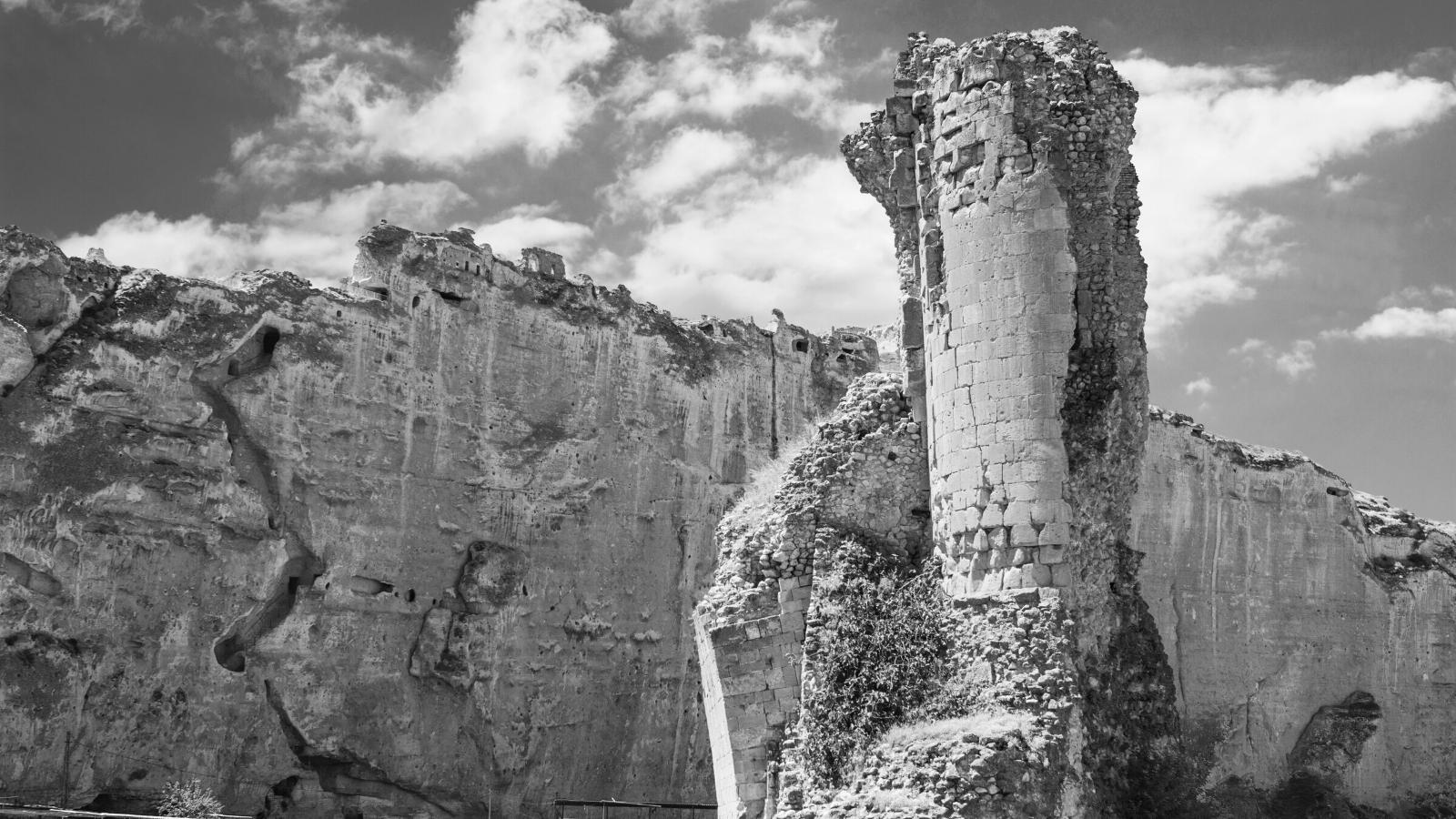
In this article, we discussed why the Akkadian Empire—history's first empire—collapsed around 2154 BCE.
These are the main reasons why the Akkadian Empire fell:
The empire went through unfortunate periods of administrative weakness after Sargon's death
Weak successors rendered the empire vulnerable to external threats
The 4.2-kiloyear climate event brought severe drought, forcing the abandonment of northern territories
The Gutians from the Zagros Mountains invaded and conquered the weakened empire
The Third Dynasty of Ur later expelled the Gutians and restored Mesopotamian rule
Ur III eventually fell to the Elamites in 2004 BCE, leading to Amorite dominance and eventually the rise of Babylon
It's clear that the Akkadian Empire went through a series of catastrophic events. But, even though the empire was ultimately destroyed, Mesopotamian civilization continued for another 1,500 years and became a central source of valuable information regarding the development of civilization as a whole for historians. The Epic of Gilgamesh, cuneiform writing, and countless Sumerian inventions continue to influence our world today.