Why Did the Crusaders Attack Constantinople During The Fourth Crusade?
The crusaders attacked Constantinople to avenge Alexius IV’s death and to repay the debts owed to them. The attack on Constantinople sent the ancient world into a frenzy. No one expected the Christians to turn on each other.
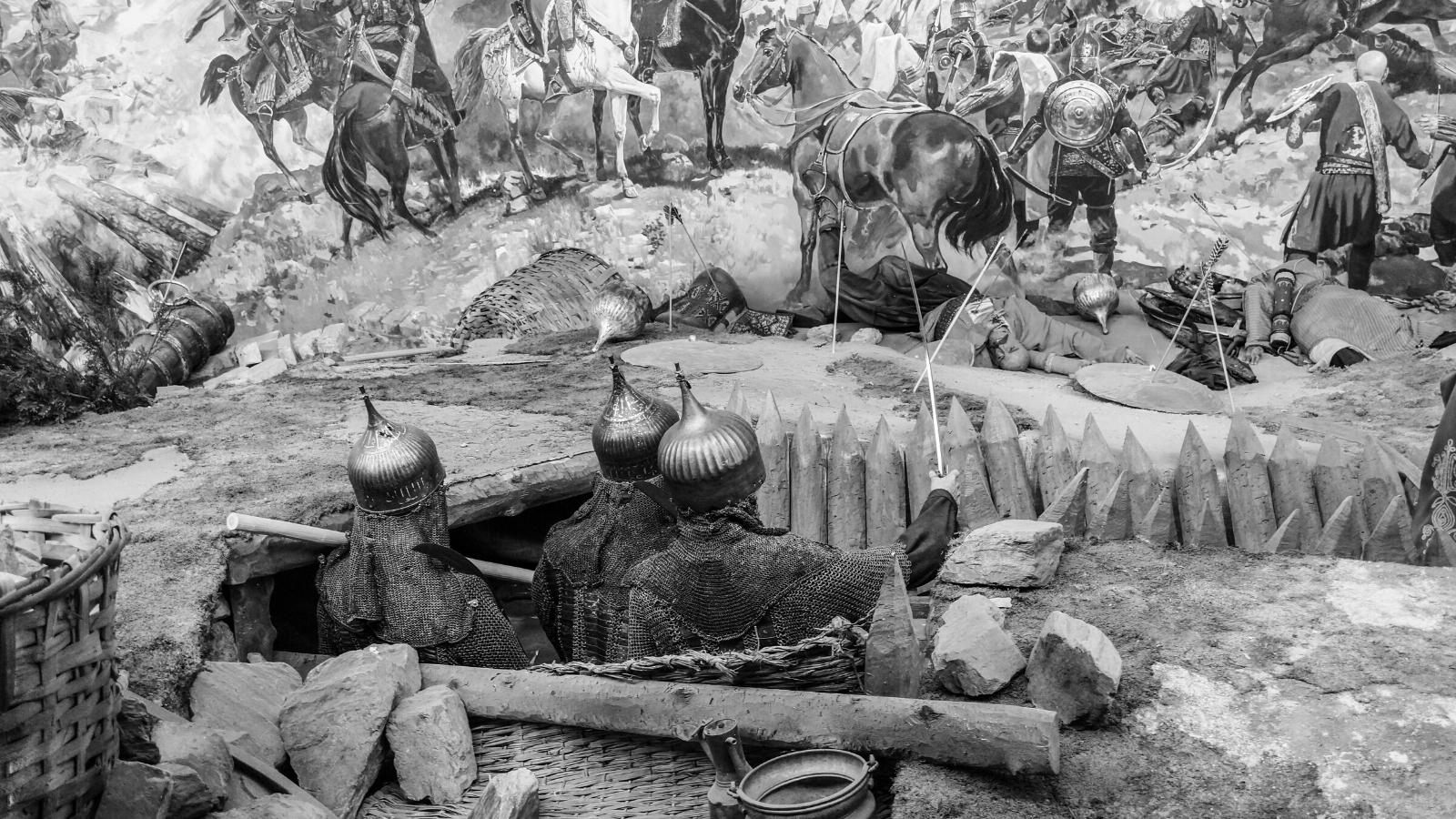
In our article, discover the events that led to the sacking of Constantinople and how they affected the Byzantine empire.
The Relevance of Constantinople
Constantinople was the capital of the Byzantine Empire. In July 1054, the universal church divided over disagreements giving birth to the Roman Catholic and Eastern Orthodox churches.
The Eastern Orthodox Church became the Byzantine Empire and had Constantinople as its capital. It was the most important city to the Christians, aside from Jerusalem.
Events Leading to the Attack on Constantinople
Though the attack on Constantinople was part of the Fourth Crusade, it was not the main aim. The main goal of Pope Innocent III was to mount a resistance against the Muslim invasion of Jerusalem. His strategy was to send the crusaders to conquer the then-powerful Islamic state, the Egyptian Ayyubid Sultanate. However, several incidents caused the Crusaders to divert course and attack Constantinople.
The Killing of the Roman Catholic Inhabitants of Constantinople
One event that contributed to the sacking of Constantinople was the murder of Roman Catholics in Constantinople. Roman Catholics, also referred to as Latins, formed a majority of the populace in the city along with the indigenous Eastern Orthodox.
The Latins controlled most of the trade in the city due to the influence of Emperor Alexios Komnenos. This made them wealthy and angered the Eastern Orthodox population who attacked them.
Historical sources estimate that the Roman Catholics lost about 60,000 lives during the conflict. About 4,000 of those who survived ended up in slavery. The Eastern Orthodox people also destroyed the Latin Republics of Genoa and Pisa, leaving them in complete ruins. These unprovoked attacks caused a vast division between the Roman Catholic and Eastern Orthodox Christians.
The Normans Revenge the Death of the Catholics in Constantinople
Another event that led to tensions between the two Christian empires was the occupation of Thessalonica by the Normans. The Normans, who were part of the Roman Catholic church, attacked Thessalonica in the Eastern Empire. They brought the city to its knees in 1185, three years after the Eastern Orthodox attacked the Catholics. As a result, about 7,000 Eastern Orthodox citizens in the Byzantine empire lost their lives.
This was one of the worst attacks on the city of Thessalonica, which deepened the divide between the two empires. This unfortunate event gave rise to Emperor Isaac II Angelos of the Byzantine empire. He played a pivotal role in the attack on Constantinople.
The Fourth Crusade and the Attack on Zara
In 1202, Pope Innocent III announced the Fourth Crusade. This was a response to the Muslim invasion and control of the city of Jerusalem. The idea was to fight the Egyptian sultanate, the most powerful Islamic country at the time. The people of Venice agreed to build ships that would transport over 33,000 Crusaders to fight the sultanate.
For Venice to transport the crusaders, the soldiers had to pay them 85,000 silver marks. The crusaders paid an initial 35,000 silver marks. However, when pressed further, the crusades could only come up with 14,000 silver marks. The cost was too much for the soldiers to bear, and it depleted their resources.
The Venetians held the Crusaders to ransom unless they paid the money in full. When the Venetians realized Crusaders couldn’t pay, they forced them to sign an agreement. The agreement was that the Crusaders would attack smaller rival ports of the Venetian. They did this to put them out of business and make Venice the preferred Port in the sub-region.
The Crusaders agreed and attacked the port of Zara, which fell after a brief battle. The Pope was annoyed at the crusaders and Venetians for attacking their fellow Christians. He decided to punish them but changed his mind after he learned that the crusaders were forced into attacking Zara.
Why Did the Crusaders Attack Constantinople: Motives For The Attack
One reason was that the Venetians wanted to exact revenge on the Byzantine Empire for the murder of the Catholics. The Venetians were Catholics, and the murder of their comrades was fresh in their memory. Thus, they coerced the Crusaders to attack Constantinople as revenge.
Also, the Venetian leader, Doge Enrico Dandolo, suffered blindness in Byzantium and blamed them for it. So, he did nothing to stop the Venetians from destroying Constantinople. Apart from the debts the Crusaders owed, their leaders also took bribes to attack Constantinople.
However, that was not all. The Crusaders also received a juicy offer from the exiled prince Alexios IV Angelos of Byzantium. Alexios IV Angelos, who co-reigned with Isaac II, fled to Swabia after his exile. There he met a leader of the crusaders, Boniface of Montferrat, and offered to pay the crusaders debts in full. All he wanted was for the crusaders to attack Constantinople in return.
The crusaders found it challenging to resist the offer, which included 200,000 silver marks and 10,000 extra troops. These offers, coupled with bribed leaders, convinced the crusaders sack Constantinople.
The crusaders set off and landed at Constantinople in June 1203.
Events of the Crusaders Attack on Constantinople
The crusaders had only one aim in mind: to return the throne to Alexios IV and receive the promised rewards. Before the crusaders sacked Constantinople, they needed to take certain strategic locations. This was to enable smooth entry into the capital of Byzantium.
The Crusaders Attack the Tower of Galata
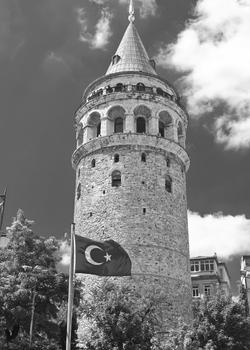
They first attacked and defeated Chalcedon and Chrysopolis, cities near Constantinople. Then they crossed the Bosporus and marched towards the tower of Galata, where they encountered the Byzantine army.
The Byzantine army engaged in a brief scuffle with the crusaders before fleeing to the south. The crusaders pursued them to the Tower of Galata and besieged it. They succeeded in breaking the chain connected to the tower and allowed their ships to enter Byzantine.
They then laid siege to the Tower of Galata, which housed Byzantine troops. These mercenary troops defended the tower by organizing swift but short attacks on the crusaders. After the attacks, the mercenaries retreated to the refuge of the tower.
This tactic was ineffective, and the crusaders conquered them. They inflicted heavy losses on the mercenaries by drowning them as they made their escape. The crusaders then took control of the tower and allowed their ships to sail to Constantinople.
The Crusaders Attack Constantinople
The crusaders went to the northwest of Constantinople and stationed their troops outside the Palace of Blachernae. They then attacked the walls surrounding the city, both on land and sea. The crusaders met the elite unit of the Byzantine Empire known as the Varangian Guard, who repelled the first attacks.
Meanwhile, the Venetian troops who sailed with the Crusaders attacked parts of the wall and took control of 25 towers. This move by the Venetians surprised the Varangian Guard, and they moved to fight the Venetians. This stretched the troops of the Varangian Guard, making the defense of the city impossible.
When the Varangian Guard moved to counter the Venetian attack, the Venetians released a screen of fire. This fire destroyed large parts of Constantinople, rendering about 20,000 citizens homeless. The Byzantine emperor Alexios III responded by leading 8,500 troops to face the crusaders. However, he lost courage when he met the crusaders and fled with minimal conflict.
The Byzantine troops also retreated due to low morale within the rank and file of the army. In addition, the fire which ravaged most of the city crashed the spirits of the Byzantine army. So, they retreated, and the crusaders took control of Constantinople. Alexios III fled the city and took refuge at Mosynopolis.
The Crusaders Sack of Constantinople
After Alexios III left, the officials of the empire reinstalled Isaac II as king instead of Alexios IV. This angered the crusaders, who refused to recognize Isaac II as king. Instead, they insisted Alexios IV be made co-emperor. They did this so that Alexios IV would fulfill all the promises he made to them.
When Alexios IV came to power, he didn’t have enough resources to fulfill his promise to the crusaders. This was because the former king emptied the kingdom’s treasury. So, Alexios IV forced his citizens to donate their gold and jewelry to offset the debts he owed the crusaders. This angered the citizens and led to much unrest within the kingdom.
These tensions led to the murder of King Alexios IV. The new king Alexios Doukas refused to pay the debts of Alexios IV, which he owed to the Crusaders. This made the Crusaders angry, and they sacked Constantinople for a couple of days. They wanted to avenge the death of Alexios IV and demanded the repayment of their debts.
Summary
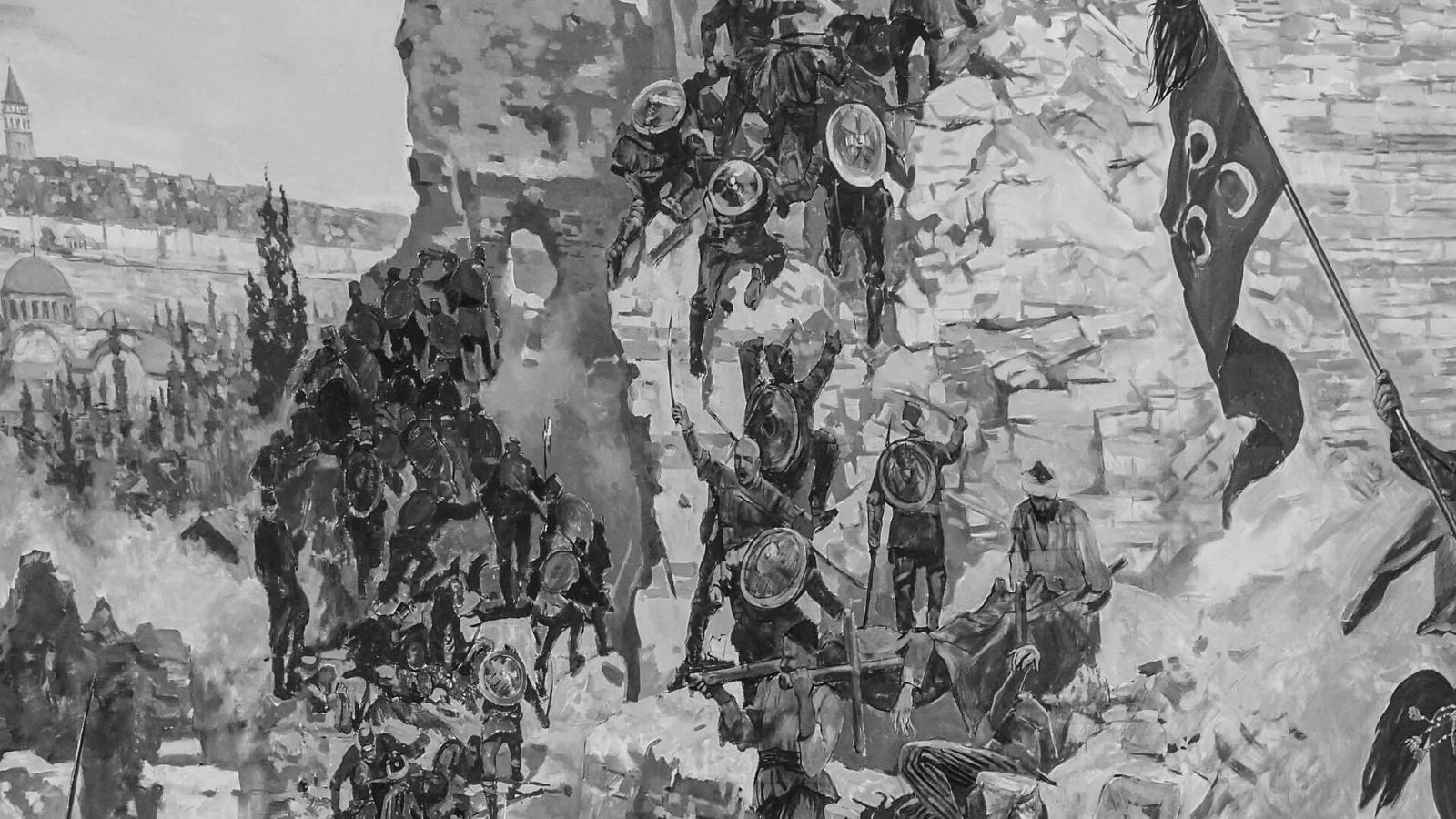
So far, we’ve read the reasons the Crusaders attacked Constantinople.
Here is a summary of what we’ve discussed so far:
There were tensions between the Eastern and Western Christians
These tensions resulted from significant attacks on each other
So when Pope Innocent III gathered the crusaders, they were easily lured into attacking Constantinople
The Crusaders couldn’t pay for the ships and equipment provided by the Venetians
Alexios III offered to pay the debts of the Crusaders only if they helped him reclaim the throne in Constantinople
Coupled with bribery, the Crusaders attacked Constantinople but did not sack it
The crusaders only sacked Constantinople when they realized that their debts wouldn’t be paid.
The crusaders attack Constantinople was a decisive moment in the history of Christianity. It deepened the divide between the Eastern and Western Christians, and it also led to the division of the Byzantine Empire.