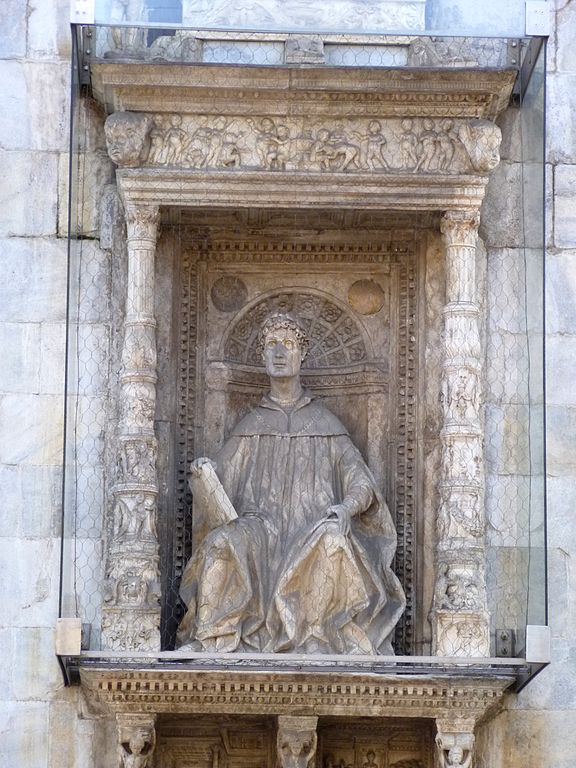
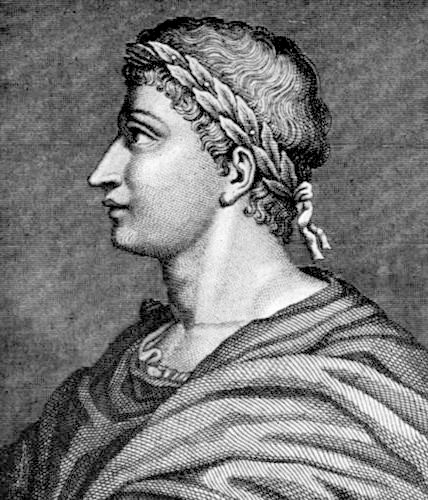
Lucan
(Epic Poet, Roman, 39 – 65 CE)
Introduction
Lucan was a Roman epic poet during the reign of Emperor Nero. Despite his short life, he is regarded as one of the outstanding figures of the Silver Age of Latin literature, and his youth and speed of composition set him apart from other poets. His masterwork “Pharsalia” was perhaps most celebrated during the Middle Ages, but his work also had tremendous influence on the poetry and drama of the 17th Century.
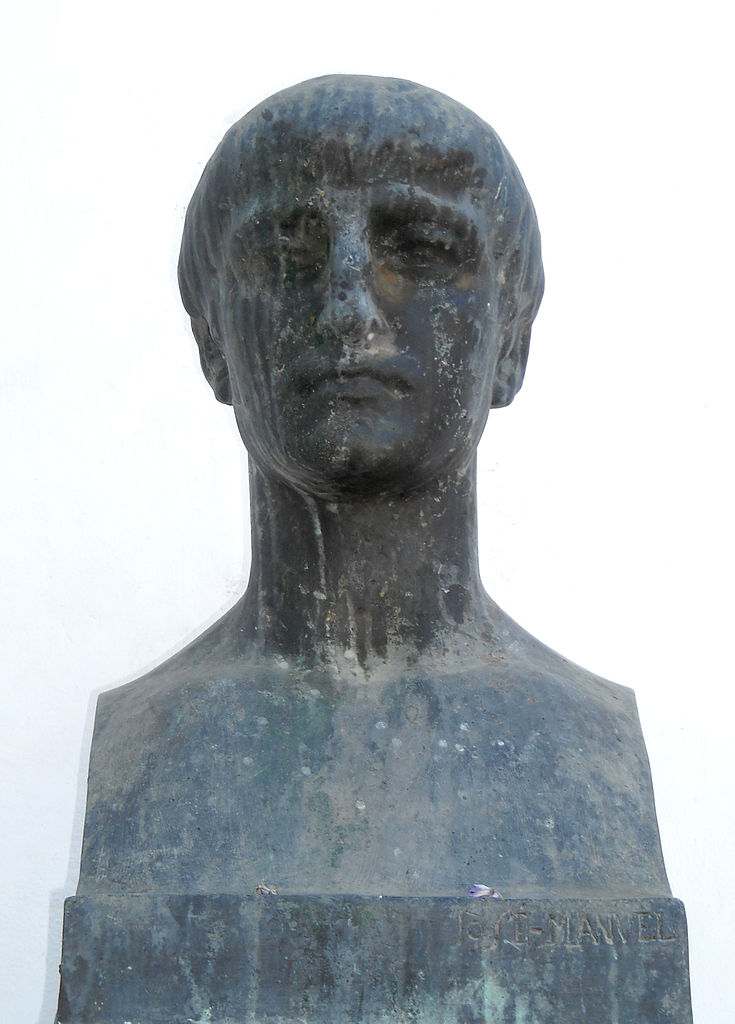
Bust of Lucan
Biography
Marcus Annaeus Lucanus (known in the English-speaking world as Lucan) was born in 39 CE in Corduba in the Hispania Baetica (modern-day Córdoba, Spain). He was the grandson of Seneca the Elder and grew up under the tutelage of his uncle, Seneca the Younger. Born into a wealthy family, he was able to study rhetoric at Athens and was probably provided with a philosophical and Stoicist education by his uncle and others.
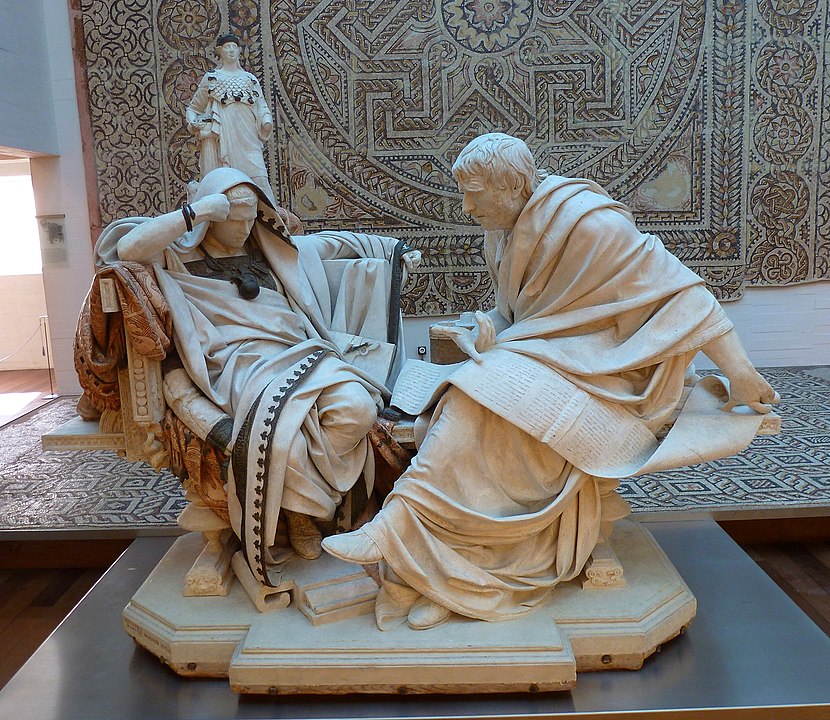
He found favour with the Emperor Nero, due to his early promise as a rhetorician and orator, and the two became close friends. Lucan was rewarded with a quaestorship in advance of the legal age, and then an appointment to the augurate in 60 CE, after he had won a prize at the quinquennial Neronia (a grand Greek-style arts festival established by Nero). During this time, he circulated the first three books of his epic poem, “Pharsalia” (“De Bello Civili”), which told the story of the civil war between Julius Caesar and Pompey in epic fashion.
At some point, however, Lucan lost favour with Nero and further readings of his poetry were banned, either because Nero became jealous of Lucan or just lost interest in him. It is also claimed, though, that Lucan wrote insulting poems about Nero, suggesting (as had others) that Nero was responsible for the Great Fire of Rome of 64 CE. Certainly the later books of “Pharsalia” are distinctly anti-Imperial and pro-Republic, and come close to specifically criticizing Nero and his emperorship.
Lucan later joined the conspiracy of Gaius Calpurnius Piso against Nero in 65 CE. When his treason was discovered, he first incriminated his own mother among others in hopes of a pardon, but he was nevertheless obliged to commit suicide at the age of 25 by opening a vein in the traditional manner. His father was condemned as an enemy of the state, although his mother escaped.
Writings
The epic poem “Pharsalia” on the war between Julius Caesar and Pompey is considered Lucan’s magnum opus, although it remained unfinished at his death, stopping abruptly in the middle of the 10th book. Lucan skilfully adapts Virgil’s “Aeneid” and the traditional elements of the epic genre (often by inversion or negation) as a kind of negative compositional model for his new “anti-epic” purpose. The work is renowned for its verbal intensity and power of expression, although Lucan also makes good use of the rhetorical techniques that dominate much of Silver Age Latin literature. The style and vocabulary are often commonplace and the metre monotonous, but the rhetoric is often lifted into real poetry by its energy and flashes of fire, such as in the magnificent funeral speech of Cato on Pompey.
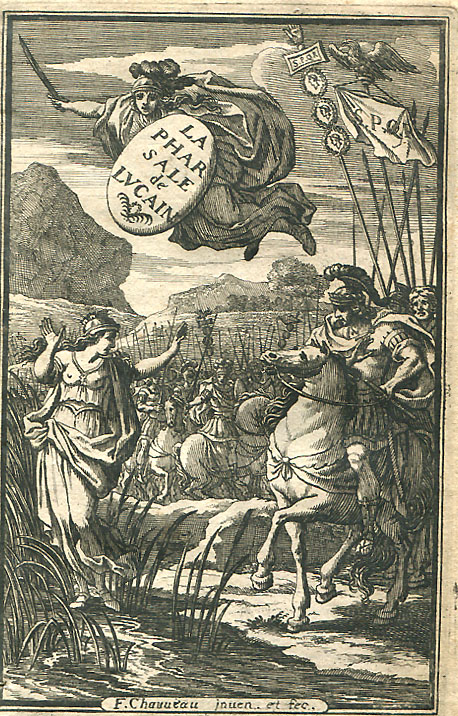
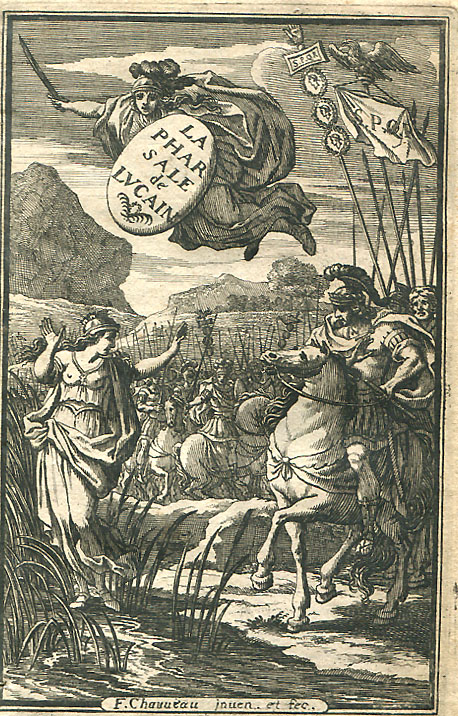
Illustration from Pharsalia
Lucan also frequently intrudes the authorial persona into the narrative, thus all but abandoning the neutrality of the traditional epic. Some see the passion and anger Lucan demonstrates throughout the “Pharsalia” as directed at those responsible for the collapse of the Roman Republic, or as a deeply-felt horror at the perversity and cost of civil war. It is perhaps the only major Latin epic poem that eschewed the intervention of the gods.
“Laus Pisonis” (“Praise of Piso”), a tribute to a member of the Piso family, is also often attributed to Lucan (although to others as well), and there is a lengthy list of lost works, including part of a Trojan cycle, a poem in praise of Nero and one on the Roman fire of 64 CE (possibly accusing Nero of arson).