Aegaeon: The Loyal Giant Monster in Greek Mythology
Aegaeon in Greek mythology refers to different characters, but the most well-known is as one of the Hecatonchires, who are giants with enormous strength and a monstrous appearance. Because of this, their father kept them imprisoned until such an event that an unexpected guest freed them. After the event, they returned to the place where they were once prisoners, but now, as guardians of this area. Continue reading to find out more about them!
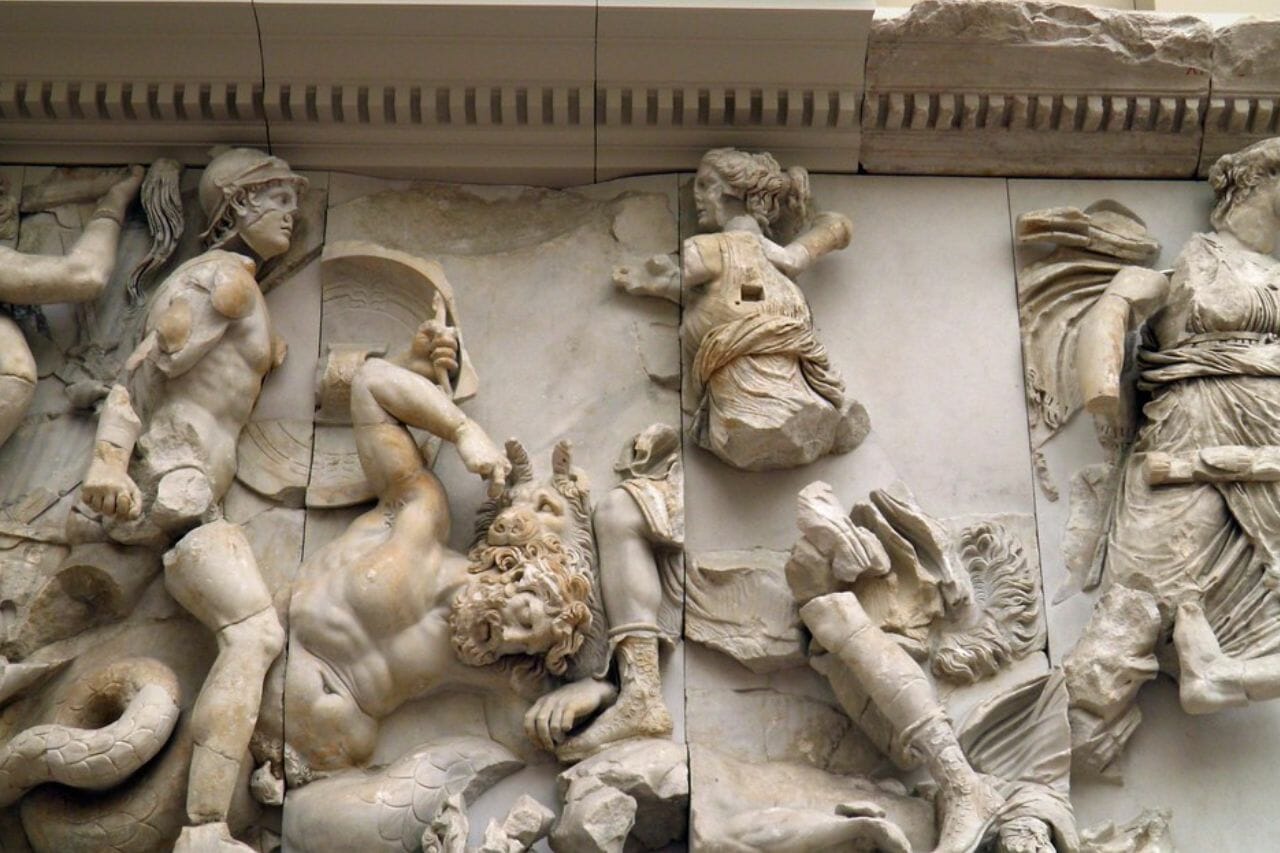
The Hecatonchires were giant monsters with fifty heads and one hundred hands.
Aegaeon the Giant
Aegaeon is a character in Greek mythology with different associations, but he is best known as one of the Hecatonchires brothers who is also a god of the stormy seas. The Hecatonchires are giant monsters with fifty heads and one hundred hands. They were locked up by Uranus and were only released by Zeus during the Titanomachy.
Meaning and Pronunciation
The Greek word “aigis,” from which his name was derived, has Aegaeon meaning “goatish” or “stormy” and has an Aegaeon pronunciation of Ey-gee-un, which may refer to different characters in Greek mythology.
The Origin of Aegaeon
One character refers to one of the Hecatonchires, who is also a god of the stormy seas, and another character is one of the Gigantes. Meanwhile, there is also the character of a prince who disrespected the supreme god, Zeus. Among these many different character associations, the character of being one of the Hecatonchires is the most well-known.
Association With The Hecatonchires
The first character who is often associated with Aegaeon is the one who also goes by the name Briareus. He is one of the three Hecatoncheires brothers. According to the Greek poet Hesiod, this monster was the name mortals called him, but the gods preferred to call him Briareus. These brothers represent the tidal surges, tornadoes, and earthquakes that naturally occur.
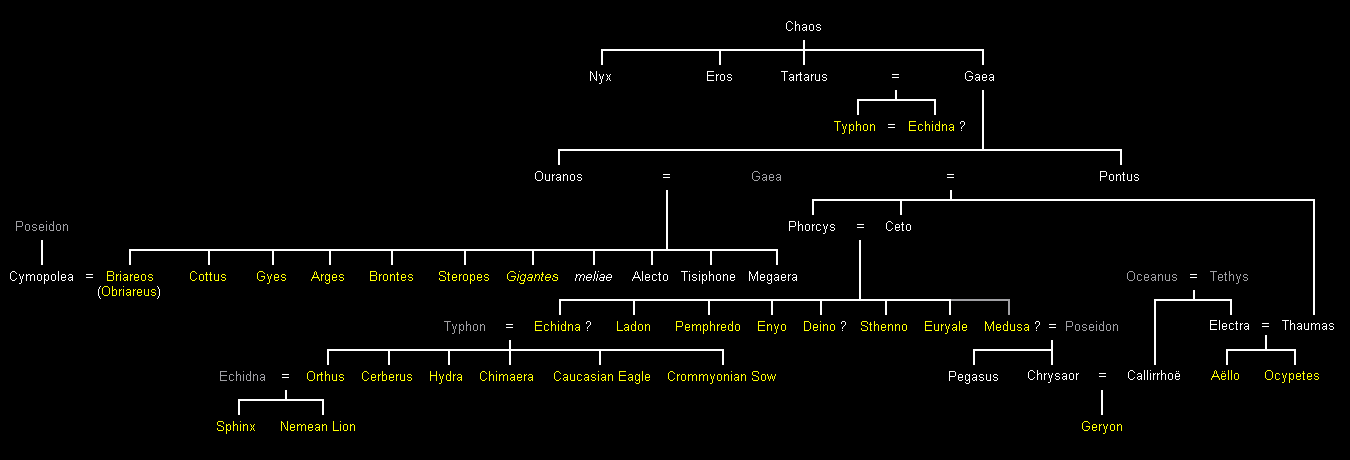
The Hecatoncheires, also called Centimanes, are giants with a monstrous appearance who have fifty heads and fifty pairs of hands. They were the offspring of Gaea, the ancestral mother of the gods, and Uranus, Gaea’s son and husband.
In addition to their hideous appearance, they also possessed extraordinary strength. Their father was so threatened by their existence that he sent them back to the womb of their mother. Together with his brothers Cottus and Gyges, they was imprisoned in Tartarus, the prison and place of anguish for the wicked Titans. They were only released when Zeus considered seeking their help in defeating Cronus during the Titanomachy battle.
Titanomachy
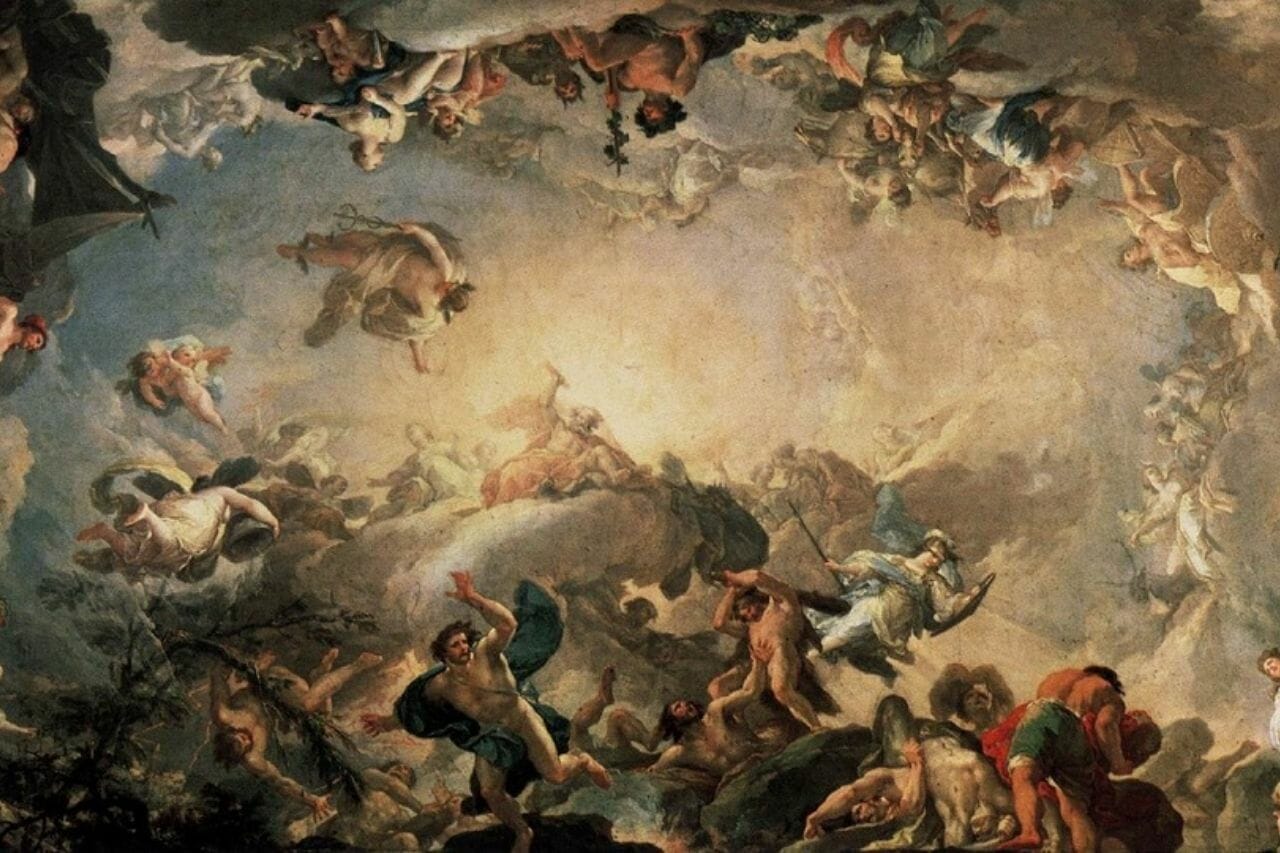
The Titanomachy was the epic battle between the Titans and the Olympian gods.
In Greek mythology, the Titanomachy is the epic battle that lasted for ten years between the titans and the Olympian gods. The purpose of this battle is to determine which group would be the best authorities to rule over the cosmos. Zeus led the Olympian gods, together with his brothers Hades and Poseidon, as well as his sisters Hera, Hestia, and Demeter, to fight their father Cronus and the other titans.
Even though Aegaeon and his Hecatonchires brothers were children of the Titans, they sided with Zeus and the Olympian gods. The reason might be the grudge they held against their titan father, Uranus, who despised them. Zeus, on the other hand, has given them a chance to be free from Tartarus.
Utilizing their strength and their one hundred hands, however he and his brothers fought in the battle. They hurled one hundred boulders at the same time while the cyclops forged lightning for Zeus.
Eventually, they won the battle, Zeus became the supreme ruler, and the titans who lost were imprisoned in Tartarus. The Hecatonchires also went back to Tartarus, but this time, not as prisoners but as guards.
Encountering Zeus
He first encountered Zeus in the Titanomachy battle. After the Hecatonchires were freed and tasked with guarding Tartarus, Zeus sought Aegaeon’s assistance once more. This time, it was Thetis who summoned him.
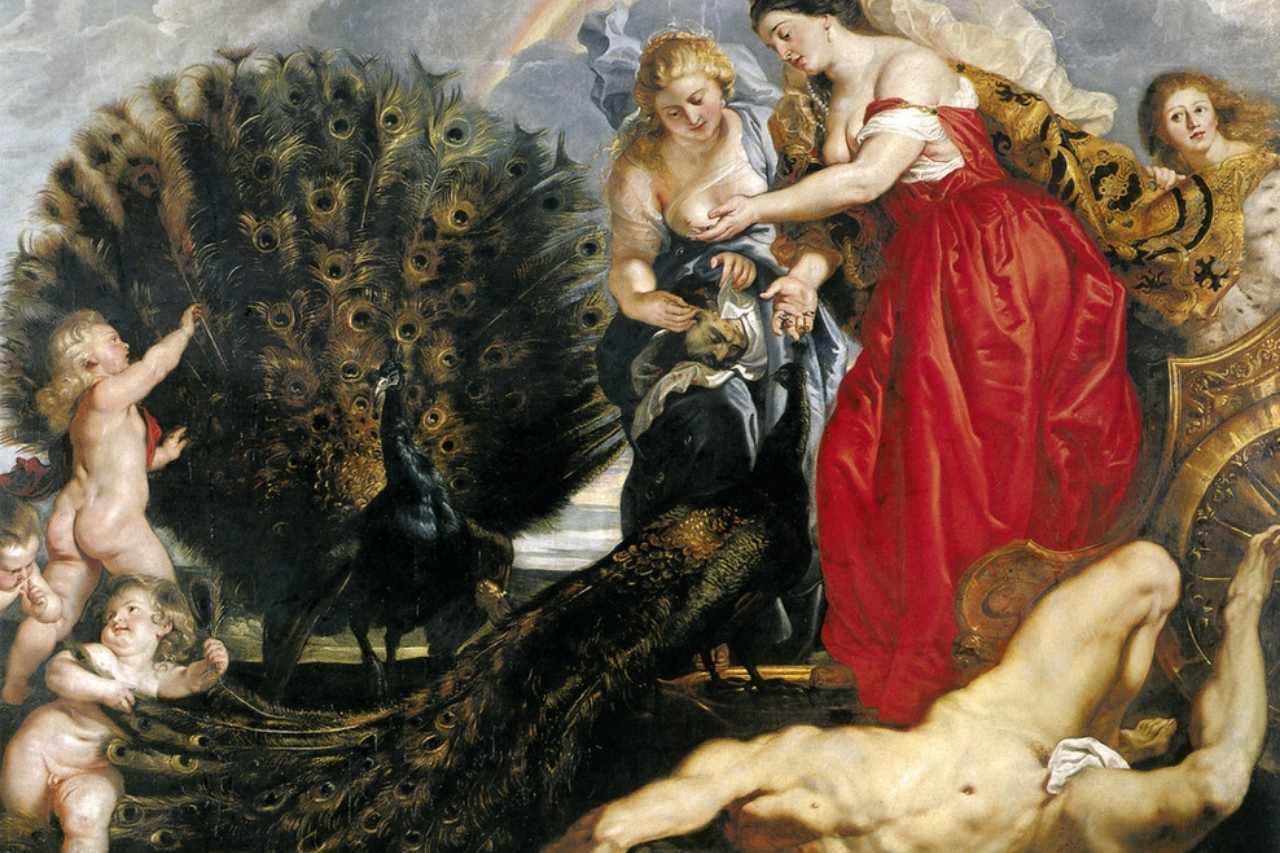
This was when there was a rebellion at Mt. Olympus. Since Zeus became the supreme god, he ruled the universe according to his will, oftentimes mistreating the other gods, which resulted in some kind of animosity toward him. His wife, Hera, on the other hand, is sick of constantly fighting with Zeus due to his infidelity.
With this, Hera led the rebellion and got the support of the other gods. They carefully planned their rebellion, and Zeus ended up being immobilized by a special gold chain. With the highest position empty and many other gods vying to take it, there is a threat of chaos breaking out due to the fighting gods.
This was when Aegaeon learned of what happened, he immediately went to Mount Olympus to help Zeus. With his strength and multiple hands, he was able to free Zeus in an instant. The supreme god unleashed thunder that shook the whole universe. All the participating gods were paralyzed in fear and immediately bowed down before Zeus. Hera and the other gods were punished. Finally, with his help, Zeus was restored as the king of the gods.
Portrayed as God of the Stormy Seas
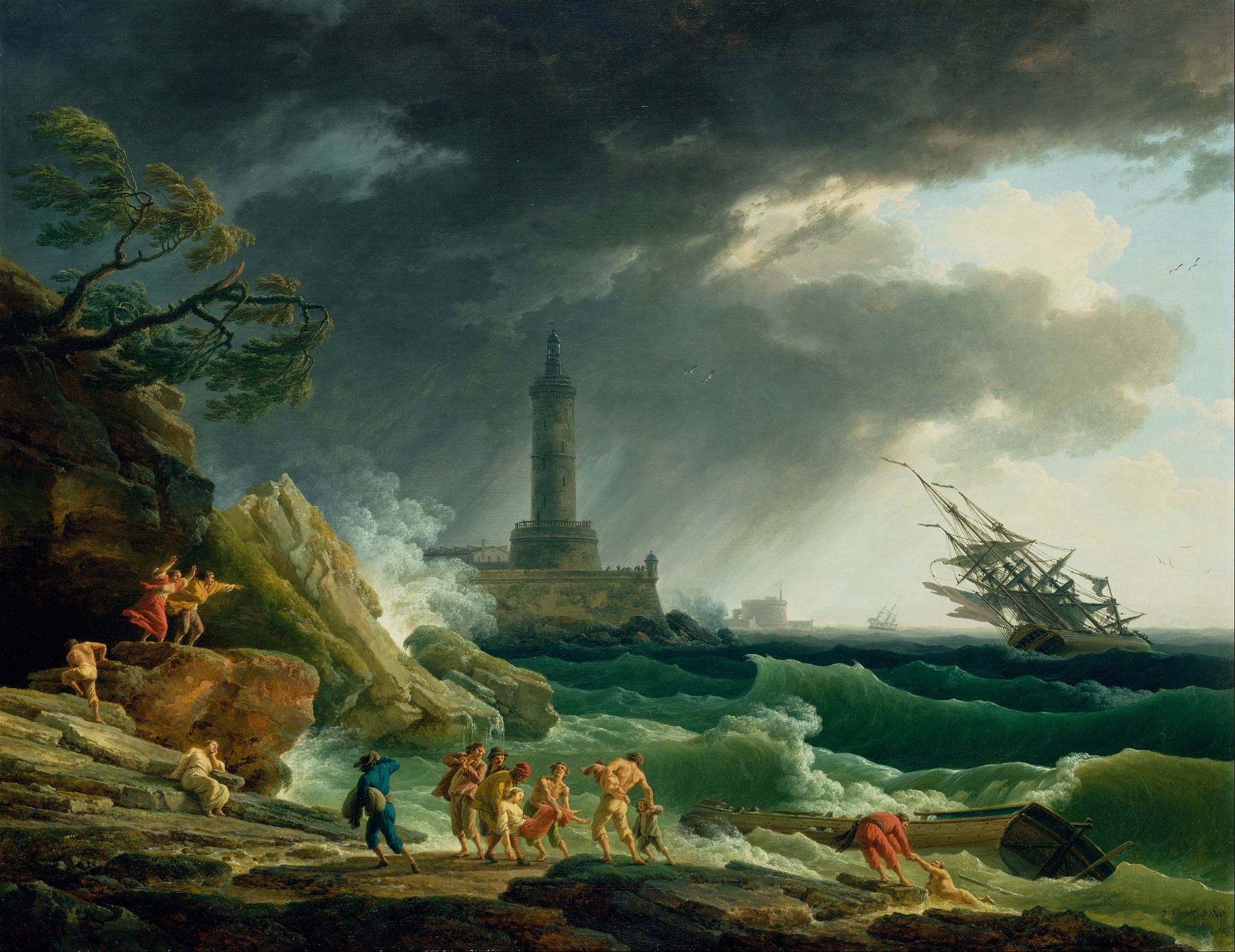
Aegaeon was associated with the stormy Aegean seas.
Aside from being an ally of the Olympian gods, he is also regarded as the god of the stormy Aegean seas. In fact, his name is closely associated with the Aegean seas, and it is believed that it was named in honor of him.
Family Background
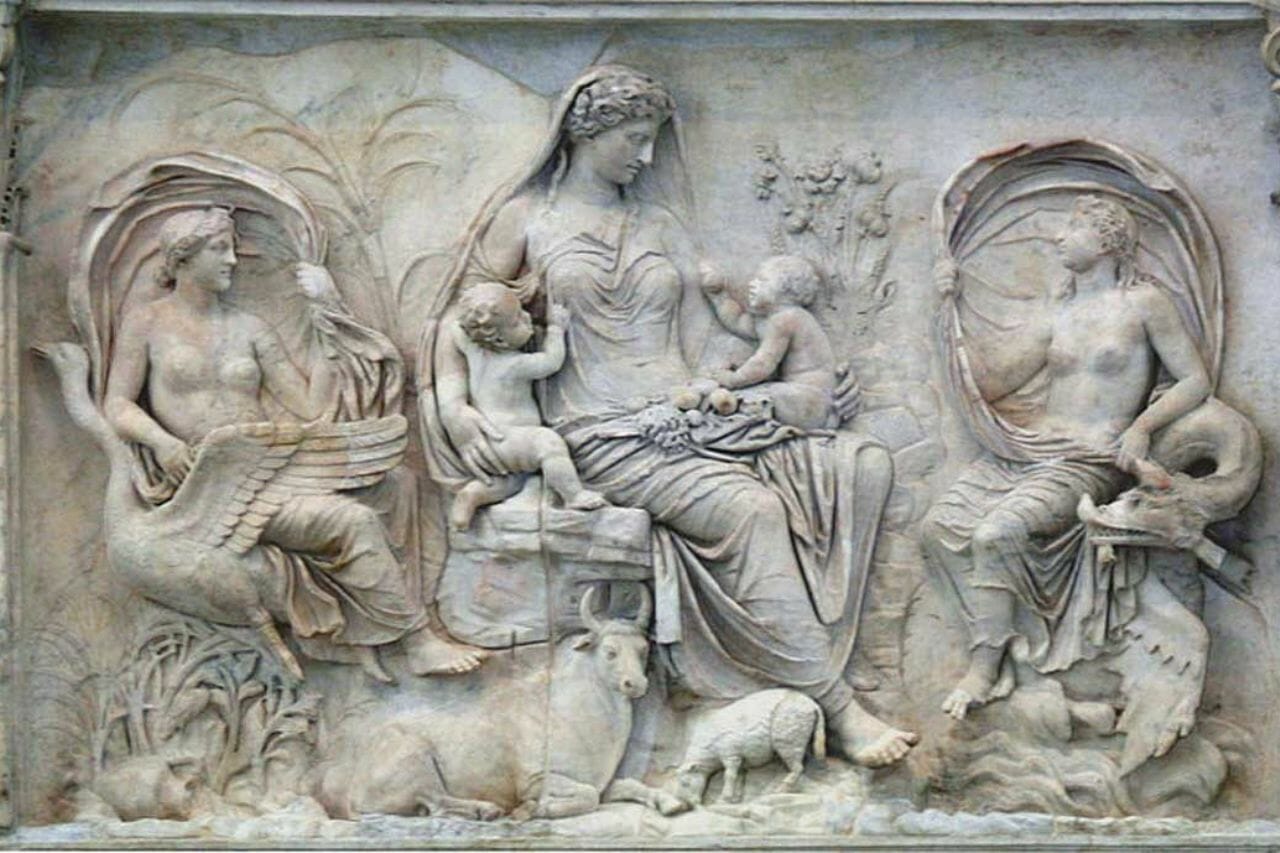
Gaea, the primordial Earth goddess and mother of the Hecatonchires.
Being one of the children of the primordial beings (Gaea and Uranus), the majority of the titans, gods, and goddesses are related to this monsterous creature, especially the deities of the waters. Below are some of them:
Potamoi
These beings were male gods of the rivers and streams of the earth, in addition, they are also sons of Gaea and Uranus. They are often depicted as so numerous that the number 3000 was only used to show their innumeracy.
They are the fathers of the Naiads, who were the nymphs of springs and fountains, whereas the Oceanids are their sisters. Their appearances varied but were presented as either a bull with a man’s head, a man with bull horns and fish tails as legs, or a man lying down with an arm resting on a pitcher of water.
Thaumas
Another god of the sea, Thaumas is a son of Gaea and Pontus and married to Elektra, who is one of the Oceanids. He was the god of the sea until Poseidon overthrew him.
Salacia
In contrast to Aegaeon as the god of the stormy Aegean seas, this sea goddess represents the serene and sunny side of the seas. Her name was derived from the Latin word “sal,” meaning salt. She is also known as Amphitrite in Greek mythology; she is a seawater nymph who is the consort of Poseidon.
Additional Characters With the Same Name
Aside from the giant, there are others who have the same name, but they are not the same person as the monster who encoutered Zeus. These characters are gigantes, and even the Arcadian prince.
One of the Gigantes
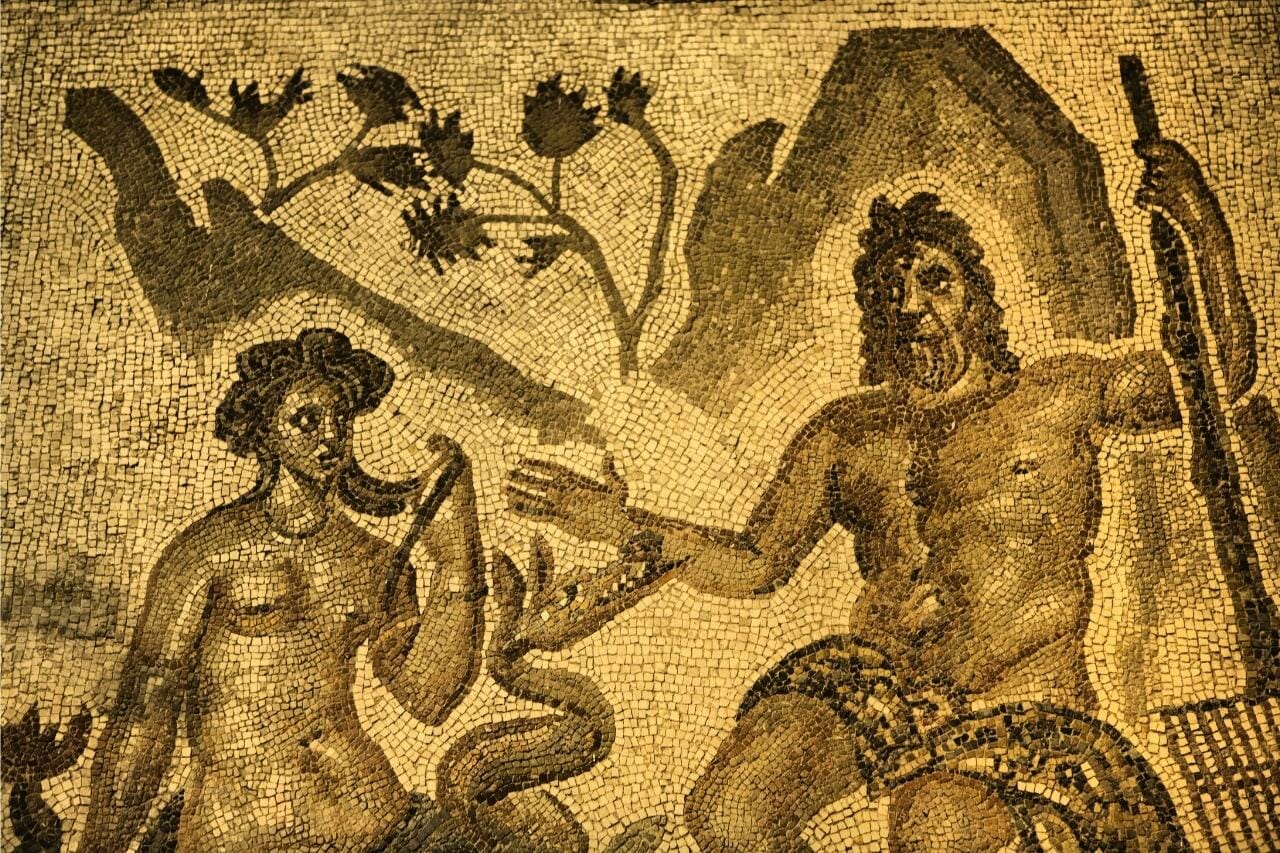
Aegaeon is also said to be the name of one of the Giants, also known as Gigantes. They were a race of fierce warriors that sprung from the drops of Uranus’ blood on the ground when Cronus castrated him. They are often depicted differently. Some are more human-like in appearance, whereas others have a half animal, half human look, even having serpents as legs.
The Arcadian Prince
Another character named Aegaeon in Greek mythology is an Arcadian prince. One of the 50 sons of the famous King Lycaon by an unidentified woman, he and his brothers were known to be evil. Zeus knew about this and went to test them. Disguised as a peasant, the brothers served him food mixed with a child’s entrails. The enraged Zeus hurled the food and struck them with lightning. This killed Aegaeon, his brothers, and his father.
Conclusion
The Greek pantheon has a lengthy list of gods and goddesses aside from the primordial beings, first-generation and second-generation titans, so it is understandable that some do not receive the same attention and popularity as others. Aegaeon is one of the less well-known second-generation titans. Let’s recap what we have learned about him:
- Aegaeon’s name is derived from the Greek word “aigis,” which means “goatish” or “stormy.”
- There are different characters in Greek mythology named Aegaeon, such as one of the Hecatonchires, a god of stormy seas, one of the Gigantes, and a prince who disrespected Zeus. However, the most well-known is Aegaeon as one of the three Hecatonchires.
- Also called Briareus, he is one of the giant creatures with fifty heads and one hundred arms. They were imprisoned in Tartarus by Uranus and were only freed by Zeus during the battle called Titanomachy.
- They sided with Zeus, and after the battle was won, they became guards of Tartarus, where the titans who lost in the battle were imprisoned. He also helped Zeus to be restored as king of the gods during the rebellion in Mt. Olympus.
- With the primordial beings Gaea and Uranus as parents, he is related to the majority of titans, as well as other gods and goddesses.
Even though Aegaeon possessed a monstrous appearance and was expected to do only evil things, he has proven his loyalty to Zeus and became not only the supreme god’s rescuer but also helped prevent the outburst of chaos among the gods. In the end, the giant helped to restore order not only in Olympus but also, essentially, in the universe.