Damia: The Goddess of Growth in Nature
Damia, in Greek mythology, is a minor goddess of the fertile Earth. She was also considered one of the Horae, the goddesses of the seasons, and the natural portions of time. She was worshipped in different parts of Greece, along with other gods and goddesses. Read on and discover more details about the goddess Damia, her origins, myths, and legends, as well as her journey toward divinity.
Damia Goddess
Damia Goddess of the fertile Earth was worshipped in Athens alongside Hegemone and Carpho. The former was the goddess of plants who make them bloom and bear fruit, whereas the latter was the goddess of fruition. Meanwhile, in the Argolis region, she was worshipped in the cities of Argos, Epidaurus, Troezen, and others.
Her Roman equivalent was Bona Dea, which means "good goddess." She was the goddess of ancient Roman religion. Her themes are fertility, divination, femininity, blessing, and abundance. She was also considered the goddess of healing, protection, chastity, and fertility, both in women and on land. It was said that Bona Dea's cult was probably the reason why the Greek cult of she was grafted.
Damia's Assortment
She was generally known for being assorted to or her combination with Auxo or Auxesia, the goddess who grants growth and prosperity to the field. Auxesia is the epithet of Persephone, the goddess of spring growth and the daughter of Demeter. Together, they were described as a pair of Cretan maidens who may have been elevated to dignity after being wrongfully stoned to death by peasants.
Name Meaning
Damia meaning "Earth-Mother" or "Of the Land" is a Greek word referring to a goddess with pleasing femininity. Her name came from the Greek words "da," "de," and "ge," which all mean "earth," and "maia," meaning "nursing mother." Damia pronunciation is "dAA my yA." She was a possible epithet of Demeter, the ancient Greek goddess of fertile earth and the harvest, and she is probably the same as Carpho, the goddess of fruition.
Origination
This goddess and Auxesia were once mortal women from originating from the island of Crete, perhaps priestesses, who according to Troezenian legend were stoned to death by local peasants due to a revolt that occurred in the city. Eventually, She and Auxesia were given a divine honor by Troezenians, who also organized a festival called "Festival of the Lithobolia" or "Stoning."
Worship of Damia and Auxesia
The worship of Damia and Auxesia started in the olden days when the city of Epidaurus was struck by famine, as they were unable to grow any food. They decided to go to the oracle of Delphi to seek advice concerning their calamity. The priestess told them to erect statues of the goddesses Damia "of the Land" and Auxesia "Growth," saying that if they follow the instructions, their land would be better.
They were asked neither to make it out of bronze or stone, but rather to make it specifically out of olive woods. Epidaurians, who didn't have olive woods, then asked permission from the Athenians to allow them to cut down some olive trees, assuming the olives were the holiest.
Athenians then agreed to give them trees but in return, they will have to pay tribute to Athena, the goddess of their city, and Erechtheus every year. Epidaurians agreed to the demands of the Athenians. Eventually, they created statues of Damia and Auxesia out of the olive trees and set them up. After doing so, their land bore fruit as it had never done before.
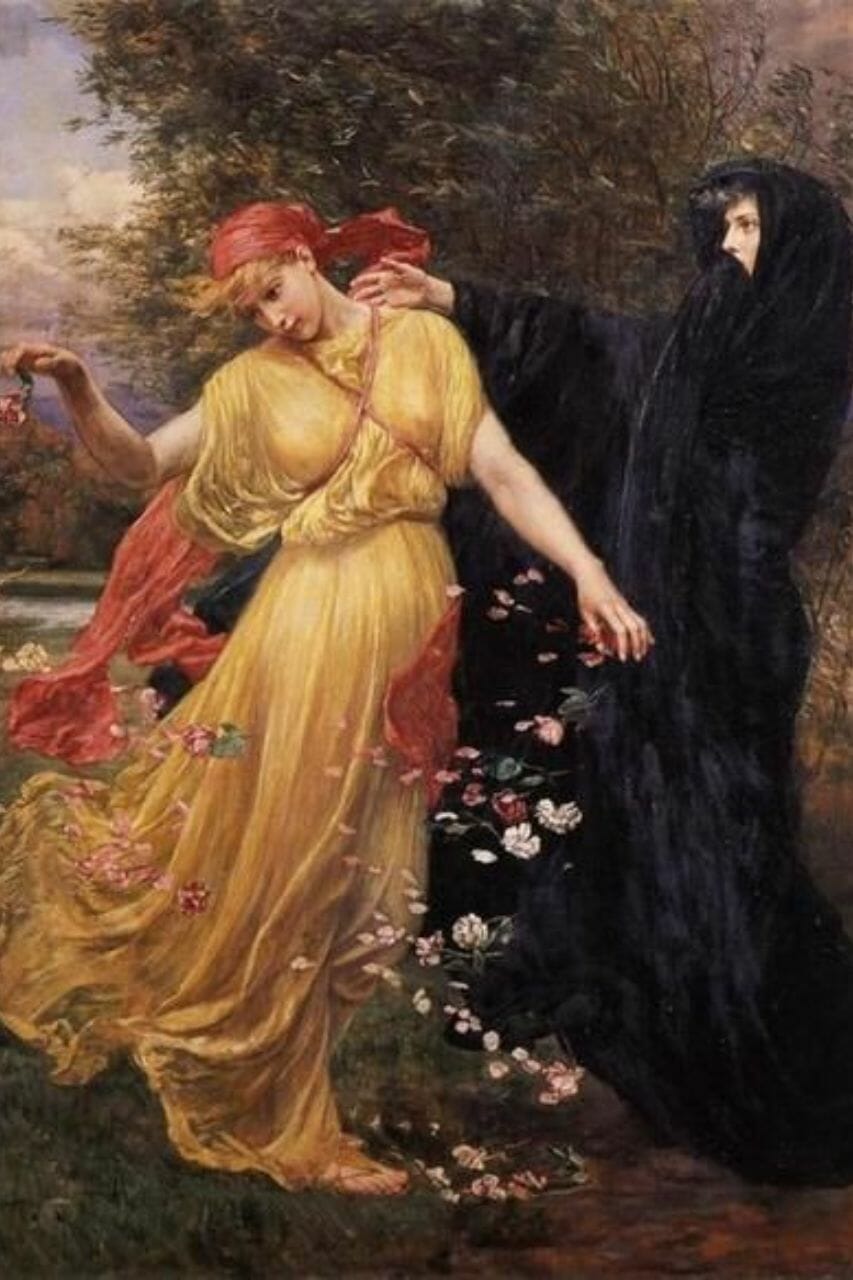
Demeter and Persephone were often considered epithets or aliases of Damia and Auxesia, the goddesses of fertile earth and growth
The Stealing of Statues
In 540 BC in an insurrection, Aegina separated itself from Epidaurus. They build their own ships, and during the revolt, they stole the statues of Damia and Auxesia. Upon reaching their island, they set up the statues in the middle part of their city called Oea, which was about 20 furlongs far from the city. There, they fulfilled rites, offered sacrifices, celebrated mysteries, and tried to gain the favor of the two goddesses.
Damia and Auxesia were honored by competing with choruses in the satirical and abusive mode. They set up two groups of female choruses consisting of ten women in each team and dedicated to each one of the pair. Under the leadership of a man, these choruses would mock each other and would aim their raillery at the women of the country.
On the other hand, Epidurians ceased fulfilling their agreement with the Athenians and were prevented from offering tribute to the goddess Athena and Erechtheus as the statues were stolen. It came to the knowledge of the Athenians, who then sent an angry message to the Epidurians.
The Counter Argument
In reply, the Epidurians said that for as long as they had the images in their country, they are willing to fulfill their agreement, but now that they are deprived of the statues, the Athenians should ask for their dues from the men of Aegina who are now in possession of the statues. The Athenians, therefore, demanded that the Aeginetans restore the statues of the goddesses, but the latter rejected them.
The Athenians were forced to react and tried to steal the statues and bring them back to Epidaurus to be able to continue receiving the tribute. When the Aeginatans turned them down, the Athenians sent the trireme's crew to attempt to get the statues back. They threw ropes at the statues in an attempt to drag them away by using force.
However, according to legend, as they were dragging the statues, they were interrupted by earthquakes and thunderstorms wherein all of them were consumed by madness, became oddly enraged, and killed one another as if they were enemies. Only a single person escaped the place and brought the bad news to Athens.
Goddess Association
In a related manner, Damia was often associated with the goddess Demeter as she was the ancient Greek goddess of the harvest, agriculture, and grain. Demeter was one of the Twelve Olympians. She was the middle daughter of Rhea and Cronus, and she was also the mother of Persephone, the goddess of spring, nature, and vegetation.
Most scholars identify that Demeter's name means "Mother Earth," referring to her role as a mother goddess. However, they linked it to the word "Deo," which referred to the name of a few grains. Demeter became mostly known as the "Giver of Food and Grain" or "She of the Grain."
Ancient Greeks identified Damia also as "The Bringer of Laws" or Tesmophoros, and they organized a festival for women called Tesmophoria to celebrate her. Her other epithets included "The Giver of Gifts," "Great Mother," "The Bearer of Food," and "Green," as she presided over the cycles of plants and seasons.
Demeter was usually portrayed as a matronly-looking woman who was fully clothed. She was depicted either standing, enthroned, or seated and extending her hand. Sometimes, she was riding a chariot with her daughter Persephone.
Demeter and Persephone also share the same symbols, such as the scepter, ears of corn, a sheaf of wheat, cornucopia, a crown of flowers, or a torch. Together, they were the goddesses in the Eleusinian Mysteries, the ancient Greeks' most famous secret religious festival.
Demeter and Persephone
The goddesses Demeter and Persephone were the possible alias of the goddesses Damia and Auxesia. Persephone was always within her mother's vicinity, and her being stolen by Hades resulted in her mother creating the seasons of the earth.
When Persephone was picking flowers in the meadow, Hades, the king of the Underworld, saw her and decided that he wants her to be his wife. Using his ability, he opened up the earth and abducted Persephone to the Underworld, this was one of the specifics of Damia.
When Demeter discovered the incident, she inflicted a great drought and famine upon the earth. Demeter swore that she will not restore the harvest until Persephone was released and returned to her.
Before releasing Persephone, Hades tricked the goddess by making her eat a pomegranate fruit before she left, without knowing that the fruit will make her bound to Hades and the Underworld. This devastated Demeter, but Zeus arranged a compromise. Persephone was the one to spend one-third of the year in the Underworld with her husband and the remaining time of the year, she would spend with her mother on earth. Both parties agreed to the terms, and from that deal, the seasons were born, which is through Damia's strength.
It is stated that Demeter grieves over Persephone whenever she was in the Underworld. This is the reason why the winter season comes. There is no harvest, no agriculture, no vegetation, and no fertility of the earth. When her daughter came back to the earth after her time in the Underworld is complete, Demeter's joy and happiness coincide with the months of summer and fertile spring, which was prosperous by Damina.
Conclusion
Damia is the Greek goddess of the fertile Earth who was worshipped in combination with the goddess Auxesia. They were considered the goddesses that helped famine-stricken land.
She was the combination of two goddesses who combined their strength and granted it to Damia.
She was worshipped in some regions of Greece, because of her almighty strength.
Worshippers erected statues of Damia and Auxesia made out of olive woods.
They were honored by the offering of sacrifices and choral performances.
Demeter and Persephone were the epithets or aliases of Damia and Auxesia.
The legend of the goddesses Damia and Auxesia was not an ordinary tale because it rarely happens that mortal women can make their way toward divinity. Now, after reading this article you know all about this goddess and her aliases.