Defying Creon: Antigone's Journey of Tragic Heroism
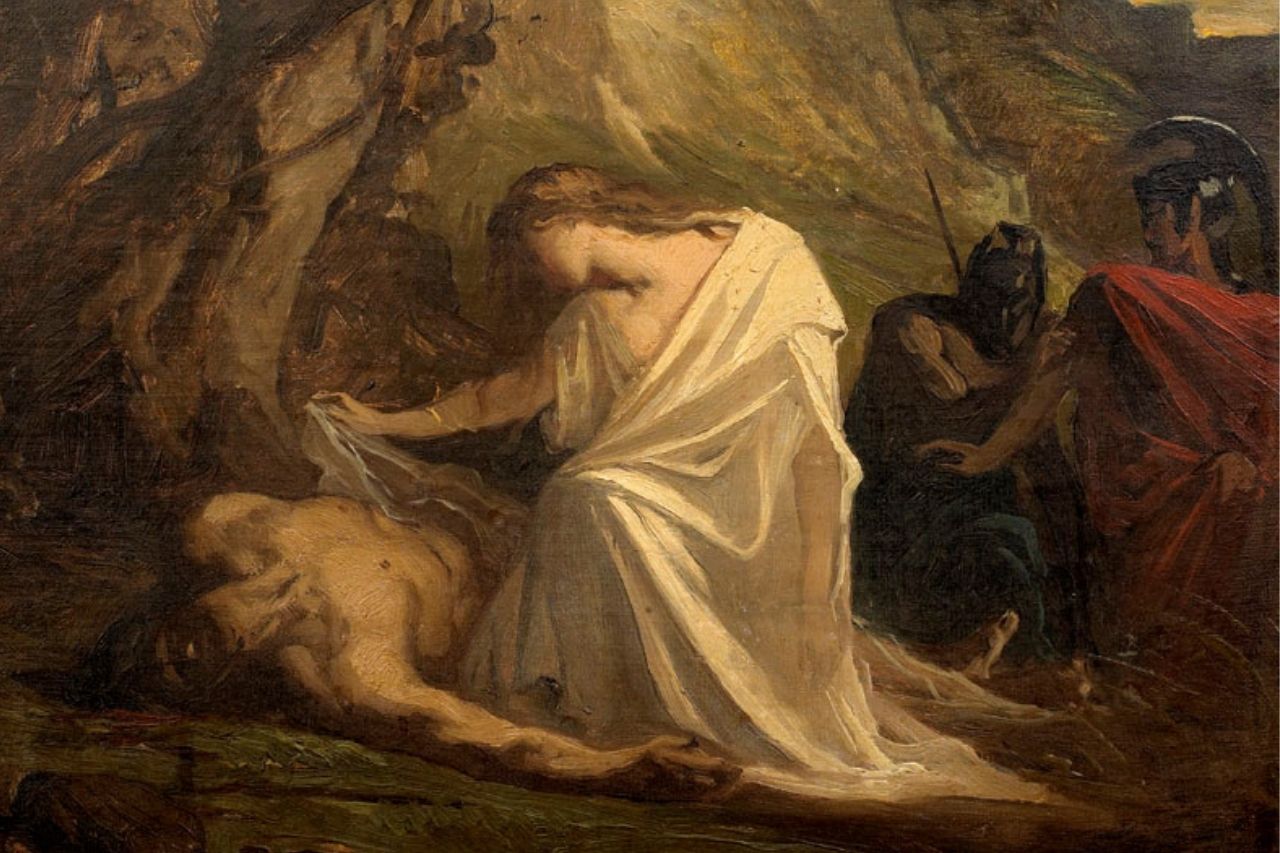
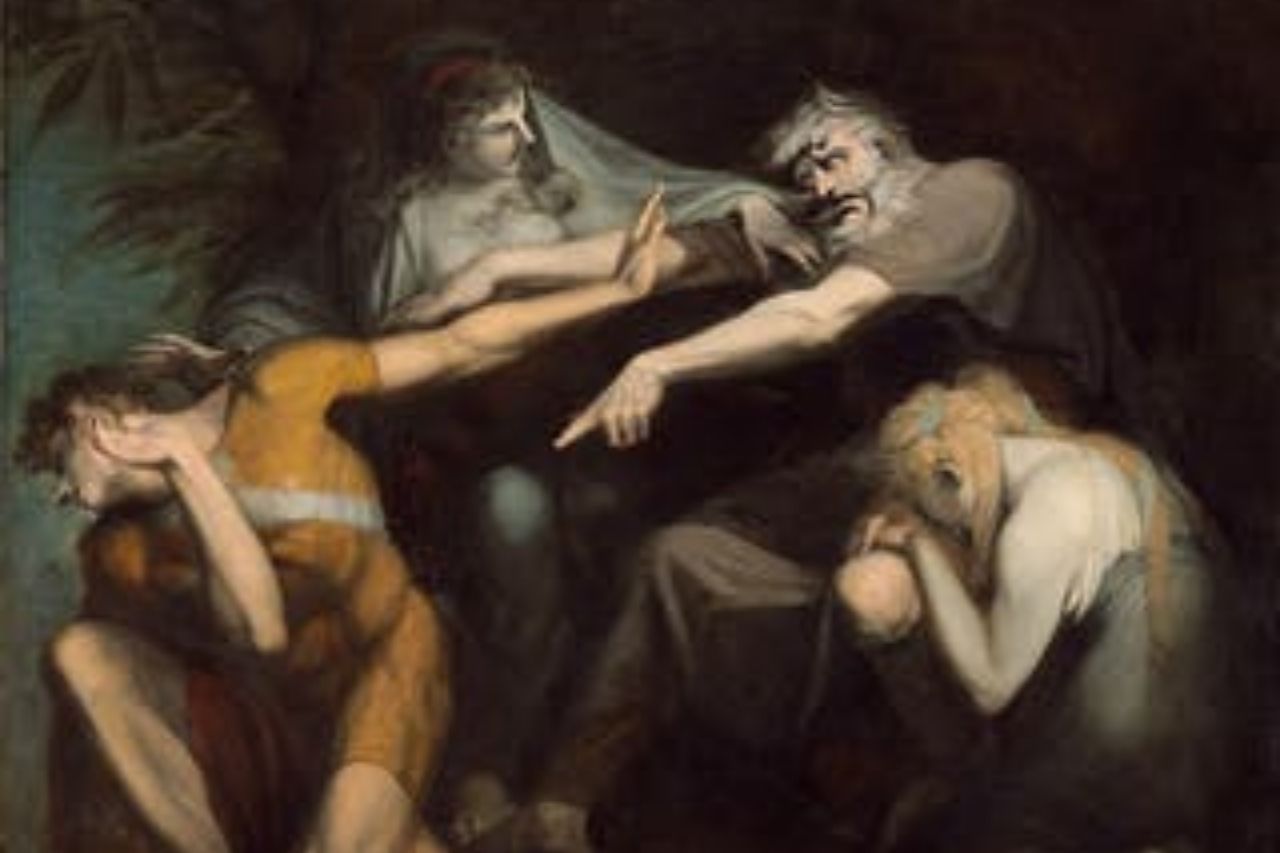
By defying Creon, Antigone sealed her own fate, quite literally. But how did it come to that? How did the daughter of Oedipus end up sealed alive in a tomb, sentenced to death by her own uncle for the crime of burying her dead brother? It seems as if fate had it in for Creon, Oedipus, and Antigone. The entire family was under a curse, one of hubris.
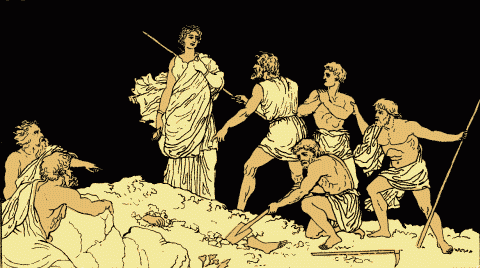
King Creon, brother to Jocasta, has taken over the Realm. In this third of the Oedipus plays, Thebes is at war with Argos. Both of Oedipus’ sons, Polynices and Eteocles, have been killed in battle. Creon has declared Polynices a traitor and refuses to allow him to be buried, defying both the law of man and gods:
“But for his brother, Polyneices-who came back from exile, and sought to consume utterly with fire the city of his fathers and the shrines of his fathers’ gods-sought to taste of kindred blood, and to lead the remnant into slavery;-touching this man, it hath been proclaimed to our people that none shall grace him with sepulture or lament, but leave him unburied, a corpse for birds and dogs to eat, a ghastly sight of shame.”
Why is Creon the antagonist in the play Antigone, when it was Polyneices who was the traitor? Hubris; his pride and inability to accept others’ wise advice led him ultimately to lose everything. The Chorus of elders, symbolizing Creon’s advisors, initially praise the rule of law, setting them up to support Creon. Still, when he sentences Antigone to death, even against the pleading of his own son, who is engaged to her, they begin to sing of the power of love, setting up the conflict between the law and loyalty and love.
Why is Creon Wrong?
In Creon, character traits like pride, dignity, and the desire to maintain law and order in his kingdom are admirable. Unfortunately, his pride and desire for control superseded his sense of decency.
His order, on its face, is legal, but is it moral?
Creon is trying to maintain law and order and make an example of Polynices, but he does so at the expense of his own human dignity. By imposing such a harsh sentence on Oedipus’ son, and later on Antigone, he overrules all of his advisors and even his family.
The play opens with Antigone informing her sister Ismene of her plan. She offers Ismene the opportunity to assist her in doing what she feels is right for their brother, but Ismene, afraid of Creon and his temper, refuses. Antigone replies that she would rather die than live with not having done what she could to give him a proper burial. The two-part, and Antigone goes on alone.
When Creon hears that his order has been defied, he is furious. He threatens the sentry who brings the news. He informs the frightened sentry that he himself will face death if he does not discover the one who has done this. He is infuriated when he realizes it was his own niece, Antigone, who has defied him.
For her part, Antigone stands and argues against her uncle’s edict, arguing that even though she has defined the king’s law, she has the moral high ground. She never denies what she has done. Hoping to die alongside her sister, Ismene tries to confess to the crime falsely, but Antigone refuses to accept guilt. She alone has defied the king, and she will face the punishment:
“Die I must,-I knew that well (how should I not?)-even without thy edicts. But if I am to die before my time, I count that a gain: for when any one lives, as I do, compassed about with evils, can such one find aught but gain in death? So for me to meet this doom is trifling grief, but if I had suffered my mother’s son to lie in death an unburied corpse, that would have grieved me; for this, I am not grieved. And if my present deeds are foolish in thy sight, it may be that a foolish judge arraigns my folly.”
In denying Polynices a proper burial, Creon is going against not only the law of the gods but the natural law of family caring. He refuses to turn away from his folly, even when confronted with his cruelty by his niece.
Is Creon in Antigone the Villain?

Ironically, even though he is clearly the antagonist in Antigone vs. Creon’s battle, “tragic hero” is a more accurate description of Creon than a villain. His reasoning and motivation are to keep the peace, protect the pride and security of Thebes, and carry out the duty he has to his throne and his people. His motives seem unselfish and even pure.
He is, presumably, willing to sacrifice his own comfort and happiness for the sake of his people. Unfortunately, his true motivation is pride and a need for control. He believes Antigone is stubborn and stiff-necked. He rejects her claim of morality:
“I saw her e’en now within-raving, and not mistress of her wits. So oft, before the deed, the mind stands self-convicted in its treason, when folks are plotting mischief in the dark. But verily, this, too, is hateful-when one who hath been caught in wickedness then seeks to make the crime a glory.”
As they argue, Antigone asserting that her loyalty to her brother is stronger than her obedience to Creon’s law, the truth comes out. Creon will not allow a mere woman to stand against him:
“Pass, then, to the world of the dead, and, it thou must need love, love them. While I live, no woman shall rule me.”
Antigone has defied his lawful (if immoral) order, and so she must pay the price. At no point, even when confronted with it, does he acknowledge that the order was given out of wounded pride. He will not accept that Antigone is in the right.
Ismene Pleads her Sister’s Case
Ismene is brought in, weeping. Creon confronts her, believing her emotion betrays foreknowledge of the deed. Ismene tries to claim a part in it, even trying to absolve Antigone. Antigone responds that justice will not allow her to accept her sister’s confession and asserts that she alone carried out the deed against Ismene’s will. Antigone refuses to allow her sister to suffer the punishment with her, even though Ismene cries that she has no life without her sister.
The advisors, represented by the chorus, ask Creon if he will deny his own son the love of his life, and Creon responds that Haemon will find “other fields to plough” and that he does not want an “evil bride” for his son. His pride and hubris are too great for him to see reason or have compassion.
Antigone and Creon, Ismene and Haemon, Who are the Victims?

In the end, all of the characters suffer from Creon’s hubris. Haemon, Creon’s son, comes to his father to plead for his betrothed’s life. He assures his father that he continues to respect and obey him. Creon responds that he is pleased with his son’s show of loyalty.
Haemon goes on, however, to plead with his father that he might change his mind in this case and see the reason for Antigone’s case.
“Nay, forego thy wrath; permit thyself to change. For if I, a younger man, may offer my thought, it was far best, I ween, that men should be all-wise by nature; but, otherwise-and oft the scale inclines not so-‘tis good also to learn from those who speak aright.”
Creon refuses to listen to his son’s reasoning, arguing that it’s not right that a younger man schools him. He refuses Haemon’s council based on his age and even turns down the voice of his own people in favor of his pride, saying, “Shall Thebes prescribe to me how I must rule?”
He accuses Haemon of “yeilding to a woman” over his fealty to his father, ignoring the irony of the argument when he has sentenced Antigone to death for the proposed crime of showing fealty to her brother. Creon seals his own fate with his insistence upon having his own way.
With Creon Greek Mythology Offers an Example of a Tragic Hero
Creon meets Haemon’s pleading and arguments with him with a stubborn refusal to budge. He accuses his son of siding with a woman over the law and his father. Haemon responds that he cares for his father and does not want to see him follow this immoral path. The Seer Teiresias tries his luck at arguing with Creon, but he has turned away as well, with accusations of having sold out or being foolish in his old age.
Unmoved, Creon orders Antigone sealed in an empty tomb. Haemon, going to his love’s aid, finds her dead. He dies by his own sword. Imene joins her sister in death, unable to face life without her, and finally, Eurydice, Creon’s wife, commits suicide in grief over the loss of her son. By the time Creon realizes his mistake, it is too late. His family is lost, and he is left alone with his pride.