Timeless Myths Logo

Explore myths and legends from cultures around the world

Featured

Classical Mythology
Classical Mythology Greek and Roman myths, gods, heroes, and epic tales
Norse Mythology
Norse Mythology Vikings, Asgard, Ragnarok, and the nine realms
Celtic Mythology
Celtic Mythology Irish, Welsh, and Gaelic legends and folklore
Ancient Literature
Ancient Literature Classical texts, translations, and literary analysis

All Mythologies

Arthurian Legends King Arthur, Camelot, the Round Table, and the Holy Grail Egyptian Mythology Pharaohs, pyramids, and ancient Nile deities Japanese Mythology Shinto gods, spirits, and legendary creatures Chinese Mythology Dragons, immortals, and celestial beings Aztec Mythology Mesoamerican gods, rituals, and creation myths

Discover gods and goddesses from every pantheon

Featured

Greek Gods
Greek Gods The Olympians, Titans, and primordial deities
Norse Gods
Norse Gods Odin, Thor, Loki, and the Aesir and Vanir
Egyptian Gods
Egyptian Gods Ra, Osiris, Isis, Anubis, and more
Japanese Gods
Japanese Gods Amaterasu, Susanoo, and Shinto kami

All Gods & Deities

Roman Gods Jupiter, Mars, Venus, and the Roman pantheon Celtic Gods The Tuatha Dé Danann and Celtic deities Aztec Gods Quetzalcoatl, Tezcatlipoca, and Aztec deities Chinese Gods Jade Emperor, Dragon Kings, and celestial beings View All 150+ Deities Browse the complete collection of mythological deities
View all gods & deities

Tales, legends, and character profiles from mythology

Featured

All Stories
All Stories Browse 800+ mythology and history stories
Characters
Characters Profiles of 67 mythological heroes, gods, and villains

All Stories

Mythology Stories Ancient myths and legends retold History Stories Historical tales from ancient civilizations Religion & Culture Religious traditions and cultural beliefs
View all stories

Tools, references, and site information

Featured

Name Generators
Name Generators Generate fantasy and mythology-inspired names
All Articles
All Articles Browse 1,800+ articles on mythology and history

All Resources

About Timeless Myths Learn about this mythology resource Bibliography Sources and references used on this site FAQ Frequently asked questions Contact Get in touch with us
Search
Classical Mythology Greek and Roman myths, gods, heroes, and epic tales Norse Mythology Vikings, Asgard, Ragnarok, and the nine realms Celtic Mythology Irish, Welsh, and Gaelic legends and folklore Arthurian Legends King Arthur, Camelot, the Round Table, and the Holy Grail Egyptian Mythology Pharaohs, pyramids, and ancient Nile deities Japanese Mythology Shinto gods, spirits, and legendary creatures Chinese Mythology Dragons, immortals, and celestial beings Aztec Mythology Mesoamerican gods, rituals, and creation myths Ancient Literature Classical texts, translations, and literary analysis
Greek Gods The Olympians, Titans, and primordial deities Roman Gods Jupiter, Mars, Venus, and the Roman pantheon Norse Gods Odin, Thor, Loki, and the Aesir and Vanir Egyptian Gods Ra, Osiris, Isis, Anubis, and more Celtic Gods The Tuatha Dé Danann and Celtic deities Aztec Gods Quetzalcoatl, Tezcatlipoca, and Aztec deities Japanese Gods Amaterasu, Susanoo, and Shinto kami Chinese Gods Jade Emperor, Dragon Kings, and celestial beings View All 150+ Deities Browse the complete collection of mythological deities View all gods & deities
All Stories Browse 800+ mythology and history stories Characters Profiles of 67 mythological heroes, gods, and villains Mythology Stories Ancient myths and legends retold History Stories Historical tales from ancient civilizations Religion & Culture Religious traditions and cultural beliefs View all stories
Name Generators Generate fantasy and mythology-inspired names All Articles Browse 1,800+ articles on mythology and history About Timeless Myths Learn about this mythology resource Bibliography Sources and references used on this site FAQ Frequently asked questions Contact Get in touch with us
Search Search the entire mythology archive

Epithets in the Iliad: Titles of Major Characters in the Epic Poem

iliad

The epithets in the Iliad are replete with that are usually titles that praise a character or reveal their unique characteristics. Since the Iliad is a poem and meant to be recited, many scholars believe that epithets help the narrator to remember the name and events of the characters.
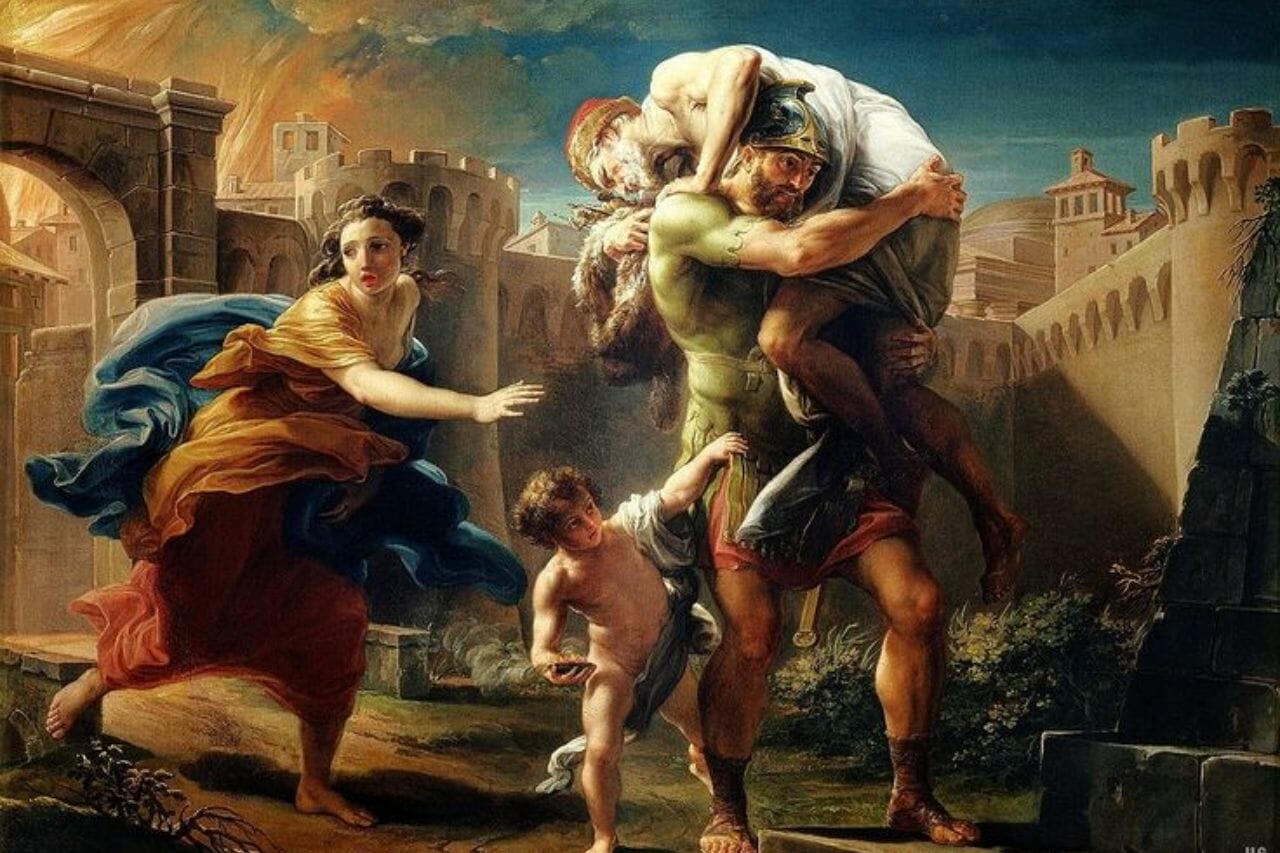
Epithets in the Iliad - what are those

What Are Epithets in the Iliad?

Epithets in the Iliad are phrases that express a feature or a quality of a character in the epic poem. It is Homer's way of giving more insight into the characters. The epithets enhance the poetic feeling and the rhythm of the Iliad while revealing more about the characters.

Epithets in the Iliad

Epithets are illustrated in different ways in the Iliad, for example, Achilleus is referred to as "swift-foot" due to his speed and agility while Hektor is known as "man-killing" as a result of his exploits on the battlefield.

Achilles Epithets in the Iliad

As already discovered, one of Achilleus' epithets is "swift-footed" to describe his athleticism. Being quick to attack or defend is a very important aspect of combat for the slightest miscalculation could result in death.

Achilleus is known as the greatest Greek warrior whose presence raised the morale of his soldiers while striking fear in the hearts of the Trojans. His dexterity with weapons ensures that he kills his enemies even before they know it.

The exact wording of the epithet depends on the translation. In books, the epithet is translated as "Achilleus of the swift feet" but the meaning remains the same.

Another epithet of Achilleus is "lion-hearted" which captures the bravery and fearlessness of the Greek epic hero. His fearlessness made him face a thousand foes and empowered by his invincibility, he was able to conquer them all. His courage pitted him against the most powerful Trojan warrior, Hektor, who he killed without breaking a sweat.

Another one in the list of epithets of the epic hero is "like to the gods" which refers to Achilleus' god-like status (demigod). He was born of the nymph Thetis and Peleus the King of the Myrmidons in Thessaly. According to some versions of the myth, his mother attempted to make him immortal by dipping in the infernal river Styx. Achilles became invincible except for the part that his mother held while plunging him into the river.

Epithets of Hector

Hector is called "man-killing" or "man-killer" depending on the translation and it depicts his ability to route the Greek warriors. As a "man-killer", Hektor kills some top officials in the Greek army including Patroclus and Protesilaus the king of Phylake. As the greatest Trojan warrior, this name evokes confidence and heightens morale in the camp.

He is also known as the "horse tamer" not for his ability to tame horses but his capacity to tame the "wild" Greeks. The firstborn son of Priam is called "shepherd of the people" for his role as the commander and protector of the Trojan army while his epithet "of the glinting helmet" reflects his warrior status.

True to his epithets, Hector's leadership skills are unquestionable as he gives everything on the battlefield including his life. His epithet "tall" shows his ranking in the Trojan army and how his subordinates perceive him.

Thetis Epithets

The Homeric epithet for the nymph and mother of Achilleus is silver-footed and though the meaning is not clear, it is believed to indicate her shape-shifting ability. The nymph is known to change shapes either to escape capture or to deceive her victims.

When Peleus attempts to marry her, the nymph keeps eluding him until a friend advised him to hold her tightly. Peleus finally succeeds and their marriage is witnessed by all the deities.

Epithets of Agamemnon

Agamemnon is the Greek general who commands the Achaean troops after Paris kidnaps Helen the wife of Menelaus. Therefore, as the commander, he is given the epithet "shepherd of the people."

His ability to rally the troops to mount attacks and counteroffensives is indicative of his epithet "lord marshal" while his feats on the battlefront earned him the nickname "powerful." The Greek army commander is also known as brilliant, probably, for how he won the war and "powerful" for his strength and power.

Epithets of Athena

Athena epithets in the Odyssey appear to be similar to hers in the Iliad. The nickname of Athena, the goddess of war, is the "hope of soldiers" as she frequently comes to the aid of the Greek warriors. She encourages and counsels Achilleus and deflects an arrow meant for Menelaus, the King of Sparta and husband of Helen.

She is referred to as the "tireless one" indicating her industry in ensuring that the Greeks won the war. Other epithets include bright-eyed which shows her alertness in protecting the kings and generals of the Greek army.

Nonetheless, she is also referred to as the "daughter of Zeus" and "whose shield is thunder" probably to reflect her relationship with the king of the gods. As the goddess of war, she is compared to her predecessor, Pallas, the Titan god of warcraft, thus she is nicknamed "Pallas".

Epithets of Ajax the Great

Ajax, the Greek warrior and cousin of Achilleus is known as "gigantic" which probably indicates his stature and the shield he wields. Homer also calls him "swift" and "mighty" and it is not surprising that the greatest warrior of Troy could not defeat the Telamonian Ajax.

He is second to Achilleus in terms of power and swiftness. No one can defeat and that is why he is tricked into committing suicide.

Briseis Epithet

She is a slave girl and a war prize of Achilleus who sees her as a monument to his success at the war front. Homer names her "fair-cheeked" and "fair-haired" to describe her beauty and elegance.

Her beauty certainly catches the eye of her captor who treats her as a wife instead of a slave. Thus, when Agamemnon takes Achilleus' slave girl, the pain and shame become unbearable, forcing him to withdraw from the war.
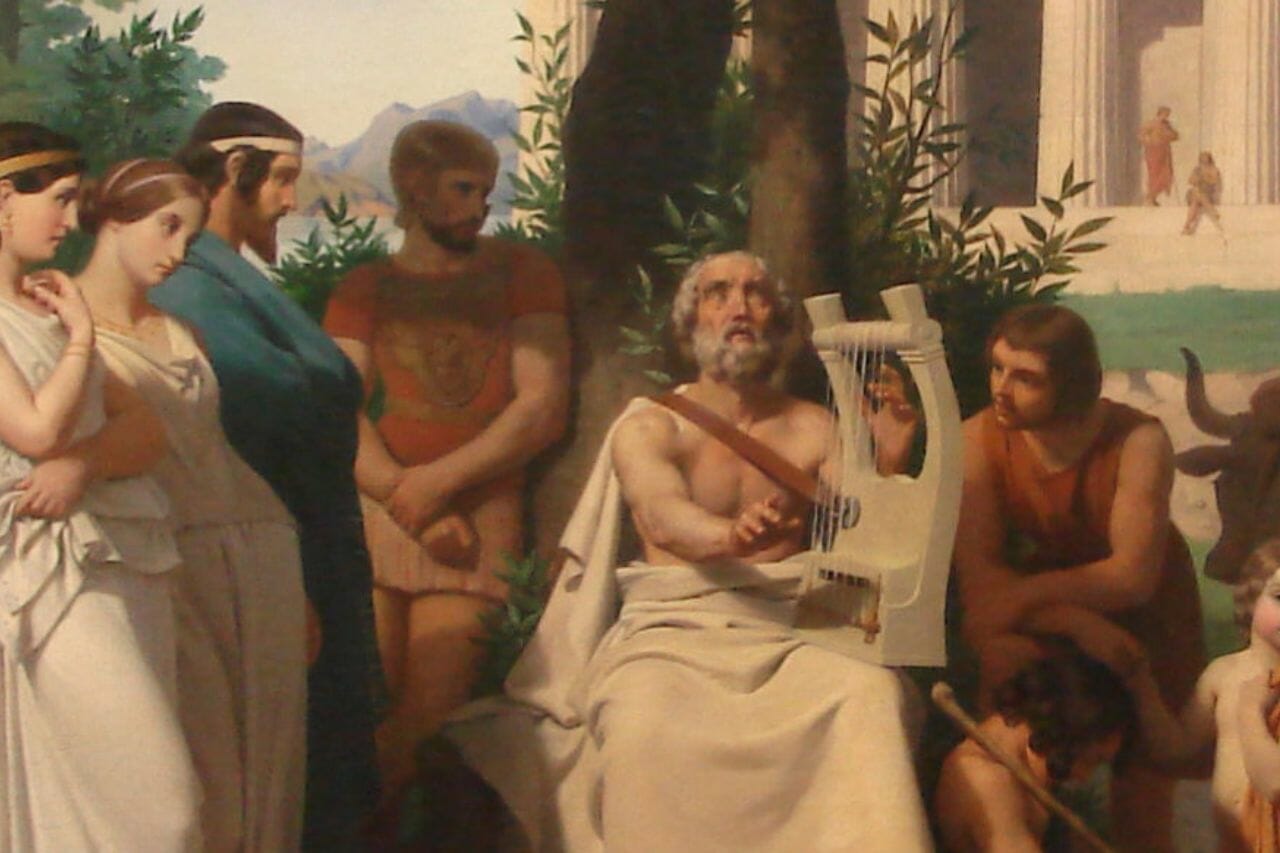
Epithets in the Iliad - why are they important

Conclusion

This article has discussed the use of epithets in Homer's Iliad and given some examples of epithets the poet used to describe some of his major characters. Here is a summary of all that this article has covered:

  • Homer uses epithets to describe and give more information about the characters in the poem.

  • Epithets also add rhythm and beauty to the epic poem while aiding the poet to remember the major characters and events in the poetic piece.

  • The protagonist in the Iliad, Achilleus, is referred to as "shepherd of the people", "swift-footed" and "like to the gods" to reflect his role in the ranks of the Greek army.

  • Homer does not only use epithets for mortals as deities such as Athena are nicknamed "daughter of Zeus" while Thetis is called "silver-footed".

  • The slave girl of Achilleus is called "fair-cheeked" and "fair-haired" to show her beauty which catches the eye of the epic hero, Achilleus, who treats her as his wife.

Epithets are still in use today as many prominent people have either adopted or were given specific names and titles by their admirers.

By Ancient Literature

Created: February 17th, 2024

Modified: January 11th, 2025

Homeric Epithets – The Rhythm of Heroic Descriptions

Homeric Epithets – The Rhythm of Heroic Descriptions

Homeric epithets appear throughout the epic works and help ground the listeners in the writer's expressions of the people and places described. Epithets are more than just flowery descriptive language. They contribute to the poem's form, upholding...

February 16th, 2024 • Ancient Literature
Honor in the Iliad: The Penultimate Aim of Every Warrior in the Poem

Honor in the Iliad: The Penultimate Aim of Every Warrior in the Poem

Honor in the Iliad was more valuable than life, therefore, everyone strived to achieve it. Characters such as Achilles, Agamemnon, Odysseus, Patroclus and even the old Nestor did what they did for the honor that they would receive. To the ancient ...

February 16th, 2024 • Ancient Literature
What is the Role of Athena In The Iliad?

What is the Role of Athena In The Iliad?

Athena in the Trojan War acts as a mentor to Achilles, battling on the side of the Achaeans. Achilles is a hot-headed warrior, impulsively rushing into battle with little discipline. Athena tries to rein in his impulsivity and direct his strength ...

February 16th, 2024 • Ancient Literature
Epithets in Beowulf: What Are the Main Epithets in the Epic Poem?

Epithets in Beowulf: What Are the Main Epithets in the Epic Poem?

Epithet in Beowulf is an extra description given to the verses of the poem to add further imagery to the story. There are plenty of examples of epithets in Beowulf, and it's not just the main character who has them. These epithets add to the depth...

February 16th, 2024 • Ancient Literature
What Roles Did the Gods in The Iliad Play?

What Roles Did the Gods in The Iliad Play?

The gods in the Iliad, as in most Greek mythology, heavily influenced events as they unfolded. While Zeus, the king of the gods, remained neutral, several lesser gods and goddesses chose sides, championing either Greek or Trojan causes. The entire...

February 16th, 2024 • Ancient Literature
Hera in the Iliad: The Role of the Queen of the Gods in Homer's Poem

Hera in the Iliad: The Role of the Queen of the Gods in Homer's Poem

Hera in the Iliad follows all the schemes of the queen of the gods to turn the tide of the war in favor of the Greeks. Some of her attempts were successful while others yielded little or no results. Eventually, her favored side, the Greeks, wins t...

February 16th, 2024 • Ancient Literature
Who Were The Iliad Main Chracters?

Who Were The Iliad Main Chracters?

The main characters in The Iliad included women and men, mortal and immortal, victims, warriors, and gods. Their stories are intertwined and overlapping throughout the epic, weaving the tapestry threads known as the Trojan War. The Trojan war char...

February 16th, 2024 • Ancient Literature
Iliad vs Odyssey: A Tale of Two Epics

Iliad vs Odyssey: A Tale of Two Epics

While the Iliad vs Odyssey question is related and even considered sequential by some, there are various subtle and not-so-subtle differences. For example, The Iliad is more liberal with its mixing of the paranormal and fantasy and the mundane. Th...

February 16th, 2024 • Ancient Literature
Heroism in the Odyssey: Through the Epic Hero Odysseus

Heroism in the Odyssey: Through the Epic Hero Odysseus

Heroism in the Odyssey is one of the prevalent themes easily recognizable in this timeless piece of literature similar to the case of any other epic. Different characters displayed different versions of heroism, and in some cases, you may not read...

February 16th, 2024 • Ancient Literature
Heroes 2

Heroes 2

Heroes II contains information on the heroes who fought in the Trojan War. Below is a list of Greek and Trojan champions. Greek Champions Trojan Champions Please note that I have moved Helen, Penelope, Andromache and Cassandra to the new Heroines ...

April 24th, 1999 • Jimmy Joe
Timeless Myths

Exploring mythology and legends from around the world.

Explore Myths

All Stories Characters All Articles Search Site Map

Mythologies

Norse Mythology Classical Mythology Celtic Mythology Arthurian Legends Mythology Gods Ancient Literature

About Us

Introduction About Jimmy Bibliography FAQs Retro Version

Resources

Timeless Myths All Stories All Articles Characters
© 1999-2026 Timeless Myths • Copyright • Privacy Policy • Cookie Policy • Contact
Follow us: