Greek Mythology: What is a Muse in the Odyssey?
The Muse in the Odyssey is a deity or goddess whom Homer, the author, made an appeal to as he began writing the epic poem. In Greek mythology, there were Greek goddesses who are in charge of giving an author inspiration, skill, knowledge, and even the right emotion at the beginning of their work.
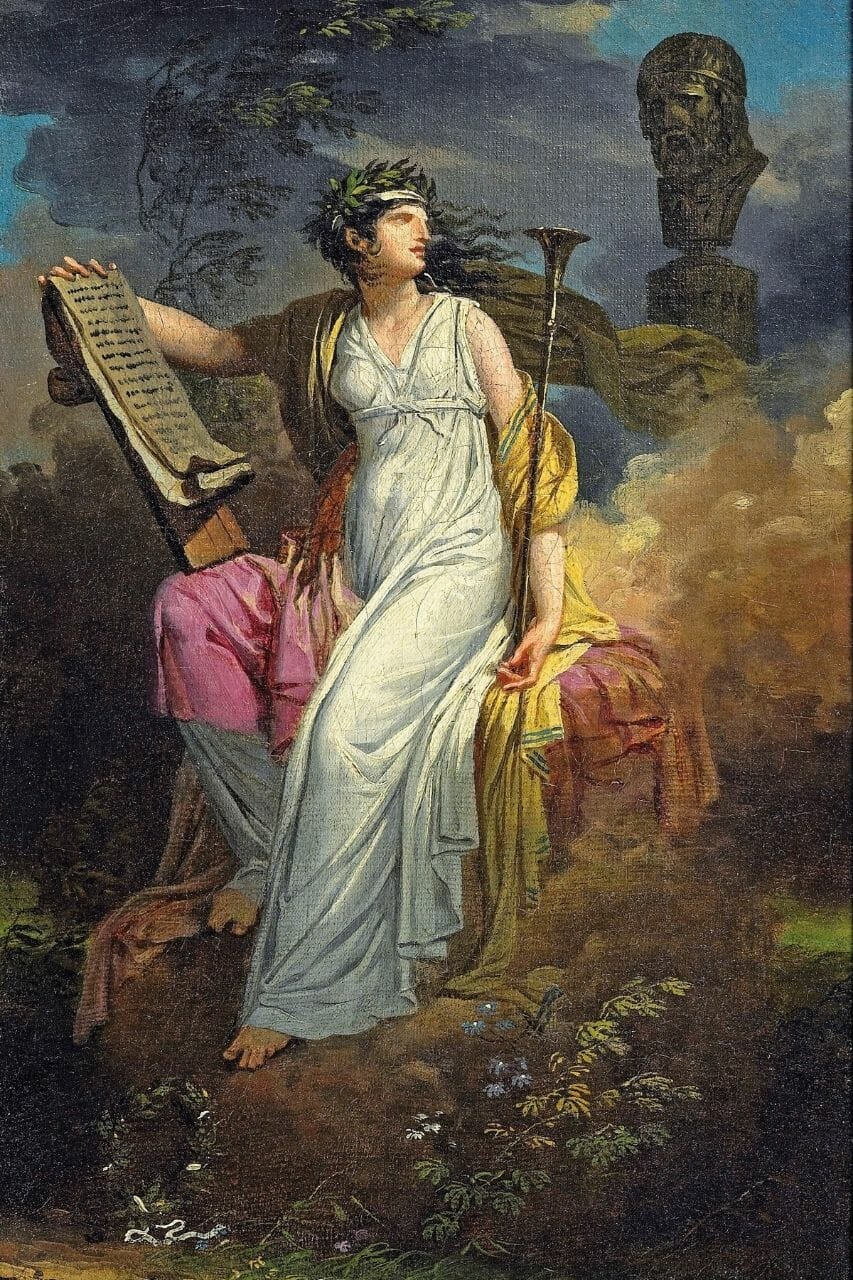
Calliope, the Muse of Epic Poetry
What Did the Muses Do in the Odyssey?
In the Odyssey, the poem's narration begins with asking the muse to give him blessing and inspiration as he writes the story of the travels and adventures of Odysseus. This is called the invocation of the muse. Additionally, the latter serves as a prologue placed at the beginning of the poem.
The request is a prayer or address made to the deity or goddess in Greek mythology. Invoking the muse was very common in ancient Greek and Latin epic poetry and was later followed by poets of the Neoclassical and Renaissance period.
There were nine muses in Greek mythology, also known as the "Daughters of Wit and Charm." They are the goddesses of various arts, such as dance, music, and poetry, who helped both gods and mankind to forget their problems by giving them the ability to reach greater intellectual heights and creativity.
Mortals, who are bestowed with these artistic talents, can use their captivating song or graceful dance to comfort those who are suffering and heal the unwell. The muses are beautiful as they are extremely artistic and excel in their respective crafts and skills. That is why the term muse carries so much significance in today's creative and artistic landscape.
These muses are the daughters of Zeus and Mnemosyne, namely: Kleio, the muse of history; Euterpe, the muse of flute playing; Thaleia, the muse of comedy; Melpomene, the muse of tragedy; Terpsichore, the muse of dance; Erato, the muse of love poems; Polymnia, the muse of sacred music; Ourania, the muse of astrology; and lastly, Kalliope, the muse of epic poetry.
Who Is the Muse in the Odyssey?
Of the nine muses, Kalliope is the eldest one of the Greek muses. She is the muse whom Homer invoked in his epic poem Odyssey. She is also the muse in the Iliad. She is also sometimes believed to be Virgil's muse for the epic poem Aeneid.
Kalliope was also called "Chief of all Muses" by Hesiod and Ovid. She was also considered the most assertive and wisest of the muses according to Hesiod. She also granted the gift of eloquence to princes and kings while attending their birth.
She was usually depicted carrying a book or holding a writing tablet. She sometimes appears wearing a gold crown or with her children. She married King Oeagrus of Thrace in a town near Mount Olympus called Pampleia. She had two sons with either King Oeagrus or Apollo; they are Orpheus and Linus. She also appears in some accounts to be the mother of Corybantes by her father Zeus, the mother of sirens by the river-god Achelous, and the mother of Rhesus by the river-god Strymon.
In a singing match, Kallipoe defeated the daughters of Pierus, the king of Thessaly, and she punished them by turning them into magpies. She also taught his son Orpheus verses for singing.
Invocation to the Muse Example
Written below is an example of an invocation to the muse from the Odyssey, which can be read at the very beginning of the poem.
"Sing to me of the man, Muse, the man of twists and turns…
driven time and again off course, once he had plundered
the hallowed heights of Troy.
Many cities of men he saw and learned their minds,
many pains he suffered, heartsick on the open sea, fighting to save
his life and bring his comrades home."
To simplify, the narrator is seeking assistance from his muse to inspire his writing as he tells the story of Odysseus' journey after the Trojan War. This can be compared to the invocation in Iliad that also begins with a form of inspiration as the narrator imagines the muse singing through him for inspiration.
Fates in the Odyssey
If fate is described as "the development of events beyond a person's control, or determined by a supernatural power," then in the Odyssey, one can assume that Odysseus' fate is to return home alive to the island Ithaca from his long journey because he has a protectress, Athena, the goddess of wisdom and also the patron of heroes.
It is Athena who controls Odysseus' fate, particularly when she asks Zeus to let Odysseus return home. However, Odysseus cannot escape the fact that he had to face the consequences of his own actions, especially when he decided to blind Polyphemus the Cyclops to be able to escape the island of cyclops and resume his voyage with his crew. Poseidon, Polyphemus' father, was angered by Odysseus' action and attempted to hit him with a storm in the sea.
The fate of Odysseus is to face the aftermath and suffer Poseidon's wrath, but Athena does everything in her power to aid and protect Odysseus on his journey back home. She plays various roles throughout the epic. She assists Telemachus and appears in disguise as the Ithacan mentor, instructing Telemachus to journey for his father. She acted as guardian to Odysseus' family using her divine powers.
Conclusion
The muse in the Odyssey is the deity or goddess that gives inspiration to authors like Homer. Homer invoked the muse as written in the prologue of his poem. Here are some highlights covered in this article.
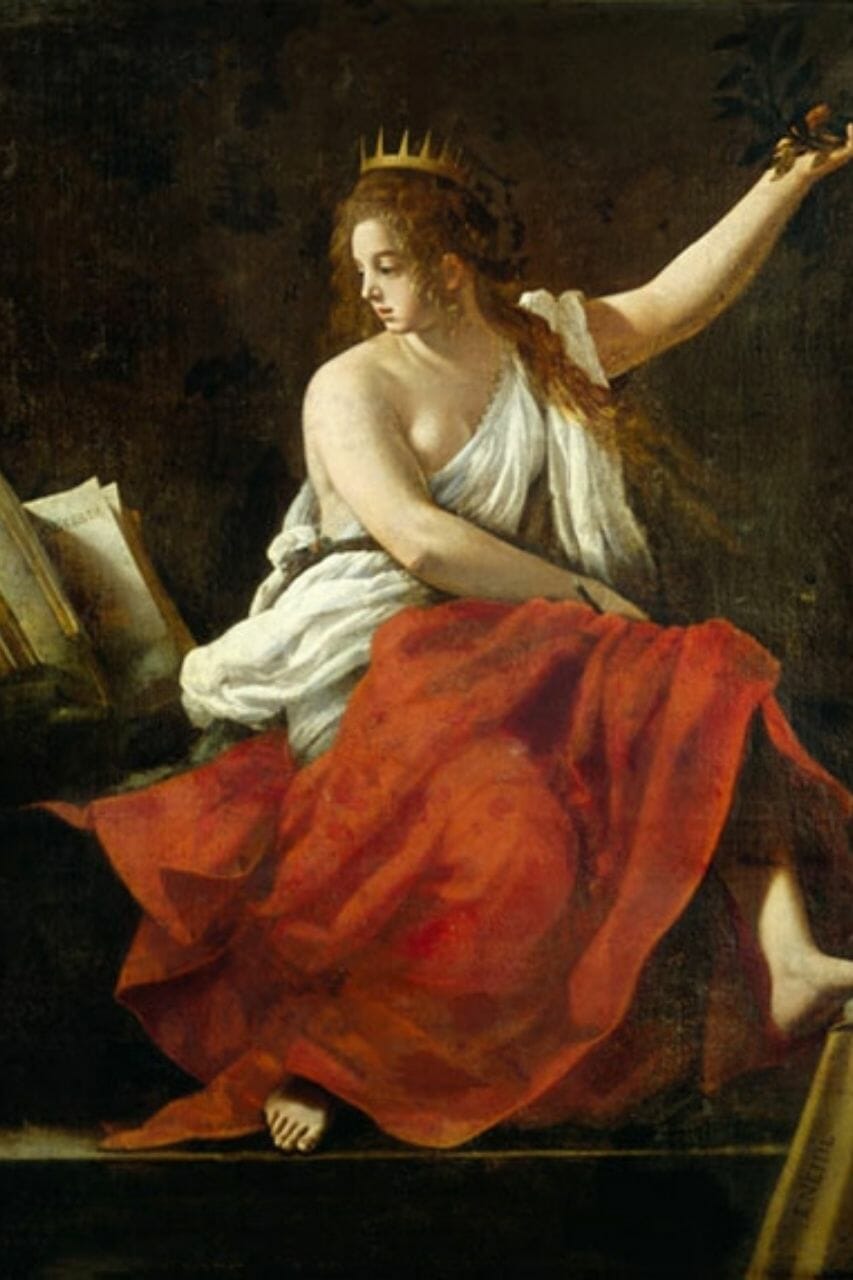
The Muse of Epic Poetry
Kalliope is the muse of the Odyssey. She is the ninth muse in Greek mythology.
The invocation to the muses is very common in Greek poetry.
It can also be read in Homer's Iliad and Virgil's Aeneid.
The word muse is considered a very important term nowadays when it comes to arts and creative landscape.
When a woman is referred to as a muse, she is the symbol or the face of the brand or subject she is representing.
This epic poem authored by this Greek poet started with an invocation to the muse in the form of a prayer or address.