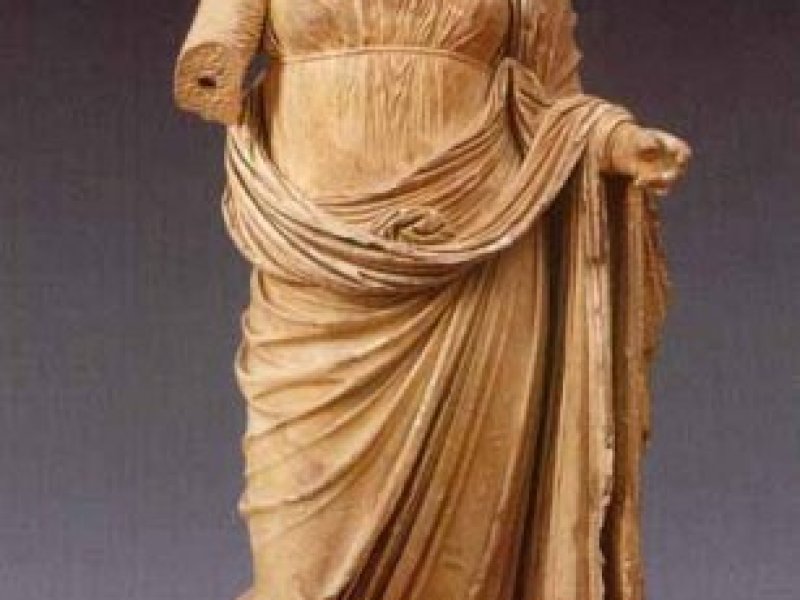
Ourania: The Mythology of the Greek Goddess of Astronomy
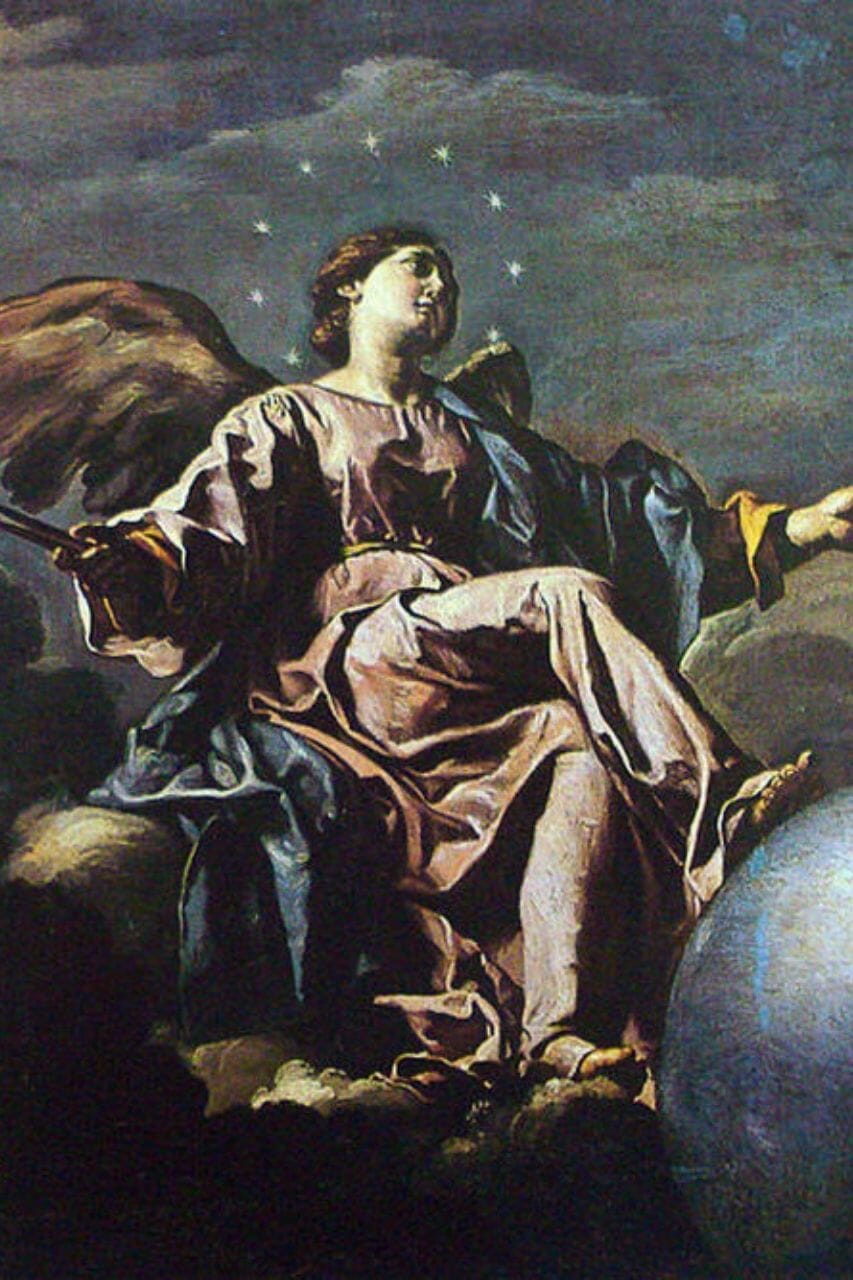
Ourania, the Greek muse of astronomy, depicted with a globe and stars
Ourania was a muse in charge of astronomy and astronomical writings during the Classical period. She often held a globe in one hand and pointed rod in the other.
Who Was Ourania?
Ourania, also known as Urania, was the daughter of Zeus and Mnemosyne, an ancient Greek goddess of memory and daughter of Uranus. Zeus and Mnemosyne gave birth to eight other muses after Zeus spent nine consecutive nights with Mnemosyne in the region of Pieria.
Urania had at least one son, but the son's identity differs according to the version of the myth. One version narrates that she was the mother of Linus, an ancient Greek musician, and son of Apollo. Other versions say she gave birth to Hymenaeus, the Greek god of marriage ceremonies. However, other ancient literary texts name Linus and Hymenaeus as the children of other muses.
The Role of Urania
As already mentioned, Urania was the muse of astronomy which was not surprising given the meaning of her name. Astronomers gave her the Ourania name because it meant "heaven," which hosted the celestial beings. She inspired men to study astronomy and to strive for greater heights in their academic pursuits. Since many ancient astronomers used divine beings to determine the future, it was believed that Urania had prophetic abilities.
Aside from inspiring man to study the heavenly bodies, Urania and her sisters spent their time on Mt Olympus entertaining the gods. They played music, danced, sang, and told tales, especially stories of the majesty and adventures of their father, Zeus. Thus, though their home was on Mount Helicon, they spent most of their time on Mount Olympus, home of the Greek gods. Urania and her sisters especially loved the company of Dionysus and Apollo, gods of wine and prophecy, respectively.
The goddess of astronomy also inspired the study of fine and liberal arts in ancient Greece, with many students calling on her to guide them during their studies. According to tradition, many Greek astronomers prayed to her to aid them in their work before they started. The modern readings of astrological signs and symbols are said to have begun with the goddess.
Urania in Christian Poetry
Eventually, the Christians during the Renaissance came to adopt Urania as the inspiration for their poetry. According to John Milton in his epic poem, Paradise Lost, he invoked Urania but was quick to add that he was invoking the Ourania meaning and not the name. In the poem, John Milton, calls on the Urania to help him in his narration of the origins of the cosmos.
Urania in Modern Times
Urania is one of the few gods whose legacy endures to this day, with her name being used in modern science. The planet Uranus, though named after her grandfather, bears her name. Some of the world's most-renowned astronomical observatories have been named after her. The British astronomer, John Russel Hind, discovered a main-belt asteroid and named it 30 Uranus.
As part of their official seal, the United States Naval Observatory depicts the goddess holding a globe with seven stars above her. Below the deity is an inscription in Latin that indicates the role of Urania in inspiring and propagating the study of Astronomy. In the Netherlands, Hr. Ms. Urania is a training vessel used by the Royal Netherlands Naval College and every year there has been a vessel bearing the same name since the 19th Century.
The Royal Astronomical Society of Canada also depicts Urania on their seal seated with seven stars above her head. Its motto mentions Urania and it reads "Quo Ducit Urania" which means where Urania leads, we follow. The seven stars atop Urania represent the Ursa Major famous as the Great Bear and it comprises Dubhe, Merak, Phecda, Megrez, Alioc, Mizar and Alkaid. The Great Bear has served as a navigational pointer for decades.
Aphrodite Ourania
In Greek mythology, Aphrodite adopted the heavenly qualities of Urania and became known as Aphrodite Urania. This Aphrodite Urania was the daughter of Uranus but without a mother. Urania was born when her father's severed genitals were thrown into the foaming sea. She came to represent the heavenly love of body and soul and was different from Aphrodite Pandemos — a version of her that personified sensual lust.
Aphrodite Pandemos was the daughter of Zeus and Dione, a sea nymph, Phoenician goddess, or Titaness. The worship of Urania was more strict and holier than the worship of Pandemos, as Urania represented pure love. A prominent Urania cult center was located on the Greek island of Cythera, where rituals were performed in honor of the goddess. Another cult center was in Athens, where Urania was associated with Porphyrion, a member of the Gigantes who was born of Uranus.
Urania was connected to the flourishing purple trade in both cities and was believed to be the deity that supervised it. In the city of Thebes, there were three statues named Aphrodite Uranus, Aphrodite Pandemos, and Aphrodite Apotrophia, all dedicated by the immortal goddess Harmonia. In Thebes, Uranus was believed to expel sensual lust and evil desires from the heads and hearts of men. As such, wine was not poured during prayers to Urania.
Ourania Pronunciation
The name is pronounced as 'oo-r-ah-nee-aa'.
Symbols of Aphrodite Urania
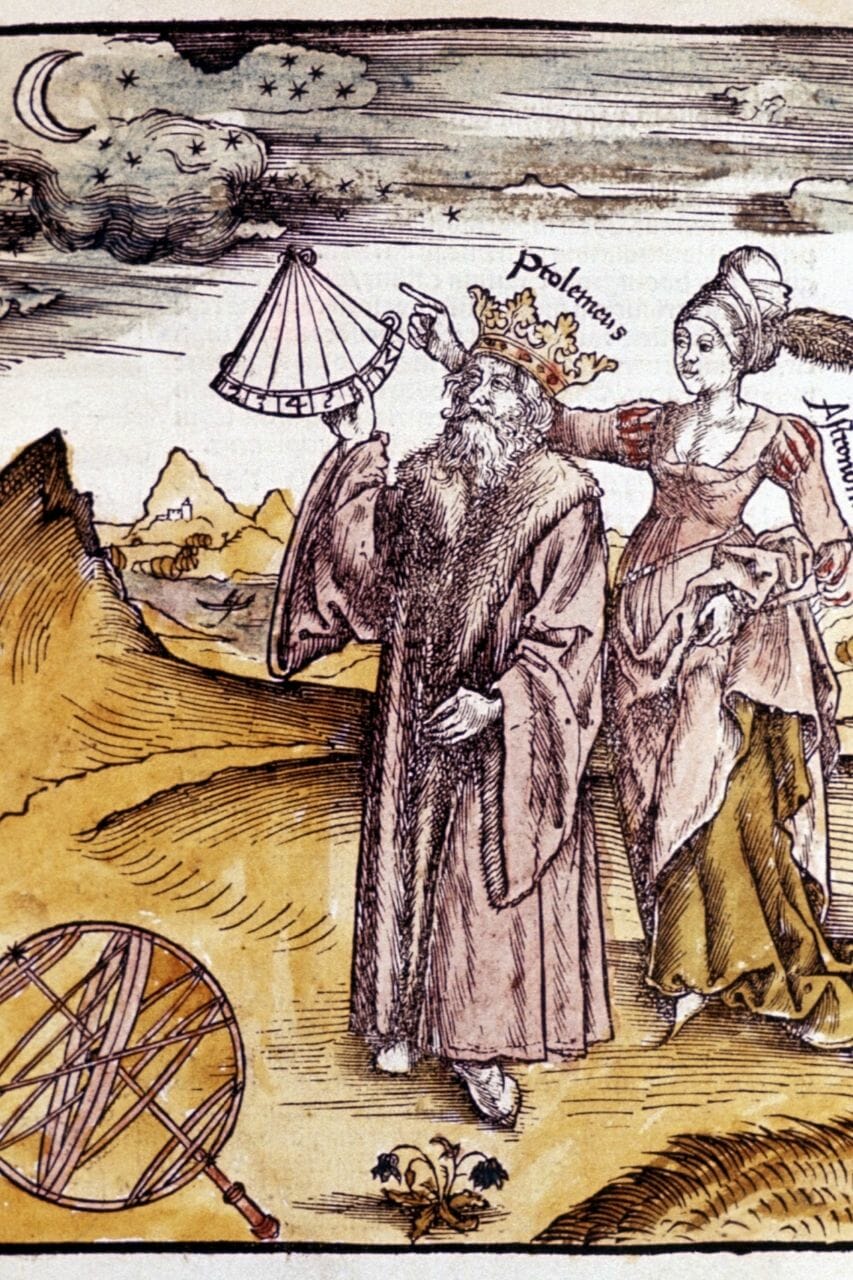
Depiction of Ourania, the muse of astronomy
Aphrodite Urania was mostly depicted riding a swan but some pictures show her standing by or hugging the bird. The swan's color as well as its beauty symbolizes the grace and allure of the goddess. The purity of Urania is captured by the snow-like color of the bird and its tendency to keep its feathers clean all the time.
The Classical Greek sculptor Phidias depicted Aphrodite Urania putting a foot on the tortoise and the reason is not clear. However, some scholars have speculated that it was a symbol of women for staying at home and keeping quiet, though other scholars disagree.
Sometimes, she was depicted standing on a globe to represent her role as goddess of the heavens.
Ourania Game
An ancient Greek game was named after the goddess, and it involved only girls or young women. The girls form a circle with one player in the middle holding the ball. She then throws the ball vertically and simultaneously calls out another girl's name. The one whose name is mentioned must quickly run into the circle's center to catch the ball before it hits the ground.
Conclusion
Though Urania is a minor Greek goddess, her influence has stretched across generations and millennia, right to this very day. Here is a recap of all that we have read about the goddess of heaven:
She was the daughter of Zeus and Mnemosyne and the granddaughter of the Titan Uranus.
Urania was part of the nine muses who inspired the study of the arts, music and science and entertained the other gods who resided on Mount Olympus.
She influenced the study of astronomy and was thought to guide astronomers to reach for higher heights in their pursuits.
She is mainly depicted holding a globe in one hand and a rod in the other, pointing to the world, indicating her role as the mother of Astronomy.
Today, significant observatories where the celestial bodies are studied are named after her, including a training vessel at the Royal Netherland Naval College.
A game was also named after her which was played by only girls while a main-belt asteroid, 30 Uranus, was named in her honor.