Hesiod Theogony Family Tree: Know the Origins of the Greek Deities
The Hesiod Theogony Family Tree describes the origins and families of the major Greek deities. It tells of how the primordial deities gave birth to the Titans who, in turn, brought forth the Olympians. It discusses the intricate web of the familial connection of the gods as well as their relations to mankind. To discover more about the Theogony written by Hesiod, keep on reading.
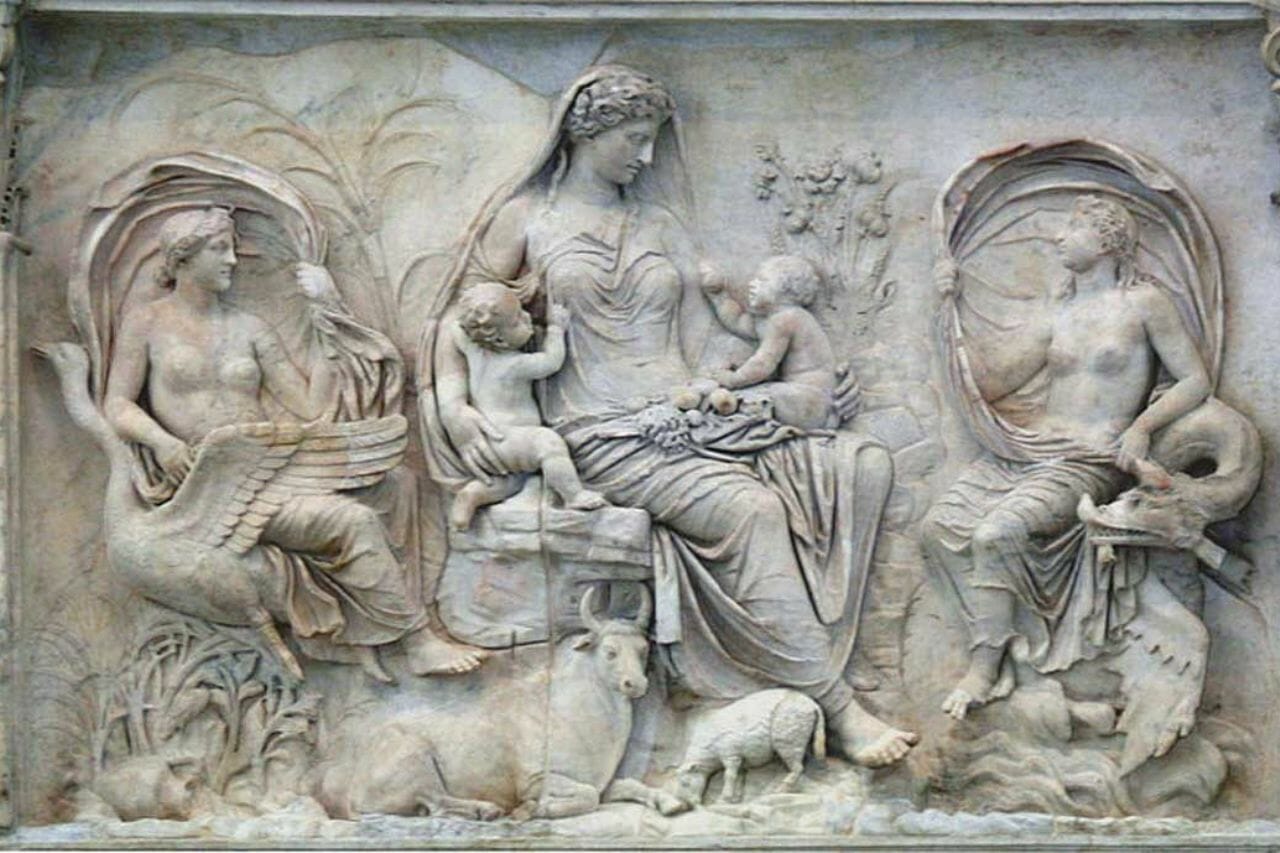
Gaia, the primordial Greek goddess of nature and Earth
What Is the Hesiod Theogony Family Tree?
The Hesiod Theogony Family Tree is a narrative that shows how the Greek gods were birthed and how Zeus became the chief god of the Greek pantheon. The poem was penned in Homeric Greek around the 8th or 7th Century BC and is made up of 1022 lines.
The Family Tree
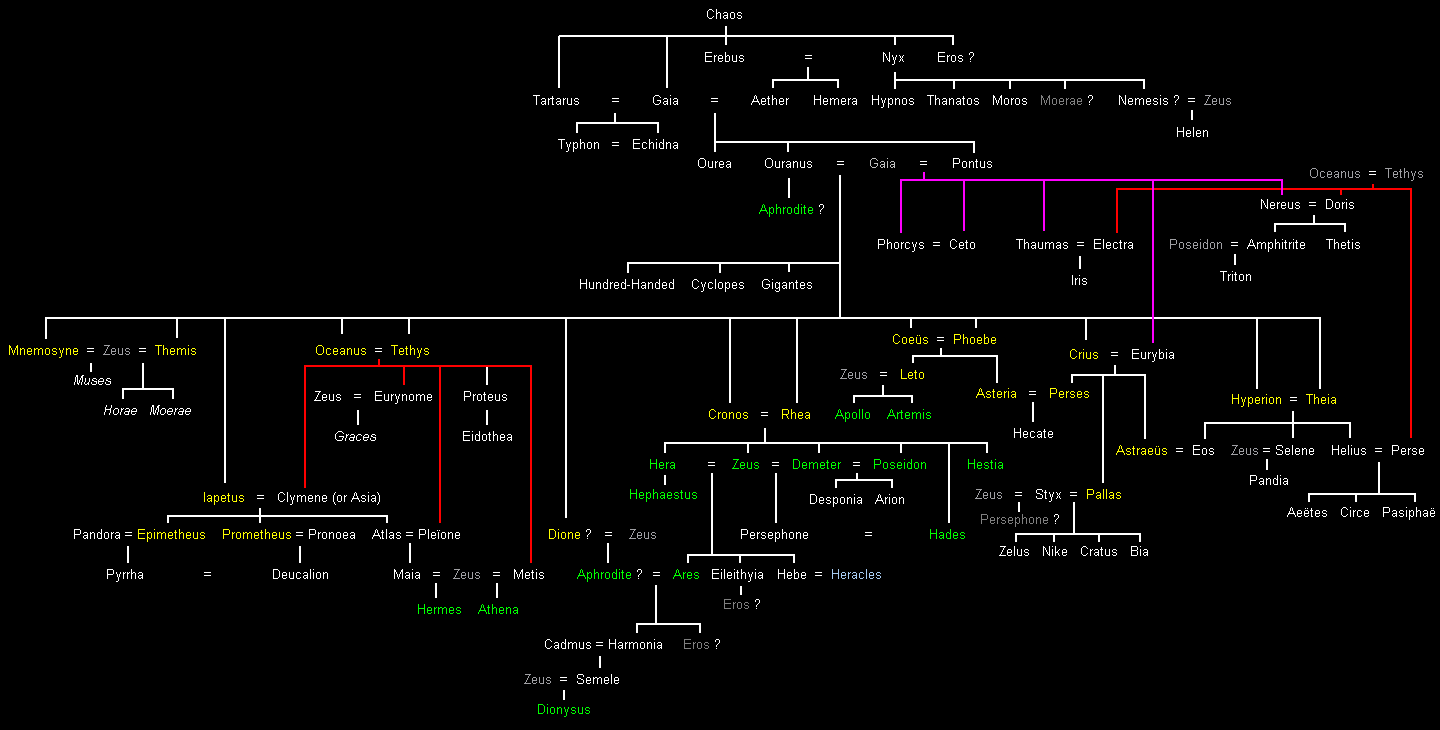
Below are the members of the family tree:
The Primordial Deities
The ancient Greek primordial deities were the gods that existed before creation began. They included four beings that came out of nowhere and set into motion events that would result in the creation of the universe. According to Greek mythology, the first four beings were Chaos also known as Chasm (who came first), followed by Gaia (Earth), then came Tartarus (depths of the Earth) and Eros (sexual desire). Chaos then gave birth to Erebus and Nyx – the representations of Darkness and Night respectively.
Later, Nyx and Erebus, through love, produced Aether and Hemera; the former symbolized Brightness and the latter represented Day. Just like Chaos, Gaia gave birth to three deities on her own: Uranus, who symbolized the sky, Ourea, who represented the mountains, and Pontus who is a symbol of the Sea. Together, all these deities formed the first gods and their union produced other deities known as the Titans.
The Titans
In Greek mythology, The Titans came into being as a result of the union between Uranus (the sky god) and his mother Gaia. The couple produced 12 Titans namely Coeus, Oceanus, Hyperion, Crius, Iapetus, Thea, Themis, Rhea, Tethys, Phoebe, Cronus, and Mnemosyne. After the 12 Titans, Gaia and Uranus brought forth the Hecatonchires, also known as the hundred hands, and the one-eyed Cyclopes. There were three Hecatonchires: Briareous, Cottus and Gyges, and three Cyclopes: Steropes, Brontes, and Arges.
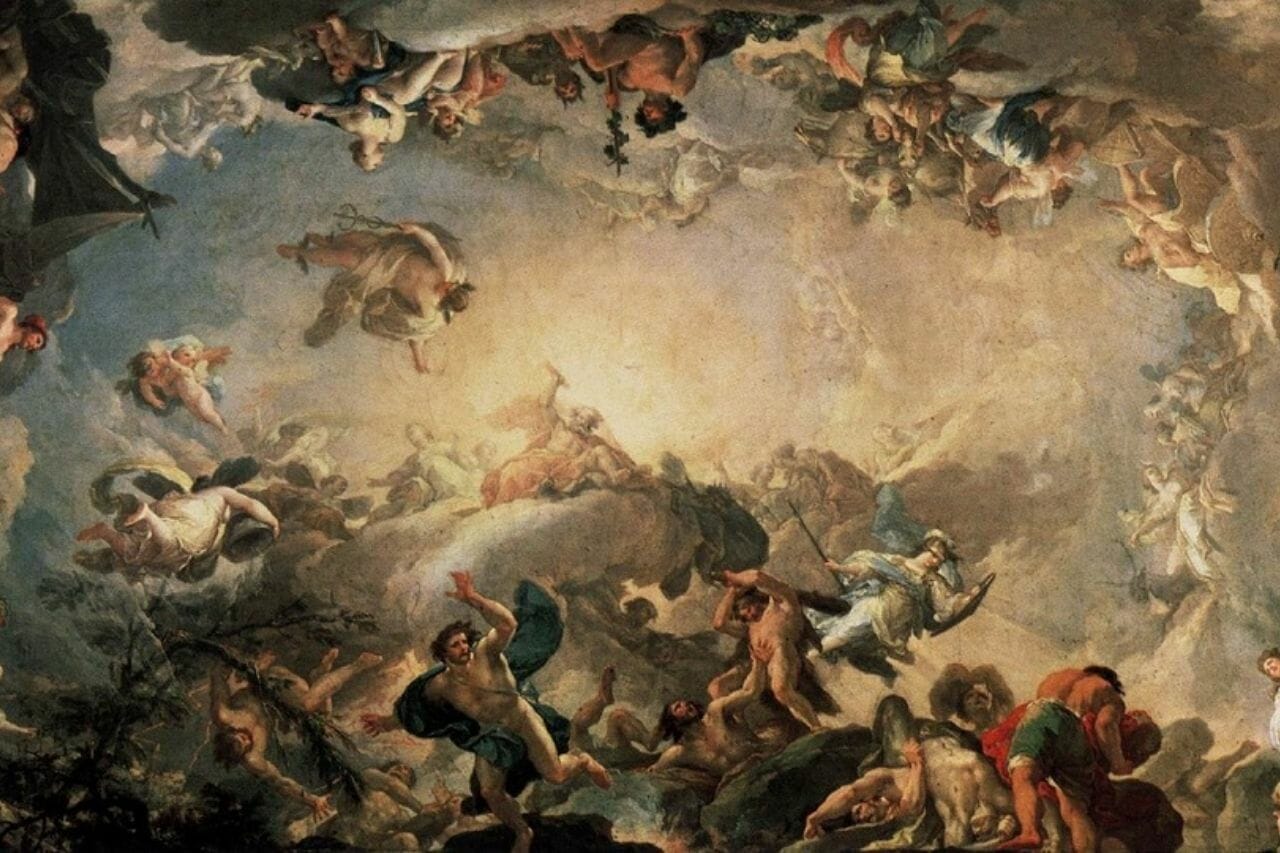
The Titans, who ruled before the Olympians took power
The Roles of the Titans
Oceanus was put in charge of the river that encircled the Earth and later became the father of the Oceanids as well as the 3000 river gods. What is unique is how Thea became the goddess of sight and vision and she imbued gold, silver, diamonds, and other minerals with their radiance and intrinsic values.
Themis became the goddess of law, justice, divine order, and prophecies and the patroness of the Oracle of Delphi. Mnemosyne was made the goddess of memory and later mothered the nine Muses who were the goddesses of science, art, and literature.
Cronus was the god of time and the harvest who later became the leader of the Titans. The other Titans such as Tethys, Coeus, Crius, Hyperion, Iapetus, Phoebe, and Rhea had no specific dominions but their major roles were to be parents to other major gods.
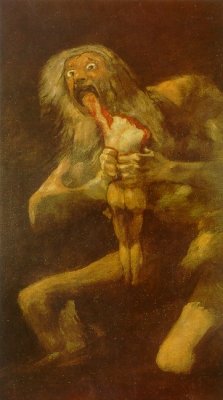
Cronus overthrew his father Uranus and assumed the leadership of the Titans by conniving with his mother Gaia. Cronus castrated Uranus and threw his genitals away which gave rise to another set of deities.
The Offspring of the Titans
Hyperion married Thea and the couple produced Helios, the god of the Sun, Eos, the deity of the dawn and Selene, the god of the moon. Crius slept with Eurybia and gave birth to Pallas, Astraios and Perses. Later, the children of the Titans, Eos and Astraios, produced Notos, Boreas, Zephyrus and Eosphoros (who were known as the four winds) and the stars.
The Titan Coeus and Phoebe gave birth to Asteria and Leto, who became the mother of Apollo, the god of prophecy and Artemis, the goddess of the hunt. Pallas, the grandson of the Titans, mated with Styx, an Oceanid, and they produced Nike (Victory), Zelus (Envy), Kratos (Power) and Bia (Force). Asteria married Perses and the goddess Hecate was born. Iapetos, the Titan, copulated with Clymene, an Oceanid, and birthed another generation of Titans: Menoetius, Atlas, Epimetheus and Prometheus.
The Children from the Blood and Semen of Uranus and Gaia
When Cronus castrated Uranus, his blood fell on the Earth (Gaia) and this produced the Erinyes, Giants and Meliae. The genitals of Uranus were then thrown into the foam of the sea and this gave rise to Aphrodite, the goddess of love, procreation, beauty and pleasure. The Erinyes (Furies) were female goddesses who were responsible for revenge. The Giants were famous for their strength and militancy but were not necessarily huge.
The Meliae were the nymphs of the ash tree who took care of the infant Zeus when his mother Gaia hid him in the Dikti mountains on Crete. They were also known as the ancestors of man during the Bronze Age.
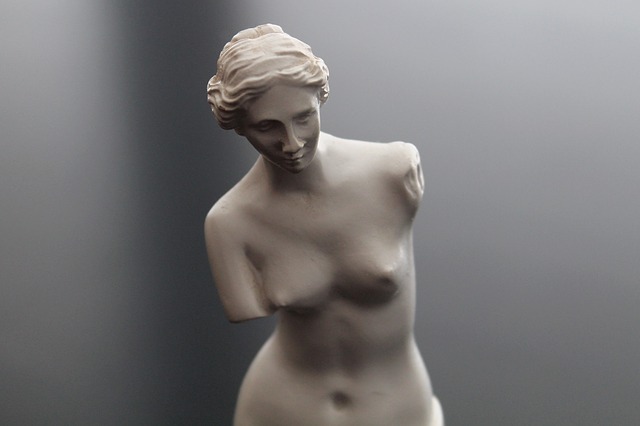
Aphrodite, goddess of love, born from the foam of the sea
The Offspring of Gaia and Pontus
Once Cronus was castrated and overthrown, Pontus, the god of the Sea had an affair with his mother and their union produced Nereus, Thaumas, Phorcys and Ceto. Nereus, also known as the Old Man of the Sea, married one of the 3000 Oceanids called Doris and fathered Nereids. The Nereids totaled 50 and included Amphitrite (who later became the wife of Poseidon), Psamathe (mother of Phocus of Aegina) and Thetis.
Thaumas took the hand of Electra the Oceanid in marriage and they produced Iris, the rainbow goddess, Aello and Ocypete. Aello and Ocypete were Harpies (half woman half bird) that terrorized travelers on the seas and sometimes killed them.
Phorcys and Ceto fell in love with each other and they parented 5 children: three Gorgons and two Graiae. The Gorgons were Euryale, Sthenno and Medusa while the Graiae included Enyo (goddess of war) and Pemphredo.
The Children and Grandchildren of Nyx
Just as Gaia before her, Nyx produced other deities without male involvement. These were Hypnos (sleep), Oneiroi (dream), Ker (destiny), Moirai (Fates), Keres (Destinies), Thanatos (Death), Moros (Doom), Philotes (love), Eris (Discord), Nemesis (Retribution), Apate (Deceit), Geras (Old Age), Oizys (Pain), Momus (Blame) and the Hesperides (the Daughters of Night).
Eris, the goddess of dissension and discord gave birth to all the deities associated with war, confusion and sorrow, all on her own. These deities include Dysnomia (Anarchy), Amphillogiai (Disputes), Hysminai (Battles), Makhai (Wars), Androktasiai (Manslaughter) and Phonoi (Murders). Others were Neikeia (Quarrel), Ate (Ruin), Ponos (Hardship), Limos (Starvation), Algea (Pains), Lethe (Forgetfulness), Logoi (Stories) and Horkos (Oath).
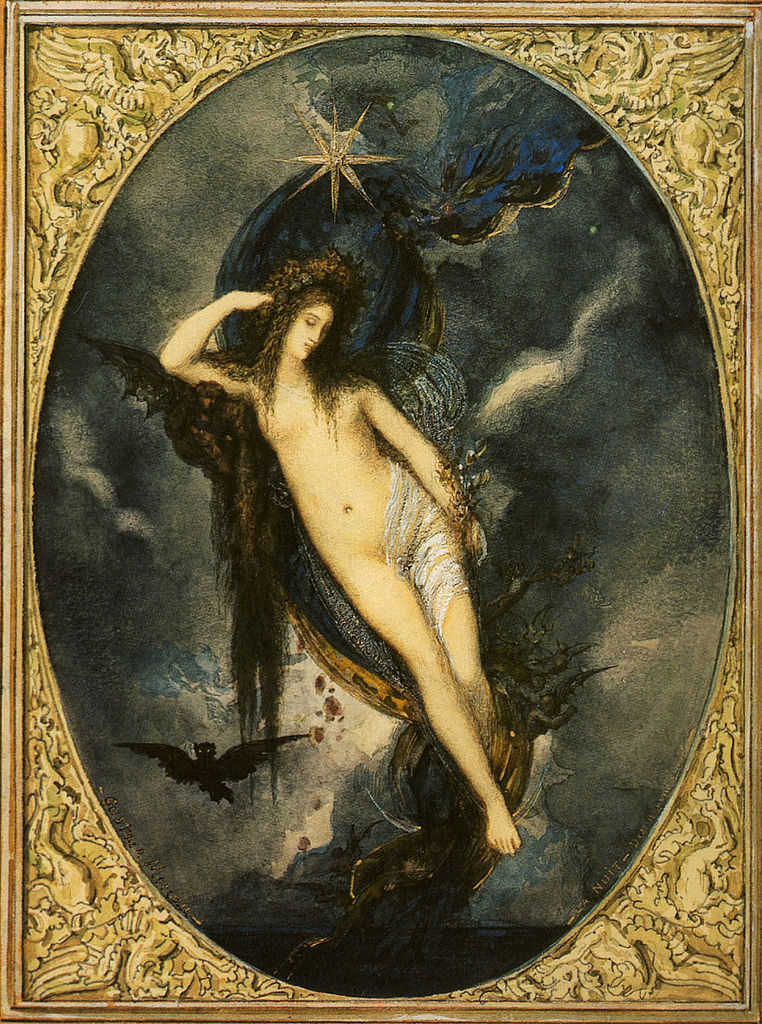
Nyx, the primordial goddess of night, mother of many Greek deities
Zeus and His Descendants
As it is clear, Zeus had a number of wives and children and here are the list and the names of each:
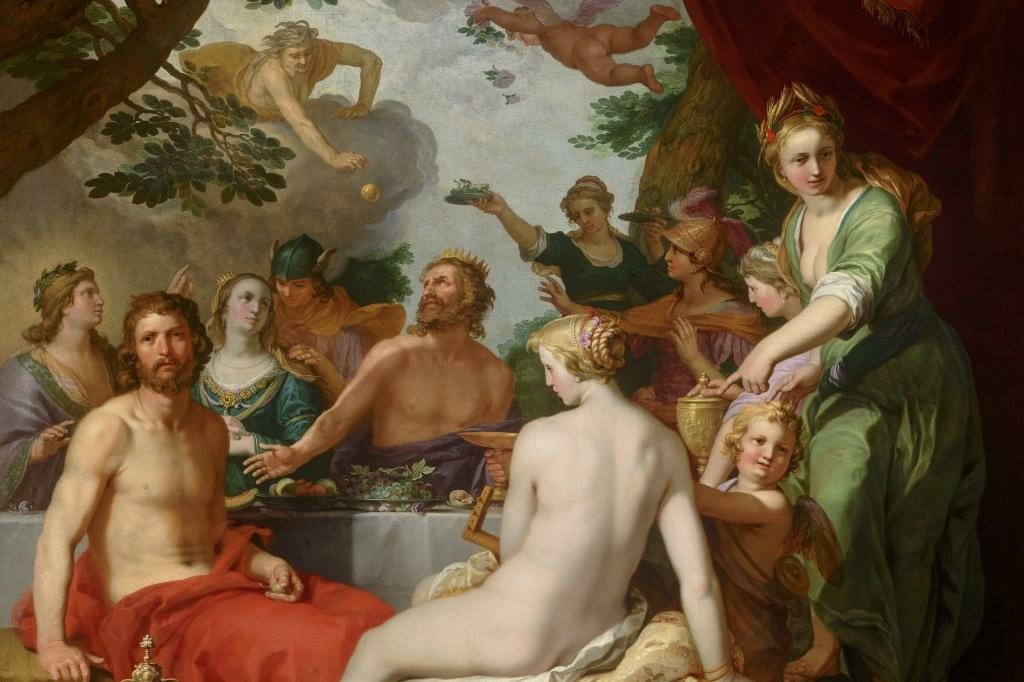
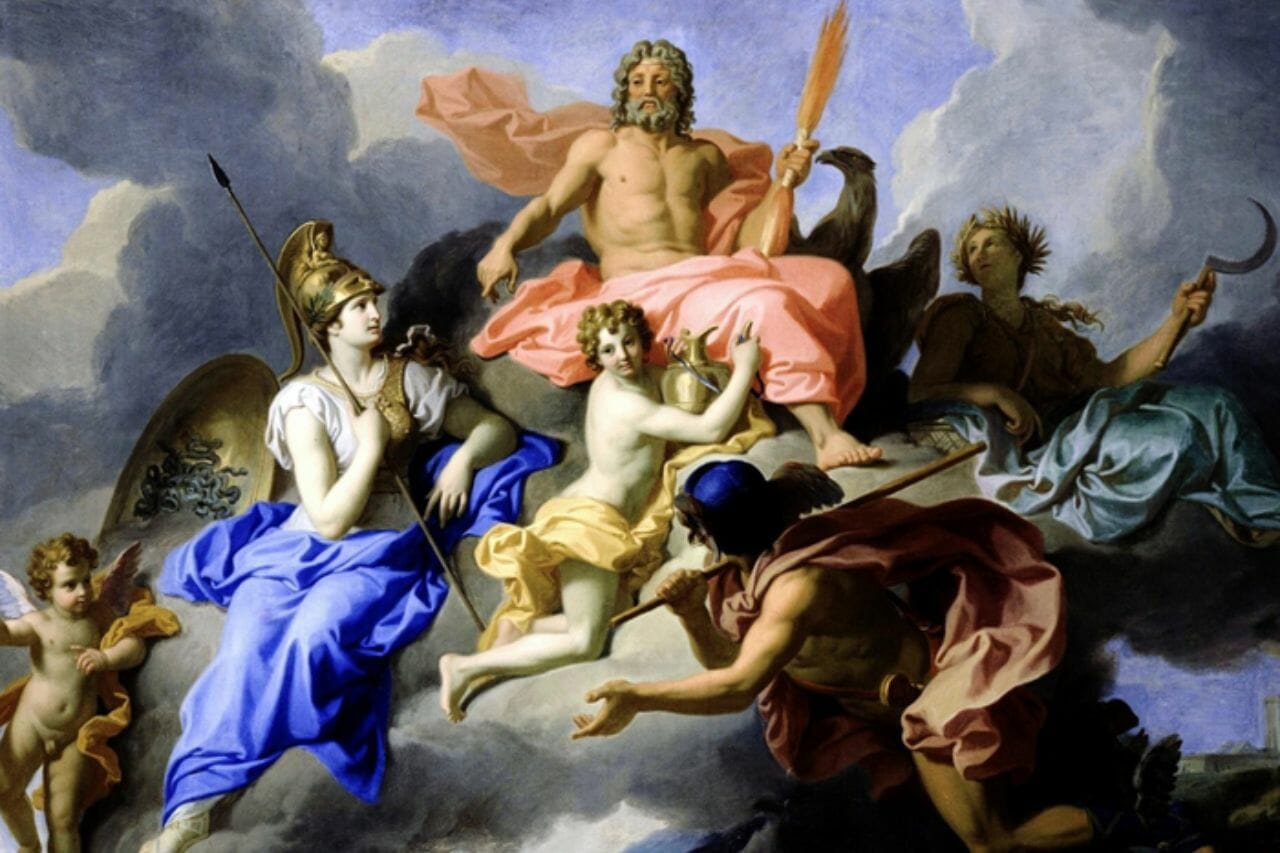
Zeus, king of the Olympian gods and father of many deities
Children from Zeus’ 1st and 2nd Wives
Cronus and his sister gave birth to the first set of Olympian gods which were Demeter, Hestia, Hera, Hades, Poseidon and Zeus. Zeus overthrew his father, Cronus, in a battle known as the Titanomachy. He married and impregnated Metis, an ocean nymph, and to prevent any son of his from overthrowing him, Zeus swallowed the pregnant Metis. He then married his aunt, Themis the Titan, and the couple birthed six deities; three Horae called Seasons and the three Moirai known as the Fates.
The Horae consisted of the following deities: Eunomia (Order), Eirene (Peace) and Dike (Order) while the Moirai (Fates) included Clotho (Spinner), Lachesis (Measurer) and Atropos (Unyielding).
Offspring from Zeus’ 3rd, 4th and 5th Wives
Zeus took a third wife, the ocean nymph Eurynome, and fathered the Charites; Aglaea, Thalia and Euphrosyne. Aglaea was the goddess of splendor, Thalia the goddess of good cheer and Euphrosyne, the goddess of Joy. Later, Zeus married Demeter, his fourth wife, and they gave birth to Persephone, the queen of the Underworld. The chief god took his aunt, Mnemosyne, as his fifth wife and fathered the nine Muses: Thalia, Euterpe, Polymnia, Clio, Erato, Melpomene, Urania, Calliope and Terpsichore who were deities of science, arts and literature.
The Children from Zeus’ 6th and 7th Marriages
Zeus married his sixth wife, Leto the Titan, and the couple produced Apollo, the god of prophecy, and Artemis, the goddess of war. Finally, Zeus settled with his sister Hera and they parented Hebe, the goddess of youth, Ares, the god of war, and Eileithyia, the goddess of childbirth. The last to be born, according to Hesiod, was Athena, who Zeus gave birth to on his own after she came out of his head. This vexed Hera and she also gave birth on her own to Hephaestus the god of blacksmiths.
Zeus later went in for Maia, one of the nymphs, and they birthed Hermes, the messenger of the gods.
Other Deities and Their Descendants
Poseidon and his wife Amphitrite, also a nymph, became the parents of Triton, a god of the sea. The union of Ares and Aphrodite brought forth Deimos (Terror), Phobos (Fear), and Harmonia (Harmony).
Conclusion
So far, we’ve looked at the Hesiod Theogony family tree and have discovered how the various Greek deities came into being. Here is a summary of all that this article has covered:
- The first deities were the primordial gods who had always existed and they included Chaos, Eros, Gaia and Tartarus.
- According to this Hesiod Theogony lecture, these deities gave birth to other deities such as Erebus, Hemera, Nyx and the Titans.
- From the Titans came the Olympian gods, the Cyclopes and the Hecantochires who waged a war to overthrow the Titans.
- When the Olympians came into power Zeus took seven wives and fathered several other deities such as Ares, Erato and Hermes.
- Later, Zeus gave birth to Athena by himself which forced his wife, Hera, to birth Hephaestus on her own.
Other deities, aside from the Olympians, were Triton who was born from Poseidon and Amphitrite. Ares and Aphrodite also had three children namely Deimos, Phobos and Harmonia.