Timeless Myths Logo

Explore myths and legends from cultures around the world

Featured

Classical Mythology
Classical Mythology Greek and Roman myths, gods, heroes, and epic tales
Norse Mythology
Norse Mythology Vikings, Asgard, Ragnarok, and the nine realms
Celtic Mythology
Celtic Mythology Irish, Welsh, and Gaelic legends and folklore
Ancient Literature
Ancient Literature Classical texts, translations, and literary analysis

All Mythologies

Arthurian Legends King Arthur, Camelot, the Round Table, and the Holy Grail Egyptian Mythology Pharaohs, pyramids, and ancient Nile deities Japanese Mythology Shinto gods, spirits, and legendary creatures Chinese Mythology Dragons, immortals, and celestial beings Aztec Mythology Mesoamerican gods, rituals, and creation myths

Discover gods and goddesses from every pantheon

Featured

Greek Gods
Greek Gods The Olympians, Titans, and primordial deities
Norse Gods
Norse Gods Odin, Thor, Loki, and the Aesir and Vanir
Egyptian Gods
Egyptian Gods Ra, Osiris, Isis, Anubis, and more
Japanese Gods
Japanese Gods Amaterasu, Susanoo, and Shinto kami

All Gods & Deities

Roman Gods Jupiter, Mars, Venus, and the Roman pantheon Celtic Gods The Tuatha Dé Danann and Celtic deities Aztec Gods Quetzalcoatl, Tezcatlipoca, and Aztec deities Chinese Gods Jade Emperor, Dragon Kings, and celestial beings View All 150+ Deities Browse the complete collection of mythological deities
View all gods & deities

Tales, legends, and character profiles from mythology

Featured

All Stories
All Stories Browse 800+ mythology and history stories
Characters
Characters Profiles of 67 mythological heroes, gods, and villains

All Stories

Mythology Stories Ancient myths and legends retold History Stories Historical tales from ancient civilizations Religion & Culture Religious traditions and cultural beliefs
View all stories

Tools, references, and site information

Featured

Name Generators
Name Generators Generate fantasy and mythology-inspired names
All Articles
All Articles Browse 1,800+ articles on mythology and history

All Resources

About Timeless Myths Learn about this mythology resource Bibliography Sources and references used on this site FAQ Frequently asked questions Contact Get in touch with us
Search
Classical Mythology Greek and Roman myths, gods, heroes, and epic tales Norse Mythology Vikings, Asgard, Ragnarok, and the nine realms Celtic Mythology Irish, Welsh, and Gaelic legends and folklore Arthurian Legends King Arthur, Camelot, the Round Table, and the Holy Grail Egyptian Mythology Pharaohs, pyramids, and ancient Nile deities Japanese Mythology Shinto gods, spirits, and legendary creatures Chinese Mythology Dragons, immortals, and celestial beings Aztec Mythology Mesoamerican gods, rituals, and creation myths Ancient Literature Classical texts, translations, and literary analysis
Greek Gods The Olympians, Titans, and primordial deities Roman Gods Jupiter, Mars, Venus, and the Roman pantheon Norse Gods Odin, Thor, Loki, and the Aesir and Vanir Egyptian Gods Ra, Osiris, Isis, Anubis, and more Celtic Gods The Tuatha Dé Danann and Celtic deities Aztec Gods Quetzalcoatl, Tezcatlipoca, and Aztec deities Japanese Gods Amaterasu, Susanoo, and Shinto kami Chinese Gods Jade Emperor, Dragon Kings, and celestial beings View All 150+ Deities Browse the complete collection of mythological deities View all gods & deities
All Stories Browse 800+ mythology and history stories Characters Profiles of 67 mythological heroes, gods, and villains Mythology Stories Ancient myths and legends retold History Stories Historical tales from ancient civilizations Religion & Culture Religious traditions and cultural beliefs View all stories
Name Generators Generate fantasy and mythology-inspired names All Articles Browse 1,800+ articles on mythology and history About Timeless Myths Learn about this mythology resource Bibliography Sources and references used on this site FAQ Frequently asked questions Contact Get in touch with us
Search Search the entire mythology archive

Lycomedes: The King of Scyros Who Hid Achilles Among His Children

greek-mythology

When Calchas the seer prophesied that Achilles would die in the Trojan War, his mother Thetis took him to the island of Scyros and hid him there. She did that by convincing the king of Scyros, Lycomedes, to disguise Achilles as one of his daughters.

Lycomedes obliged and dressed Achilles in girls' apparel while teaching him how to adopt feminine mannerisms. Achilles was then given the name Pyrrha which meant the red-haired one.
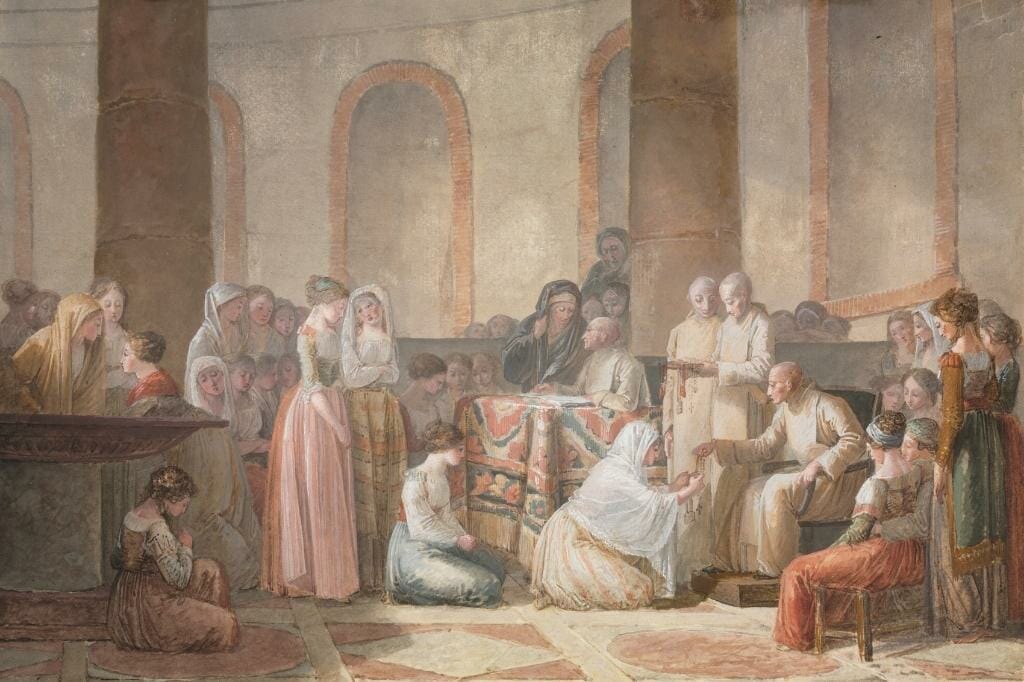
Lycomedes, the King of Scyros in Greek mythology

Lycomedes, the King of Scyros

The Myth of Lycomedes in the Iliad

As time elapsed, Achilles became close to one of Lycomedes' daughters, Deidamia, and the two became almost inseparable. Eventually, Achilles fell in love with Deidamia and impregnated her and she bore a son named Pyrrhus also called "Neoptolemus."

However, other versions of the story narrate that Deidamia gave birth to two boys Neoptolemus and Oneiros. A prophecy claimed that the Greeks could only win the war when they had Achilles within their ranks so they started a search for him.

Word started making rounds that Achilles was hiding on the Island of Scyros in the court of Lycomedes. Odysseus and Diomedes went to Scyros in search of Achilles but were told he was not on the island. However, Odysseus knew of the Lycomedes' secret so he devised a plan to draw Achilles out of his disguise and it worked.
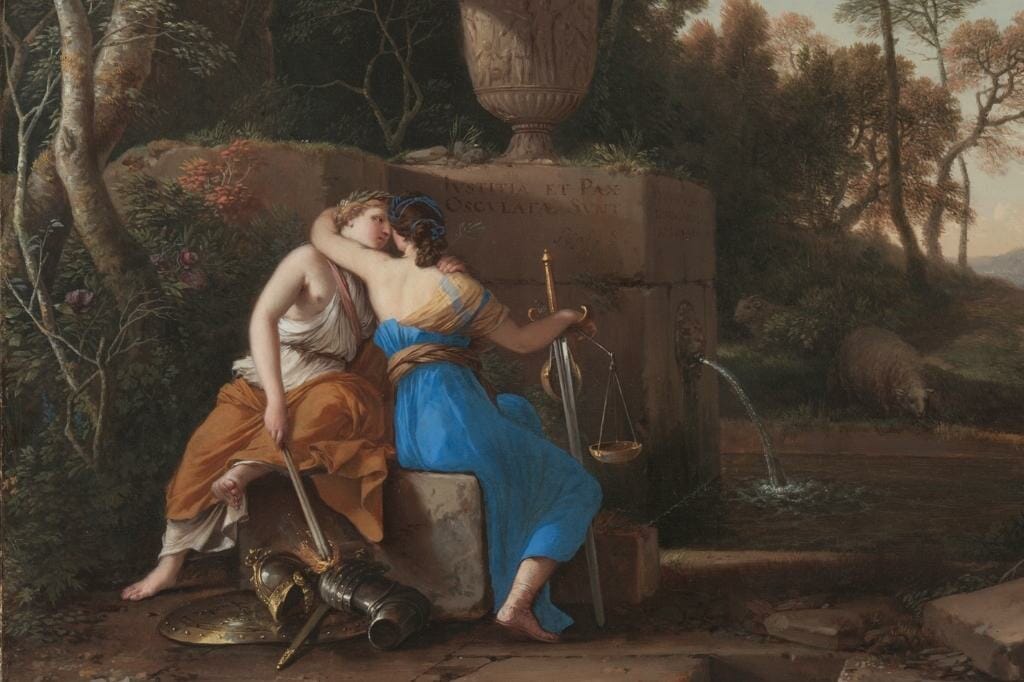
Achilles and Deidamia, daughter of Lycomedes

Achilles and Deidamia, daughter of Lycomedes

Odysseus Tricks Lycomedes and Achilles

Odysseus gave gifts to the daughters of Lycomedes which included musical instruments, jewelry, and weapons. Following the latter, he then bade farewell to Lycomedes and his daughters and pretended to leave his palace. Once they were outside the palace, Odysseus had his troops make noise as if the palace of Lycomedes was under attack. To make the fake attack more believable, Odysseus had the trumpet blown.

Once Achilles heard of the fake enemy attack, he grabbed some of the weapons Odysseus brought and sprung into action thereby revealing his identity. Odysseus went with him to fight the Trojans while Lycomedes and his daughters looked on.

All except Deidemia, the lover of Achilles, who broke down in tears as she also knew that the love of her life would not return to her. When Achilles died in the war, Neoptolemus, the grandson of Lycomedes was chosen to go and replace his father.

The Roman Version of the Myth of Lycomedes

According to the Romans, Thetis informed Achilles of her plan to hide him in the home of Lycomedes. However, he was uncomfortable with the idea and remained reluctant until he saw the beauty of Lycomedes' daughter, Deidamia.

He was so fascinated by her charm that he agreed to her mother's plans to hide him among the daughters of King Lycomedes. Thetis then dressed him up as a maiden and convinced Lycomedes that Achilles was really her daughter who was brought up as an Amazonian.

Thus, Lycomedes did not know that Achilles was male and was hiding from the Greeks. Thetis informed Lycomedes to train Achilles to behave, talk and walk like a lady and to prepare 'her' for marriage.

The daughters of Lycomedes also fell for this lie and accepted Achilles into their company. Achilles and Deidamia grew close and spent more time with each other. Soon, Achilles developed a sexual interest in Deidamia and found it difficult to control his desires.

Lastly, at a feast of Dionysus meant only for women, Achilles, still disguised as a lady, raped Deidamia and revealed his secret. Deidamia understood Achilles and promised him that his secret was safe with her.

Deidamia also swore to keep the eventual pregnancy a secret. Therefore, when Odysseus tricked Achilles into revealing himself, Lycomedes realized he had been deceived.
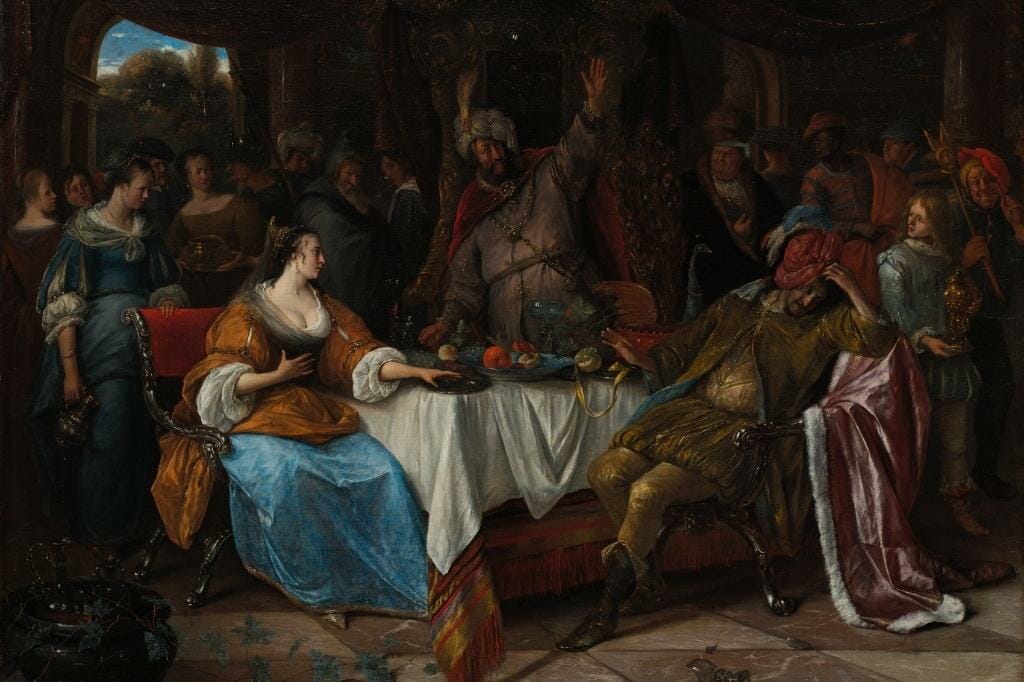
The myth of Lycomedes and his daughters

The myth of Lycomedes and his daughters

Lycomedes and Theseus

Though the two men were close, some people wonder why did Lycomedes kill Theseus?

Well, according to the Greek historian Plutarch, Lycomedes feared that Theseus would become more powerful and eventually overthrow him. Theseus had gone to seek refuge in the palace of Scyros after Menestheus took over his throne in Athens. However, given the way the people of Scyros welcomed and treated Menestheus, Lycomedes thought Theseus would usurp his throne so he threw him over a cliff to his death.

Other Characters Named Lycomedes in Greek Mythology

Lycomedes of Thebes and Others

Lycomedes of Thebes was the son of Creon, the King of Thebes, and either his wife Eurydice or Henioche. According to the Iliad, Lycomedes joined the forces of Argos to fight the Trojans in the Trojan War. He was mentioned as a nighttime guard commander at the base of the Greek wall in Book IX of the Iliad. Lycomedes was called into action when Hector, the Trojan hero, pressed against the Greek wall with his army.

He fought gallantly to prevent Hector and his Trojan troops from making incursions into Greek territory but was unsuccessful. During the incursion, his friend, Liocritus was killed which angered him. He then avenged the death of his friend by driving his spear into the bowels of the Trojan warrior, Apisaon.

Later during the fight, Lycomedes suffered injuries to the wrist and ankle at the hands of the Trojan, Agenor. Lycomedes of Thebes was part of the entourage that delivered gifts to Achilles from Agamemnon to help quash the dispute between them.

King Lycomedes Character Traits in the Song of Achilles

Song of Achilles, published in 2011, is the modern adaptation of the Roman version of the myth. Lycomedes's song of Achilles was tricked into keeping the disguised Achilles as his daughter until he was discovered by Odysseus and taken to fight the Trojan War. Lycomedes was an old king who was often ill and thus was ineffective at running the kingdom. Therefore, Deidamia was left to run the Kingdom of Scyros making it vulnerable.

Due to his weakness and age, Lycomedes was at the whims of Thetis. However, he was a kind man who took many young women into his custody to protect them.

How to Pronounce Lycomedes

The pronunciation of Lycomedes is as follows: |Ly| is pronounced as 'lai', |co| is 'ko', |me| is pronounced 'me' and |des| is 'diss'.

Art Depictions of Lycomedes

One of the most famous depictions of Lycomedes is Achilles Among the Daughters of Lycomedes by Peter Paul Rubens in the 16th Century.

Conclusion

So far, we've studied the myth of Lycomedes in both the Greek and Roman versions and other characters bearing the same name.

Here is a summary of all that we've discovered:

  • Lycomedes was a king of the Island of Scyros who had beautiful daughters.

  • Thetis who learned that her son, Achilles, would die in the Trojan War decided to hide him away at the palace of Lycomedes.

  • Achilles fell in love with one of Lycomedes' daughters, Deidamia, and impregnated her.

  • Later, Odysseus discovered Achilles hiding in the court of Lycomedes and tricked him into revealing his true identity.

  • Achilles then left the court of Lycomedes with Odysseus to fight in the Trojan war which broke Deidamia's heart.

Though there are various versions of the story, the plot covered in this article serves as the spine that runs through all of them including the 2011 adaptation of the Greek myth.

By Ancient Literature

Created: February 16th, 2024

Modified: February 16th, 2024

Scyrus

Scyrus

Scyrus (Skyrus) was an Aegean island northeast of Euboea. Scyrus was famous because its king, Lycomedes, was host to the aging hero Theseus. Theseus either accidentally fell to his death, or Lycomedes murdered the hero by pushing him off a cliff. ...

August 8th, 1999 • Jimmy Joe
Peleus: The Greek Mythology of the King of the Myrmidons

Peleus: The Greek Mythology of the King of the Myrmidons

Peleus was an Argonaut who fled the city of Aegina after he and his half-brother, Telamon, murdered their sibling, Phocus. The two brothers landed in Phthia for the purification ceremony only for Peleus to later kill the King of Phthia albeit in a...

February 16th, 2024 • Ancient Literature
Deidamia: The Secret Love Interest of the Greek Hero Achilles

Deidamia: The Secret Love Interest of the Greek Hero Achilles

Deidamia was the daughter of Lycomedes, king of the island of Scyros who secretly had an affair with Achilles. Thetis, the mother of Achilles, disguised him as a girl and planted him among the daughters of Lycomedes. This was to prevent him from f...

February 16th, 2024 • Ancient Literature
Diomedes: Iliad's Hidden Hero

Diomedes: Iliad's Hidden Hero

It seems as if there is little mention of Diomedes in the Iliad, considering the importance of his exploits to the continuation of the storyline. A respected king in his own right, Diomedes comes into the war as the King of Argos. Bound by the Oat...

February 16th, 2024 • Ancient Literature
Antilochus: The Greek Mythology of the Greatest Prince of Pylos

Antilochus: The Greek Mythology of the Greatest Prince of Pylos

Antilochus was a Greek warrior who sought the hand of Helen in marriage and thus had to join the Greek expedition to Troy after Paris kidnapped Helen. He killed some notable Trojan warriors while defending the honor of his father, Nestor. Antiloch...

February 15th, 2024 • Ancient Literature
Tenedos

Tenedos

The island was formerly named Leucophrys, and was renamed to Tenedos by Tenes. Tenes was a son of Cycnus and Procleia, but it was said that his real father was Apollo. He was a brother of Hemithea. Cycnus was a king of Colonae, near Troy. Procleia...

August 8th, 1999 • Jimmy Joe
Idomeneus

Idomeneus

Idomeneus (Ἰδομενεές) was a son of Deucalion. He was also the brother of Crete and the half-brother of Molus. Idomeneus was the nephew of Catreus. Idomeneus married Meda, and became the father of Cleisithyra and Idamante. Idomeneus was a former su...

September 22nd, 2002 • Jimmy Joe
Menelaus in The Odyssey: King of Sparta Helping Telemachus

Menelaus in The Odyssey: King of Sparta Helping Telemachus

Menelaus in The Odyssey is presented as Odysseus' friend and the king that offered Odysseus' son, Telemachus, assistance to find our hero's whereabouts. Menelaus, who welcomed the Ithacan party of Telemachus and his men with open arms. He recounte...

February 16th, 2024 • Ancient Literature
Tyndareüs

Tyndareüs

King of Sparta. Tyndareüs (Τυνδάρεως) was the son of Oebalus and Gorgophone, who was daughter of Perseus and Andromeda. Tyndareüs was the brother of Icarius and Arene. He was also the half-brother of Hippocoön, his rival. Tyndareüs succeeded his f...

August 17th, 2002 • Jimmy Joe
Telemachus in The Odyssey: The Son of the Missing King

Telemachus in The Odyssey: The Son of the Missing King

Telemachus in The Odyssey played a small but crucial role in Homer's Classic. The Homeric classic plays the son of our missing hero, Odysseus, and strongly believes in his father's survival. His resolution and loyalty to his father run deep enough...

February 16th, 2024 • Ancient Literature
Timeless Myths

Exploring mythology and legends from around the world.

Explore Myths

All Stories Characters All Articles Search Site Map

Mythologies

Norse Mythology Classical Mythology Celtic Mythology Arthurian Legends Mythology Gods Ancient Literature

About Us

Introduction About Jimmy Bibliography FAQs Retro Version

Resources

Timeless Myths All Stories All Articles Characters
© 1999-2026 Timeless Myths • Copyright • Privacy Policy • Cookie Policy • Contact
Follow us: