Odyssey Cyclops: Polyphemus and Gaining the Sea God's Ire

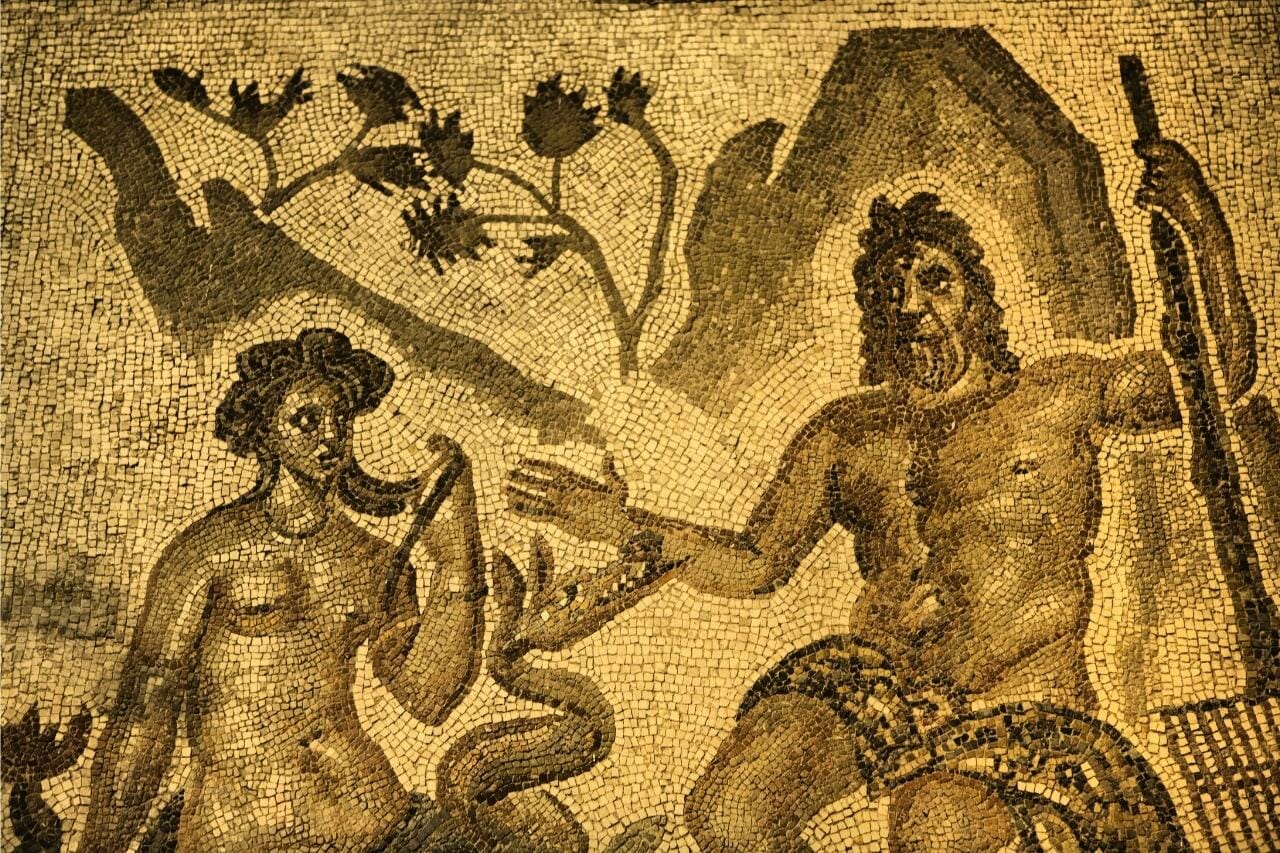
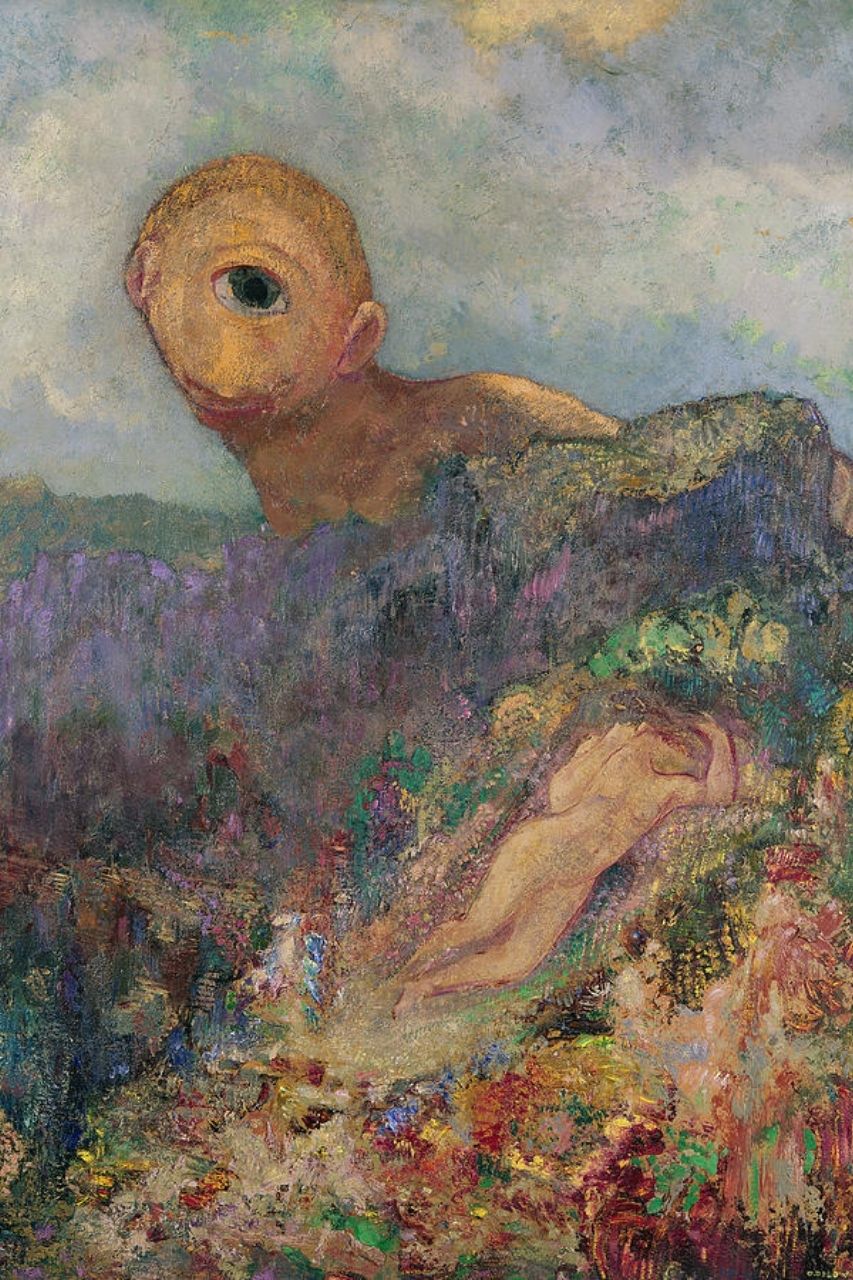
The Odyssey cyclops or Polyphemus is known as the son of the god of the sea, Poseidon. Like his father, the demigod is strong and holds deep resentment to those who do him wrong. The giant is written as a violent, cruel, and selfish being, killing his loved one’s lover, Acis. But who was he in The Odyssey? And how did he cause Odysseus’ tumultuous journey home? To answer these questions, we must go back to the same events that occurred in The Odyssey.
The Odyssey
After the Trojan War, the men who had participated in the strife were to head home back to their families. Odysseus gathers his men onto ships and heads straight to their beloved home, Ithaca. On their way, they stop by various islands with varying degrees of danger, but no island has given them troubles that would last them a lifetime until they reach the isle of Sicily, land of the Cyclops’.
Here they find a cave filled with food and gold; in their greed, the men decide to take what’s there to take and feast on the food present in the home, enjoying the luxuries of the time, unaware of the dangers they face. Polyphemus, a one-eyed giant, enters his home only to see strange little men eating his food and marveling at his treasures.
Odysseus marches up to the giant and demands he gives them food to eat, shelter from their travels, and safety in their journey, all in exchange for stories of their adventure and voyage. The giant blinks and takes the two men nearest to him. He chews on them and swallows them in front of Odysseus and his men, prompting them to run in fear and hide from the giant who’d just eaten their friends.
Polyphemus closes the cave with a boulder, trapping the men inside, and goes off to sleep on his cot. The following day Polyphemus hunts for two more men and eats them for breakfast. He opens the cave briefly to let his cattle out and covers the cave with a boulder, again trapping the Ithacan men inside.
Blinding the Giant
Odysseus hatches a plan, takes a portion of the giant’s club, and sharpens it in the form of a spear; he then waits for the giant’s return. Once Polyphemus enters his cave, he eats another two of Odysseus’ men before Odysseus gathers the courage to speak to the giant. He offers the cyclops wine from their voyage and allows him to drink as much as he pleases.
Once Polyphemus is drunk, Odysseus plunges the spear right into the cyclops’ eye and blinds him in the process. Polyphemus, blind in rage, tries to search for the bold human who dared blind him, but to no avail, he could not feel for the Ithacan king.
The next day Polyphemus must allow his herd to walk amongst the grass and sunlight. He opens the cave but checks on everything that passes through. He felt every one of his sheep, hoping to catch the men that rendered him to blindness, but to no avail; all he could feel was the soft wool of his sheep. Unbeknownst to him, Odysseus and his men had tied themselves onto the underbellies of the sheep to escape peacefully, without getting caught.
Although the Ithacan men had survived and were able to escape in one piece, Odysseus’ pride gets the better of him. He shouts his name and tells the giant to tell anyone who knew that he, the king of Ithaca, had blinded the giant and nobody else.
Polyphemus in The Odyssey then prays to his father, Poseidon, to delay Odysseus’ return home, and Poseidon heeds his beloved son’s request. Poseidon sends storms and waves to the Ithacan king’s party, leading them into perilous waters and dangerous islands.
They were brought to the island of the Laistrygonians, where they were hunted like prey and treated like game, to be tracked and grilled once caught. Odysseus barely escapes with a few of his men, only to be directed towards the island of Circe by the storm. On the island of Circe, Odysseus’ men are turned into swine and are saved by the help of Hermes.
They stay in luxury on the island for a year and once again set sail towards Ithaca. Another storm leads them to the island of Helios, where Odysseus’ men slaughter the god’s beloved golden cattle, earning the ire of the gods.
Zeus’ Punishment
As punishment Zeus, the god of the gods, sends a thunderbolt their way, sinking their ship and drowning all the men. Odysseus, the sole survivor, washes ashore the island of Ogygia, home of the Greek nymph Calypso, where he is imprisoned for several years.
His imprisonment ends as Athena can persuade her father and the rest of the Olympian council to let him return home. Odysseus escapes Calypso’s island but is yet again derailed by Poseidon’s solid waves and storms. He washes ashore on the isle of the Phaeacians, where he meets the daughter of the king. The young girl brings Odysseus back to the castle and advises him to charm her parents to be escorted back to Ithaca. He charms the Phaeacians by recounting his adventures and the struggles he’d face amid his travels.
The king commands a group of his men to bring the Young Ithacan home for their Patron, Poseidon, who had sworn to protect them on their travels. Thus, our Greek hero was able to return safely to Ithaca with the kindness and skill of the Phaeacians, where he eventually took his rightful seat at the throne.
Who Is Cyclops in The Odyssey?
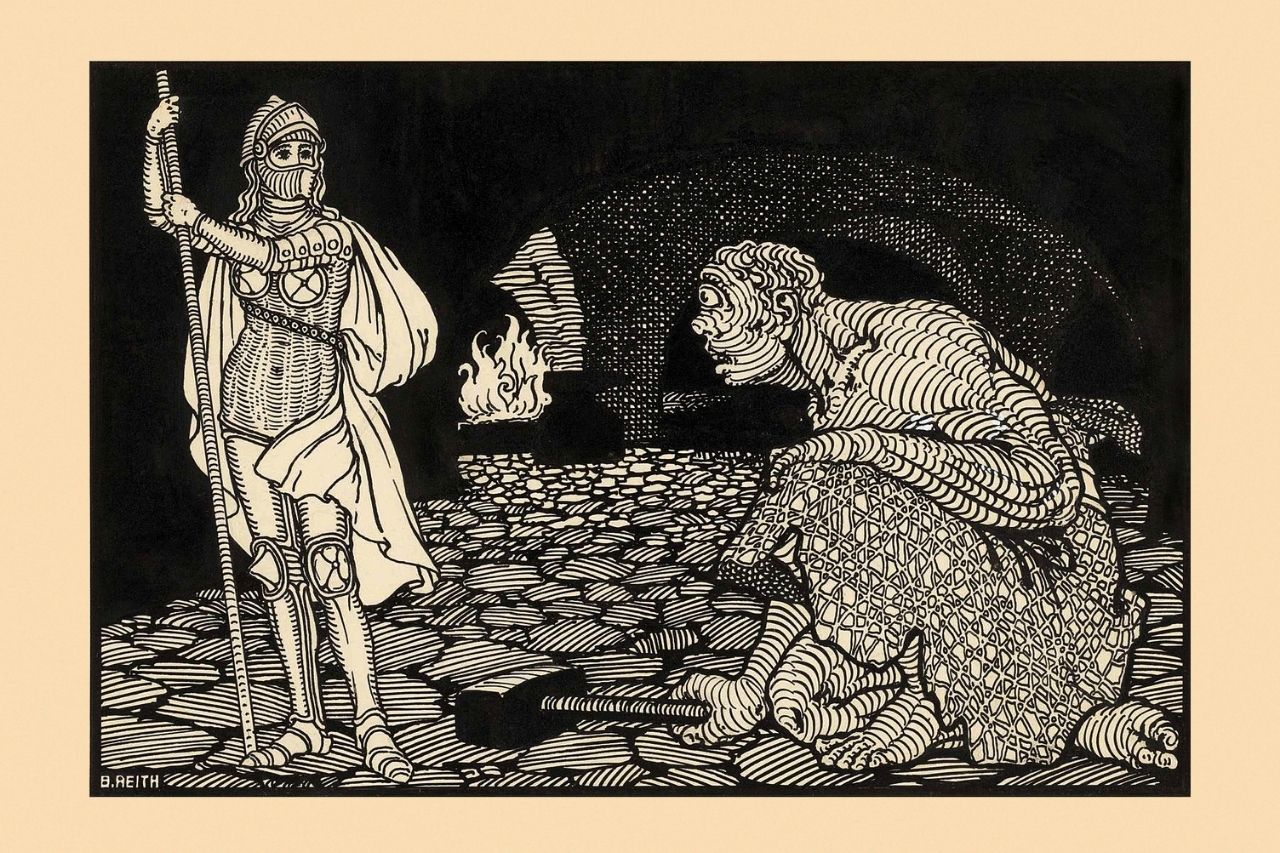
The Cyclops from The Odyssey is a mythical creature born from gods and goddesses with great significance in Greek mythology. In The Odyssey, the most notable Cyclops is the son of Poseidon, Polyphemus, who encounters Odysseus and his men in his very own home.
Poseidon, erratic in nature, once favored Odysseus for his noble acts in the Trojan war but finds his presence a menace after disrespecting him by injuring his son. The Ithacan king blinds him as they escape his clutches. Embarrassed and enraged, Polyphemus prays to his father and asks him to exact revenge on those who injured him.
Poseidon sends various storms and waves to Odysseus’ way, leading them to sea monsters, tricky waters, and the most dangerous islands to harm the Ithacan men. Poseidon’s last attempt to derail Odysseus’ journey is after the Ithacan king escapes Calypso’s island. Strong waters overboard Odysseus’ ship as he washes the island of the Phaeacians ashore.
Ironically, the sea-faring people are Poseidon’s chosen beings; the Phaeacians regard Poseidon as their patron as he promised to protect them on their journey at sea. The Phaeacians escort Odysseus home safely, and Odysseus rises back to power in Ithaca.
Odysseus and the Cyclops Cave
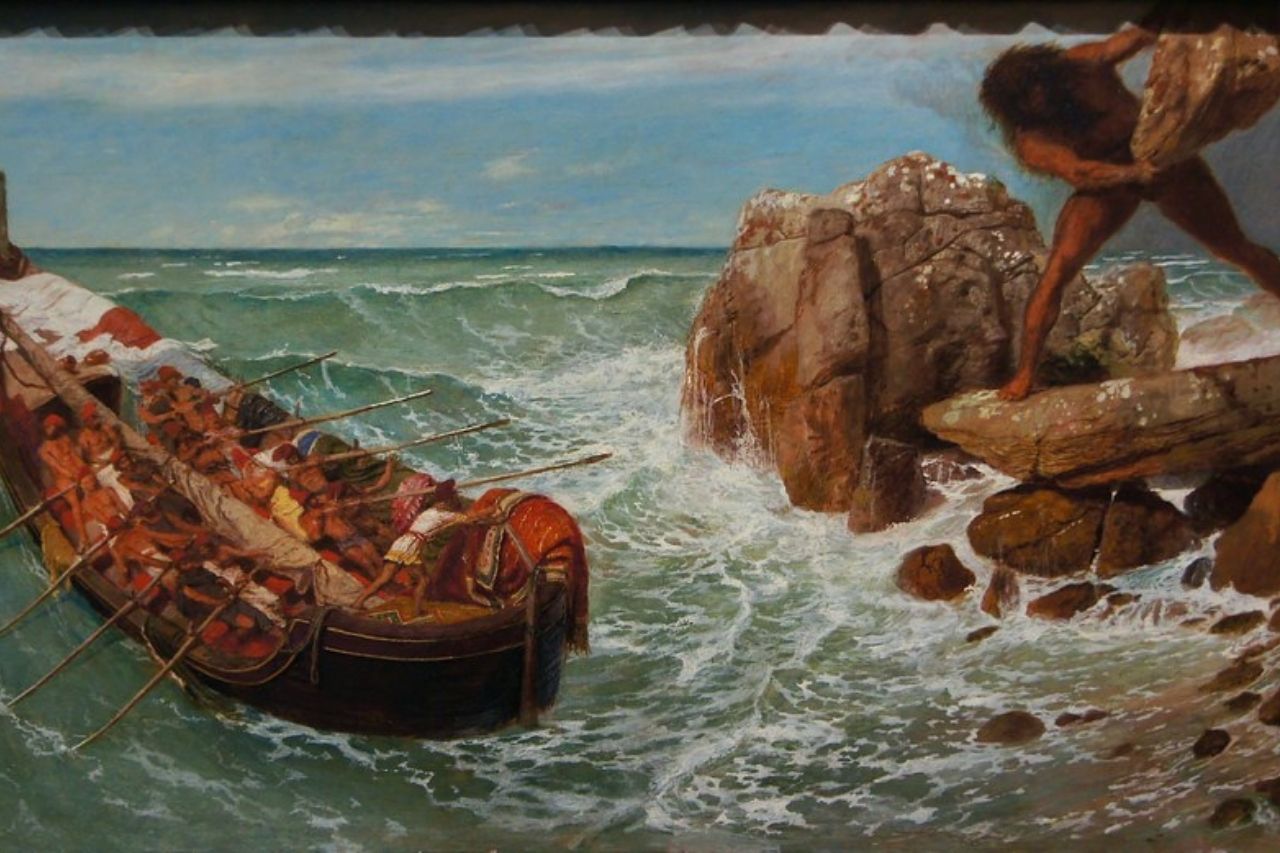
Odysseus and his men arrive in Sicily and venture into the cave of Polyphemus and immediately demand Xenia. Xenia is the Greek custom of hospitality, deeply rooted in the belief in generosity, gift exchange, and reciprocity.
In Greek customs, it is typical and suitable for the house owner to offer food, shelter, and safe travels to sea-faring voyagers in exchange for stories of their travels. Because information was so scarce and travel was an arduous task, the levels of travelers held great importance in ancient times, so Odysseus’ demand for such was nothing but a way of greeting the ancient Greeks.
Odysseus demanded that he demand Xenia from a Cyclops, a completely different cultural setting from the Greeks’. The cyclops, much like the gods and goddesses, do not care for such a trait, as they have the power and authority to travel on their own. Polyphemus, in particular, had no interest in what lay ahead of his beloved island.
The Greek Cyclops, already known for his murderous and violent tendencies, did not appreciate unknown visitors in his cave who demanded rights to his house. So instead of listening to Odysseus’ demands, he ate his men as a show of force. Odysseus and the Cyclops then face a battle of wit as the Greek men try to escape while the Cyclops try to keep them in prison.
Conclusion
Now that we’ve talked about Polyphemus, who he is in the Odyssey, and what his role was in the play, let’s go over some of the critical points of this article:
- The Cyclops in The Odyssey is none other than Polyphemus
- Odysseus and the Cyclops, also known as Ulysses and the Cyclops, recounts the tale of Odysseus as he tries to escape the cave of Polyphemus, blinding the giant in the process and gaining Poseidon’s ire
- Odysseus blinds Polyphemus to escape the cave bringing about the wrath of Poseidon, who goes out of his way to make the young Ithacan king’s journey home Arduous
- Polyphemus is a violent and murderous cyclops who has little to no interest in anything outside his island
- Odysseus demands xenia from the Cyclops but is rewarded with the death of a number of his men
In conclusion, Polyphemus in The Odyssey played a crucial role in making an antagonist in the play. Without Polyphemus, Odysseus would not have gained Poseidon’s anger, and the divine antagonist would not have gone out of his way to delay Odysseus’ journey for years. And there you have it, a complete analysis of the Cyclops in The Odyssey, who he is, and the Cyclops’ importance in the play.