Timeless Myths Logo

Explore myths and legends from cultures around the world

Featured

Classical Mythology
Classical Mythology Greek and Roman myths, gods, heroes, and epic tales
Norse Mythology
Norse Mythology Vikings, Asgard, Ragnarok, and the nine realms
Celtic Mythology
Celtic Mythology Irish, Welsh, and Gaelic legends and folklore
Ancient Literature
Ancient Literature Classical texts, translations, and literary analysis

All Mythologies

Arthurian Legends King Arthur, Camelot, the Round Table, and the Holy Grail Egyptian Mythology Pharaohs, pyramids, and ancient Nile deities Japanese Mythology Shinto gods, spirits, and legendary creatures Chinese Mythology Dragons, immortals, and celestial beings Aztec Mythology Mesoamerican gods, rituals, and creation myths

Discover gods and goddesses from every pantheon

Featured

Greek Gods
Greek Gods The Olympians, Titans, and primordial deities
Norse Gods
Norse Gods Odin, Thor, Loki, and the Aesir and Vanir
Egyptian Gods
Egyptian Gods Ra, Osiris, Isis, Anubis, and more
Japanese Gods
Japanese Gods Amaterasu, Susanoo, and Shinto kami

All Gods & Deities

Roman Gods Jupiter, Mars, Venus, and the Roman pantheon Celtic Gods The Tuatha Dé Danann and Celtic deities Aztec Gods Quetzalcoatl, Tezcatlipoca, and Aztec deities Chinese Gods Jade Emperor, Dragon Kings, and celestial beings View All 150+ Deities Browse the complete collection of mythological deities
View all gods & deities

Tales, legends, and character profiles from mythology

Featured

All Stories
All Stories Browse 800+ mythology and history stories
Characters
Characters Profiles of 67 mythological heroes, gods, and villains

All Stories

Mythology Stories Ancient myths and legends retold History Stories Historical tales from ancient civilizations Religion & Culture Religious traditions and cultural beliefs
View all stories

Tools, references, and site information

Featured

Name Generators
Name Generators Generate fantasy and mythology-inspired names
All Articles
All Articles Browse 1,800+ articles on mythology and history

All Resources

About Timeless Myths Learn about this mythology resource Bibliography Sources and references used on this site FAQ Frequently asked questions Contact Get in touch with us
Search
Classical Mythology Greek and Roman myths, gods, heroes, and epic tales Norse Mythology Vikings, Asgard, Ragnarok, and the nine realms Celtic Mythology Irish, Welsh, and Gaelic legends and folklore Arthurian Legends King Arthur, Camelot, the Round Table, and the Holy Grail Egyptian Mythology Pharaohs, pyramids, and ancient Nile deities Japanese Mythology Shinto gods, spirits, and legendary creatures Chinese Mythology Dragons, immortals, and celestial beings Aztec Mythology Mesoamerican gods, rituals, and creation myths Ancient Literature Classical texts, translations, and literary analysis
Greek Gods The Olympians, Titans, and primordial deities Roman Gods Jupiter, Mars, Venus, and the Roman pantheon Norse Gods Odin, Thor, Loki, and the Aesir and Vanir Egyptian Gods Ra, Osiris, Isis, Anubis, and more Celtic Gods The Tuatha Dé Danann and Celtic deities Aztec Gods Quetzalcoatl, Tezcatlipoca, and Aztec deities Japanese Gods Amaterasu, Susanoo, and Shinto kami Chinese Gods Jade Emperor, Dragon Kings, and celestial beings View All 150+ Deities Browse the complete collection of mythological deities View all gods & deities
All Stories Browse 800+ mythology and history stories Characters Profiles of 67 mythological heroes, gods, and villains Mythology Stories Ancient myths and legends retold History Stories Historical tales from ancient civilizations Religion & Culture Religious traditions and cultural beliefs View all stories
Name Generators Generate fantasy and mythology-inspired names All Articles Browse 1,800+ articles on mythology and history About Timeless Myths Learn about this mythology resource Bibliography Sources and references used on this site FAQ Frequently asked questions Contact Get in touch with us
Search Search the entire mythology archive

Temptation in the Odyssey: Dangerous Tests

greek-mythology

Temptation in the Odyssey is one of the themes in the epic poem. It was exhibited repeatedly throughout the poem. On many occasions, the concept of temptation that comes along Odysseus' way has caused his journey to becoming full of misfortune. Let us begin to discover how temptation was demonstrated in the Odyssey and what other themes underlie this epic poem.

Odysseus Temptation in The Odyssey

Most of their misadventures of Odysseus were caused by the temptation that he and his men encountered on their journey back home. Submitting to temptation or recklessness would either distract them from their travel or anger the gods. Read on and see some instances in which Odysseus and the members of his crew yielded to temptation and faced the consequences along the way.

Temptations on Different Locations

The temptation was considered one of the main themes as it transpired numerous times in situations in which Odysseus and his men struggled with temptation that caused delays in his return to his home in Ithaca.

There were different times and locations when different characters of the epic poem faced temptations of numerous kinds: whether it was through food, getting out of despair, or even the desire for adultery.

On the Island of the Lotus-eaters

When Zeus sent a storm, Odysseus and his crew were challenged in the ocean for nine days. This event forced them to dock on the nearest island, the island of the Lotus-eaters called Djerba. This small island was inhabited by lotophages or harmless humans who only consume the fruits of the lotus plant, thus the name of their island.

Odysseus ordered his men to explore and greet the lotus-eaters. However, several hours have passed and they have not returned yet.

To his dismay, Odysseus himself marched to follow his men and saw them in their intoxicated state as the lotus-eaters offered lotus fruits to them. They became addicted and forgot their desire to go home, only wanting to remain with the lotus-eaters forever.

Odysseus dragged them back to their ship and chained them as they refused to leave and wanted to eat more fruits from the lotus plant. They continued to set sail after yielding to the temptation posed by the lotus fruits.

On Helios' Island

After facing the terrors of Scylla and Charybdis, Odysseus and his crew's next destination was on the island of Thrinacia of the sun god Helios. Odysseus wanted to avoid this place, but Eurylochus talked him into resting there. They were given instructions not to do any harm to the sacred golden cattle of the sun god. As they stayed there, however, the provisions they brought had run out. This was when the temptation on Odysseus' crew arose.

Odysseus decided to pray in the temple and left his crew with a warning not to touch the animals. However, while he was away, Eurylochus convinced the others to kill the cattle one by one, eat their meat, and offer the best one to the gods as a repayment for their sins. When Odysseus returned, he found out what his crew did and immediately gathered them into the ships and set sail into the storm.

The sun god Helios was offended and angered at the same time for their disrespectful manner. He threatened that he would drag the sun down in the underworld if Zeus would not punish their actions. So, as they were sailing, Zeus struck them with a thunderbolt, which destroyed all of their ships and killed every single member of the crew but Odysseus.

On the Island of Ogygia
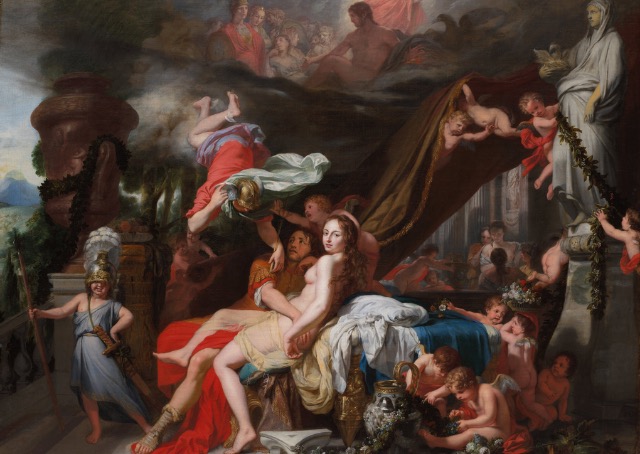
Hermes ordering Calypso to release Odysseus

Hermes delivering Zeus' command to Calypso to release Odysseus

The beautiful nymph Calypso imprisoned Odysseus as he washed ashore on the island where the nymph resided. She fell in love with Odysseus and became a constant temptation to the hero.

She offered him immortality in return for marrying her and continued to hope and entice him with her offerings for seven years while he was detained on the island. If not for the goddess Athena's intervention, Calypso would not have released Odysseus.

Why Is Temptation Crucial for the Life Journey of Odysseus?

In Homer's Odyssey, the temptation in the Odyssey was crucial for the life journey of Odysseus as it was used to test his patience, endurance, and dignity as a leader to his crew. These served as challenges to prove how strong and intelligent he was to handle the situation as he and his companions give in to temptations.

FAQ

What Is the Ruling Theme of the Odyssey?

The ruling themes of the Odyssey are hospitality, temptation, loyalty. Numerous scholars dating back the ancient times up to the modern times have scrutinized and studied the themes in the Odyssey. They have considered the following as they were the recurring themes in the poem while showing the crucial events in the life of Odysseus.

Greek hospitality was a dominant part of the poem and was an essential part as the epic is a story of travels. Hospitality, referred to as "guest-friendship," was a social ritual practiced by Greeks where people were expected to welcome visitors. This was the reason why, even though Odysseus and the members of his crew were tossed from various islands, inhabitants hosted them and provided them with food, water, and shelter.

Loyalty was another themes and was also considered one of the main motifs in the Odyssey. The best example of loyalty was the demonstration of Penelope, Odysseus' wife, who waited for his return for 20 years.

Conclusion

Temptation in the Odyssey was one of the reasons why Odysseus' journey home was full of misfortune. The more he yielded to temptation, the more his journey was delayed.

  • Odysseus was tempted many times in the story, which resulted in the derailing of his journey.

  • The temptation was crucial to the life of Odysseus because it was used to test his abilities and potential, whether it was through surviving or through obstacles.

  • Temptation is considered to be the theme that tested Odysseus the most because it was a barrier on his road back home.

Temptations played a vital role in the epic as they made the story more interesting and something from which we can acquire lessons, whether it was through being stuck on an island, or being an adulterer, he didn't lose his focus and aimed to go back to his original island.

By Ancient Literature

Created: February 16th, 2024

Modified: January 3rd, 2025

Conflicts in The Odyssey: A Character's Struggle

Conflicts in The Odyssey: A Character's Struggle

In Odysseus's journey home, he faces significant conflicts in The Odyssey. The various challenges Odysseus faces are essentially the center of Homer's classic, but what are these antagonisms he encounters? To understand this, we will go over the p...

February 16th, 2024 • Ancient Literature
Sirens in The Odyssey: Beautiful Yet Deceitful Creatures

Sirens in The Odyssey: Beautiful Yet Deceitful Creatures

Sirens in The Odyssey were alluring creatures who sang beautiful songs that could drive a man mad just by hearing them. The sirens were one of the first ordeals Odysseus and his crew had to pass through so they could continue on their journey home...

February 16th, 2024 • Ancient Literature
Odyssey Cyclops: Polyphemus and Gaining the Sea God's Ire

Odyssey Cyclops: Polyphemus and Gaining the Sea God's Ire

The Odyssey cyclops or Polyphemus is known as the son of the god of the sea, Poseidon. Like his father, the demigod is strong and holds deep resentment to those who do him wrong. The giant is written as a violent, cruel, and selfish being, killing...

February 16th, 2024 • Ancient Literature
Aphrodite in The Odyssey: A Tale of Sex, Hubris, and Humiliation

Aphrodite in The Odyssey: A Tale of Sex, Hubris, and Humiliation

Why did Homer mention Aphrodite in The Odyssey? She doesn't even appear in person, but only as a character in a bard's song. Is it just an entertaining story, or did Homer make a specific point? Keep reading to find out!What Is the Role of Aphrodi...

February 15th, 2024 • Ancient Literature
Monster in the Odyssey: The Beasts and the Beauties Personified

Monster in the Odyssey: The Beasts and the Beauties Personified

In Greek mythology, the monster in the Odyssey includes Scylla, Charybdis, the sirens, and Polyphemus the cyclops. They are important figures in the Odyssey, which is an epic poem considered as one of the two masterpieces in Greek literature writt...

February 16th, 2024 • Ancient Literature
Allusions in The Odyssey: Hidden Meanings

Allusions in The Odyssey: Hidden Meanings

In understanding the allusions in The Odyssey, a connection must be made between the reader and the author, who both share an appreciation for knowledge before the reference is made. An allusion is an implied or indirect reference to a person, eve...

February 15th, 2024 • Ancient Literature
Fates In the Odyssey: Odysseus' Destiny

Fates In the Odyssey: Odysseus' Destiny

Fate in the Odyssey showed how Odysseus suffered during his long journey back to his home in Ithaca. As fate is described as the development of occurrence beyond a person's control, it is determined by a supernatural power and is subject to change...

February 16th, 2024 • Ancient Literature
Calypso in the Odyssey: A Beautiful and Captivating Enchantress

Calypso in the Odyssey: A Beautiful and Captivating Enchantress

Calypso in the Odyssey was described as a seductive nymph inhabiting the mythical island of Ogygia in Greek mythology. Located in an unknown place, Calypso's island became Odysseus' home for seven years. Calypso fell in love with Odysseus, the kin...

February 15th, 2024 • Ancient Literature
Eurymachus in The Odyssey: Meet the Deceitful Suitor

Eurymachus in The Odyssey: Meet the Deceitful Suitor

Eurymachus in The Odyssey plays an essential role as one of the mortal antagonists in the play. Eurymachus, an Ithacan noble who Penelope's father backs, is seemingly innocent and charming in Penelope's eyes. But behind the facade is a dishonest, ...

February 16th, 2024 • Ancient Literature
Hubris in The Odyssey: The Greek Version of Pride and Prejudice

Hubris in The Odyssey: The Greek Version of Pride and Prejudice

Hubris in The Odyssey and other Greek literature plays a vital role. In a way, Homer's The Odyssey served as a cautionary tale to the ancient Greeks, warning them that the consequences of hubris could be devastating, even fatal. What is hubris, an...

February 16th, 2024 • Ancient Literature
Timeless Myths

Exploring mythology and legends from around the world.

Explore Myths

All Stories Characters All Articles Search Site Map

Mythologies

Norse Mythology Classical Mythology Celtic Mythology Arthurian Legends Mythology Gods Ancient Literature

About Us

Introduction About Jimmy Bibliography FAQs Retro Version

Resources

Timeless Myths All Stories All Articles Characters
© 1999-2026 Timeless Myths • Copyright • Privacy Policy • Cookie Policy • Contact
Follow us: