Teucer: The Greek Mythologies of Characters Who Bore That Name
Teucer was a name borne by two significant figures in Greek mythology. The first was a legendary archer who fought in the Trojan War alongside his half-brother Ajax, while the second was an ancient king who founded the land that would eventually become Troy. Both left lasting legacies in Greek tradition, though their stories are separated by generations and vastly different circumstances.
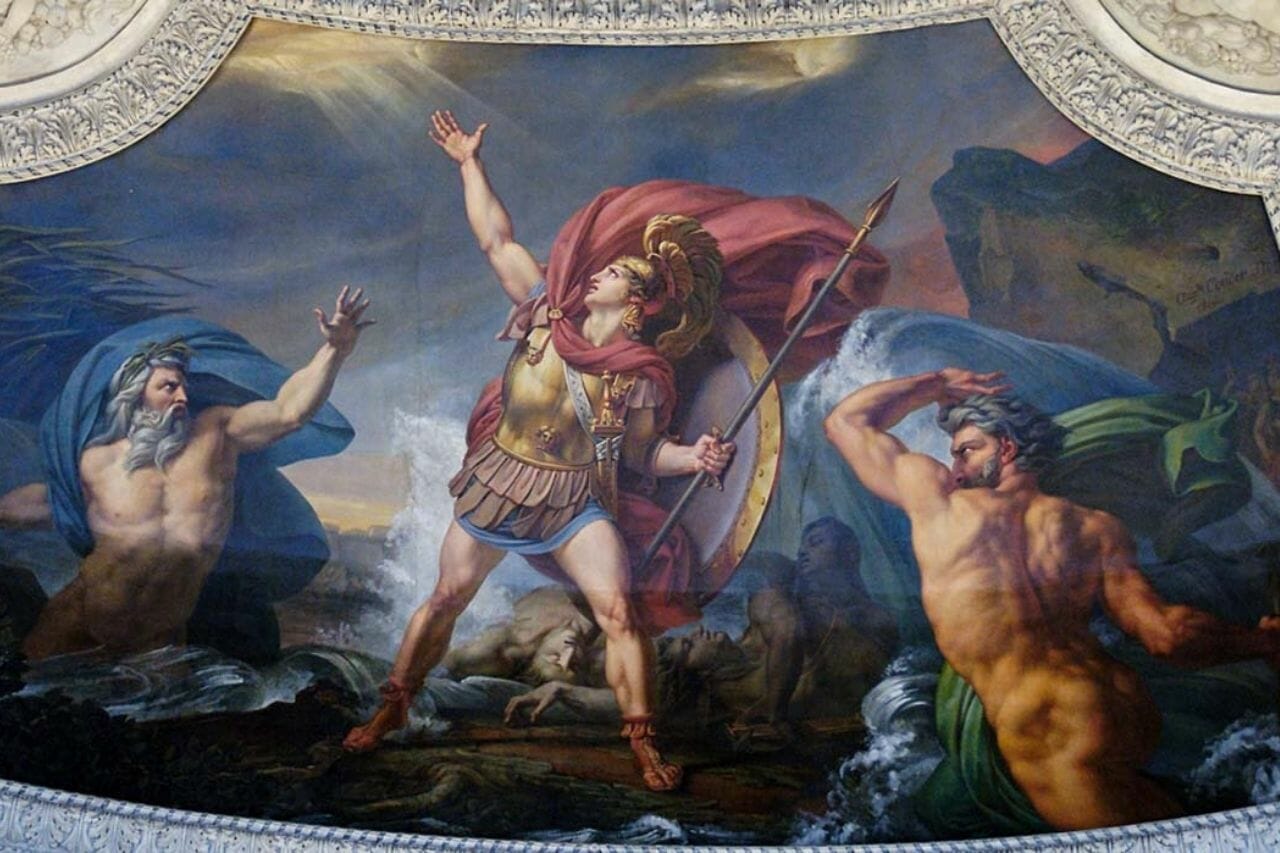
Teucer of Salamis, the renowned Greek archer of the Trojan War
Teucer, the Great Archer
The more famous of the two Teucers was the half-brother of Ajax the Great, and one of the finest archers to fight in the Trojan War. His skill with the bow made him a formidable warrior, though he operated in a unique way that maximized both his abilities and those of his towering half-brother.
The Family of Teucer
Teucer was born to Telamon, the king of Salamis, and Hesione, a Trojan princess. This made his family connections remarkably complex—his uncle was King Priam of Troy, and his cousins included Hector and Paris, the very men he would fight against during the war. Through his father, he was the half-brother of Ajax the Great, who became his closest companion in battle.
Later in life, after his banishment from Salamis, Teucer would marry a Cyprian princess named Eune and father a daughter called Asteria.
Teucer in Greek Mythology
During the Trojan War, Teucer developed a distinctive fighting style that took advantage of both his archery skills and his brother's legendary strength. He would stand behind the huge shield of Ajax, using it as cover while he unleashed a barrage of arrows upon the Trojan forces. When he needed to reload or rest, he would duck behind Ajax's massive shield for protection, then emerge to fire again.
This collaboration between the two brothers proved devastatingly effective. Together, they inflicted significant damage on the Trojan forces, with Teucer's precision archery complementing Ajax's defensive capabilities perfectly.
Teucer's Encounter With Hector
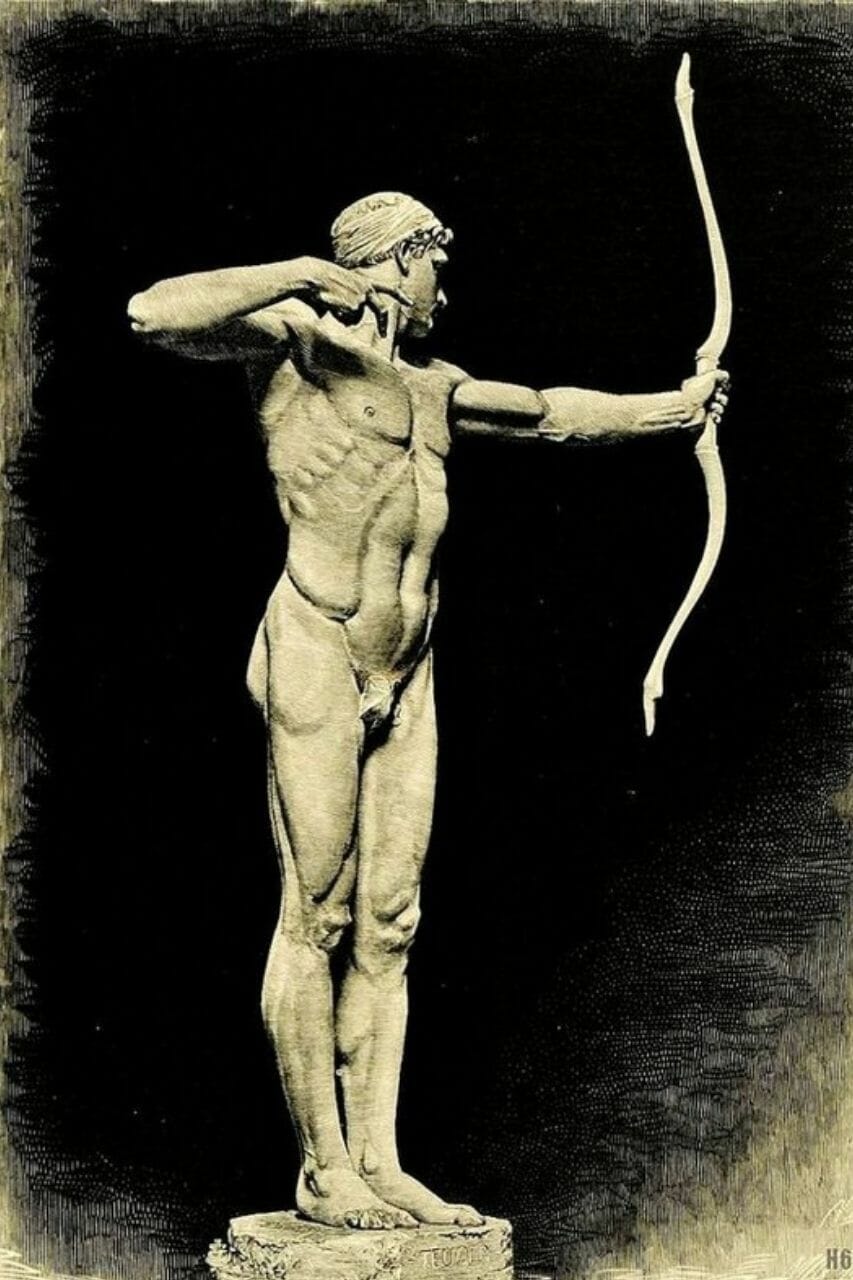
Teucer the warrior, master archer of the Greek forces
One of the most dramatic moments in Teucer's story came during his confrontation with Hector, Troy's greatest warrior. Teucer first killed Hector's charioteer, then shot multiple arrows directly at his cousin. However, Apollo, who favored the Trojans, deflected every arrow that would have struck Hector.
Zeus himself intervened to protect Hector, breaking Teucer's bow to prevent any further attempts on the Trojan prince's life. Hector then seized the opportunity, hurling a large stone that struck Teucer's arm and left him severely wounded. The battle only ended when Patroclus arrived on the battlefield.
The Trojans Finally Retreat
When Patroclus entered the battle wearing Achilles' armor, the Trojans were thrown into confusion and fear. The sight of what they believed to be the invincible Achilles caused them to retreat, as they feared the legendary warrior whose mother Thetis had made him nearly impervious to harm. This gave the Greeks a much-needed respite in the fighting.
Teucer's Exploits During the Trojan War
Throughout the course of the war, Teucer proved himself one of the most effective Greek warriors. He is credited with killing approximately thirty Trojan warriors with his arrows. Among his confirmed kills were Aretaon, Ormenus, Daetor, and Melenippus, along with many others.
Perhaps most notably, Teucer severely wounded Glaucus, the captain of the Lycian forces allied with Troy. This wound forced Glaucus to withdraw from battle at a critical moment, demonstrating Teucer's ability to affect the outcome of engagements even against the most formidable opponents.
Teucer Insists On The Burial of Ajax
After the death of Achilles, a dispute arose over who should receive the fallen hero's legendary armor. When the armor was awarded to Odysseus instead of Ajax, the great warrior was consumed by rage and shame. Athena, to prevent Ajax from murdering Menelaus and Agamemnon in his fury, drove him temporarily mad. In his delusion, Ajax attacked a flock of cattle, believing them to be the Greek leaders who had wronged him.
When Ajax regained his senses and realized what he had done, the shame was too great to bear. He committed suicide by falling on his own sword. Teucer arrived too late to save his brother, but he fiercely guarded Ajax's body, insisting on a proper burial despite the objections of Menelaus and Agamemnon.
Teucer's insistence was crucial—in Greek belief, without proper burial rites, a soul could not pass peacefully to the Underworld. Despite the anger of the Greek commanders, Teucer ensured his brother received the honors due to a great warrior.
The King of Salamis Banishes Teucer
When Teucer finally returned home to Salamis after the war, he faced an unexpected trial. His father Telamon accused him of negligence for returning without Ajax's body or his armor. The king found Teucer guilty and banished him from the kingdom, forcing him to seek a new home.
Teucer set sail in search of a place to settle. During his wanderings, he was recruited by King Belus of Tyre to help in a campaign against Cyprus. In recognition of his service, Teucer was granted land on the island, where he founded a new city that he named Salamis, after his lost homeland. There he married Eune, a Cyprian princess, and fathered a daughter named Asteria.
The Mythology of King Teucer
The second Teucer in Greek mythology lived long before the Trojan War. He was a king and founder figure whose legacy would shape the very land that would one day become Troy.
The Family of King Teucer
This earlier Teucer was the son of the river god Scamander and the nymph Idaea. He originally lived in Crete but was forced to flee when a great famine struck the island. Seeking a new home, he eventually settled at the Scamander River in the region known as the Troad, where he founded a kingdom called Teucria—the land that would later become Troy.
How Dardanus Met King Teucer
The story of how Dardanus came to meet King Teucer varies among ancient sources. According to Virgil, Dardanus was a Tyrrhenian prince who traveled to the Troad. Dionysius of Halicarnassus provides a different account, stating that Dardanus came from Arcadia, where he ruled alongside his brother Iasus.
In this version, Dardanus had married a woman named Chryse, but after a great flood displaced the Arcadian population, tragedy struck the family. Zeus killed Iasus for having an affair with Demeter, and Dardanus was forced to leave his homeland. He sailed first to Samothrace and then to the Troad, where he encountered King Teucer.
Teucer welcomed Dardanus and gave him his daughter Batea in marriage. The union produced three sons—Ilus, Erichthonius, and Zacynthus—and a daughter named Idaea.
Teucer's Death and Legacy
King Teucer granted Dardanus land at the base of Mount Ida, where he could establish his own settlement. After Teucer's death, Dardanus founded a city called Dardania, which would eventually grow to become the great city of Troy.
Despite the changes in rulership, the Trojans maintained the name "Teucrian" as a term for their descendants, honoring the memory of the ancient king. Even in Virgil's Aeneid, written centuries after the supposed events, Aeneas is referred to as the "great captain of the Teucrians," demonstrating how enduring Teucer's legacy proved to be.
The Modern Legacy of Teucer
The name Teucer continues to resonate in unexpected places today. The city of Pontevedra in Galicia, Spain, traces its legendary foundations to Teucer, and is sometimes called "The city of Teucer." Citizens of Pontevedra are occasionally referred to as Teucrinos, and several sporting clubs in the region use his name in their titles.
Teucer Pronunciation
The name Teucer is pronounced "TEW-ser" or "TYOO-ser" in English. The meaning of the name remains uncertain in modern translations, though some scholars have suggested it may be related to the Greek word for "archer," which would be fitting given the famous Teucer's skill with the bow.
Conclusion
The two Teucers of Greek mythology, though separated by generations, both left significant marks on the ancient world. The first—son of Telamon and Hesione—was a masterful archer whose partnership with his half-brother Ajax made them one of the most effective fighting pairs of the Trojan War. Despite his military successes, he faced banishment for failing to return with Ajax's body, eventually founding a new city in Cyprus.
The second Teucer was a king and founder whose realm would transform into the legendary city of Troy. His welcoming of Dardanus and the marriage alliance they formed set in motion the dynasty that would produce Priam, Hector, Paris, and ultimately the great Trojan War itself. Through the term "Teucrian," his name became synonymous with the Trojan people for generations to come.