Timeless Myths Logo

Explore myths and legends from cultures around the world

Featured

Classical Mythology
Classical Mythology Greek and Roman myths, gods, heroes, and epic tales
Norse Mythology
Norse Mythology Vikings, Asgard, Ragnarok, and the nine realms
Celtic Mythology
Celtic Mythology Irish, Welsh, and Gaelic legends and folklore
Ancient Literature
Ancient Literature Classical texts, translations, and literary analysis

All Mythologies

Arthurian Legends King Arthur, Camelot, the Round Table, and the Holy Grail Egyptian Mythology Pharaohs, pyramids, and ancient Nile deities Japanese Mythology Shinto gods, spirits, and legendary creatures Chinese Mythology Dragons, immortals, and celestial beings Aztec Mythology Mesoamerican gods, rituals, and creation myths

Discover gods and goddesses from every pantheon

Featured

Greek Gods
Greek Gods The Olympians, Titans, and primordial deities
Norse Gods
Norse Gods Odin, Thor, Loki, and the Aesir and Vanir
Egyptian Gods
Egyptian Gods Ra, Osiris, Isis, Anubis, and more
Japanese Gods
Japanese Gods Amaterasu, Susanoo, and Shinto kami

All Gods & Deities

Roman Gods Jupiter, Mars, Venus, and the Roman pantheon Celtic Gods The Tuatha Dé Danann and Celtic deities Aztec Gods Quetzalcoatl, Tezcatlipoca, and Aztec deities Chinese Gods Jade Emperor, Dragon Kings, and celestial beings View All 150+ Deities Browse the complete collection of mythological deities
View all gods & deities

Tales, legends, and character profiles from mythology

Featured

All Stories
All Stories Browse 800+ mythology and history stories
Characters
Characters Profiles of 67 mythological heroes, gods, and villains

All Stories

Mythology Stories Ancient myths and legends retold History Stories Historical tales from ancient civilizations Religion & Culture Religious traditions and cultural beliefs
View all stories

Tools, references, and site information

Featured

Name Generators
Name Generators Generate fantasy and mythology-inspired names
All Articles
All Articles Browse 1,800+ articles on mythology and history

All Resources

About Timeless Myths Learn about this mythology resource Bibliography Sources and references used on this site FAQ Frequently asked questions Contact Get in touch with us
Search
Classical Mythology Greek and Roman myths, gods, heroes, and epic tales Norse Mythology Vikings, Asgard, Ragnarok, and the nine realms Celtic Mythology Irish, Welsh, and Gaelic legends and folklore Arthurian Legends King Arthur, Camelot, the Round Table, and the Holy Grail Egyptian Mythology Pharaohs, pyramids, and ancient Nile deities Japanese Mythology Shinto gods, spirits, and legendary creatures Chinese Mythology Dragons, immortals, and celestial beings Aztec Mythology Mesoamerican gods, rituals, and creation myths Ancient Literature Classical texts, translations, and literary analysis
Greek Gods The Olympians, Titans, and primordial deities Roman Gods Jupiter, Mars, Venus, and the Roman pantheon Norse Gods Odin, Thor, Loki, and the Aesir and Vanir Egyptian Gods Ra, Osiris, Isis, Anubis, and more Celtic Gods The Tuatha Dé Danann and Celtic deities Aztec Gods Quetzalcoatl, Tezcatlipoca, and Aztec deities Japanese Gods Amaterasu, Susanoo, and Shinto kami Chinese Gods Jade Emperor, Dragon Kings, and celestial beings View All 150+ Deities Browse the complete collection of mythological deities View all gods & deities
All Stories Browse 800+ mythology and history stories Characters Profiles of 67 mythological heroes, gods, and villains Mythology Stories Ancient myths and legends retold History Stories Historical tales from ancient civilizations Religion & Culture Religious traditions and cultural beliefs View all stories
Name Generators Generate fantasy and mythology-inspired names All Articles Browse 1,800+ articles on mythology and history About Timeless Myths Learn about this mythology resource Bibliography Sources and references used on this site FAQ Frequently asked questions Contact Get in touch with us
Search Search the entire mythology archive
  1. Classical Mythology
    Pantheon Heroic Age Royal Houses Geographia Facts & Figures Genealogy Bibliography About Classical Myths
  2. Heroic Age
    Heroes 1 Heroes 2 Heroines Amazons Perseus Theseus Heracles Argonauts Calydonian Boar Hunt Seven Against Thebes Trojan War Odyssey Aeneid Tales of Lovers Giants Centaurs Mythical Creatures
  3. Seven Against Thebes
    Seven Against Thebes - War Epigoni
  4. Epigoni
    Epigoni

Epigoni

  • After Born

  • Aftermath

After Born

At the funerals of the seven fallen leaders, their sons could not rest until they avenged their fathers' deaths. They vowed that someday they would conquer Thebes. The only survivor of the Argive chieftains was Adrastus, king of Argos.

Adrastus had a son named Aegialeus, while Amphiaraüs (Amphiaraus) had Alcmeon and Amphilochus. Other leaders each had only one son, except Eteoclus who had died childless. Mecisteus was the father of Euryalus; Capaneus was father of Sthenelus; Hippomedon of Polydorus; and Parthenopaeüs (Parthenopaeus) of Promachus. Polyneices was the father of Thersander, while Tydeus was the father of Diomedes. (See Facts and Figures.)

These sons of the Seven chieftains became known as the Epigoni (After-Born).
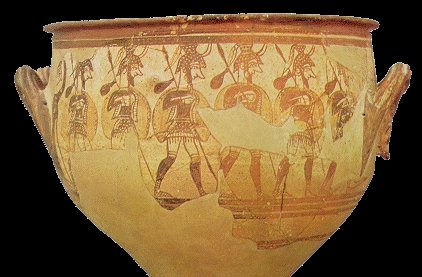
Warrior vase

Warrior vase
Bronze Age (1200 BC),
Mycenae
National Archaeological
Museum, Athens

Amphiaraüs' son Alcmeon became the leader of the new army, as the oracle of Delphi had advised them. The aged king Adrastus also decided to accompany the Epigoni to Thebes. Amphiaraüs also told his sons to not only avenge him on the Thebans, but also against their mother Eriphyle, who had accepted a bribe from Polyneices and forced Amphiaraüs to fight in a war that was doomed to fail. Alcmeon and Amphilochus at first did not want to kill their own mother until she accepted another bribe, this time from Polyneices' son, Thersander.

Ten years after the first war against Thebes, the Argive army again marched to Thebes. However, it was prophesied that unless the last of the original Seven (Adrastus) died, this war would also end in disaster.

In the battle that followed, Laodamas the son of Eteocles and king of Thebes, killed Aegialeus. With his only son dead, Adrastus died in grief. With the last of the Seven dead, the tide of the battle turned in favour of the Argives, and most of the Thebans fled to Illyria. Some say that Laodamas fled with the other Thebans, while others say that Alcmeon killed Laodamas. Thebes fell to the Epigoni.

Among those killed trying to flee was the ancient, blind seer Teiresias. Odysseus would later find and speak to the shade of Teiresias in the Underworld (see the Odyssey).

Related Information

Title

Epigoni, Ἐπίγονοι – After Born.

Sources

Library, written by Apollodorus.

Epigoni was one of the works of the Epic Cycle.

Pythian VIII was written by Pindar.

Related Articles

Adrastus, Diomedes, Teiresias.

Facts & Figures about the Epigoni.

Aftermath

Having captured Thebes, Thersander, son of Polyneices and Argeia, daughter of Adrastus, became the new king of Thebes. Thersander married Demonassa, daughter of Amphiaraüs (Amphiaraus). They became parents of Tisamenus.

Thersander was a former suitor of Helen and took forty ships to Troy. Thersander was slain by Telephus, son of Heracles, perhaps in Mysia, before arriving at Troy. Since the Theban forces were without a leader, one of the five Boeotian chieftains (Peneleus) led the Thebans at Troy. Of the five Boeotian captains who fought at Troy, only Leitus survived the long war, though he did receive a wound from Hector.

Back at home, Tisamenus succeeded his father to the throne of Thebes.


With Adrastus and his son dead in the second war, Adrastus' young grandson Cyanippus (son of Aegialeus) became king of Argos. Diomedes, Sthenelus and Euryalus, who were also suitors of Helen, went to Troy. Diomedes was leader of the Argive forces, with Sthenelus and Euryalus as his lieutenants. They took 80 ships to Troy. All three returned home safely after fighting a ten year war against the Trojans. (See the Trojan War.)

When Cyanippus died young and childless, the Argives decided that Sthenelus had a better claim to the throne than his friend and comrade, Diomedes. So the crown was either given to Sthenelus or to Sthenelus' son, Cylarabes. Diomedes was banished from Argos due to his wife taking Cometes (Sthenelus' other son) as her lover. According to Vergil's Aeneid, Diomedes settled in southern Italy while Aeneas went to Latium.


Alcmeon, who led the Epigoni in the second war against Thebes, sent their spoils to Delphi. He took Manto, daughter of the seer Teiresias, as his concubine. He became the father of Amphilochus; he named his son after his brother. The Younger Amphicholus was a seer like his grandfather Amphiaraüs. Manto had another son named Mopsus, either by Rhacius or by the god Apollo.

Like Orestes, Alcmeon was ordered by the oracle to kill his mother Eriphyle. His father (Amphiaraüs) had also ordered he and his brother to kill their mother.

When Alcmeon murdered his mother, he suffered the same fate as Orestes: he was driven mad by the Erinyes (Furies), and wandered for many years before Phegeus purified him at Psophis in Arcadia. He then married the king's daughter Arsinoe. Alcmeon became the father of Clytius. But the Erinyes and madness still hounded him.

Later he was purified by the river-god Acheloüs and married the god's daughter, named Callirrhoé (Callirrhoe). They had twin sons named Acarnan and Amphoterus. Finally the Erinyes and the madness ceased to trouble him, only for him to be murdered by his brother-in-laws, as ordered by his first father-in-law, Phegeus.

When Callirrhoé heard of her husband's death, she prayed to the gods that her sons would grow to manhood in a single night and avenge their father's death. Her infant sons grew into young men, overnight. They went to Arcadia and murdered Phegeus and his sons.

Related Information

Names

Thersander.

Alcmeon, Alcmaeon, Alcmaion.

Sources

Iliad was written by Homer.

Library, written by Apollodorus.

Description of Greece was written by Pausanias.

Fabulae was written by Hyginus.

Related Articles

Diomedes, Teiresias.

House of Proëtus and the Aeolids (genealogy).

Jimmy Joe Timeless Myths

By Jimmy Joe

Seven Against Thebes:

  • • Seven Against Thebes - War
  • • Epigoni
Seven Against Thebes and Epigoni

Seven Against Thebes and Epigoni

Seven Against Thebes EpigoniSeven Against Thebes Here is a list of the seven Argive champions who fought against Thebes. It also shows the gate the hero fought at, and which Theban champions they were killed by. Champions Parentage Gate Killed By ...

August 8th, 1999 • Jimmy Joe
After the War

After the War

At the death of Polyneices and Eteocles, Creon again became regent, this time for Laodamas, the young son of Eteocles. Laodamas' reign was brief, ruling for a short time before a new Argive army returned a second time. Ten years later after the fi...

May 6th, 1999 • Jimmy Joe
Seven Against Thebes

Seven Against Thebes

Two generations of war between two powerful cities: Argos and Thebes. The first war took shortly after the quest of Jason and the Argonauts and after the reign of Oedipus in Thebes. The second war was set just before the Trojan War began. Facts & ...

May 6th, 1999 • Jimmy Joe
Seven Against Thebes - War

Seven Against Thebes - War

The Seven Against Thebes was a famous war between the Argive army, led by seven champions, and the city of Thebes. The war was set after the reign of Oedipus in Thebes, and a generation before the Trojan War. The tales were popular during the clas...

May 6th, 1999 • Jimmy Joe
Eteocles and Polyneices

Eteocles and Polyneices

Eteocles (Ἐτεοκλἣς) and Polyneices (Πολυνείκης) were the sons of Oedipus and Jocasta. They were brothers of Antigone and Ismene. As brothers, they were bitter rivals and enemies. When Oedipus went into exile as a blind wanderer, Creon, Oedipus' un...

May 6th, 1999 • Jimmy Joe
The Aeolids in Argos

The Aeolids in Argos

At first, Proëtus (Προιτος) ruled in his kingdom at Tiryns, when his twin brother was still ruling in the city of Argos. Proëtus and Acrisius were bitter rivals, both seeking power in Argos. Proëtus only received Argos from his great-nephew, Perse...

April 24th, 1999 • Jimmy Joe
Argos after the Trojan War

Argos after the Trojan War

Diomedes, a son of Tydeus, was captain of the Argives forces at Troy and brought eighty ships with him from Argos, Tiryns, Epidaurus and Troezen. His lieutenants Sthenelus, son of Capaneus, and Euryalus, son of Mecisteus, accompanied him. All thre...

April 24th, 1999 • Jimmy Joe
House of Thebes

House of Thebes

Thebes was a principal city in the valley of southern Boeotia, between the Cithaeron Mountains in the north and Lake Copaïs (Copais) in the southeast. The city was originally named Cadmeia after Cadmus, its founder and first king. It was later nam...

May 6th, 1999 • Jimmy Joe
Adrastus

Adrastus

The descendants of Megapenthes (son of Proëtus), Bias and Melampus, participated the famous but unsuccessful war against Thebes (see Seven Against Thebes). Adrastus (Ἄδραστου) was the son of Talaüs (Talaus, Ταλαός) and grandson of Bias. Adrastus w...

April 24th, 1999 • Jimmy Joe
House of Pelops

House of Pelops

Children of Pelops House of AtreusChildren of Pelops The family tree of Pelops displays his descendants, such as Agamemnon, Menelaus and Orestes. Several of his daughters were married into Perseus' family, so also see the House of Perseus. You wil...

July 28th, 1999 • Jimmy Joe
Timeless Myths

Exploring mythology and legends from around the world.

Explore Myths

All Stories Characters All Articles Search Site Map

Mythologies

Norse Mythology Classical Mythology Celtic Mythology Arthurian Legends Mythology Gods Ancient Literature

About Us

Introduction About Jimmy Bibliography FAQs Retro Version

Resources

Timeless Myths All Stories All Articles Characters
© 1999-2026 Timeless Myths • Copyright • Privacy Policy • Cookie Policy • Contact
Follow us: