Timeless Myths Logo
Aphrodite Apollo Ares Artemis Athena Atlas Coeus Crius Cronus Demeter Dionysus Gaia Hades Hephaestus Hera Hermes Hestia Hyperion Iapetus Mnemosyne Oceanus Phobos Phoebe Poseidon Prometheus Rhea Tethys Themis Uranus Zeus
Bacchus Ceres Diana Juno Jupiter Mars Mercury Minerva Neptune Pluto Venus Vesta Vulcan
Amun Anubis Aten Atum Babi Bastet Bes Geb Hapi hathor heqet Horus Isis Khepri Khnum Khonsu Maat Nephthys Nut Osiris Ptah Ra Seshat Seth Shu Sobek Thoth
Alfheim Baldur Freya Freyr Frigg Heimdallr Helheim Idun Jotunheim Loki Nerthus Njord Odin Thor Tyr
Aengus Arawn Badb Brigid Cailleach Ceridwen Cernunnos Cu Chulainn Dagda Danu Gwydion Herne the Hunter Lugh Medb Morrigan Neit Nuada Taliesin Taranis
Chalchiuhtlicue Coatlicue Huitzilopochtli Mictlantecuhtli Mixcoatl Ometeotl Quetzalcoatl Tezcatlipoca Tlaloc Tonatiuh Xipe Totec Xochiquetzal Xolotl
Amaterasu Ame no Uzume Benzaiten Bishamonten Daikokuten Ebisu Fujin Fukurokuju Inari Izanagi Kagutsuchi Raijin Susanoo Tsukuyomi
Caishen Cangjie Dragon King Eight Immortals Erlang Shen Fuxi Guanyin Hou Yi Huxian Jade Emperor King Yama Leizi Lu-ban Mazu Nezha Nuwa Pangu Shennong Sun Wukong Xiwangmu Yue Lao Zhong Kui
Norse Classical Celtic Arthurian
Literature Stories Names
Aphrodite Apollo Ares Artemis Athena Atlas Coeus Crius Cronus Demeter Dionysus Gaia Hades Hephaestus Hera Hermes Hestia Hyperion Iapetus Mnemosyne Oceanus Phobos Phoebe Poseidon Prometheus Rhea Tethys Themis Uranus Zeus
Bacchus Ceres Diana Juno Jupiter Mars Mercury Minerva Neptune Pluto Venus Vesta Vulcan
Amun Anubis Aten Atum Babi Bastet Bes Geb Hapi hathor heqet Horus Isis Khepri Khnum Khonsu Maat Nephthys Nut Osiris Ptah Ra Seshat Seth Shu Sobek Thoth
Alfheim Baldur Freya Freyr Frigg Heimdallr Helheim Idun Jotunheim Loki Nerthus Njord Odin Thor Tyr
Aengus Arawn Badb Brigid Cailleach Ceridwen Cernunnos Cu Chulainn Dagda Danu Gwydion Herne the Hunter Lugh Medb Morrigan Neit Nuada Taliesin Taranis
Chalchiuhtlicue Coatlicue Huitzilopochtli Mictlantecuhtli Mixcoatl Ometeotl Quetzalcoatl Tezcatlipoca Tlaloc Tonatiuh Xipe Totec Xochiquetzal Xolotl
Amaterasu Ame no Uzume Benzaiten Bishamonten Daikokuten Ebisu Fujin Fukurokuju Inari Izanagi Kagutsuchi Raijin Susanoo Tsukuyomi
Caishen Cangjie Dragon King Eight Immortals Erlang Shen Fuxi Guanyin Hou Yi Huxian Jade Emperor King Yama Leizi Lu-ban Mazu Nezha Nuwa Pangu Shennong Sun Wukong Xiwangmu Yue Lao Zhong Kui
Norse Classical Celtic Arthurian
Literature Stories Names
  1. Dark Mirrors Of The Heavens
    Genesis: In Brief Lilith Gnostic Cosmogony Enoch & the Watchers Thoughts – Reflecting Pond Extra Info

Dark Mirrors Of The Heavens

Most people are aware of the events that take place in the Judaic-Christian Biblical Genesis, particularly of the Creation with Adam and Eve, Cain and Abel, Noah’s Ark and the great Flood that destroyed mankind, and the narrative of three important patriarchs – Abraham, Isaac and Jacob. Genesis is a narrative before the time of Moses the Lawgiver, who first appears in the 2nd book of the Old Testament – Exodus – and in the next 3 books. Genesis formed one of the bases of the Jewish Torah and the Christian Old Testament Bible. What most people are unaware of is that between mid-6th century BC and the 4th century AD, a host of commentaries and non-canonical literature about the events in Genesis was written down, too.

In Dark Mirrors of Heaven, I will help you explores the fascinating but more obscure texts that have been left out of the Jewish-Christian Bible. Unless you are a scholar, most people have the tendency to ignore these alternative texts that were written by Jewish and Christian writers at that time, regarding these earliest events of Jewish history or legend.

These obscure texts that I am referring to are non-canonical scriptures and are sometimes known as apocryphal or pseudepigrapha writings. These writings are not exactly meant to replace what was in Genesis, but to supplement or to explain what was not originally included there.

I have read and studied the following non-canonical collections of texts:

  • Old Testament Apocrypha (texts not included in the Old Testament)

  • Old Testament Pseudepigrapha (texts falsely claiming to be written by an ancient Biblical character)

  • Haggadah (Judaic/Talmudic legends)

  • and the Gnostic literature from the Nag Hammadi Library.

The Old Testament Apocrypha and Pseudepigrapha are sometimes referred to as intertestamental literature, ie. between the 2 testaments (Old Testament and New).

I have also included Gnostic texts in my research because they provide an interesting and different perspective to the origin of Christian and Judaic faiths.

Dark Mirrors of Heaven covers only the events from Creation to the time of Noah’s Flood. I’ve left out other events such as the patriarchs of Abraham, Isaac and Jacob (as well as that of Moses). I would just like to limit my scope to the time before Abraham.

To best understand what I have written, it is helpful if you’ve some knowledge of Genesis or have even read Genesis before, especially the first eleven chapters of it. If you haven’t read Genesis for a while and you wish to refresh your memory, then you could always read my summary – Genesis: In Brief. This is only optional reading, so you can skip this page if you are already familiar with the Book of Genesis.

These other texts that I have included in my sources are generally regarded as apocryphal, pseudepigrapha or simply as heretical. As an amateur scholar, I only wished to point out that there are alternative texts that exist, apart from those available in the Christian Bible and the Jewish Torah, which most people are familiar with.
Genesis: In Brief

Genesis: In Brief

Lilith

Lilith

Gnostic Cosmogony

Gnostic Cosmogony

Enoch & the Watchers

Enoch & the Watchers

Reflecting Pond

Reflecting Pond

Extra Info

Extra Info

Anyway, I hope that you’ve enjoyed your visit to Dark Mirrors of Heaven, or at least have found the site informative.

Jimmy Joe Timeless Myths

By Jimmy Joe

:

  • • Norse Mythology
  • • Dark Mirrors Of The Heavens
  • • Mythology Gods
  • • Classical Mythology
  • • Arthurian Legends
  • • Celtic Mythology
  • • Book of Heroes
  • • Classical Literature
Bibliography

Bibliography

Below are books and websites of my bibliography and the suggested readings for people. Most of these are lists of (translated) literature, such as scriptures of both canonical and non-canonical texts. I have given some websites as well as a list o...

April 2nd, 2002 • Jimmy Joe
Enoch & the Watchers

Enoch & the Watchers

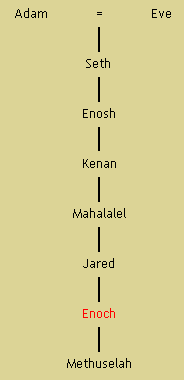
Enoch in Genesis Enoch in Rabbinic Legends Enoch and the Pseudepigraphal Texts Book of Watchers SourcesEnoch in Genesis Of all the patriarchs in pre-Hebrew times (before the time of Abraham), one of them received special attention, though very lit...

April 2nd, 2002 • Jimmy Joe
Thoughts – Reflecting Pond

Thoughts – Reflecting Pond

Reflecting Pond contains some pages on my thoughts on certain issues about life, culture, religion or spirituality. In the other sections of Dark Mirrors of Heaven, the main theme of this site is about looking into other sources about certain even...

April 2nd, 2002 • Jimmy Joe
Creation

Creation

In many ancient cultures and religions, there are stories of Creation Myths. These myths often tell of how the gods created the world and mankind. There are some common stories of how the gods were themselves born, their wars against the elder god...

April 9th, 1999 • Jimmy Joe
Obscure Creation Myths

Obscure Creation Myths

Hesiod was the not the only Greek poet who wrote about the Creation and the origin of the gods and mankind. Hesiod's account is just one kind. The world was created from Chaos first, and then by the World Parents – Gaea (Earth) and Uranus (Heaven)...

April 9th, 1999 • Jimmy Joe
Sumerian Tablets vs. the Bible: Parallels Between the Ancient Tales

Sumerian Tablets vs. the Bible: Parallels Between the Ancient Tales

When comparing the Sumerian tablets vs Bible tales, you will find countless similarities, but it is difficult to find every parallel because there is such a wealth of source material. Where do we start with the many Sumerian tablets and fragments ...

January 11th, 2022 • Timeless Myths
Genealogy: Descendants of Adam, according to Book of Jubilees

Genealogy: Descendants of Adam, according to Book of Jubilees

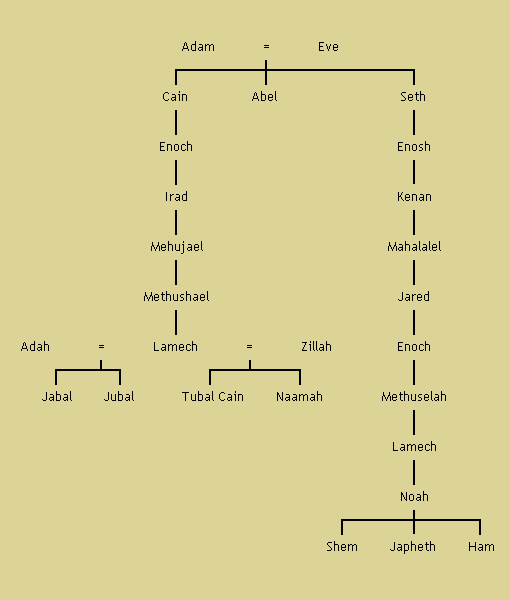
This genealogy is based on the Book of Jubilees. The Book of Jubilees is a text written before the Christian era, the in 2nd or 1st century BCE. The book was sometimes known as the Little Genesis. It gives many details not found in Genesis, such a...

April 2nd, 2002 • Jimmy Joe
Gnostic Cosmogony

Gnostic Cosmogony

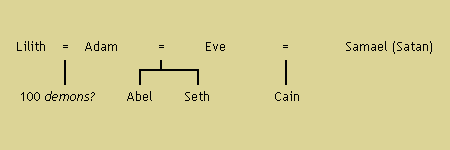
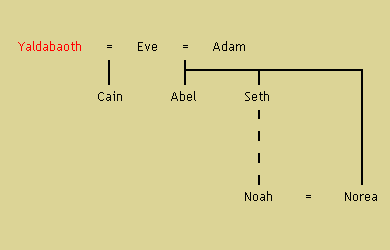
Below is a summary of the Gnostic myths. Background The Perfect, Invisible Spirit and Barbelo Sophia and the Demiurge Adam and Eve Norea ConclusionBackground Before I retell any part of the Gnostic myth, let me just explain why I have included the...

April 2nd, 2002 • Jimmy Joe
Genesis: In Brief

Genesis: In Brief

Before I give you a summary about Genesis, I think it would be appropriate to reveal something about the authorship of the first book of the Old Testament. When I read Genesis (Bereshit), I had a mixture of feelings: awe, fascination, curiosity an...

April 2nd, 2002 • Jimmy Joe
Facts & Figures

Facts & Figures

Facts & Figures provides additional information regarding particular myths or tales, sort of like an appendix at the back of a book. This information includes lists or tables of names associated with the myths, places, objects, etc. Facts & Figure...

September 27th, 2000 • Jimmy Joe
Timeless Myths

Exploring mythology and legends from around the world.

Explore Myths

All Stories Characters All Articles Search Site Map

Mythologies

Norse Mythology Classical Mythology Celtic Mythology Arthurian Legends Mythology Gods Ancient Literature

About Us

Introduction About Jimmy Bibliography FAQs Retro Version

Resources

Timeless Myths All Stories All Articles Characters
© 1999-2026 Timeless Myths • Copyright • Privacy Policy • Cookie Policy • Contact
Follow us: