Biblical Allusions in Beowulf: How Does the Poem Include the Bible?
Biblical allusions in Beowulf are refrenced, even though it was written when paganism and pagan culture ruled at the time. This is reasonable noting that Europe was slowly converting to Christianity during that period, and this epic poem illustrates the transition.
While Biblical allusions are shown, direct references as well to various Bible stories are highlighted. Read this to find out just what the Biblical allusions in Beowulf were.
Examples of Biblical Allusions in Beowulf: With Direct Connections
As mentioned above, there are both allusions to the Bible in Beowulf together with direct mentions. Taken from the Seamus Heaney translation, examples of direct Biblical reference in Beowulf include:
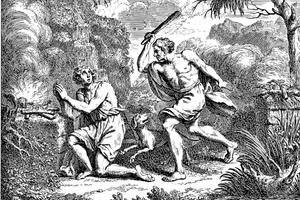
Grendel, the evil monster, has a backstory in the plot, according to the poem. It has to do with Cain and Abel: "For the killing of Abel The Eternal Lord had exacted a price: Cain got no good from committing that murder Because the Almighty made him anathema And out of the curse of his exile there sprang Ogres and elves and evil phantoms And the giants too"
The mention of the creation of the earth as spoken in the Bible: "How the Almighty had made the earth A gleaming plain girdled with waters; In His splendour He set the sun and moon To be earth's lamplight, lanterns for men, And filled the broad lap of the world With branches and leaves; and quickened life In every other thing that moved"
However, there are many other allusions to the Bible in Beowulf.
These include:
"He was the Lord's outcast" which is a phrase describing the villain Grendel. This is a reference to the Cain and Abel story in which Cain was cast out of the garden for murder. Or it could also be a reference to Lucifer, who was cast out of Heaven
A reference to the afterlife, which in Christianity is Heaven: "But blessed is he Who after death can approach the Lord And find friendship in the Father's embrace"
The existence of paganism even though Christianity has grown, is referred by: "Of good deeds and bad, the Lord God, Head of the Heavens and High King of the World, Was unknown to them"
"The glorious Almighty, made this man renowned" which is giving the credit for a man gaining notoriety and honor because of God
Non-Christian Allusion: Beowulf and the Lingering Paganism in the Poem
It is clear how paganism is still being ruled strongly in the culture and society referring to the poem. In both the Anglo-Saxon culture and warrior culture, there was a focus on honor, nobility, dying for a cause, loyalty to a king, revenge, refusal to be cowed, and courage and strength.
Nonetheless, these highlighted the aspects of culture that often went along with violence, not turning the other cheek and seeking honor instead of humility, as the new religion values.
Here are a few examples of the lingering paganism in Beowulf:
Beowulf says, "Wise sir, do not grieve. It is always better To avenge dear ones than to indulge in mourning." The focus is on vengeance and not letting God take revenge (a Christian belief)
He also says: "Let whoever can win glory before death" But the focus in Christianity is on storing up treasures in Heaven instead of on earth
The poem also mentions "Sometimes at pagan shrines they vowed Offering to idols, swore oaths That the killer of souls might come to their aid And save the people" Paganism rituals and traditions are mentioned despite the recurring mention of the Christian god
Beowulf says, to fight against an envious person, "Because all knew of my awesome strength," among other things. But while this suits Anglo-Saxon culture and the pagan pursuit of honor above all as well as courage, this doesn't quite fit Christianity. Beowulf is often boasting, stating things like this, but in the Bible, it says, "pride goes before a fall"
Religious Allusion in Beowulf: The Odd Mixture of Paganism and Christianity
Christianity was gaining strength and Europe during that time in history, even though paganism still held strong in many areas, especially in traditions. For this reason, many believe that the author of this poem wanted to show both Christianity and paganism. As you read it, you can see the flipping the author makes between the two religions.
There are plenty of Biblical allusions in the epic poem which is how we know that the author is leaning in that direction. The characters are making the transition to the new religion, although they still hold on to some pagan traditions.
What Is an Allusion? Why Use Biblical Allusions in Literature?
An allusion is when something is not explicitly referenced, making you think of that thing, event, or person. For example, you might have heard things like "you can't just click your heels" or "I wish I had a golden ticket," both are allusions to famous stories, one being The Wizard of Oz, and the other Charlie and the Chocolate Factory. As mentioned, allusions don't explicitly state what story you're meant to think of, but they are depending on the fact that you already know these.
Allusions in general are commonly used in literature for many reasons. One of them is because it can help the audience make connections to the story they're reading. They're able to draw on what they know from the thing, event, or person being alluded to. Keeping in mind that, it also helps people relate thoroughly to the story if they happen to read allusions about stories they have once read.
Biblical allusions, on the other hand, are very commonly used, because of the vast and various stories found in the Bible. Moreover, most people have read the Bible or at least some portion of it and can easily relate to it when alluded to in stories.
For example, there are many Biblical allusions we use every day but might not even realize, one of them is the phrase "put in my two cents," referencing the story of the poor widow who put in two cents (all she had) as an offering to the church.
What Is Beowulf? Background to and Context of The Famous Poem
Beowulf is an epic poem written in Old English by an anonymous author. We don't know the author because it was likely an orally told story that got passed down from generation to generation. Once the dialect of Old English (of the Anglo-Saxons) was developed, it could be written down. Furthermore, it became one of the most important works of art to the English language.
It renders the events of a famous warrior hero in Scandinavia who traveled to Denmark to help Hrothgar, King of the Danes. The king and his people are suffering at the hands of a merciless and bloodthirsty monster named Grendel. To gain and to show his loyalty due to an old promise, Beowulf offers to help.
It's a perfect example highlighting both the Anglo-Saxon culture and set values, coming from were paganism, but later transformed into Christian values.
Conclusion
Take a look at the main points of Biblical allusions in Beowulf covered in the article above.
Beowulf is an epic poem written in Old English, about warrior hero's tale of going to the Danes to help them fight the monster Grendel
Beowulf is a very important poem for the English language, one of the reasons is that it portrays the religious turning point of Europe at the time
They were moving from paganism to widespread Christianity, and in this poem, you can see the transition
Biblical allusions are very popular in literature in general because many people have at least read some of the Bible. It's an easy way to make widespread connections
Beowulf makes many Biblical allusions, highlighting the new value system of Christianity, for example, the creation story is mentioned as an allusion.
In Beowulf, there aren't just allusions to the Bible, but there are also direct mentions of Bible names and stories, like the story of Cain killing Abel and being cast out of the Garden of Eden is mentioned explicitly, where the monster alludes as a descendent of Cain
Another example of a Biblical allusion in Beowulf is "find friendship in the Father's embrace" which alludes to the afterlife and his way to Heaven
Conversely, there are also some mentions of pagan values, such as revenge and violence, showing the transition of religion at the time
Beowulf is an epic poem, an incredible example of a culture moving from one religion and its values to another. Beowulf shows the lingering paganism at its time together with focusing on belief in Christianity's God and the new values that come along. It's interesting to see the interplay between the two supposedly opposite religions.