Who Is Cain in Beowulf, and What Is His Significance?
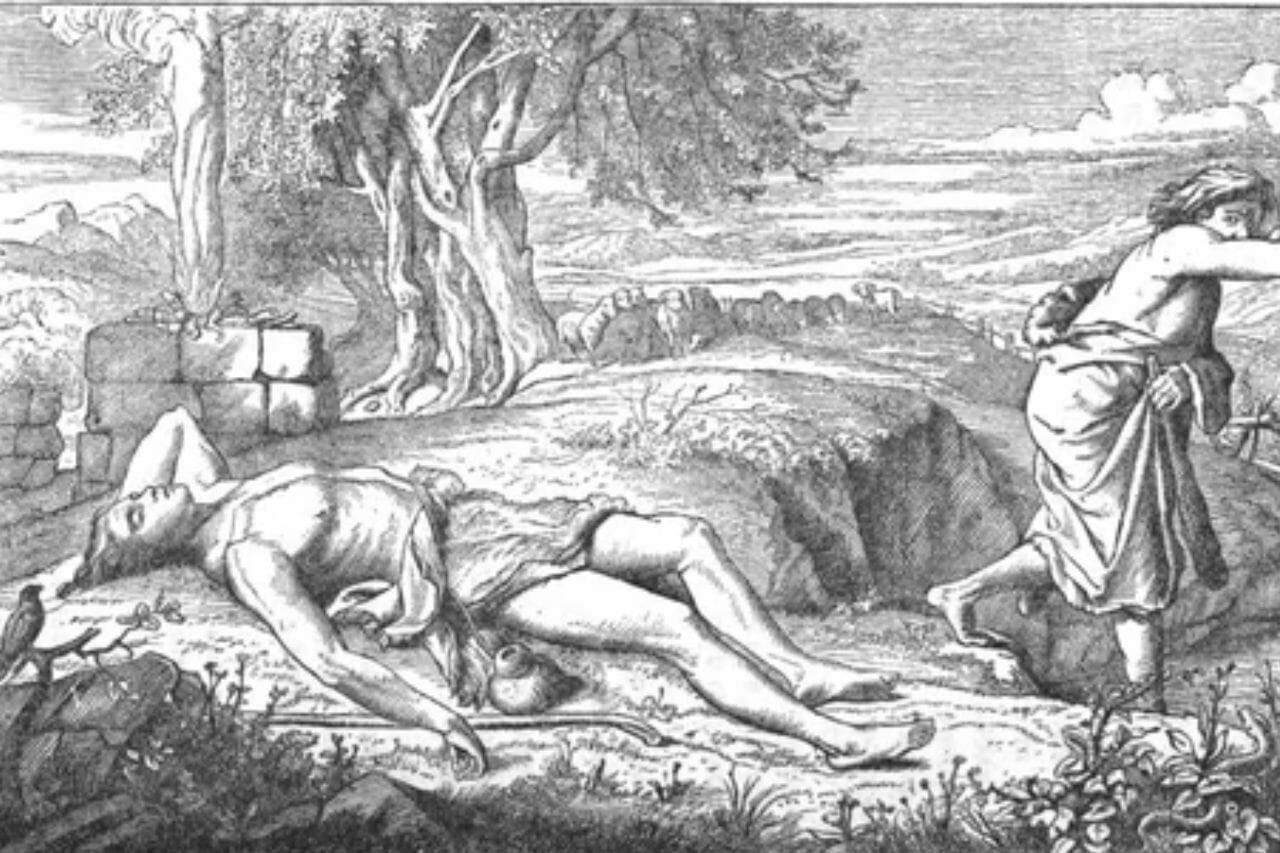
Who is Cain in Beowulf? Cain is believed to be the origin of all evil in the epic poem Beowulf. His biblical story, which made him the first human murderer, is the basis of the existence of the first two monsters that Beowulf defeated, which elevated his status to that of a glorious hero.
Let us learn more about the backstory of Beowulf and how it relates to Cain.
Who Is Cain in Beowulf?
In the Anglo-Saxon poem Beowulf, Cain is thought to be the origin of all evil because he was the first murderer in human history because he killed his brother. This is because fratricide was considered the highest sin by Anglo-Saxons.
All of the horrible things, such as the monsters – Grendel, Grendel's mother, and the dragon – are referred to as Cain's descendants. It is believed that all of them existed in the Anglo-Saxon period because of Cain. The dawning of Christianity only heightened the strength of this conviction. As a result, Grendel, who was thought to be Cain's descendant, played a vital role in bridging the gap between the old and new faith.
As a result, Cain is thought to be the progenitor of the Kenites, who, like Cain, have a distinguishing mark and have always avenged any member who was killed. They also live a nomadic lifestyle, similar to Cain's when he was exiled from the place God had given him. This tribe is thought to include Grendel and his mother.
Abel in Beowulf
The author of Beowulf doesn't signify who Abel really was, however; in the poem, Beowulf links the story of the brothers from the old testement, Abel and Cain to the existence of Grendel and the other two antagonists as they relate to the darkness of human history's first murder. Keeping in mind that the first murder was written in the Holy Bible, and in the story of the pagans of Beowulf, this murder described how Grendel was the descendant of Cain, due to his acts of jealousy and in addition to his raging characteristics.
Abel was the younger of the two sons of Adam and Eve. His older brother, Cain, was a farmer while he was a shepherd. Adam and Eve reminded their sons to offer to the Lord. Abel offered his firstborn of his flock while Cain offered his land's produce. The Lord favored Abel's offering and rejected Cain's. With this, Cain murdered Abel in a jealous rage.
Grendel in Beowulf
Grendel is a fictional character who is the first of the three monsters that Beowulf encounters in the Anglo-Saxon epic poem Beowulf. Grendel is said to be a descendant of Cain and is depicted as a monster who is envious and resentful toward humankind. As the narration progresses, it is revealed that Grendel also bears the curse of his ancestor, Cain.
He had tormented Heorot for twelve years by bursting into its large mead hall and terrorizing the people feasting there. This is because Grendel becomes enraged as the minstrel in the mead hall is singing a song about creation. It triggered Grendel's fury as he resents not only humankind but also the thought that his ancestor Cain was regarded as a horrible person. Grendel was constantly reminded of this terrible history, which explains his rage.
Beowulf's Motives
Beowulf's actions in the poem are motivated by his desire to become a famous and celebrated warrior. He faces various issues and trials throughout the poem, all of which revolve around three basic evils: jealousy, greed, and revenge, not to mention his own personal ambition for fame, glory, and power.
During his triumph of killing Grendel the monster and Grendel's mother, in his first two battles, Beowulf was lauded as a hero for risking his life to save the Danes' people. He not only got his wish of being honored, but he also got rich as King Hrothgar showered him with gifts as a token of gratitude and respect.
As time goes by, Beowulf's motive shifts to a nobler cause as he matures. It moved away from personal fame and glory and toward protection and loyalty. This signifies that even though he began with progressively self-centered goals, such as fame, glory, and power, his primary goal remains the same: to protect good from evil.
The protection that he had set as his goal and driving the force of evil away was shown when he fought the dragon terrorizing the Geats. Even though he was already old, he maintained his commitment to his people by fighting the dragon; however, he ensured the safety and protection of his people against this evil.
Frequently Asked Questions
Who Are the Danes in Beowulf?
Danes is not a name of a single person, but it refers to people living in the land that is now known as Denmark. The Danes, who were ruled by King Hrothgar, become an integral part of the story in the epic poem Beowulf. They were the people that Beowulf helped by killing the monster, Grendel. The Danes are too weak to fight Grendel and to make matters worse, their weapons are under a spell cast by Grendel.
Even though Beowulf was not a Dane, he felt obligated to help them as his father owed a favor to King Hrothgar. Beowulf bears the inherited debt of loyalty and aims to show his gratitude by standing and fighting for King Hrothgar and the Danes. He not only defeated Grendel, but he killed Grendel's mother, too, to make sure that no monster would attack them again to avenge Grendel's death.
Who Was Unferth and What Was His Significance in Beowulf?
Beowulf is one of Hrothgar's men who is respected, well-known, and deemed important by the Danes. He is depicted as an intelligent and generous warrior from the Spear-Danes tribe. Like all of the people at Danes, he was tormented by Grendel every night, unable to have the courage and strength to fight and defeat Grendel.
When Beowulf arrived with the intention to kill Grendel, the Danes threw a feast, and all of the people in Heorot celebrated his arrival. This might have stepped on Unferth's ego, and instead of being grateful, he becomes envious of Beowulf instead.
Unferth claims that Beowulf lost in the North Sea swimming tournament and concludes that if Beowulf couldn't win in the swimming competition, then he is unlikely to defeat Grendel. Unferth brings this up in order to undermine Beowulf and convince Hrothgar to doubt his abilities. Unferth believes Beowulf's accomplishments aren't as significant as Beowulf claims them to be. It's also probably due to his humiliation at not being able to protect Heorot himself.
Beowulf reacted by boasting that he is the world's strongest swimmer and providing information about the swimming competition. Beowulf claims to have swum in full armor while wielding a sword and slain nine sea monsters before being dragged to the ocean depths. He reports that the currents also carried him to the shores of the Finns. Unferth may be right in certain details, but Beowulf does not claim to have defeated Breca.
Furthermore, Beowulf claims that he has never heard of anybody else having such a big sea-fight as he did and that he has never heard such legends recounted by Unferth, who, in fact, is remembered for killing his siblings, for which Beowulf predicts that Unferth will be tormented in hell despite his cunning.
Who Is Cain in the Bible?
Cain is Adam and Eve's eldest son, as well as the Bible's and human history's first murderer. Adam and Eve were the first humans, according to Christian, Jewish, and Islamic traditions, and all people descended from them. They appeared in the Book of Genesis, where the narrative of how Cain killed his younger brother, Abel, is told.
Cain is a farmer, while his younger brother is a shepherd. They are both asked by their parents to make offerings to the Lord whenever they are able, but only without expecting anything in return. Cain was angered when the Lord preferred his brother's offering over his own. With this, he plotted the murder of his brother Abel and lied to God. He was exiled from the land, but the Lord promised that whoever killed him would be avenged sevenfold.
Conclusion
Cain is portrayed in the epic poem Beowulf as the literary representation of Grendel's ancestor and the root of all evil. The biblical story in which Cain kills his brother Abel makes him the first human murderer in history. Let's summarize what we've read and learned so far:
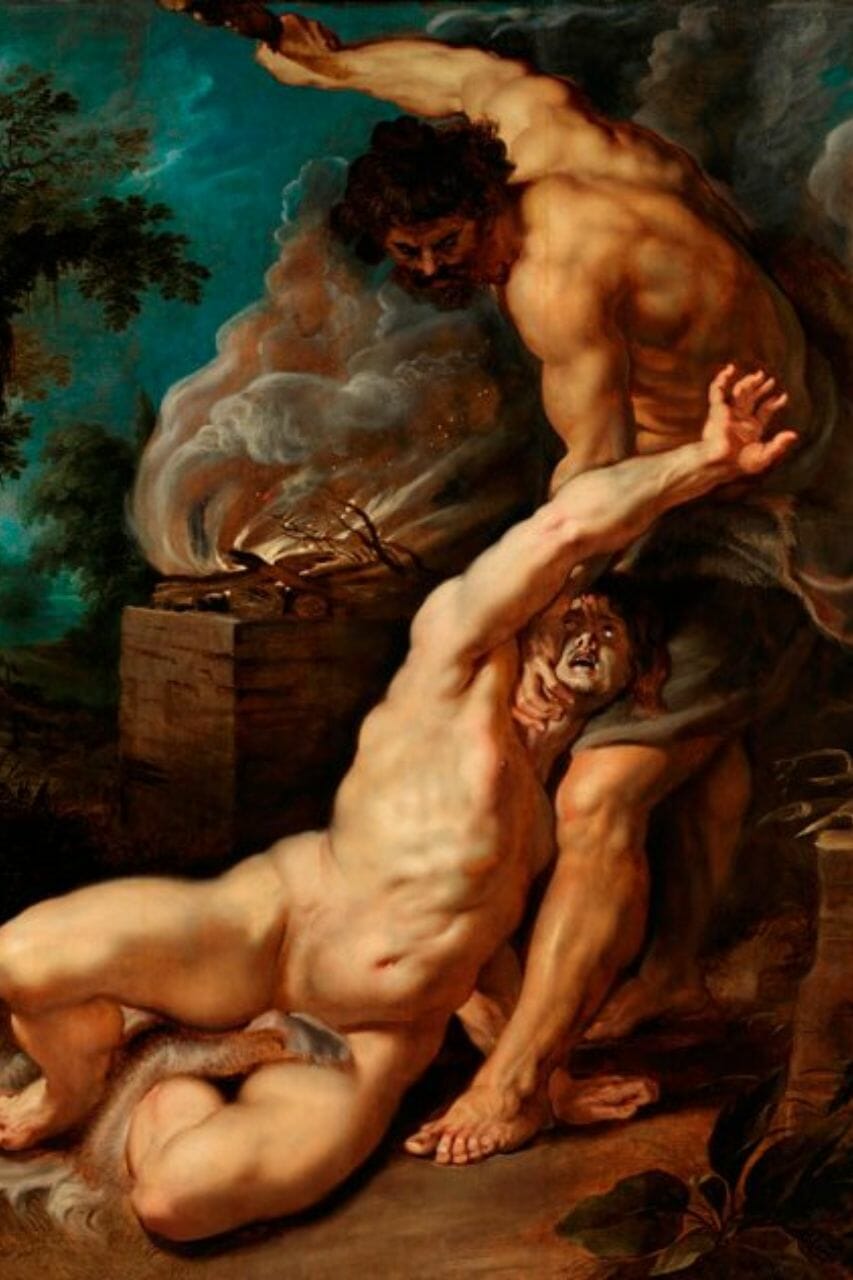
The epic poem Beowulf was written in the Anglo-Saxon period during which Cain's persona is commonly used to symbolize the prevalence of evil.
The poem reflects pagan and Christian beliefs were killing one's kin is regarded as the ultimate sin. Cain's biblical character, who is infamous for killing his brother, Abel, makes the perfect reference.
The monster Grendel and his mother were said to be descendants of Cain and belonged to the tribe called Kenites.
In contrast, Beowulf is the embodiment of good. Even though his motives were self-centered at first, such as being prominent, powerful, and celebrated, they evolved into a nobler motivations as he matured.
Unferth is one of Hrothgar's warriors who were unable to fight Grendel and thus feels envious of Beowulf. As a result, he tried to discredit Beowulf and questioned his ability to fight Grendel. He brought up a swimming competition wherein he claimed Beowulf lost to Breca. Beowulf quickly dismissed it.
To summarize this biblical parallel, Grendel and his mother are not Cain's exact descendants; instead, they are similar in that they were both outcasts who never had anything go their way. The main difference is that Grendel's character had an insatiable bloodlust that drove him to slaughter people in their sleep for twelve years.