Elpenor in The Odyssey: Odysseus' Sense of Responsibility
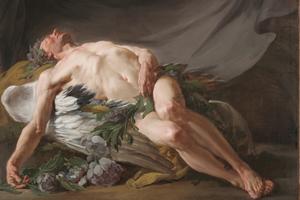
Elpenor fell from the roof of Circe's castle
Elpenor in The Odyssey was Odysseus' youngest man in his troop. On Circe's Island, he was turned into a pig and, once freed, drank himself to a stupor that eventually lead to his death. He ended up begging Odysseus to give him a proper burial to pass, but before this, the events that had led him to the Underworld would be disclosed. To fully grasp Elpenor as a character in The Odyssey, we must go over how the story unfolds and how he fits into Odysseus' journey home.
Who Is Elpenor in The Odyssey?
Elpenor in Circe's Island
Elpenor appeared in the Odyssey during the time that Odysseus journeyed home and ventured off into various islands that brought him and his men harm. On Aeaea, in particular, they encountered Circe, who turned the troop Odysseus had sent to scour the land, into pigs. Elpenor was also amongst those men. Although Eurylochus was spared, he ran back to Odysseus and their ships in order to beg their leader to leave the men turned swine behind and save themselves from having the same fate.
Odysseus disregarded his concerns as he strutted to where his men were turned into pigs. Hermes helped our fallen hero as he attempted to save his men by warning him about Circe and her powers. He told Odysseus of a trick in order to avoid Circe's manipulation: a white-flowered plant called moly would make Odysseus immune to Circe's spells.
Upon arriving, the hero ingested the moly and made Circe swear not to hurt him and restore his men to their original forms as sailors. Circe did so and returned everyone back to their human form, including Elpenor.
Odysseus and his men lived in luxury on Circe's island as Circe ended up becoming Odysseus' lover. Eventually, after a year of feasting with pleasure, the men were able to convince Odysseus to leave the island and return to their journey.
What Happened to Elpenor After He Became Human Again?
During their last night on the island, Odysseus and his men feasted and drank extravagantly, swearing to leave by morning. Elpenor was drinking incessantly daily on the island, but on the night before their departure, he went beyond his limits and drank even more than he could take. Drunk on wine and feeling the excitement of eventually being able to return home, Elpenor climbed on the roof of Circe's castle and fell asleep there.
He woke up to the sound of men preparing to leave and rushed to get back on his ship. Forgetting his whereabouts, he attempted to rise but fell and broke his neck. Unfortunately, due to the prolonged stay on the island, Odysseus and his men were eager to leave, too excited to check if they'd left anything or anyone behind.
Elpenor in The Odyssey: What Does Elpenor Ask of Odysseus
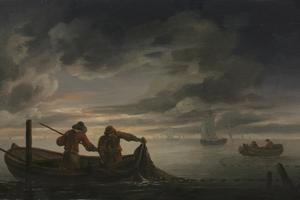
Odysseus with sailors sailed to the River Ocean
Before leaving Aeaea, Circe had informed Odysseus of what he had to do in order to reach home safely; venture into the underworld. With a quest at hand, Odysseus sailed to the River Ocean in the land of the Cimmerians. That's where he poured libations and performed sacrifices as Circe had instructed, so the dead would be attracted to the blood seeping from the cup he was pouring from.
Shockingly, the first to appear was Elpenor.
As we mentioned before, Elpenor was the youngest sailor of Odysseus who had died tragically from a drunken mistake of falling from the roof of Circe's residence. Elpenor begged Odysseus to return to Circe's Island and give his body a proper burial with his complete set of armor as well as an anonymous burial with an oar to mark his grave.
He pleaded with Odysseus to salvage his pride as he would rather die with honor as a sailor than be labeled as a drunkard who had lost his life from a mistake. For a warrior, there was no more humiliating death than death from a mistake. Despite not dying honorably as a soldier, Elpenor wished to die like a sailor instead of a drunkard.
In ancient Greek tradition, death was not considered the great separator but was perceived as another world that one belonged to. It was viewed as a reward for the deceased. The Greeks believed that after death, the soul went on a journey to the Underworld.
A proper burial ensured the peaceful journey of the dead. Without a proper burial, the dead couldn't continue on their peaceful journey towards the Underworld.
Elpenor in The Odyssey: The Importance of Death in Greek Classics
The Greek concept of the afterlife was well established in the Homeric classic, The Odyssey; the poet described Hades' and Persephone's domain as the "shades" of all those who had passed. It wasn't depicted as a happy place, as the monochromatic views of hell itself were derived from ancient Greek literature such as The Odyssey. This point was further emphasized by Achilles who had told Odysseus that he would rather be a poor serf on earth than lord of the land of the dead.
This is due to the Greek belief that at the moment of death, the psyche or spirit that had left the body would become a little puff of wind ready to travel to another world. Traveling to a different world meant going into the Underworld.
The deceased would then be prepared for burial according to the rituals of the time. Ancient literature emphasizes the necessity of burials and would refer to the lack of one as an insult to humanity. This is from the belief that in order to pass through or enter the Underworld, one must be buried in a ritual. This is seen in various poems and plays as The Iliad and Antigone, both of which elaborated the importance of burying the dead.
Elpenor's Role in The Odyssey
Elpenor in Greek mythology wasn't that significant but contained symbolism about what a leader like Odysseus should be. He was a young sailor who died by accidentally falling from the roof of Circe's residence and breaking his neck due to rushing. The crew members were unable to find him and left him on the Island. He then reappeared in the ancient ritual that Odysseus performed where the young man begged for burial to peacefully join the other souls of the Underworld.
Elpenor's role in The Odyssey was to emphasize Odysseus' lacking qualities as a leader; the death of the young man allowed Odysseus to reform himself, making the Ithacan king realize his responsibilities as a leader, king, and soldier.
Odysseus as the captain of his crew had a multitude of responsibilities. As a leader, he must have ensured proper guidance of his men in their quest to return home. Odysseus should have at least been able to keep all his sailors safe to the best of his abilities, of course. He didn't manage to do that in Elpenor's case.
Odysseus Wouldn't Have Been the Same Without Elpenor
Odysseus' accomplishments would not have been possible without the subjects that helped him through the difficult journey. We saw him act with misguided authority throughout the adventure: he trusted his men with responsibility that they took advantage of multiple times, yet he worried about their safety during their travels. Overall, he showed valiant comradery and cared about his men when Circe trapped them into pig bodies, forcing her to return them to their original state.
We witnessed Odysseus' reformation when he granted the young Elpenor's wish, by returning to Circe's Island, and by burying the young man's body in peace.
In the end, Elpenor's role in The Odyssey may not have been significant, but it contributed to portraying Odysseus' responsibility as a captain and king. Odysseus was a man of his word and a captain beloved by his men. He was a role model towards them and ensured their safety the best way he could. He proved his value as a leader when he buried Elpenor's body.
Conclusion

Circe's island
Now that we've talked about Elpenor, who he is, and his role in The Odyssey, let's go over the key characteristics of this Article
Elpenor in The Odyssey was the youngest man of the troop. He was a sailor who adventured with Odysseus after the fall of Troy.
Elpenor died in The Odyssey due to intoxicating himself with wine in a stupor, leading to his untimely death due to breaking his neck from falling from the roof of Circe's residence.
At the Island of Circe, the Ithacan crew met a powerful enchantress who tricked Odysseus' men and turned them into pigs. Odysseus then confronted Circe and forced her to return his men to their original forms; one of those men was Elpenor.
The hero and his men remained on the Island for over a year and decided to leave later. During the night before their departure, Elpenor died due to his drunkenness by breaking his neck.
Continuing in his Journey, Odysseus performed the ritual that Circe instructed him to do. Elpenor appeared first and begged the hero to honor his wish of a proper burial.
According to the ancient Greek tradition, honoring death is not a final separation but a journey to another world. A proper burial ensured the dead had a safe trip towards the afterlife. Without it, the dead could not proceed to the next journey.
Elpenor's role in The Odyssey was not of real significance. It showed that Odysseus was a man of his word and would honor the wishes of his men.
Elpenor's importance was to exhibit what Odysseus had lacked as a leader which allowed the Ithacan king to reform himself before taking back the throne in Ithaca. Ultimately in our article, we found out that, without Elpenor, Odysseus would not have had what it takes to rule his kingdom again.