Eurycleia in The Odyssey: Loyalty Lasts a Lifetime
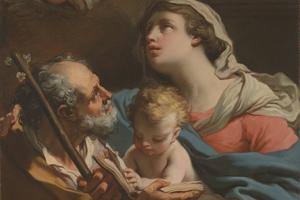
Eurycleia, the loyal servant in The Odyssey
The servant Eurycleia in The Odyssey is an essential archetype in both fiction and real life. She plays the role of the loyal, trusted servant, who helps the master achieve greatness while remaining well away from the spotlight.
Still, such characters get more attention than one would think.
Let's explore how Eurycleia fulfills this role in The Odyssey.
Who Is Eurycleia in The Odyssey and Greek Mythology?
Though Eurycleia plays a key role in The Odyssey, we know little about her birth and early life. The Odyssey mentions that her father was Ops, son of Peisenor, but the importance of these men is unknown.
When Eurycleia was young, her father sold her to Laertes of Ithaca, whose wife was named Anticleia. Anticleia's name means "against fame," where Eurycleia's name means "widespread fame," so one can see which roles these two ladies might play in the coming stories.
Still, Laertes loved Anticleia and did not want to dishonor her. He treated Eurycleia well, almost as a second wife, but never shared her bed. When Anticleia gave birth to Odysseus, Eurycleia cared for the child. Eurycleia reportedly served as Odysseus' wet nurse, but sources neglect to mention having any children of her own, which would be necessary to suckle a child.
Whether as a wet nurse or nanny, Eurycleia was responsible for Odysseus throughout his childhood and was deeply devoted to him. She knew every detail about the young master and helped shape the man he would become. Likely, there were times that Odysseus trusted her above any other person in his life.
When Odysseus married Penelope, there was tension between her and Eurycleia. She didn't want Eurycleia giving her orders or demeaning her for stealing Odysseus' heart. However, Eurycleia helped Penelope settle in as Odysseus' wife and taught her to manage the household. When Penelope gave birth to Telemachus, Eurycleia assisted with the delivery and served as Telemachus' nurse.
Eurycleia as Telemachus' Devoted Nurse and Trusted Confidante
Eurycleia's history above appears in Book One of The Odyssey during her first scene. In this part of the narrative, the action is simple; Eurycleia carries the torch to light Telemachus' way to his bedroom and helps him prepare for bed.
They exchange no words, which is a mark of their comfortable relationship. Telemachus is preoccupied with the advice from the guest Mentes, who he knows to be Athena in disguise. Eurycleia, seeing him distracted, knows not to press him to speak, and she merely cares for his needs and exits quietly, leaving him to his thoughts.
Soon, however, Telemachus, the son of Odysseus, turns to Eurycleia for help preparing for a secret journey to find his father.
Why doesn't Eurycleia want Telemachus to leave?
Her reasons are practical:
As soon as you have gone from here, the suitors
Will start their wicked schemes to hurt you later —
How they can have you killed by trickery
And then parcel out among themselves
All your possessions. You must stay here
To guard what's yours. You don't need to suffer
What comes from wandering on the restless sea.
Homer, The Odyssey, Book Two
Telemachus assures her that a god is guiding his decision. Eurycleia swears not to tell his mother, Penelope, for eleven days. On the twelfth day, she immediately tells Penelope and encourages her to be brave and trust her son's plan.
When Telemachus finally returns safely home from his journey in Book 17, Eurycleia is the first to spot him. She bursts into tears and runs to embrace him.
How Does Eurycleia Recognize Odysseus?
Eurycleia is the only person to identify the disguised Odysseus without assistance. Since Eurycleia raised him, she knows him almost as much as she knows herself. She thinks he seems familiar to her when she sees him, but one small thing confirms her suspicions, something that not many people would have ever seen.
What is it?
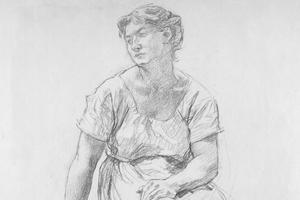
Eurycleia recognizes Odysseus by his scar
When Odysseus arrives at his palace disguised as a beggar, Penelope offers him proper hospitality: good clothes, a bed, and a bath. Odysseus requests that he receive no finery, and he would consent to be bathed only by an older servant "who knows true devotion and has suffered in her heart as many pains as I have."
Tearfully, Eurycleia consents and remarks:
… Many worn-out strangers
Have come here, but none of them, I tell you,
Was so like him to look at — your stature,
Voice, and feet are all just like Odysseus.
Homer, The Odyssey, Book 19
Eurycleia kneels and begins to wash the beggar's feet. Suddenly, she sees a scar on his leg, which she recognizes instantly.
Homer recounts two tales of Odysseus's visits to his grandfather, Autolycus. The first story credits Autolycus for naming Odysseus, and the second recounts a hunt in which a boar scarred Odysseus. It is this very scar that Eurycleia finds on the beggar's leg, and she is sure that her master, Odysseus, has finally come home.
Odysseus Swears Eurycleia To Secrecy
Eurycleia drops Odysseus' foot in shock at her discovery, which clangs into the bronze basin and spills the water onto the floor. She turns to tell Penelope, but Odysseus stops her, saying that the suitors would slaughter him. He warns her to stay silent because a god would help him overpower the suitors.
"Prudent Eurycleia then answered him: My child,
What words escaped the barrier of your teeth!
You know how strong and firm my spirit is.
I'll be as tough as a hard stone or iron.
Homer, The Odyssey, Book 19
As good as her word, Eurycleia holds her tongue and finishes bathing Odysseus. The following morning, she directs the female servants to clean and prepare the hall for a special feast. Once all the suitors are seated inside the hall, she quietly slips away and locks them inside, where they would meet their doom at the hands of her master.
Odysseus Consults Eurycleia About the Disloyal Servants
When the fateful deed is done, Eurycleia unlocks the doors and sees the hall covered in blood and bodies, but her lords Odysseus and Telemachus stand tall. Before she can cry out with joy, Odysseus stops her. In his travels, he learned much about the consequences of hubris, and he doesn't wish his beloved nurse to suffer for showing any hubris herself:
"Old woman, you can rejoice
In your own heart—but don't cry out aloud.
Restrain yourself. For it's a sacrilege
To boast above the bodies of the slain.
Divine Fate and their own reckless acts
Have killed these men, who failed to honor
Any man on earth who came among them
Bad or good. And so through their depravity
They've met an evil fate. But come now,
Tell me about the women in these halls,
The ones who disrespect me and the ones
Who bear no blame."
Homer, The Odyssey, Book 22
At her master's request, Eurycleia revealed that twelve of the fifty female servants had sided with the suitors, and they often behaved reprehensibly toward Penelope and Telemachus. She called those twelve servants to the hall, and frightful Odysseus made them clean up the massacre, carrying the bodies outside and scrubbing the blood from the floors and furniture. Once the hall was restored, he ordered all twelve women killed.
Eurycleia Informs Penelope of Odysseus' Identity
Odysseus sends Eurycleia, his most loyal servant, to bring his wife to him. Gleefully, Eurycleia hurries up to Penelope's bedchamber, where Athena had induced her to sleep through the entire ordeal.
She wakes Penelope with the happy news:
"Wake up, Penelope, my dear child,
So you can see for yourself with your own eyes
What you've been wanting each and every day.
Odysseus has arrived. He may be late,
But he's back in the house. And he's killed
Those arrogant suitors who upset this home,
Used up his goods, and victimized his son."
Homer, The Odyssey, Book 23
However, Penelope is reluctant to believe that her lord is finally home. After a lengthy discussion, Eurycleia finally persuades her to go down to the hall and judge for herself. She is present for Penelope's final test for the beggar and her tearful reunion with Odysseus.
Conclusion
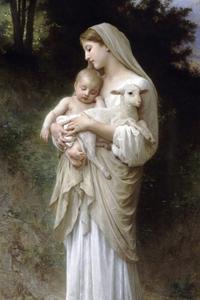
Eurycleia served as wet nurse to Odysseus
Eurycleia in The Odyssey fills the archetypal role of the loyal, beloved servant, appearing in the narrative several times.
Here's what we know about Eurycleia:
She was the daughter of Ops and the granddaughter of Peisenor.
Odysseus' father, Laertes, bought her and treated her as an honored servant but did not have sex with her.
She served as wet nurse to Odysseus and later to Odysseus' son, Telemachus.
Telemachus asks Eurycleia to help him prepare for a secret trip to find his father and is the first to greet him upon his return.
Eurycleia discovers Odysseus's identity when she finds a scar while bathing his feet, but she keeps his secret.
She directs the servants to prepare the hall for the final banquet and locks the door once the suitors are inside.
After the massacre of the suitors, she tells Odysseus which of the female servants were disloyal.
Eurycleia wakes Penelope to tell her Odysseus is home.
Though she is technically an owned slave, Eurycleia is a valued and well-loved member of Odysseus' household, and Odysseus, Telemachus, and Penelope all owe her much gratitude.