Hospitality in The Odyssey: Xenia in Greek Culture
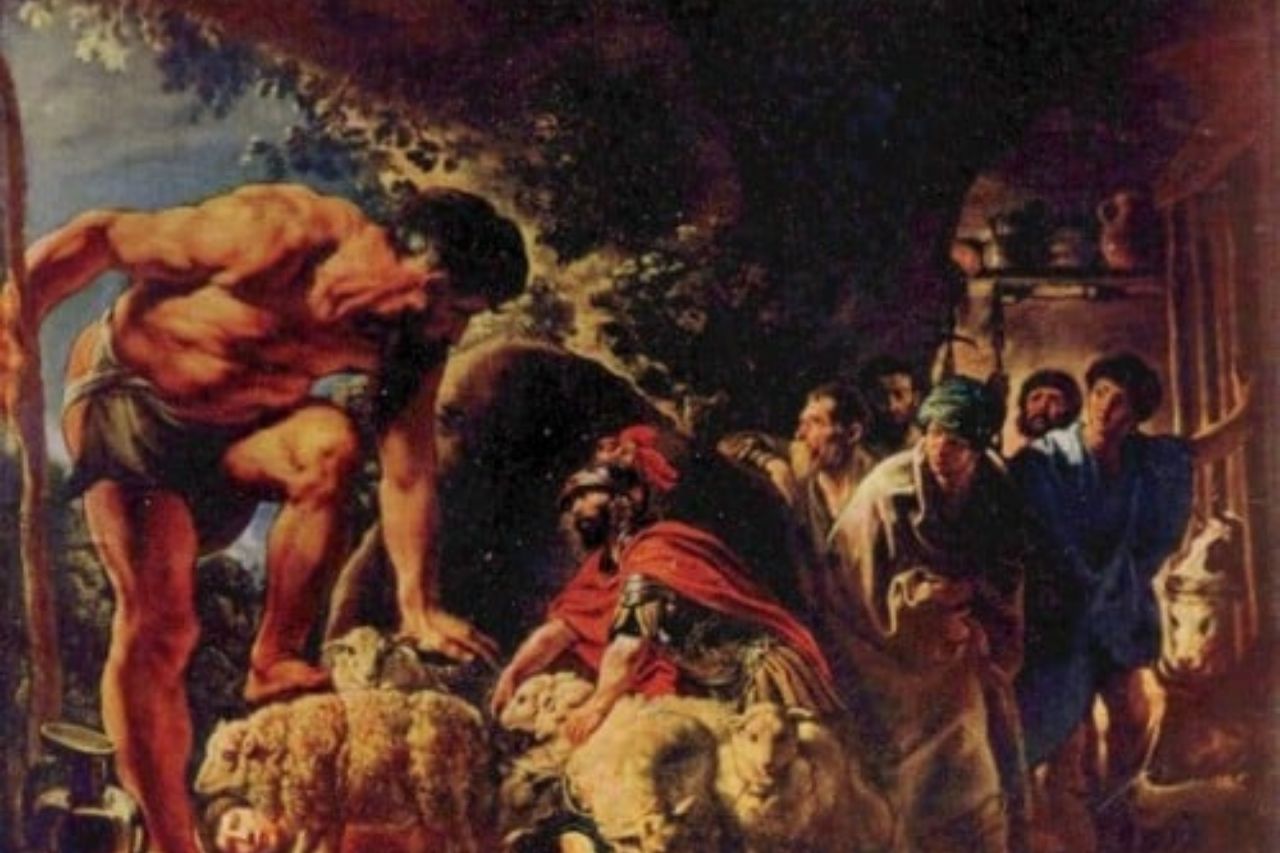
Hospitality in ancient Greece - scene from the Odyssey
Hospitality in The Odyssey played a crucial role in Odysseus' journey to his hometown and his family's struggles back home in Ithaca. Still, to fully grasp the importance of this Greek trait and how it affected our hero's journey, we must go over the actual events of the play's happenings.
A Short Take of The Odyssey
The Odyssey starts at the end of the Trojan War. Odysseus, originally from Ithaca, is finally allowed to take his men home to their beloved country after years of fighting in the war. He gathers his men into ships and sets sail towards Ithaca, only to be delayed by various encounters on the way. The first island that slows their journey is the island of the Cicones.
Instead of docking for only supplies and rest, Odysseus and his men raid the island villages, taking what they can and burning what they can't. The Cicones are forced to flee their homes as the Ithacan party causes chaos and destroys their village. Odysseus commands his men to return to their ships but is ignored. His men continued feasting on their collection and partying until daybreak. As the sun comes up, the Cicones attack back up and force Odysseus and his men to their ships dwindling in numbers.
The next island that hampers their journey home is the island of the Lotus Eaters. Fearing what had occurred on the last island, Odysseus orders a group of men to investigate the island and try to ease their way into resting on the land. But he is left to wait as the men take their time. Little did he know the men he sent had been offered lodging and food from the peaceful dwellers of the land.
They had eaten food made from the lotus plant endemic to the ground and entirely forgot their objective. The lotus plan had properties that stripped the eater of their desires, leaving them a shell of a person whose only aim was to eat more of the plant's fruits. Odysseus, worried about his men, charges into the island and sees his men look drugged. They had lifeless eyes and seemed not to want to move. He dragged his men to their ships, tied them to keep them from escaping, and set sail again.
The Land of the Cyclops
They once again traverse the seas only to stop on the island of the giants, where they find a cave with food and beverages they so eagerly sought. The men feast upon the food and marvel at the treasures of the cave. The cave owner, Polyphemus, enters his home and witnesses strange little men eating his food and touching his treasures.
Odysseus walks up to Polyphemus and demands Xenia; he demands shelter, food, and safe travels from the giant but is disappointed as Polyphemus stares him dead in the eyes. Instead, the giant doesn't reply and takes the two men near him and eats them in front of their peers. Odysseus and his men run and hide in fear.
They escape by blinding the giant and tying themselves to the cattle as Polyphemus opens the cave to walk his sheep. Odysseus tells the Cyclops to tell anyone who'd ask that Odysseus of Ithaca blinded him as their boats sail off. Polyphemus, son of god Poseidon, prays to his father to delay Odysseus' journey, which starts the Ithacan king's tumultuous journey at sea.
They almost reach Ithaca but are rerouted as one of Odysseus' men releases the winds gifted to them by god Aeolus. They then reach the land of the Laestrygonians. In the isle of the giants, they are hunted like game and eaten once caught. Severely dwindled in numbers, Odysseus and his men barely escape the horrid land, only to be sent into a storm that leads them into another island.
The Island of Circe
On this island, fearing for their lives, Odysseus sends a group of men, headed by Eurylochus, to venture into the island. The men then witness a goddess singing and dancing, eager to meet the beautiful lady, they run towards her. Eurylochus, a coward, stays behind as he feels something amiss and watches as the Greek beauty turns the men into swine. Eurylochus runs towards Odysseus' ship in fear, begging Odysseus to leave their men behind and set sail immediately. Odysseus disregards Eurylochus and immediately rushes to save his men. He saves his men and becomes Circe's lover, living in luxury for a year on her island.
After a year in luxury, Odysseus ventures into the underworld to seek Tiresias, the blind prophet, to seek a safe refuge home. He was advised to head in the direction of Helios' island but was warned never to touch the Greek god's cattle.
Helios' Island
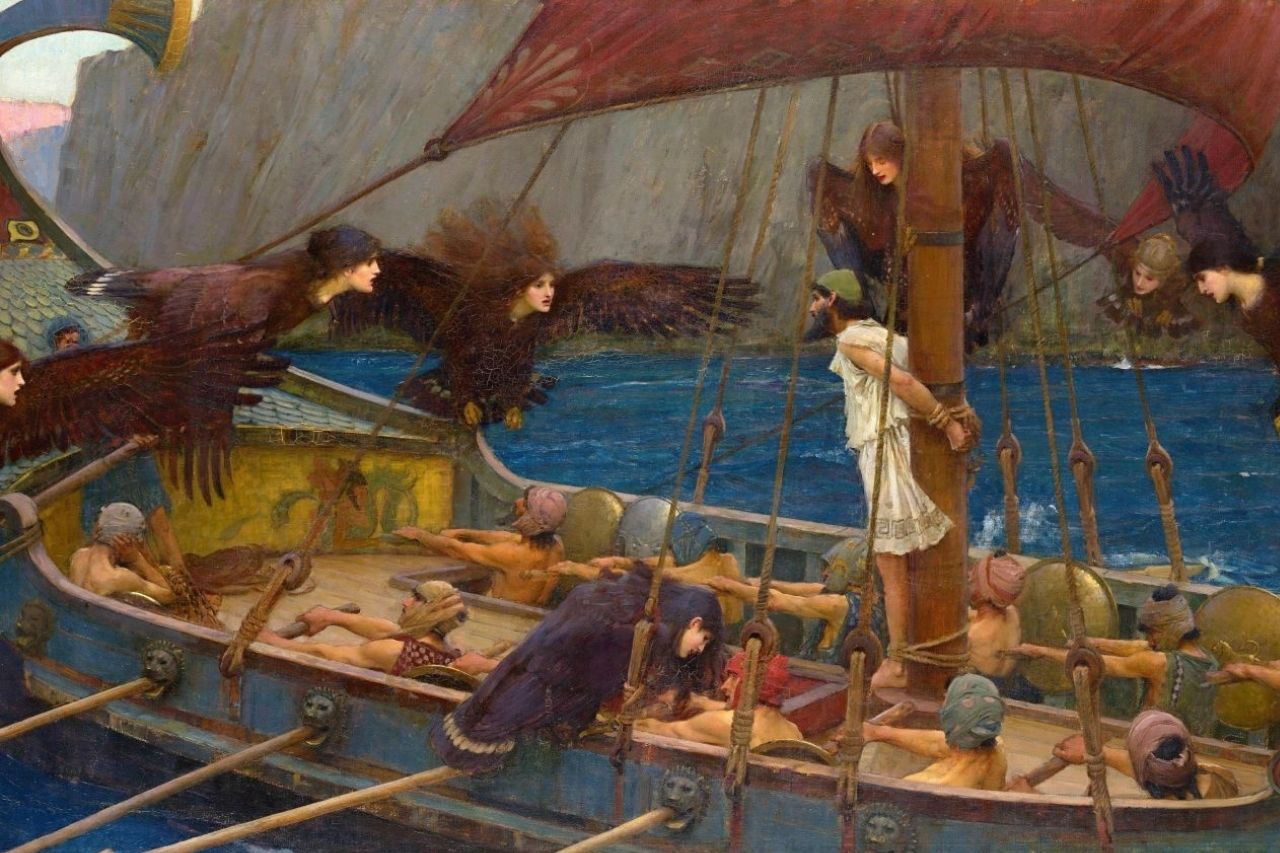
Hospitality in the Odyssey - Odysseus on his ship
The Ithacan men venture off into the direction of Helios' island but encounter yet another storm their way. Odysseus is forced to dock his ship in the Greek god's island to wait for the storm to pass. Days go by, but the battery seems not to let on; the men starve as their supply runs out. Odysseus leaves to pray to the gods and warns his men not to touch the cattle. In his absence, Eurylochus convinces the men to slaughter the golden cattle and offer the plumpest one up to the gods. Odysseus returns and is afraid of the consequences of his men's actions. He rounds up his men and sets sail in the storm. Zeus, the sky god, sends the Ithacan men a thunderbolt, destroying their ship and drowning them in the process. Odysseus survives and washes ashore the island of Calypso, where he is imprisoned for several years.
After years of being stuck on the Nymph's island, Athena argues over Odysseus' release. She manages to convince the Greek gods and goddesses, and Odysseus is allowed to go home. Odysseus returns to Ithaca, slaughters the suitors, and returns to his rightful place on the throne.
Examples of Hospitality in The Odyssey
Ancient Greek Hospitality, also known as Xenia, translates to 'guest friendship or 'ritualized friendship'. It is a deeply rooted social norm from the beliefs of generosity, gift exchange, and reciprocity that portrayed the Greek law of Hospitality. In The Odyssey, this trait was illustrated several times, and often enough was the cause of such tragedy and struggle in the lives of Odysseus and his family.
The Giant and Xenia
The first scene of Xenia we witness is in the cave of Polyphemus. Odysseus demands Xenia from the giant but is disappointed as Polyphemus neither replies to his demands nor acknowledges him as an equal. As such, the one-eyed giant decides to eat a few of his men before they can escape. In this scene, we witness Odysseus' demand for hospitality in ancient Greece, a social norm in their culture.
But instead of accepting the hospitality demanded by the Ithacan king, Polyphemus, a Greek demigod, refused to abide by what he thought were silly laws. The concept of hospitality was different from that of the giant, and Odysseus and his men were not worthy enough to receive such a thing from Poseidon's son, as such Polyphemus looked down on Odysseus and his men and refused to follow the Greek custom.
The Abuse of Xenia in Ithaca
While Odysseus struggles in his journey, his son, Telemachus, and wife, Penelope, face obstacles of their own for Penelope's suitors. The suitors, hundreds by number, all feast day in and day out from Odysseus' absence. For years, the suitors eat and drink their way in the house as Telemachus worries about the state of their home. In this context, Xenia, rooted in generosity, reciprocity, and gift exchange, seems to be abused.
The suitors don't bring anything to the table, and instead of reciprocating the generosity shown to them by the house of Odysseus, they disrespect the Ithacan king's house instead. This is the ugly side of Xenia; when generosity is abused instead of reciprocated, the party who generously offered their house and food are left to deal with the consequences of the abusers' actions.
Xenia and Odysseus' Return Home
After escaping the island of Calypso, Odysseus sets sail towards Ithaca only to be sent a storm and washes ashore the island of the Phaeacians, where he meets the daughter of the king. The daughter helps him by leading him to the castle, advising him to charm her parents to travel home safely.
Odysseus, arriving in the palace, is met with a feast as they welcome him with open arms; in exchange, he recounts his journey and travels, giving the royal couple wonder and amazement. The king of the Scheria, who was deeply moved by his tumultuous and arduous journey, offered his men and ship to escort the young Ithacan king home. Because of their generosity and hospitality, Odysseus arrives in Ithaca safely with no wound or scratch.
Xenia, in this context, played an incredible role in Odysseus' safe arrival home; without the Greek custom of hospitality, Odysseus would still be alone, fighting off the storms sent his way, journeying to various islands to return to his wife and son.
Xenia Portrayed by the Spartans
As Telemachus ventures off into an adventure to find his father's whereabouts, he travels the seas and arrives in Sparta, where his father's friend, Menelaus. Menelaus welcomes Telemachus and his crew with a feast and a luxurious bath.
Menelaus offered his friend's son a place to rest, food to eat, and the luxuries his house could afford. This is in reciprocal to the help and bravery Odysseus had shown during the Trojan war that inevitably allowed Menelaus to venture home as well safely. In this sense, Xenia was portrayed in a good light.
In this scene, Xenia is shown in a good light as we see no consequences, demands, or even pride in the action. Hospitality was given from the heart, neither demanded nor sought, as Menelaus welcomes the Ithacan party with open arms and an open heart.
Conclusion
Now that we've talked about the theme of hospitality in The Odyssey, let's go over the key points of this article:
Xenia translates to 'guest friendship or 'ritualized friendship. This Greek law of Hospitality is a deeply rooted social norm from the beliefs of generosity, gift exchange, and reciprocity.
Hospitality plays a crucial role in Odysseus' journey home and the struggles he faces as he returns.
There are ups and downs to the customs of Xenia, as illustrated by our playwright; in a negative light, Xenia is often abused, and the thought of reciprocity is forgotten as the suitors eat their way into the house of Odysseus, placing the family at risk.
The good of Xenia is shown as Odysseus arrives home; without the hospitality of the Phaeacians, Odysseus would never have been able to gain the favorability needed in regards to being escorted home by the chosen people of Poseidon.
Xenia held great importance in the portrayal of Greek customs and the development of the plot of The Odyssey.
We can now grasp the importance of the Greek rules of hospitality from the way it was written in The Odyssey. Through this article, we hope you can fully understand why the events of The Odyssey had to happen for the sake of the development of both the plots and the characters.