Motifs in The Odyssey: Recounting Literature
Motifs in The Odyssey
Motifs in The Odyssey have been studied and scrutinized by numerous scholars ranging from old to young.
The Odyssey comprises various books with different themes. But one thing that's stayed true through all of these is its motifs in literature.
What Are the Motifs in The Odyssey?
There are various recurring themes in literature. In this article, we will be discussing that of The Odyssey.
These literary elements in The Odyssey are what both the audience and scholars all try to analyze and interpret, so let's begin by listing them one by one and discussing each carefully and precisely.
Greek Hospitality
In The Odyssey, Odysseus and his men journey towards Ithaca, and on their path home, they are tossed to numerous islands demanding a level of treatment they believe they are entitled to because of Greek customs. They are given food and water and are received with open arms. We have seen this on the island of Djerba, where the lotus-eaters welcome the men.
The next part that we encounter this is on Cyclops island, where Odysseus demands food, shelter, and protection from Polyphemus. The breaking of these Greek customs brings about a slew of misfortune and disfavor of the Gods.
Temptation
Throughout the Greek classic, our hero faces numerous struggles within the play. From dealing with monsters to gaining the ire of the gods, he does not fall short of the challenges he must face to return home. One of which is Temptation.
Odysseus was tempted numerous times on his journey back to Ithaca, each time derailing and delaying his return.
The first instance we witness this temptation is on the island of Circe. Here, Odysseus saves his men from the Greek goddess. He ingests the plant molly to avoid Circe's drugs and strikes her as she casts magic. She promises to bring his men back and is then tempted by her beauty.
Now Circe's lover, Odysseus, along with his men, stayed on the island for a year, living in luxury. He refuses to leave until one of his men convinces him to return home.
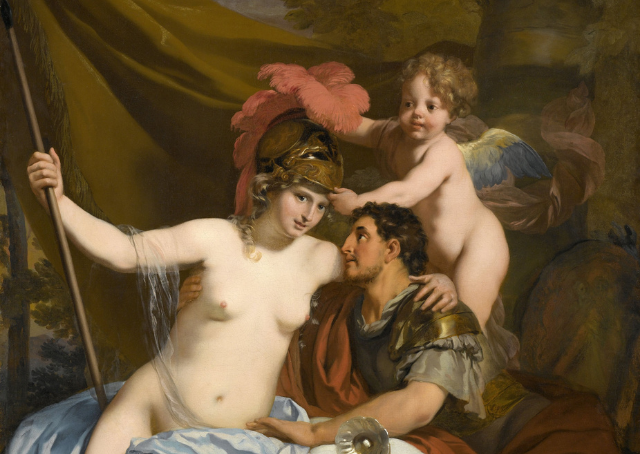
Odysseus and Calypso
The subsequent encounter we have of temptation is on Calypso's island. Odysseus and his men anger Zeus by killing Helios' golden cattle—in punishment, he kills all the men in a storm and imprisons Odysseus in Ogygia.
The nymph holding him captive acts as his lover during his stay, and despite being released from the island, prolongs his journey to sleep with her one last time.
Both Calypso and Circe end up becoming seductresses to Odysseus and delay his journey home. But they weren't the only women who used their feminine wiles to delay men and impair their plans for the future. Penelope, Odysseus's wife, uses this method to avoid returning to her homeland and avoid remarriage.
She leads her suitors on, promising to marry one of them once she completes the mourning shroud. Little did the suitors know, she undid her work every night, prolonging their courtship.
Loyalty
Although a recurring theme in most Greek literature, loyalty (or lack thereof) still prevails in the Greek classic. In the play, Odysseus struggles with his men's disobedience and the lack of commitment of his second command, Eurylochus. This brings about the misfortune that comes their way.
The first is exhibited on the island, Ismaros. Despite Odysseus' command to return immediately, his men feast till morning, allowing the Cicones to gather their forces and retaliate with force. This kills six of his men per ship, barely escaping the Cicones' wrath.
The subsequent disobedience that happens is on the Island of Helios. Despite warning his men not to touch the Greek god's cattle, Eurylochus convinces the men to slaughter one while Odysseus is away. This angers Zeus, killing all the men and trapping the sole survivor Odysseus in Ogygia for seven years.
Disguise in The Odyssey
Disguises in The Odyssey play a crucial role in how the gods and goddesses communicate with mortals, guiding them towards their destined paths and escorting them to safety.
The first disguise we encounter is Athena, dressed as Mentor. Athena guides and urges Telemachus to look for his father, Odysseus, for he was alive and well. Athena disguises herself in various details, from Odysseus' friend Mentor to a shepherd, all for the sake of guiding Odysseus back to his rightful place, the throne.
In Book 4, we encounter Proteus, the firstborn son of Poseidon, a prophet who holds vast knowledge. Menelaus describes him as a being who hides behind a disguise, rebelling against his fate as a prophet, refusing to bestow his knowledge on humans.
King of Sparta, Menelaus captures Proteus long enough to milk information out of him and thus gains the ability of Odysseus' whereabouts.
But the motif of disguise does not solely lie in the hands of the Greek gods but on mortals as well. Odysseus disguises himself multiple times in the play to escape danger and uses his cunning nature to beat unbeatable foes.
For example, in the cave of Polyphemus, Odysseus hides his identity and introduces himself as no one, blinding the cyclops and escaping their island safely. Another instance of this is when Odysseus disguises himself as a beggar to join the competition of the suitors.
This helps him escape an untimely death that undoubtedly would be upon him if he had entered the palace as himself.
Storytelling in The Odyssey
Storytelling in The Odyssey delivers the plot to the audience and gives us a proper cultural context. For example, through oral portrayal with choruses and actors, how the story is told refers to the Greek culture of orally passing down tradition and myths from generation to generation.
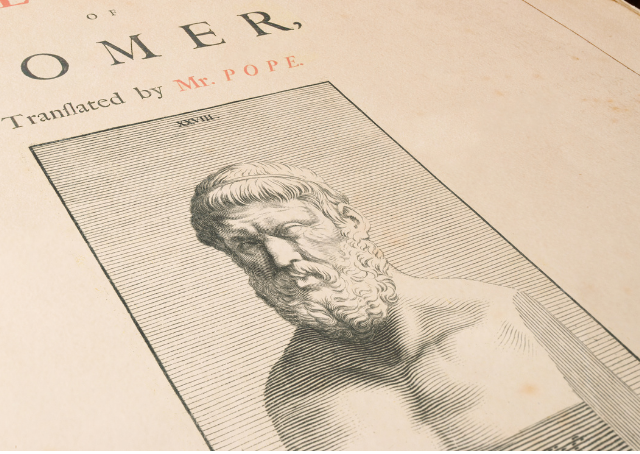
Homer, the author of The Odyssey
Not only is the storytelling a reference to Greek tradition but also an allusion to The Iliad. They recount the cunning of Odysseus in the Trojan War while Phemius, a court bard, sings of the exploits of the heroes of Troy.
Homer also evokes the history of The Odyssey through the monologues of both Nestor and Menelaus to Telemachus, urging the audience to interconnect the two stories.
Conclusion
You've read our analysis of the different motifs, themes, and literary elements in the Greek classic, The Odyssey!
Let's go over some significant points of the article:
Motifs are recurring themes in literary pieces that hold important events to our main hero, whether it be to derail him from a path or lead him to such.
Loyalty, Greek hospitality, disguises, storytelling, and temptation are significant motifs Homer intricately portrayed in his second work, The Odyssey.
Loyalty is seen to be tested with Odysseus and his men.
Greek hospitality can be seen in both Djerba and Sicily, where the absence of the customs brought about misfortune to Odysseus and his men.
Temptation is seen through the seductresses Circe and Calypso, who became Odysseus' lovers and derailed his journey home twice.
On the other hand, disguises are essential in the communication of the Gods with the mortal realm. They use masks to hide their identities and try to guide the mortals to a better path.
Storytelling in The Odyssey is used to exhibit the plot as well as Greek traditions and customs. The oral portrayal of such values is reiterated through the plays choruses and the monologues of some characters.
In conclusion, the motifs Homer has carefully placed in the Odyssey have become a recurring theme in the literary world. With adaptations from his work to the portrayal of such motifs in various pieces of literature, the creativity and effort our author spent on his serpentine-like writing has left us all amazed and baffled.
Despite being written in ancient times, his work transcends and relates to modern-day problems, allowing the audience to immerse themselves in the play thoroughly.