Penelope in the Odyssey: Story of the Faithful Wife of Odysseus
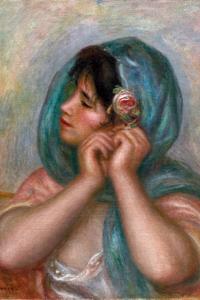
Penelope in the Odyssey
Penelope in the Odyssey, the poem by Homer, is the faithful wife of Odysseus (or Ulysses for the Romans). Odysseus is the King of Ithaca, and he is the main protagonist in Homer's poems, the Iliad and the Odyssey. Odysseus is a warrior in the Trojan War, and the Odyssey covers his return home after many long years.
Read this to find out how Penelope was affected by Odysseus being away.
What Is the Odyssey and Who Was Penelope in the Odyssey?
The Odyssey is the second epic poem written by Homer, meant to follow the events of the Iliad, where Penelope is the wife of Odysseus, the main character. These poems were written in the 7th or 8th century, and they've become some of the most important works of literature in the western world.
In the first poem, the Iliad, Odysseus is away at war, fighting against the Trojans for ten long years. However, when he begins his journey home, many odd challenges come upon him, which take him another ten years to finally get back to his home.
Odysseus leaves his wife Penelope of Ithaca and his son, Telemachus on their own and initiates the journey, during which he loses all his crewmates, and arrives on his own. Penelope waited faithfully for his return, as Telemachus had to help her fight against the many suitors who wanted her hand. During the twenty years of her husband being away, a total of 108 suitors came to try and get her to marry them.
By using cunning ways, she urges to try and avoid remarriage. Penelope's character is one of patience and fidelity, and for her efforts, she is finally reunited with her husband after twenty years apart. He arrived back at his home in disguise to see if his wife had remained faithful. She puts him through the test, and he passes, thus allowing them to reunite.
What Was Keeping Odysseus From Home: Odysseus' Trials and Fidelity
On his way back from the Trojan War, Odysseus ran into many troubles because of angering Poseidon, the god of the sea. He struggles through storms, capture, and even magic. For seven years, he got stuck on an island with Calypso, where she fell in love with him and begged him to make love to her, promising that she would make him her husband.
Some stories say that he gave in, while others say that he remained faithful just as his wife had done. Athena helped him by asking Zeus, the sky god, to stop Poseidon's anger and letting Odysseus get on his way.
Odysseus found himself with the Phoenicians who eventually delivered him to Ithaca, after he told them his story. While he was away, goddess Athena and his son came looking for him, the suitors pining for Penelope planning to kill Telemachus on his ship as he returned.
Penelope worries for her son, but all is soon to be over.
What Was Penelope's Role in the Odyssey? Keeping Those Suitors at Bay
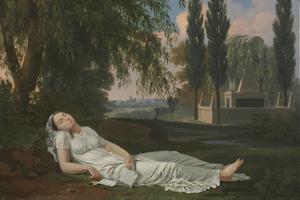
Penelope's role in the Odyssey
While Odysseus was away, Penelope had 108 suitors clamoring for her hand. However, due to the love she had for her husband, Penelope chose to remain faithful, strongly believing that Odysseus would return home one day.
For this reason, to avoid remarriage, she devised a few tricks keeping the marriages from taking place and from even meeting her suitors.
One of these tactics was to announce that she would marry if only she completed sewing a burial shroud for Odysseus' father. For three years, she claimed she was sewing it, and so she couldn't marry that presents perseverance as one of the themes in the Odyssey.
Athena, on the other hand, encouraged Penelope to meet with all her suitors and fan the flame of their interest and desire. It would bring her more honor and esteem from her husband and son. Listening to Athena, she considers marrying one of them, in addition to asking Artemis to kill her.
The separation from her husband and the overzealous suitors likely had gotten to her. However, with Athena's help together with his son, makes his escape from the island where he was kept with Calypso. He, finally returns home, revealing himself to his recently returned son, and joins one of Penelope's final competitions for her hand.
Ulysses and Penelope: Fighting for Love and Finding That Proof
Athena disguises Odysseus as a beggar so that Penelope can't recognize him, as he joins the competition to marry her. The competition is as follows: The man who can string an arrow to Odysseus' bow and shoot an arrow through twelve ax heads may have her as their wife.
She creates this competition on purpose, knowing it's impossible for anyone to win except for her husband. Disguised as a beggar, Odysseus is able to see how things are in his household before his full return.
He wants to know if his wife has been faithful to him. He confirms that she has indeed been, and hence he joins the competition, easily stringing the bow and shooting through twelve ax heads.
Once he completes this task, he throws off his disguises, and with the help of his son, kills all 108 suitors. Telemachus even hangs twelve of the housemaids who had betrayed Penelope or had made love to the suitors themselves.
Odysseus reveals himself to Penelope, fearing that it is some type of a scam, she tries out one more trick on him. She tells her lady's maid to move the bed that she and Odysseus had shared.
Though Odysseus had carpentered the bed himself, having the knowledge into the matter, he answered how it could not be moved, because one leg was a living olive tree. Penelope is finally convinced that her husband has finally returned, and they are reunited in happiness at long last.
Penelope in Greek Mythology: Some Confusing Points That Don't Add Up
In Greek mythology, Penelope's name is mentioned a few times, and so there are varied stories about her. In the Latin mention of this story, Penelope was illustrated as the faithful wife who waited for her husband for twenty years until his return.
It suits the Latin belief of the importance of chastity, especially since the Romans were converted to Christianity. Thus, she was continually used as a symbol of both fidelity and chastity even later in history.
Nonetheless in some stories, or other myths, Penelope was not just the mother of Telemachus. She was also the mother of others, including Pan. Pan's parents were recorded as god Apollo and Penelope, and other scholars and mythologists claim this to be true. Some stories even state that Penelope had made love to all of her suitors, as a result to this, Pan was born.
Conclusion
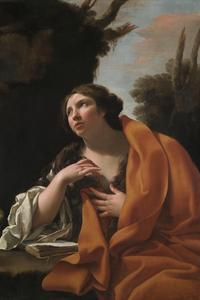
Penelope in the Odyssey poem
Take a look at the main points about Penelope in the Odyssey covered in the article above:
The Odyssey is one of two major epic poems written by the Greek poet Homer, who also wrote the Iliad which came before the Odyssey, mentioning his role in the Trojan war.
In the Odyssey, Odysseus is returning home, and the poem focuses a lot on Odysseus' wife, who waited twenty years for his return from the war
During the time when he was away, Penelope had 108 suitors all pining for her hand where she and her son, Telemachus, had to try to think of ways to keep them away
Penelope created many tricks to delay marriage, either because she loved her husband and wanted to respect his memory or because she loved him and had a feeling that he would return one day
For three years she claimed that she was sewing a burial shroud for Odysseus' father. After getting caught, she had to think of other ways to stop marriage.
With Athena's help, Odysseus was finally freed from where he'd been trapped on an island by Calypso. When he arrived home, he saw his son and revealed himself
Being disguised as a beggar he got the chance to see his household and to see if his wife had been faithful to him
Penelope has a new competition to keep the suitors at bay: they must be able to string Odysseus' bow and shoot through twelve ax heads
Odysseus was the only one to succeed. After which, he revealed himself to Penelope who puts him through one more test: she asks to move the bed in her bedroom. He objected because the bed couldn't move, one leg was a living olive tree.
They are finally reunited, and the story goes that they lived "happily ever after"
But the version of her as a chaste wife remained the most popular and was used as a symbol in later history
Penelope in the Odyssey is the image of chastity, fidelity, and patience. She was able to wait twenty years for a husband and created many tricks to delay marriage to others for that long. In the end, she was rewarded, but readers wonder, would she have made it until the end of her days, and would she have been expected to?