Ino in The Odyssey: The Queen, Goddess, and Rescuer
Ino in The Odyssey appears for only a handful of verses, but she plays an essential role. Without her assistance, Odysseus would have perished just before he made it to safety.
How was Ino able to provide such timely aid?
Read on!
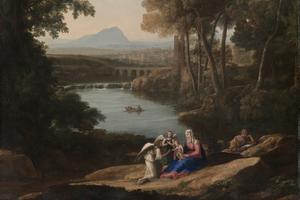
Ino in The Odyssey
Who Is Ino in The Odyssey?
The Odyssey is Ino's earliest appearance in written literature.
Homer describes her in a few lines:
"Then Ino with the lovely ankles noticed him—
Cadmus' daughter, once a mortal being with human speech,
But now, deep in the sea, she was Leucothea
And had her share of recognition from the gods."
Homer, The Odyssey, Book Five
One might wonder about the significance of mentioning Ino's attractive ankles. Remember that the literature of Ancient Greece was once only performed orally.
The poets often used specific descriptions such as these as a reminder of other stories. By mentioning certain physical features or ancestry in every story, the audiences could easily recognize the characters and remember other stories about them.
Ino's part of The Odyssey appears in Book Five, relatively early in the story, considering her contribution occurs near the end of Odysseus' journey. Homer allows his protagonist to tell much of his own account after reaching safety. Therefore, the early parts of Odysseus' wanderings are recorded later in the poem.
How Does Ino Help Odysseus? Part 1: Calypso Relents
Ino's cameo appearance in The Odyssey is essential because her intervention saves Odysseus's life, and it confirms the decree of Zeus. First, we must understand the events that lead up to her scene by recounting the earlier sections of the chapter.
When Book Five begins, Odysseus has been trapped on Calypso's island for seven years. Calypso loves the hero and treats him well, but Odysseus still longs for home. After the gods discuss the matter on Mount Olympus, Hermes flies to Calypso and delivers Zeus's order that she must release Odysseus. Calypso argues mightily, complaining of being the victim of a double standard:
"The gods are harsh and far too jealous —
More so than others. They are unhappy
If goddesses make mortal men their partners
And take them to bed for sex."
Homer, The Odyssey, Book Five
Still, Calypso must admit that Odysseus wouldn't stay with her if not forced. Every day, she would see him pining for his wife, son, and home. Reluctantly, she obeys Zeus's order and allows Odysseus to build a raft and sail away with fresh clothes, a warm cloak, and plenty of provisions for his journey.
How Does Ino Help Odysseus? Part 2: Poseidon's Last Vengeance
Poseidon, whose anger was the catalyst for much of Odysseus' misfortune, returns from travels abroad and spies Odysseus's raft on the water near the island of Scheria.
He flies into a rage:
"Something's wrong!
The gods must have changed what they were planning
For Odysseus, while I've been far away
Among the Ethiopians. For now,
He's hard by the land of the Phaeacians,
Where he'll escape the great extremes of sorrow
Which have come over him — so Fate ordains.
But still, even now, I think I'll push him
So he gets his fill of troubles."
Homer, The Odyssey, Book Five
Zeus's decree ensured that Odysseus would reach home safely, but it wasn't required to be easy. Poseidon takes the opportunity to inflict a final measure of punishment.
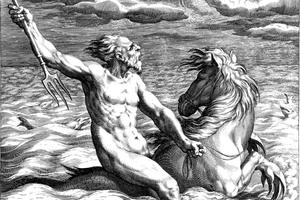
Poseidon causes a great storm
Once again, Poseidon, the seas god, causes a great storm on the sea. Winds and waves pummel Odysseus from every direction, and the raft's mast snaps in two. Then, a colossal wave knocks Odysseus into the sea, and Calypso's fine cloak weighs him down, pulling him underwater. He swims desperately and reaches the raft but with little hope of survival.
How Does Ino Help Odysseus? Part 3: Ino's Sympathy and Assistance
Just as all hope seems lost, Ino appears with her memorable ankles. The goddess knows about Odysseus' perilous journey, trying to reach home. She, too, thinks he has suffered enough, and she intervenes to hasten Zeus's decree of a positive outcome:
"She rose up from the water,
Like a seagull on the wing, perched on the raft,
And spoke to him, saying: "You poor wretch,
Why do you put Earthshaker Poseidon
In such a furious temper, so that he
Keeps making all this trouble for you?
No matter what he wants, he won't kill you.
It seems to me you've got a clever mind,
So do just what I say. Take off these clothes,
And leave the raft. Drift with the winds.
But paddle with your hands, and try to reach
The land of the Phaeacians, where Fate says
You will be rescued. Here, take this veil —
It's from the gods — and tie it around your chest.
Then there's no fear you'll suffer anything
Or die. But when your hand can grab the shore,
Then take it off and throw it far from land
Into the wine-dark sea. Then turn away."
Homer, The Odyssey, Book Five
Giving him the veil, she departs again just as swiftly as she appeared. Naturally, Odysseus is wary due to his many unfortunate encounters with gods lately, and he can also see that the island is still quite far away. He decides to stay with the raft as long as it remains intact and then use the goddess' veil if needed. Unfortunately, at that moment, Poseidon sends an enormous wave, splintering the vessel.
Without further hesitation, Odysseus sheds Calypso's fine clothes, wraps Ino's veil around his chest, and gives himself to the waves. Poseidon sees that his last bit of fun is over, and he leaves for his palace under the water. For three days, Odysseus drifts on the sea, safe from drowning due to Ino's veil. At last, he reaches the shore and throws the veil back into the sea, as Ino has instructed.
Who is Ino in Greek Mythology? Her Origins Before The Odyssey
Though Ino only appears for a brief moment in The Odyssey, her life story before that moment is intriguing. Homer didn't write about Ino's history, so his audiences must have known Ino before The Odyssey. More of Ino's chronicle can be found in the works of Plutarch, Ovid, Pausanias, and Nonnus, among others.
Before her transformation into a goddess, Ino was the second daughter of Cadmus, the founder of Thebes, and his wife, Harmonia, the illegitimate daughter of Ares and Aphrodite.
Ino's parents had six children: two sons named Polydorus and Illyrius, and four daughters named Agave, Ino, Autonoe, and Semele. Semele was notable in Greek mythology for being the mother of Dionysus.
Ino became the second wife of Athamas, the King of Orchomenus. Their two sons, Learches and Melicertes, vied for attention with Phrixus and Helle, Athamas' sons from his first marriage to Nephele. Ino executed several jealous schemes to ensure that one of her children would inherit the throne. Eventually, Nephele took her sons away for safety, which achieved Ino's goal.
How Does Ino Become the Goddess Leucothea?
Sources differ about the ordeals in Ino's life, but the cause remains the same: Zeus's infidelity. Ino's sister, Semele, was courted by Zeus, the god of the sky, resulting in pregnancy. Jealous Hera used a clever plot to ensure Semele's death, but Zeus rescued the unborn Dionysus and hid the fetus in his thigh until he grew enough to leave the makeshift womb.
Ino and Athamas agreed to serve as foster parents to Dionysus. This too enraged Hera, and she cursed Athamas with madness, and likely Ino as well. In his insanity, Athamas mistook his son Learchus for a deer and killed the boy with his bow. When he saw Ino, the madness told him that he was looking at a lion, and he chased after her to kill her.
Ino fled, carrying her younger son, Melicertes. Eventually, the chase led to the cliff's edge, and Ino jumped into the sea. Zeus may have felt some guilt over his part in their demise, for he transformed them both into gods. Ino became the goddess Leucothea, and Melicertes became the god Palaemon, both worshipped by sailors for their aid in safe passage along the seas.
Conclusion
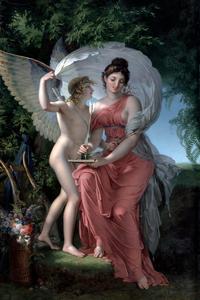
Ino's appearance in The Odyssey
Ino only plays a small part in The Odyssey, but her intervention is crucial to the hero's journey.
Here are a few facts to remember about Ino's life and her appearance in The Odyssey:
Ino was the daughter of Cadmus of Thebes and the goddess Harmonia.
She was the second wife of King Athamas of Boeotia.
Their sons were Learchus and Melicertes.
Ino and Athamas agreed to foster Zeus's bastard child Dionysus, and Hera cursed Athamas with madness.
Being chased by her insane husband, Ino flung herself and Melicertes off a cliff into the sea.
Zeus pitied them and turned mother and son into gods.
She appears in Book Five of The Odyssey.
Homer was enamored of Ino's ankles.
Ino aids Odysseus when Poseidon sends a storm and wrecks the hero's raft.
She lends him her veil to keep him afloat until he reaches the land of the Phaeacians.
Odysseus obeys and uses the veil, but only when it seems all hope is lost.
Ino's participation in The Odyssey is a further example of the influence and involvement of the gods in Odysseus's long trek home.