Sirens in The Odyssey: Beautiful Yet Deceitful Creatures
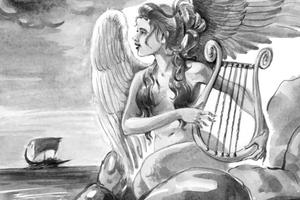
Sirens in The Odyssey
Sirens in The Odyssey were alluring creatures who sang beautiful songs that could drive a man mad just by hearing them. The sirens were one of the first ordeals Odysseus and his crew had to pass through so they could continue on their journey home to Ithaca.
The immortal goddess Circe warned Odysseus about the dangers they possessed, and she also instructed him on how to safely bypass their way without giving in to the temptation. Keep reading our article to find out how Odysseus and his men managed to survive the siren songs.
Who Are the Sirens in The Odyssey?
Sirens in The Odyssey were creatures that appeared as beautiful women that had angelic voices. Upon closer look, however, they were monsters much akin to a hawk-like bird with a large head of a woman and sharp teeth. They used their powers to entice sailors to their deaths, by drowning them while immobilizing or hypnotizing them with their melodies to stay on their island forever.
Their songs were thought to be so wonderful that it was said they could even calm the winds and waves of the sea, as well as send pangs of longing and sorrow into the hearts of men.
In early ancient Greek drawings, they were originally shown to be either male or female. However, females were more ubiquitous in many Greek works and art. We should mention that Homer didn't write about the appearances of the sirens of The Odyssey; he only stated that their lovely singing voice had mystical and dangerous powers capable of sending even the most steadfast man to insanity.
What Do the Sirens Do in The Odyssey?
The sirens in The Odyssey were known to drag unsuspecting sailors to their meadows and trap them there with the lull of their songs. Homer described their songs as man's impending doom: as soon as the sailor was too close to the creature, he would not be able to sail home.
The ultimate question is, how did Odysseus and his crew avoid getting killed by them?
Sirens in The Odyssey: Circe's Instructions to Resist the Siren Song
Circe let Odysseus know that the sirens were living "in their meadow, round them heaps of corpses, rotting away, rags of skin shriveling on their bones…" Thankfully, she proceeded to instruct him how he'd best resist their call.
She told him to stuff his crew's ears with softened beeswax so that no one in his crew could hear their call. She also included guidance for the hero: if he wanted to hear what the sirens had to say to him, he had to ask his men to tie him to the mast of their ship, so that wouldn't fall into danger. If he were to plead to be set free, his men would have to secure him and tighten the ropes further, while the others rowed the ship faster away from sirens' island.
Odysseus listened to Circe's warning and commanded his crew exactly what he was told to do.
Preparing to Pass Near the Island of the Sirens
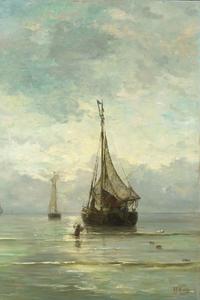
Odysseus and his crew's ship
Nearing the island at sea, the brisk wind that supported the sails of their boat mysteriously disappeared and lead their ship to a slow stop. The men immediately set to work and brought out their oars for rowing, while Odysseus readied their second line of defenses.
He easily sliced off a wheel of beeswax into pieces and knead them until they softened into a waxy pulp. The crew followed his orders of stuffing their ears with the wax as they tied him up the mast, while the others continued rowing the ship.
The Siren Song and Its Aftermath
Passing the island, the sirens notice their ship and who exactly was on board. They raised their voices and burst into their high, "rousing song:"
Come closer, famous Odysseus—Achaea's pride and glory—
moor your ship on our coast so you can hear our song!
Never has any sailor passed our shores in his black craft
until he has heard the honeyed voices pouring from our lips,
and once he hears to his heart's content sails on, a wiser man.
We know all the pains that Achaeans and Trojans once endured
on the spreading plain of Troy when the gods willed it so—
all that comes to pass on the fertile earth, we know it all!
— Book XII, The Odyssey
Since Odysseus hadn't covered his ears, he was instantly enthralled by the sirens' call. He lashed and struggled against his restraints, and even ordered his men to release him. Sticking to his previous instructions, the two crewmen responsible for him, Perimedes and Eurylochus, only tightened the ropes, while the rest rowed the ship away from the sirens' reach.
As soon as they stopped hearing the siren songs, the crew unplugged the beeswax from their ears and then released Odysseus from his bonds. Their first difficulty after leaving Circe's island was long gone and they were ready to go on with their journey to Ithaca.
Sirens in The Odyssey: The Vice of Overindulgence
A recurring theme in this Homeric epic is how excessive comforts and pleasures can backfire on a person or, in this case, on our hero Odysseus. In the first place, Odysseus knew from a prophecy that if he agreed and went on to fight in the Trojan War, it would take him an absurd amount of time to return home to his wife, Penelope, and his newborn son at the time, Telemachus.
That prophecy came true as it took Odysseus at least 20 years to return to Ithaca; ten years on the Trojan expedition, and an additional ten years on his voyage home. His journey was riddled with challenges and monsters, and many of those challenges entailed man's lust and greed for material desires.
Despite being such an intelligent and shrewd man, Odysseus' could not return to Ithaca without having to go through so many challenges that tempted him and his heart. Indulging himself with Circe's hospitality and Calypso's exploitation almost threw him off course of his original goal, which was to return to his wife and son, and being the King of Ithaca, reinstating his duties to his people.
His curiosity about the sirens' songs almost had him killed, yet listening to Circe's advice saved him in the end. Still, it's clear that he didn't learn his lesson about the vices of being overindulgent. It would take much more than a siren song to realize the ultimate mistake that he had made since the beginning: going to the Trojan War and savoring the indulgence of being a hero, despite knowing that it would take many years to finally see his wife, his child, and his land.
Conclusion
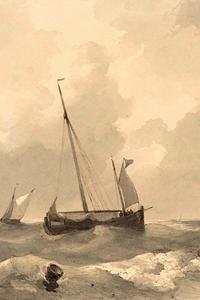
Ship of Odysseus and his crew
Now that we've discussed the origins and descriptions of the siren from The Odyssey, the relationship of Odysseus and sirens, and their role as a vice to overcome for our hero, let us go over the critical points of this article:
The sirens were creatures who lured passing sailors and travelers to their deaths with their mesmerizing voices and songs
In Greek mythology, the sirens were depicted as female figures with bird-like body parts. In Homer's Odyssey, however, there was no such description other than the narrative of their songs towards Odysseus
The sirens lay on the Ithacan's crew journey back home, and that is why Circe gave Odysseus instructions on how to bypass their trap. By stuffing the crew's ears with beeswax, they would be able to safely sail across their waters
However, Odysseus' curiosity got the better of him, and he insisted on listening to what the sirens had to say about him. So Circe told him to have the crew tie the hero to the mast, and if he would ask them to let him go, they would tighten his restraints further
These directions saved Odysseus and the crew as they sailed past the sirens' island without harm
Many of the challenges in Odysseus' journey are depicted as man's weakness to greed and lust, and the sirens are just one of the many trials he'll be facing during this voyage.
Near the end of his passage home, Odysseus learns from his mistakes and enters Ithaca focused and determined to get to his kingdom.
In conclusion, Sirens in The Odyssey were creatures that hindered Odysseus' path to return to Ithaca, but their importance was to show that specific desires can lead to eventual destruction. Odysseus overcame them when he instructed his men to put wax on their ears to prevent hearing the songs they sang as they passed through their island. He was one step closer to going home.