Nostos in The Odyssey and The Need to Return to One's Home
Nostos in the Odyssey refers to Odysseus' return home 'from Troy by sea. The word nostalgia is also derived from the words "nostos" and "algos," which is translated to "the pain of the need to return to one's home."
For the Greeks, accomplishing incredible feats was one of the goals that were important to them in their search for glory, but just living to tell the tale of their hardships to their people at home was just as heroic sometimes.
Nostos, is so much more than "returning home", however, and we have covered everything about it in our article below.

Nostos in the Odyssey
What Is Nostos?
Nostos: Three Different Meanings
While Nostos in Greek Mythology is defined as the Greek word for homecoming, it does not necessarily require a physical return. It is also defined as a "report of the return."
This can come in many forms, such as through songs or poems, and maybe similar to a way of storytelling called "kleos". The difference between songs, poems, and kleos is that the latter tells the story of another person's glorious deeds. In contrast, nostos is told by the person who experienced the hardships of returning home.
There is a third meaning to nostos which is the "return of light and life." This, of course, implies that the heroes depicted in stories had fallen from grace and required reconciliation. The reconciliation and gradual mending of their spirit were the metaphorical nostos in which the true nature of their soul returned to them.
Nostos as "Return of Light and Life": Zeus and Hercules Story
One example of this "return of light and life" can be found in the story of Hercules.
Hercules was the son of Zeus, god of the sky and thunder, and Alcmene, so naturally, Hera sent temporary madness to Hercules in her blinding jealousy, which caused him to murder his wife, Megara, and his children.
The only way Hercules would be cleansed of the impurity of murdering them was to undergo the 12 labors to regain his former respectful presence. Hercules' nostos, in this case, was not a physical return to a place, but a return of his sanity and respect from others, which he had once lost.
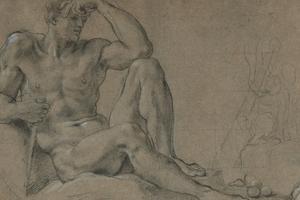
Hercules resting
Nostos in The Odyssey
Odysseus' Nostos in the Odyssey: The Beginning
The start of Odysseus' nostos began a decade after he left his home in 'Ithaca. Meanwhile, at his home, some men who were later named "the suitors", wanted to take a chance at marrying Odysseus' wife, Penelope. She had no desire to marry another man, yet had also abandoned almost every hope of Odysseus' return, in order to find a justifiable cause and good reason to drive herself away from the suitors.
As this happened, Antinous, one of the suitors, plotted to kill Telemachus to take away what familial resistance Odysseus had left at his home. This was also one of the reasons why it was so urgent for Odysseus to return home – to reclaim his glory and save his wife and son.
Nostos in The Odyssey: Island of The Lotus Eaters
After receiving aid from the Phaeacians, Odysseus made his way through Calypso's island of Ogygia and ended up on the Lotus Eaters Island. The island locals gave Odysseus and his men some of the lotus fruit to taste, but now his men lost the desire to return home and wanted to stay on the island to indulge in the fruit and forget about nostos. Odysseus had to force his men back on the boat as he realized that they had lost their nostos, their desire to return home.
Nostos in The Odyssey: The Island of Polyphemus
After leaving the Lotus Eaters' Island, Odysseus and his men met Polyphemus, a cyclops, and they asked him for aid to return home. Polyphemus, however, had no interest in helping them to go back to Ithaca and instead prevented them from leaving by locking them up and eating Odysseus' men.
Odysseus managed to escape by getting Polyphemus to drink some of the wine he offered to him and then managed to blind the cyclops by impaling his eye with a burning spear.
Odysseus had told Polyphemus that his name was "Nobody" in order to trick him and make no one believe that someone had managed to blind such a powerful being. However, something overtook Odysseus at the last minute, and he revealed his true name to the cyclops, mocking him for being bested by a human.
Polyphemus, in turn, cursed Odysseus by pleading to the god Poseidon that Odysseus would never be able to return to his home alive. In a way, then, Polyphemus played a role in presenting a difficulty for Odysseus to physically fulfill his nostos.
Nostos in The Odyssey: Trouble Returning Home
Facing the Giants After Asking a Cyclops for Directions
Having just escaped from the cyclops Polyphemus, Odysseus and his men faced other troubles on their journey back home to Ithaca. One of these problems was facing the Laestrygonians, a group of cannibalistic giants. Upon reaching the shore of the island of Laestrygonians, the giants hurled rocks at the ships and managed to sink all but Odysseus' ship.
Nostos in the Island of Aeaea
Odysseus then landed on the island of Aeaea, home to the sorceress Circe, who invited them to her home to rest after their journey.
Circe offered food to Odysseus and his remaining men. Little did they know that she had also drugged their food so they would forget about their home and abandon their nostos, just like the lotus-eaters had done to them with their lotus fruit.
She then turned Odysseus' men into pigs, and she wanted to do the same to Odysseus himself. However, the Ithacan king managed to save his men with the help and instructive advice of Hermes, the god of trade.
He stayed on the island with Circe for another year, as her lover, further delaying the fulfillment of his nostos.
Persisting Through More Troubles
Odysseus faced many more troubles, such as meeting with the dead prophet Tiresias in the Underworld to seek knowledge and his encounter with the sirens who lured men to their island with their song and killed them after catching them.
Lastly, after going through the sea monsters Scylla and Charybdis who ate his men, he was shipwrecked on the island of Calypso alone. He spent seven years there in a state of grief about the extreme difficulties of returning home and relieving his nostos.
Nostos in the Island of Calypso
As Odysseus was struggling with the idea of continuing his journey to return home, he was held captive in the isle of Ogygia by the nymph Calypso for seven years. Her intent was to marry the king of Ithaca and make him forget about the life waiting for him on his own island.
In order to seduce him and convince him to marry her, she offered Odysseus immortality, as she was immortal herself being a titan's daughter and everything. However, Odysseus was not swayed and still longed to be with his wife and child.
While gods debated amongst themselves about Odysseus' fate, the goddess Athena decided to lend her aid to Telemachus. Athena convinced Telemachus to reprimand the rowdy behavior of the suitors who barged into Odysseus' home.
She eventually pushed him to go on a journey to Sparta and Pylos, where he would learn that his father was still alive and was held captive by nymph Calypso on Ogygia. As this was happening, Antinous accelerated his plans of murdering Telemachus.
Leaving Calypso's Island: Closer to Fulfill Nostos
When Odysseus finally left Calypso, after Zeus had sent Hermes to plead with her to let Odysseus go, he met the princess of the Phaeacians, Nausicaa. Through her, Odysseys asked for the help of the king and queen of the Phaeacians. They accepted on the condition that he would tell his story and how he had spent ten whole years in the sea.
Odysseus was eager to go back to his home safe and sound and fulfill his nostos once and for all, so he obliged to the Phaecians' request and started to narrate the story of his journey.

Odysseus returning home
Nostos in The Odyssey: Returning Home At Last
By the end of all their ordeals, Penelope and Odysseus reunited, marking the turning point for the couple and their son.
Odysseus had disguised himself as a beggar, and Penelope, still unsure of Odysseus' identity, decided to hold an archery competition, in which whoever would win would also may marry her. Here Odysseus displayed his prowess, making clear to his wife Penelope that he was Odysseus indeed.
Odysseus then killed all the suitors who had reveled in his home and attempted to murder his son Telemachus. Just as the suitors' families attempted to confront Odysseus, the goddess Athena descended to stop the conflict, that would have inevitably caused more bloodshed.
Conclusion
Now that we've talked about Nostos, what it is, and how it is portrayed in the Odyssey, let's go over the most important things that we discussed in our article:
For the ancient Greeks, while achieving great feats may have been of great importance in the telling of heroic tales, being able to survive the trials thrown at them was enough for a heroic tale
While nostos does translate to "coming home", it does not necessarily have to be a physical return
Odysseus fulfilled nostos by physically returning home after several life-threatening ordeals that took place over the course of 10 years
Odysseus's return to his home also had the symbolic meaning of nostos, his "return of light and life," by reclaiming his home and saving his family from the many suitors that bugged his wife and son
The sense of urgency to return home came from the idea that Odysseus' wife would be taken away and his son would be murdered
Odysseus was able to reveal his nostos to the king and queen of the Phaeacians, which recounted the seven years he had spent on Calypso's island, among other things
Odysseus may have become an infidel many times through his journey, but his desire to return home ultimately led him to experience nostos in all meanings of the word.
The theme of nostos is one that ran through the whole poem of The Odyssey, as Odysseus himself was retelling the events that he had to live through. One could tell that all he ever wanted to do was return home, yet life and the gods prevented him from doing so. Despite the story being fictional, the theme of nostos is relevant today, especially to people unable to return to their homes despite doing everything in their power to do so.