Oedipus Tiresias: The Role of the Blind Seer in Oedipus the King
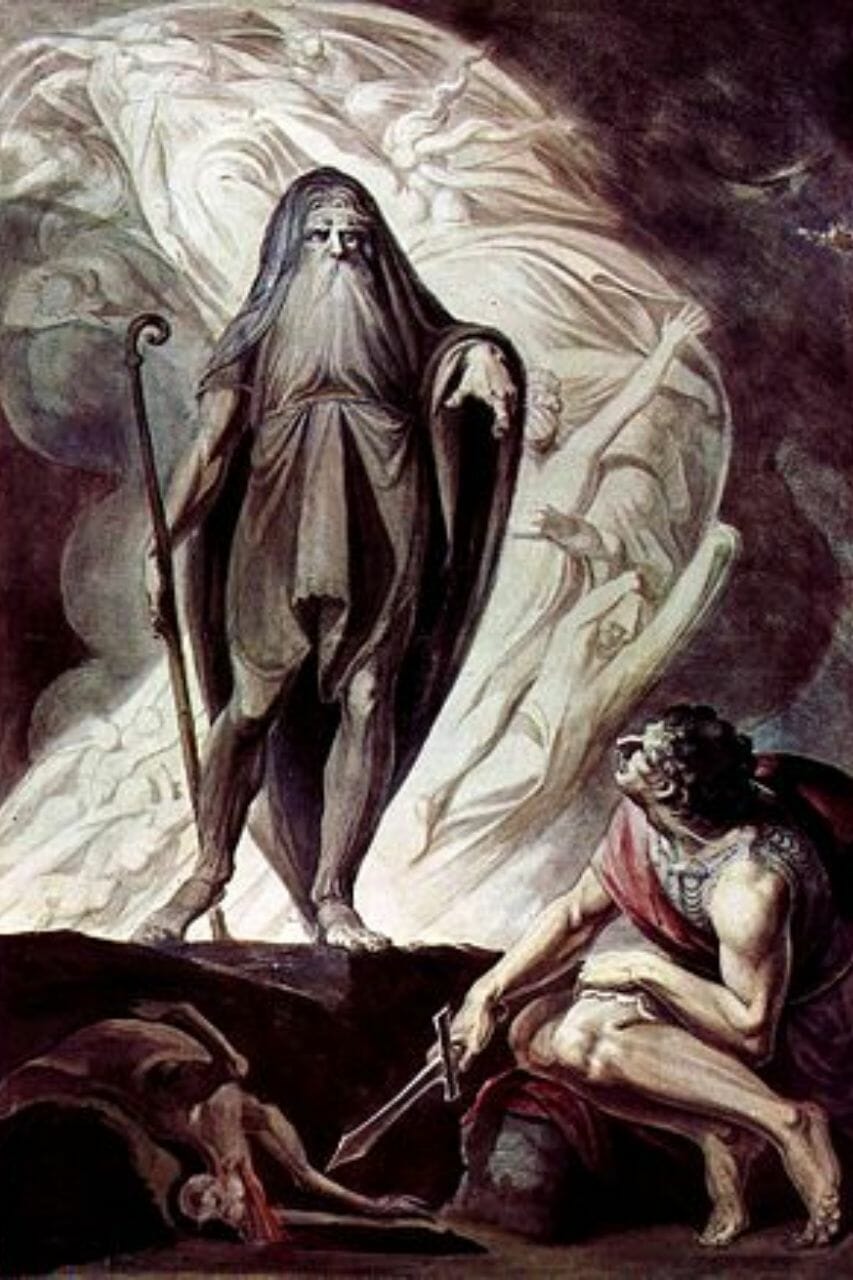
Tiresias, the blind prophet, reveals the truth to King Oedipus
Oedipus Tiresias follows the events involving the blind prophet and how those events influence the outcome play, Oedipus Rex. Tiresias is one of the Oedipus Rex characters featured in several Greek tragic plays, including Antigone and The Bacchae. In the play Antigone, Tiresias Antigone informs Creon that his actions would bring disaster to the land of Thebes.
This article will examine the role of the prophet of Apollo and how he helped to facilitate the sequence of events in the play Oedipus the King.
What Is Oedipus Tiresias?
Oedipus Tiresias, the explorer of the role of the blind seer, plays in the Greek tragedy Oedipus Rex written by Sophocles. It juxtaposes the character of Tiresias with King Oedipus and examines how each character contributes to the development of the plot.
Tiresias Influenced the Plot of Oedipus the King
When sickness ravaged the people of Thebes, they trooped to the palace of their king to find a solution to the many deaths in the land. The King, Oedipus, then sent a messenger to the oracle at Delphi to help find a solution to their predicament.
There it was revealed that the cause of the sickness was due to the murder of the former king of Thebes, Laius. Therefore, the only way to stop the illness in the land was to find the murderer of King Laius.
Oedipus Tiresias Helps to Solve Laius' Murder
King Oedipus then sent for the blind seer Tiresias to help him find the murderer to help restore the health of the Thebans. When Tiresias arrived, he refused to give an outright answer but insisted that the murderer was known to Oedipus. This angered Oedipus, and he rained insults on the old Tiresias. However, the prophet stayed mute and endured the barrage of accusations heaped on him by Oedipus.
Finally, when Oedipus accused him of being in bed with the murderer of King Laius, Tiresias revealed that the murderer was Oedipus himself. This got the king angry and ordered the blind seer thrown out of the palace.
However, subsequent events revealed the identity of the murderer, which was King Oedipus. Realizing the abomination he had committed by killing his father, King Laius, and marrying his mother, Oedipus gouges out his eyes and exiles.
Tiresias Helps to Heal the Thebans
Without the role of Tiresias, the murderer of King Laius would have remained a mystery to the people of Thebes. As a result, the sickness could have wiped out the Thebans, including Oedipus and his family.
The sickness rendered them weak and hopeless, making them vulnerable to enemies. The Thebans needed a solution to restore their health and the city's glory.
They tried all means, but nothing seemed to work; the more they tried, the worse the sickness got. They turned to their only savior, Oedipus, who had rescued them from the savage sphinx earlier.
However, they were disappointed when Oedipus had no solution but to turn to the gods for help. Oedipus realized that the sickness in the land was of spiritual and religious origins, and only the gods had the answer.
Thus, Tiresias' revelations not only bring closure to the Thebans but also brings healing and restoration. Finally, calm is restored, and the Thebans regain their health. As a result, the death in the land is curbed, and the mournings and funerals end. Tiresias did not only solve the mystery of King Laius' murder but brought healing to the land of Thebes. However, all these happened after Oedipus banished himself from the land of Thebes.
Tiresias' Revelations Lead to the Death of Jocasta, Oedipus Rex
Locaste was bothered about her former husband, Laius, but was helpless in ascertaining the truth behind his death. She believed the story that she heard of how a group of bandits killed her husband at the place where two paths met. Thus, when Tiresias mentioned the prophecy about Oedipus killing his father and marrying his mother, she asked him not to believe in the gods.
According to her, the same gods prophesied that her husband Laius would die at the hands of his son. Instead, he was killed by bandits. However, when Oedipus heard of where Laius was killed, he became worried as he remembered an incident.
He quickly sent for the guard who survived the attack on Laius to narrate what happened that fateful day. A confused Iocaste asked Oedipus why he sent for the surviving guard, and he recounted how he killed a man at that crossroads where Laius was said to have lost his life.
Oedipus then narrated how an older adult had provoked him at the crossroads by attempting to drive him off the road, and in his anger, he killed the older adult. However, subsequent events revealed that the older man was King Laius, and this news broke the heart of Iocaste. Realizing how she had married her son and had children with him, she quietly goes into her room and hanged herself. Thus, the revelations by Tiresias set into motion various incidents that led to the death of Queen Iocasta.
Tiresias Serves As a Foil to Oedipus
A foil is a literary term that indicates a character who is presented as a contrast to a second character to show the strengths and weaknesses of the second character. Oedipus the King, who was Sophocles, uses Tiresias as a foil to Oedipus to highlight his strengths and weaknesses of Oedipus. Though the character traits of Oedipus are evident from the start, his encounter with Tiresias in the palace makes them glaring.
For instance, one of the most profound contrasts has to do with the sights of both characters. Tiresias was completely blind, while Oedipus' vision was clear as day. However, Oedipus could not see into the future and required the assistance of Tiresias. Also, though Oedipus did not know who killed King Laius, Tiresias could see the killer and even pointed him out when the situation required that he do so.
Sophocles also uses the calm temperament of Tiresias as a foil to the rush and hot-headed nature of Oedipus. While Oedipus harassed and called Tiresiar names because he refused to mention the killer of Laius, Tiresias kept his cool because he knew the consequences of his answer. Even when he blurted out the answer to Oedipus' question, he did not do it with fierce anger. What does Tiresias tell Oedipus? He told him that he was the murderer of King Laius.
Tiresias Used as a Tool for Foreshadowing
Sophocles used Tiresias's character to foreshadow the tragic play's future events. In literature, foreshadowing is a device a writer uses to hint at what is to come in the future of the play. Tiresias, who had the gift of prophecy, gave hints of what would occur to Oedipus. Through Tiresias, the audience could tell the tragic fate of Oedipus.
Here is one of the Oedipus and Tiresias argument quotes where the prophet of Apollo gave clues about the King's future: "I say you know not in what worst of shame you live together with those nearest you, and see not in what evil plight you stand." Tiresias told Oedipus that though he had physical sight, he was blind to see the abomination in which he was dwelling. He then hinted that Oedipus would eventually blind himself when he realized the horror of his ways.
True to Tiresias' words, Oedipus gouges his eyes after realizing that he had killed his father and married his mother. To make matters worse, he had borne four children with his mother, Iocaste. As foreshadowed by Tiresias, Oedipus leaves the land of Thebes and wanders in his blindness. Eventually, Oedipus met his death in the city of Colonus and was revered as the protector of the land.
Conclusion
This article has examined the role of Tiresias, the blind seer, and his impact on the events of the tragic play Oedipus the King. Here is a recap of all that the article has covered so far:
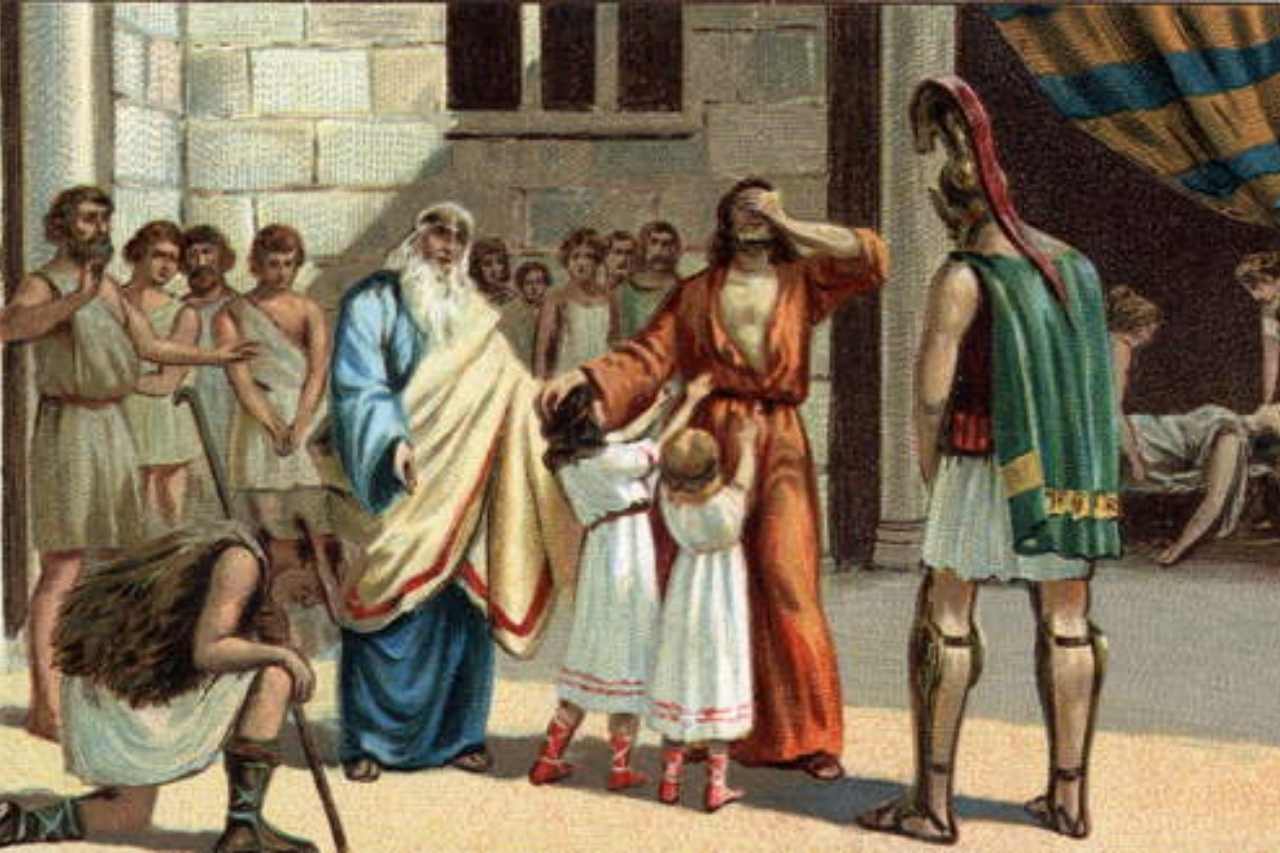
Tiresias, the blind prophet of Apollo
The prophet of Apollo helped to identify the murderer of the former King of Thebes – a case that had baffled Oedipus and the Thebans for days.
Tiresias also brought healing to the land of Thebes after the murderer was found out and justice was served. Otherwise, the plague could have wiped them all out.
Tiresias' revelations expedited the death of Iocaste when she realized that she had married her son, fulfilling the prophecy that was told years ago.
Sophocles used Tiresias as a foil to the character of Oedipus; though Oedipus could see, he was blind to his faults, while the blind Tiresias could see that Oedipus was the culprit.
The blind seer was also used as a vehicle of foreshadowing where he gave hints to the audience as to what the future held for Oedipus.
Tiresias helped to drive the plot of the play by revealing the murderer of King Laius and brought finality to the play, hinting that the damned prophecy had finally been fulfilled.