Timeless Myths Logo
Aphrodite Apollo Ares Artemis Athena Atlas Coeus Crius Cronus Demeter Dionysus Gaia Hades Hephaestus Hera Hermes Hestia Hyperion Iapetus Mnemosyne Oceanus Phobos Phoebe Poseidon Prometheus Rhea Tethys Themis Uranus Zeus
Bacchus Ceres Diana Juno Jupiter Mars Mercury Minerva Neptune Pluto Venus Vesta Vulcan
Amun Anubis Aten Atum Babi Bastet Bes Geb Hapi hathor heqet Horus Isis Khepri Khnum Khonsu Maat Nephthys Nut Osiris Ptah Ra Seshat Seth Shu Sobek Thoth
Alfheim Baldur Freya Freyr Frigg Heimdallr Helheim Idun Jotunheim Loki Nerthus Njord Odin Thor Tyr
Aengus Arawn Badb Brigid Cailleach Ceridwen Cernunnos Cu Chulainn Dagda Danu Gwydion Herne the Hunter Lugh Medb Morrigan Neit Nuada Taliesin Taranis
Chalchiuhtlicue Coatlicue Huitzilopochtli Mictlantecuhtli Mixcoatl Ometeotl Quetzalcoatl Tezcatlipoca Tlaloc Tonatiuh Xipe Totec Xochiquetzal Xolotl
Amaterasu Ame no Uzume Benzaiten Bishamonten Daikokuten Ebisu Fujin Fukurokuju Inari Izanagi Kagutsuchi Raijin Susanoo Tsukuyomi
Caishen Cangjie Dragon King Eight Immortals Erlang Shen Fuxi Guanyin Hou Yi Huxian Jade Emperor King Yama Leizi Lu-ban Mazu Nezha Nuwa Pangu Shennong Sun Wukong Xiwangmu Yue Lao Zhong Kui
Norse Classical Celtic Arthurian
Literature Stories Names
Aphrodite Apollo Ares Artemis Athena Atlas Coeus Crius Cronus Demeter Dionysus Gaia Hades Hephaestus Hera Hermes Hestia Hyperion Iapetus Mnemosyne Oceanus Phobos Phoebe Poseidon Prometheus Rhea Tethys Themis Uranus Zeus
Bacchus Ceres Diana Juno Jupiter Mars Mercury Minerva Neptune Pluto Venus Vesta Vulcan
Amun Anubis Aten Atum Babi Bastet Bes Geb Hapi hathor heqet Horus Isis Khepri Khnum Khonsu Maat Nephthys Nut Osiris Ptah Ra Seshat Seth Shu Sobek Thoth
Alfheim Baldur Freya Freyr Frigg Heimdallr Helheim Idun Jotunheim Loki Nerthus Njord Odin Thor Tyr
Aengus Arawn Badb Brigid Cailleach Ceridwen Cernunnos Cu Chulainn Dagda Danu Gwydion Herne the Hunter Lugh Medb Morrigan Neit Nuada Taliesin Taranis
Chalchiuhtlicue Coatlicue Huitzilopochtli Mictlantecuhtli Mixcoatl Ometeotl Quetzalcoatl Tezcatlipoca Tlaloc Tonatiuh Xipe Totec Xochiquetzal Xolotl
Amaterasu Ame no Uzume Benzaiten Bishamonten Daikokuten Ebisu Fujin Fukurokuju Inari Izanagi Kagutsuchi Raijin Susanoo Tsukuyomi
Caishen Cangjie Dragon King Eight Immortals Erlang Shen Fuxi Guanyin Hou Yi Huxian Jade Emperor King Yama Leizi Lu-ban Mazu Nezha Nuwa Pangu Shennong Sun Wukong Xiwangmu Yue Lao Zhong Kui
Norse Classical Celtic Arthurian
Literature Stories Names
  1. Classical Mythology
    Pantheon Heroic Age Royal Houses Geographia Facts & Figures Genealogy Bibliography About Classical Myths
  2. Heroic Age
    Heroes 1 Heroes 2 Heroines Amazons Perseus Theseus Heracles Argonauts Calydonian Boar Hunt Seven Against Thebes Trojan War Odyssey Aeneid Tales of Lovers Giants Centaurs Mythical Creatures
  3. Mythical Creatures
    Satyrs Myrmidons Dragon-teeth Men (Sparti) Earthborn Kings Argus Panoptes Geryon Graeae Keres Pegasus Arion Xanthus and Balius Ocyrrhoe Laelaps and the Teumessian Vixen Maera Cretan Bull Golden Fleece Calydonian Boar Crommyonian Sow Erymanthian Boar Nemean Lion Eagle (Aquila) Typhon Ceto Cetus Echidna Python Ladon Delphyne Campe Hydra Scylla Sphinx Chimaera Griffin (Gryphon) Cerberus Orthus Minotaur Gorgons Lamia Empusae Sirens Harpies Stymphalian Birds Caucasian Eagle Phoenix
  4. Sirens
    Sirens

Sirens

The Sirens were bird-women who lured sailors to their island with their songs. There were said to be either two or three Sirens. The song of the Sirens would cause to sailors to forget who they were and where they were going, often causing them to wreck their ships on the reefs. The Sirens were said to live on the island of Anthemoessa. Those who jumped overboard and swam to the island would be killed and devoured by the Sirens, or they would just simply waste away, listening to their songs.

There has been lots of speculation about what they sang, that would lure the sailors to their deaths. Some thought that the songs were different for each sailor, whereas others said that it was not the words, but it was the magical qualities of their voices that lured sailors.
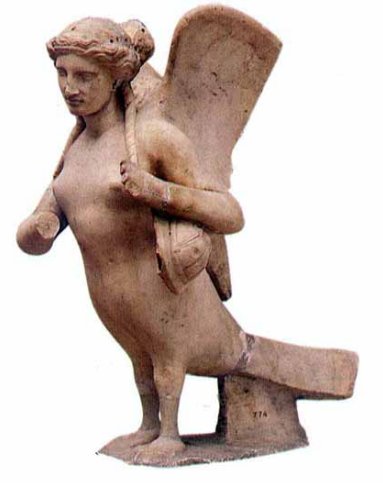
Siren

Siren
Statue for grave, 4th century BC
Archaeological National Museum, Athens

The Argonauts managed to escape the Sirens' song because of the great musician, Orpheus. Orpheus played his lyre so beautifully that it drowned out the songs from the Sirens. Only one Argonaut could not resist the Sirens' song, probably because his hearing was better than the other Argonauts. Butes, the son of Teleon or Poseidon and Zeuxippe, jumped overboard, swimming towards his death. Aphrodite took pity on Butes and spirited the hero away to Lilybaeum, in Sicily, where he became the goddess' lover.

In the Odyssey, Circe warned Odysseus about the Sirens' seductive song, telling the hero the measures he must take to protect his crew. It was simply plugging their ears with bees-wax. However, Circe knew that Odysseus was curious about the song. Circe suggested that her lover should have himself tied to the ship's mast until they passed the island.

Related Information

Name

Sirens, Sirenes, Σει&rhoἣνες

Related Articles

Odysseus, Circe, Orpheus, Aphrodite.

Odyssey, Argonauts.

Jimmy Joe Timeless Myths

By Jimmy Joe

Mythical Creatures:

  • • Satyrs
  • • Myrmidons
  • • Dragon-teeth Men (Sparti)
  • • Earthborn Kings
  • • Argus Panoptes
  • • Geryon
  • • Graeae
  • • Keres
  • • Pegasus
  • • Arion
  • • Xanthus and Balius
  • • Ocyrrhoe
  • • Laelaps and the Teumessian Vixen
  • • Maera
  • • Cretan Bull
  • • Golden Fleece
  • • Calydonian Boar
  • • Crommyonian Sow
  • • Erymanthian Boar
  • • Nemean Lion
  • • Eagle (Aquila)
  • • Typhon
  • • Ceto
  • • Cetus
  • • Echidna
  • • Python
  • • Ladon
  • • Delphyne
  • • Campe
  • • Hydra
  • • Scylla
  • • Sphinx
  • • Chimaera
  • • Griffin (Gryphon)
  • • Cerberus
  • • Orthus
  • • Minotaur
  • • Gorgons
  • • Lamia
  • • Empusae
  • • Sirens
  • • Harpies
  • • Stymphalian Birds
  • • Caucasian Eagle
  • • Phoenix
Sirens in The Odyssey: Beautiful Yet Deceitful Creatures

Sirens in The Odyssey: Beautiful Yet Deceitful Creatures

Sirens in The Odyssey were alluring creatures who sang beautiful songs that could drive a man mad just by hearing them. The sirens were one of the first ordeals Odysseus and his crew had to pass through so they could continue on their journey home...

February 16th, 2024 • Ancient Literature
Siren vs Mermaid: Half Human and Half Animal Creatures of Greek Mythology

Siren vs Mermaid: Half Human and Half Animal Creatures of Greek Mythology

Siren vs Mermaid is a fascinating comparison between two creatures that have the same physical trait, they have the head of a human and the body of another creature. Sirens are half human and half bird whereas mermaids are half human half fish. Th...

February 16th, 2024 • Ancient Literature
Orpheus and Eurydice

Orpheus and Eurydice

Orpheus (Ὀρφεύς) was the greatest mortal musician in Greek myths. Orpheus was the son of the Muse Calliope. His father was either the god Apollo or Oeagrus, the king of Thrace. Even though he may have been the son of the Thracian king, Apollo, who...

June 22nd, 2000 • Jimmy Joe
Scylla

Scylla

The six-headed monster that resided at the Strait of Messina. Scylla (Σκύλλη) was originally a beautiful maiden who was loved by a minor sea god named Glaucus. The sorceress Circe was in love with Glaucus, but the sea god did not return her love. ...

June 1st, 2000 • Jimmy Joe
Calypso in the Odyssey: A Beautiful and Captivating Enchantress

Calypso in the Odyssey: A Beautiful and Captivating Enchantress

Calypso in the Odyssey was described as a seductive nymph inhabiting the mythical island of Ogygia in Greek mythology. Located in an unknown place, Calypso's island became Odysseus' home for seven years. Calypso fell in love with Odysseus, the kin...

February 15th, 2024 • Ancient Literature
Syrinx

Syrinx

Syrinx was a nymph and huntress from Arcadia. Like other nymphs who enjoyed hunting, Syrinx was a companion of Diana (Artemis), and like her goddess, she wished to remain a virgin. Her wish could not be kept, especially when the shepherd-god Pan l...

August 31st, 2002 • Jimmy Joe
Circe

Circe

A sorceress. Circe was the daughter of Helius and Perseïs (Pereis) or Perse. Circe was also sister of Aeëtes (Aeetes) and Pasiphaë (Pasiphae). Her name means "Hawk", a bird of prey that hunts during the day. The hawk symbolised the sun. She was a ...

April 24th, 1999 • Jimmy Joe
Calypso

Calypso

A nymph or a minor goddess. Calypso was the daughter of Atlas. She lived on an island called Ogygia. Her only companions and attendants were nymphs. In the Odyssey, the hero Odysseus found himself shipwrecked at the narrow strait between the monst...

August 31st, 2002 • Jimmy Joe
Harpies

Harpies

A group of winged women. There were said to be only two harpies: Aello and Ocypetes, the daughters of Thaumas, the son of Pontus and Gaea, and the Oceanid Electra. They were the sisters of Iris. Later writers said there was a third Harpy. The best...

June 1st, 2000 • Jimmy Joe
Sibyl

Sibyl

Prophetess. Sibyl was actually the Latin name for several prophetesses that appeared in Roman legends. One of the Sibyls guided the Trojan hero Aeneas to the Underworld to talk to his father, Anchises. Sibyl appeared to be a title rather than a na...

September 28th, 2003 • Jimmy Joe
Timeless Myths

Exploring mythology and legends from around the world.

Explore Myths

All Stories Characters All Articles Search Site Map

Mythologies

Norse Mythology Classical Mythology Celtic Mythology Arthurian Legends Mythology Gods Ancient Literature

About Us

Introduction About Jimmy Bibliography FAQs Retro Version

Resources

Timeless Myths All Stories All Articles Characters
© 1999-2026 Timeless Myths • Copyright • Privacy Policy • Cookie Policy • Contact
Follow us: