Poseidon in The Odyssey: The Divine Antagonist
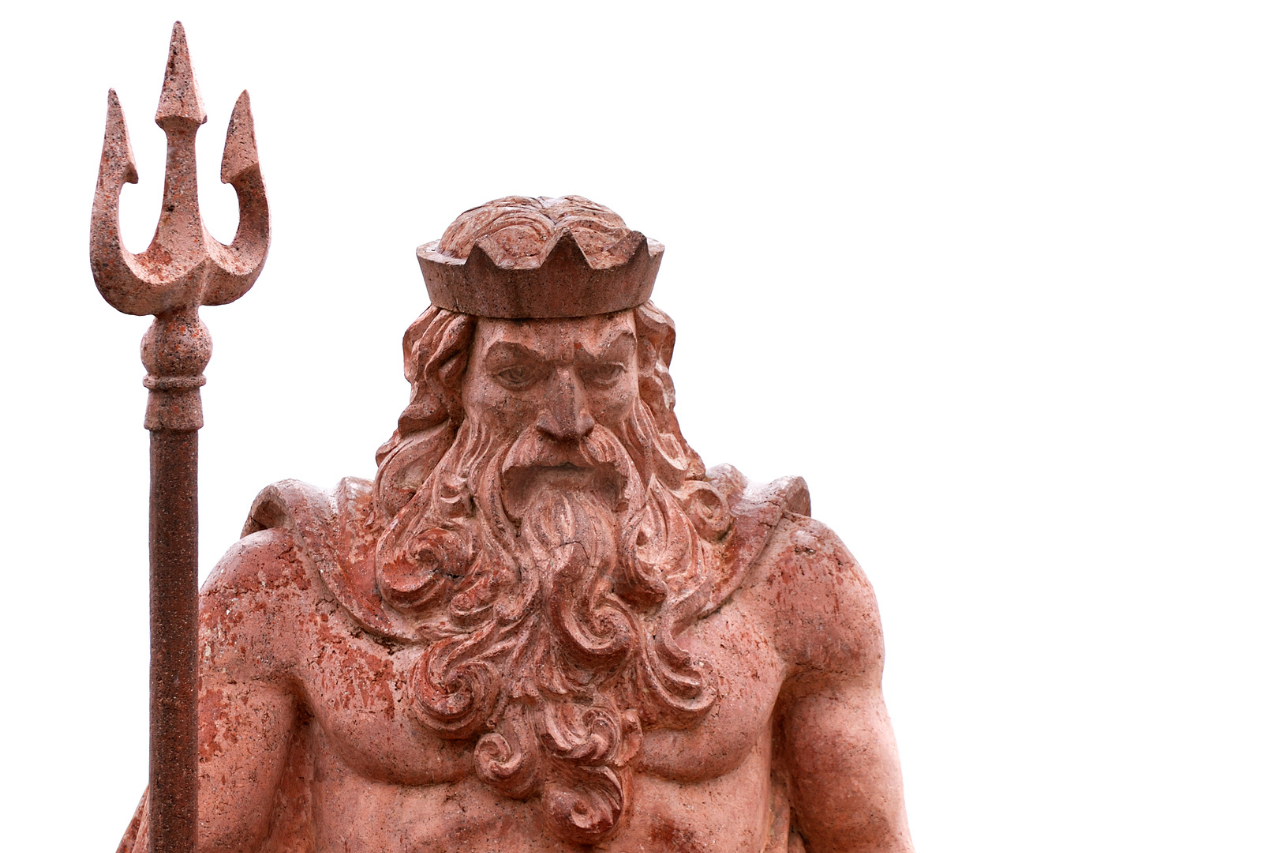
Poseidon, the god of the seas
Poseidon in The Odyssey is the god of the seas who is infamous for his bad temper, mood swings, and vengeful nature.
Although known for his ever-changing frame of mind, the Greek god is friendly and cooperative once content with his surroundings. He played a significant role in The Iliad, guiding the Greeks to victory.
In contrast, the god of the sea would hold nothing back to exhibit his vindictive nature once angered, a side we all bear witness in The Odyssey.
Who Is Poseidon in The Odyssey
Odysseus, our hero, garners the ire of the sea god and, in consequence, struggles with the god's show of power. Poseidon, who once favored the hero of Troy, sent out storms to the Greek hero's way, derailing him from his destination multiple times.
The showers and the strong waves place the Greek hero and his men in dangerous waters. But how did Odysseus garner the Greek god's anger? To answer this, we must go over The Odyssey, which tells the story of Odysseus' journey back to Ithaca.
Encounter With Polyphemus
After our hero's journey in Djerba, Odysseus and his men set sail and land on the island of Sicily, the isle of the cyclops. Here, they discover a cave filled with food and gold. They take and eat what they could, all enjoying the goldmine without realizing the danger they're in.
Polyphemus, the cave owner, arrives in his home to find strange little men feasting on what's his. Odysseus, confident in the gods' favors, demands gifts and safe travels from the one-eyed giant. Instead, the cyclops closes the cave's opening, takes two of Odysseus' men, and eats them in front of their crewmates' eyes.
Imprisoned in Polyphemus' Cave
Our hero and his men are stuck in the one-eyed giant's cave. They wait patiently for an opening to leave, taking caution of Polyphemus' moods. Another day comes, and the cyclops takes two of Odysseus' men and eats them once again. Then, he opens the cave to let his cattle roam, leaving Odysseus and his men trapped in his den.
Seeing this as an opportunity, Odysseus takes a portion of Polyphemus' club and sharpens the edges to make a spear. He awaits the giant's return and comes up with a plan to escape. Polyphemus returns and, yet again, eats two of Odysseus' men.
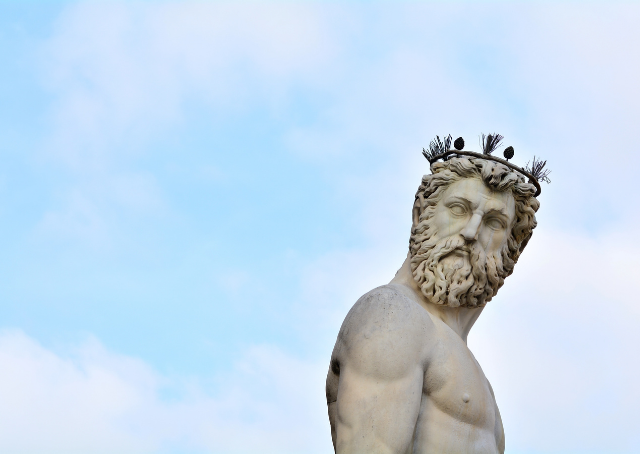
Poseidon, god of the seas
Odysseus, having had enough, offers the cyclops wine from their travel. Pleased by the tangy nature of the beverage, Polyphemus asks for his name, promising to eat our hero last. Odysseus replies with "nobody." Once the giant was drunk enough, our hero stabbed him in the eye.
Polyphemus shouts in pain, screaming at the top of his lungs. The nearby cyclops asks him who'd hurt him, and he replies with "nobody." So the other cyclops let him be, leaving him blind in the presence of Odysseus and his men.
Gaining the Sea God's Ire
Still imprisoned in the one-eyed giant's cave, Odysseus instructs his men to tie themselves in Polyphemus' cattle's underbelly to escape. The following day, Polyphemus opens his cave, blocking the entrance with one hand and using his other hand to touch everything that comes out, preventing the mortals from escaping.
Odysseus and his men, tied to the underbellies of the cattle, escape safely from the cave and immediately run towards Odysseus' ships. Once far enough from the island to reach, Odysseus shouts, "Cyclops, if any mortal man ever asks you who it was that inflicted upon your eye this shameful blinding, tell him that Odysseus, sacker of cities blinded you. Laertes is his father, and he makes his home on Ithaca."
Polyphemus, enraged with Odysseus and his rudeness, begs his father, the sea god, to seek vengeance in his stead. He begs Poseidon to have Odysseus' journey end, never reach Ithaca, or derail his journey for several years.
Poseidon, the Powerful Sea God
Poseidon, the ruler of the seas, heeds his son's requests. He was enraged at Odysseus for blinding his beloved son. Poseidon punished Odysseus by sending him and his men multiple storms, forcing them to land on several islands that bring them harm.
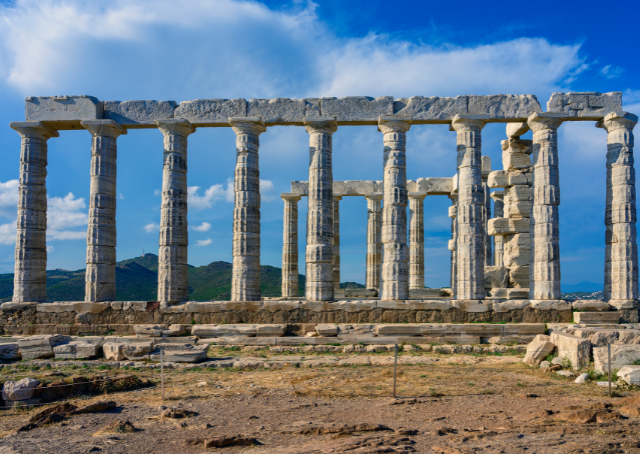
Temple dedicated to Poseidon
Poseidon's role in The Odyssey is that of a divine antagonist, hampering the main character's journey home. He sends Odysseus storms and waves, sea monsters such as the Scylla and Charybdis, all for inciting the sea god's anger. His bad temperament stems from the insult he felt as his son Polyphemus was blinded by the hero who dared to boast about it.
The god of the sea, known for his vindictive nature, does his utmost diligence to derail the Greek hero's return home, guiding him to islands that would cause him harm. Despite all his effort, Poseidon, the patron of the seafaring Phaeacians, ironically helped Odysseus return home to Ithaca.
Odysseus Returns Home
Finally escaping the island of Ogygia, Odysseus is yet again caught up in Poseidon's storm at sea. He washes up on the shores of the Phaeacians, where he recounts his tale to the king. The king, pitying our hero, pledges to send the battered Odysseus home.
He offers ships and his men to accompany the Ithacan king on his journey home. The Phaeacians are known to be protected by their patron, Poseidon, who could do nothing but watch as the mortals he vowed to protect accompany the subject of his ire. Finally, Odysseus arrives in Ithaca, ending the affair between Poseidon and Odysseus.
Conclusion
We've discussed Poseidon, his anger towards the Greek hero, and his temperament.
Let's now go over some key points of this article:
Poseidon, god of the seven seas, is known for his ever-changing frame of mind; helpful on a good day and vengeful when irritated
Odysseus and his men blind Polyphemus and escape his cave by tying themselves to the underbellies of the cyclops' sheep
Polyphemus, Poseidon's son, blinded by Odysseus on his journey home to Ithaca; begs his father for retribution, asking him to derail the war hero's journey home for several years
Poseidon decides to heed his son's commands and punish the Greek hero, exhibiting his lousy temper and vindictive nature in Homer's classic
Poseidon and Odysseus are portrayed to have contrasting characters, written in tandem; the antagonist to one's protagonist
Poseidon punished Odysseus by derailing his journey home for several years; he sends the Greek hero storms and waves, sea monsters such as the Scylla and the Charybdis all to guide him to islands that would undoubtedly bring the mortals harm
Odysseus is finally freed from his imprisonment in Ogygia, he once again sets sail and is sent a storm by Poseidon; the storm wrecks his makeshift ship and washes him ashore the isle of the Phaeacians
Odysseus recounts his tale to their king and is given a ship and men to escort him, ensuring a safe journey through their patron, Poseidon
Poseidon, patron of the Phaeacians, watch as they escort the subject of his ire home, ending his feud with the Greek hero
Homer portrays Poseidon to be Odysseus' divine antagonist, gaining his ire through his brazen wrongdoings; this inevitably leads him astray from his journey as he faces multiple challenges on his way home
In conclusion, Poseidon, known to have a bad temperament, antagonizes our hero by delaying his journey and leading him to perilous islands where he and his men are constantly in danger. This is all because Odysseus blinds Polyphemus and shamelessly announces his identity to brag about the achievement of blinding the sea god's son.
Had he not revealed his identity, Poseidon would never have known who blinded his son. If not for his boastful act, he and his men didn't have to face the dangers they encountered.