Timeless Myths Logo
Aphrodite Apollo Ares Artemis Athena Atlas Coeus Crius Cronus Demeter Dionysus Gaia Hades Hephaestus Hera Hermes Hestia Hyperion Iapetus Mnemosyne Oceanus Phobos Phoebe Poseidon Prometheus Rhea Tethys Themis Uranus Zeus
Bacchus Ceres Diana Juno Jupiter Mars Mercury Minerva Neptune Pluto Venus Vesta Vulcan
Amun Anubis Aten Atum Babi Bastet Bes Geb Hapi hathor heqet Horus Isis Khepri Khnum Khonsu Maat Nephthys Nut Osiris Ptah Ra Seshat Seth Shu Sobek Thoth
Alfheim Baldur Freya Freyr Frigg Heimdallr Helheim Idun Jotunheim Loki Nerthus Njord Odin Thor Tyr
Aengus Arawn Badb Brigid Cailleach Ceridwen Cernunnos Cu Chulainn Dagda Danu Gwydion Herne the Hunter Lugh Medb Morrigan Neit Nuada Taliesin Taranis
Chalchiuhtlicue Coatlicue Huitzilopochtli Mictlantecuhtli Mixcoatl Ometeotl Quetzalcoatl Tezcatlipoca Tlaloc Tonatiuh Xipe Totec Xochiquetzal Xolotl
Amaterasu Ame no Uzume Benzaiten Bishamonten Daikokuten Ebisu Fujin Fukurokuju Inari Izanagi Kagutsuchi Raijin Susanoo Tsukuyomi
Caishen Cangjie Dragon King Eight Immortals Erlang Shen Fuxi Guanyin Hou Yi Huxian Jade Emperor King Yama Leizi Lu-ban Mazu Nezha Nuwa Pangu Shennong Sun Wukong Xiwangmu Yue Lao Zhong Kui
Norse Classical Celtic Arthurian
Literature Stories Names
Aphrodite Apollo Ares Artemis Athena Atlas Coeus Crius Cronus Demeter Dionysus Gaia Hades Hephaestus Hera Hermes Hestia Hyperion Iapetus Mnemosyne Oceanus Phobos Phoebe Poseidon Prometheus Rhea Tethys Themis Uranus Zeus
Bacchus Ceres Diana Juno Jupiter Mars Mercury Minerva Neptune Pluto Venus Vesta Vulcan
Amun Anubis Aten Atum Babi Bastet Bes Geb Hapi hathor heqet Horus Isis Khepri Khnum Khonsu Maat Nephthys Nut Osiris Ptah Ra Seshat Seth Shu Sobek Thoth
Alfheim Baldur Freya Freyr Frigg Heimdallr Helheim Idun Jotunheim Loki Nerthus Njord Odin Thor Tyr
Aengus Arawn Badb Brigid Cailleach Ceridwen Cernunnos Cu Chulainn Dagda Danu Gwydion Herne the Hunter Lugh Medb Morrigan Neit Nuada Taliesin Taranis
Chalchiuhtlicue Coatlicue Huitzilopochtli Mictlantecuhtli Mixcoatl Ometeotl Quetzalcoatl Tezcatlipoca Tlaloc Tonatiuh Xipe Totec Xochiquetzal Xolotl
Amaterasu Ame no Uzume Benzaiten Bishamonten Daikokuten Ebisu Fujin Fukurokuju Inari Izanagi Kagutsuchi Raijin Susanoo Tsukuyomi
Caishen Cangjie Dragon King Eight Immortals Erlang Shen Fuxi Guanyin Hou Yi Huxian Jade Emperor King Yama Leizi Lu-ban Mazu Nezha Nuwa Pangu Shennong Sun Wukong Xiwangmu Yue Lao Zhong Kui
Norse Classical Celtic Arthurian
Literature Stories Names

Idomeneus: The Greek General Who Sacrificed His Son as an Offering

greek-mythology

Idomeneus was the King of Crete and served as the commander of the Cretan army during the Trojan war. He was very instrumental in repelling several Trojan attacks including one which involved the Trojan hero, Hector.
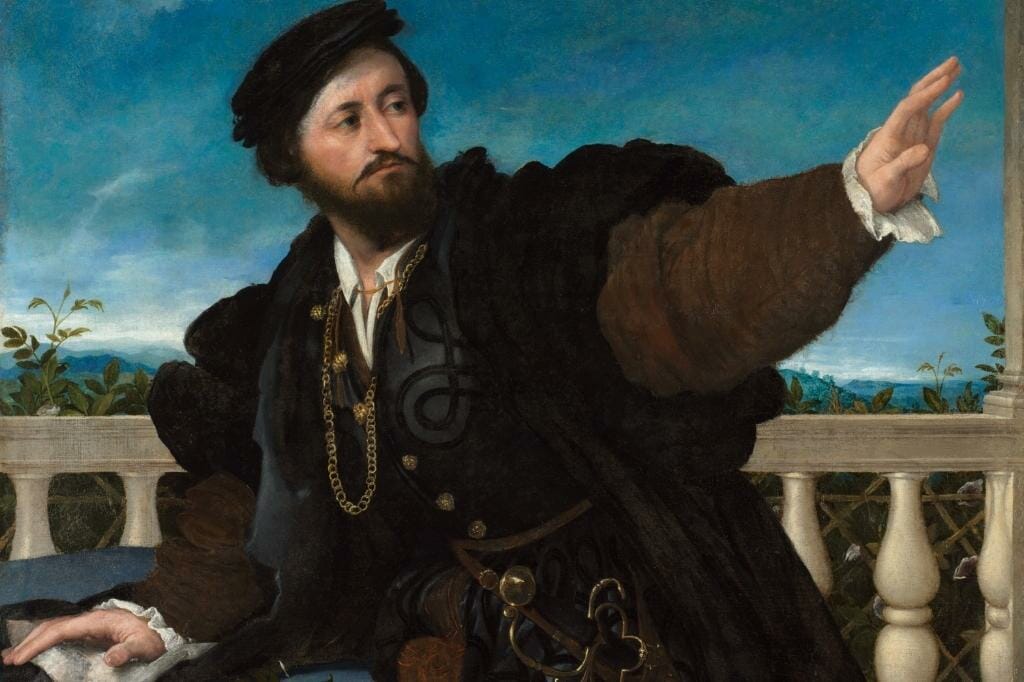
Idomeneus the King of Crete

Due to his skill, strength, and bravery, he survived the 10-year war alongside Menelaus, Nestor and Ajax the Great but when he got home he killed his son in honor of the god Poseidon. Read on to discover the reason for sacrificing his son and the repercussions of his actions.

The Myth of Idomeneus According to Apollodorus

According to Homer's Iliad, Idomeneus survived the Trojan war but doesn't tell us what happened to him next. To know what happened to him, we have to refer to his story as chronicled by the Greek historian, Apollodorus.

Apollodorus narrated, that while Idomeneus was returning from the Trojan War he encountered a violent storm. The storm threatened to sink Idomeneus ship so to save himself in his men, he prayed to Poseidon, the sea god, to save him together with his men.

In return, he promised to sacrifice the first thing that he sees as an act of worship to him (Poseidon). Poseidon spared the life of Idomeneus and his men, granting them a safe landing on the shore.

Once he got home, Idomeneus' son rushed out to meet and embrace him. Owing to the promise he made to Poseidon, Idomeneus had no choice but to sacrifice his son. When the other gods discovered what Idomeneus had done they became angry and visited a plague on Idomeneus' city, Crete.

To stop the plague, the people of Crete had to exile their king, Idomeneus, to a distant land named Calabrian. From there, the hapless Idomeneus was sent to live in the city of Colophon in Ionia until his death. Other versions of this myth narrate that after the plague hit Crete, his adopted son, Leucus, chased him out of Crete and took over the kingdom. It is worth noting that the gens Salentini in Italy trace their ancestry to Idomeneus.

The Idomeneus Myth According to the Illiad

Idomeneus was an advisor to the King of Mycenae, Agamemnon, who he helped in defeating the city of Troy. He was a highly-ranked general who commanded the respect of all the Greek warriors.

When the Achaean forces suffered heavy casualties during the war, Idomeneus was the first to spring into action along with his warriors. He also was one of the elite warriors chosen to enter the Trojan horse and was known to kill about twenty Trojans and three Amazonians.

Idomeneus and Cassandra

Idomeneus and Cassandra

Cassandra was the most beautiful daughter among the daughters of King Priam of Troy, thus many men were attracted and sought to marry her. Among Kassandra's suitors was Othryoneous, a warrior from Cabesus who fought alongside the Trojans.

Idomeneus was also interested in making Kassandra his wife so he killed Othryoneous and made fun of him while he was dying. Idomeneus then kidnapped Kassandra and made away with her.

Idomeneus and Ajax the Lesser(Locrian)

After Patroclus had died at the hands of Hector, Achilles organized some funeral games to mourn him. Ajax the Locrian was known as the swiftest Greek warrior apart from Achilles and was very skillful with the spear. During the games, he decided to challenge Odysseus and Antilochus to a footrace. Idomeneus, who was a spectator, said that an Achaean (referring to Odysseus) would win the race much to the annoyance of Ajax.

After all, of all the three competitors he was the fastest and tipped by many to win. Hence, Ajax entered into an argument with Idomeneus calling him an old man with poor eyesight. Eventually, Idomeneus' prediction came true as the goddess Athena caused Ajax to trip and fall because she didn't like him. Odysseus won the first prize, followed by Ajax with Antilochus coming in third.

Why Leucus Drove Idomeneus Out of Crete

Leucus chaced Idomeneus, the king, out of Crete in order to cover his crime of making love to and murdering Idomeneus' wife Meda. He also killed Meda's children namely Cleisithyra, Lycus and Iphiclus then he took over the throne.

Leucus was ill-advised by Nauplius who told him to secure the throne in the absence of his foster father. Nauplius was the same person who advised the wife of Idomeneus, Meda, to cheat on her husband in his absence.

Idomeneus Pronunciation, Meaning and Theater

The name of the ancient Cretan king is pronounced as "ai-do-mi-ni-us". The Idomeneus meaning is uncertain with many sources referring to him as "the Cretan King". The Idomeneus play written by German playwright Roland Schimmelpfennig is inspired by Greek mythology. It details the consequences of Idomeneus' sacrifice of his son to the god Poseidon.

Other people to write a play based on the life events of Idomeneus include Maurus Servius Honoratus, a fourth Century Italian grammarian, and Francois Fenelon, a French writer from the 17th Century. In an opera seria composed by Mozart, Poseidon stops Idomeneus from killing his son (called Idamante) and asks him to give up the throne instead.

Conclusion
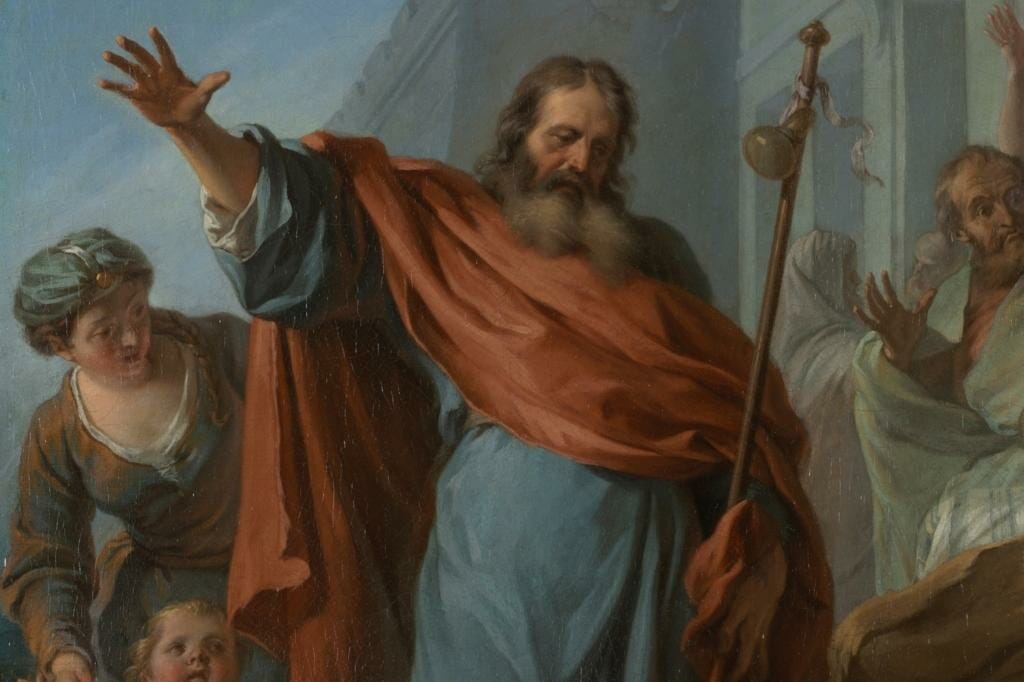
Idomeneus in Greek mythology

Though Idomeneus is a minor character in Greek mythology, his story is intriguing and didactic.

Here is a summary of what we've read so far about Idomeneus:

  • Idomeneus was the King of Crete during the Trojan War and also doubled as the first commander of his forces.

  • During the Trojan War, Idomeneus led some Greek warriors to successfully repel an onslaught by Hector and his men.

  • On his return home after the war, Idomeneus and his crew encountered a violent storm that threatened to sink their ship.

  • Fearing for his life, Idomeneus made a promise to Poseidon to sacrifice the first living thing that came to him once he got home safely.

  • He was met by his son whom he sacrificed to Poseidon much to the anger of the other gods.

The myth of Idomeneus teaches us to think through the promises especially in the heat of the moment before they come back to haunt us.

By Ancient Literature

Created: February 16th, 2024

Modified: January 11th, 2025

Idomeneus

Idomeneus

Idomeneus (Ἰδομενεές) was a son of Deucalion. He was also the brother of Crete and the half-brother of Molus. Idomeneus was the nephew of Catreus. Idomeneus married Meda, and became the father of Cleisithyra and Idamante. Idomeneus was a former su...

September 22nd, 2002 • Jimmy Joe
Odysseus

Odysseus

King of Ithaca. The Romans identified Odysseus as Ulysses. Odysseus (Ὀδυσσεύς) was the hero of the epic poem called The Odyssey. Odysseus was the son of Laërtes (Laertes) and Anticleia, daughter of the thief Autolycus and Mestra. Other writers sai...

April 24th, 1999 • Jimmy Joe
Agamemnon

Agamemnon

Agamemnon Iphigeneia in Aulis Murder of AgamemnonAgamemnon According to Homer, Agamemnon (Ἀγαμέμνων) and his brother Menelaüs (Menalaus) were the sons of Atreus and Aerope, the daughter of Catreus of Crete. The two sons of Atreus were known as the...

August 23rd, 2003 • Jimmy Joe
Diomedes

Diomedes

An Argive hero. Diomedes (Διομήδης) was the son of Tydeus, one of the seven leaders against Thebes, and Deïpyle (Deipyle) the daughter of Adrastus, king of Argos. He was married to Aegialeia, daughter of Adrastus or of Aegialeus. Together with the...

April 24th, 1999 • Jimmy Joe
Iphigenia

Iphigenia

Iphigenia or Iphigeneia (Ἰφιγένεια) was the heroine of a couple of tragedies written by Euripides – Iphigenia at Aulis and Iphigenia among the Taurians. Homer only knew her as Iphianassa. Usually, Iphigeneia was seen as the eldest daughter of Agam...

June 22nd, 2003 • Jimmy Joe
Creusa and Ion

Creusa and Ion

Xuthus was the son of Hellen and Orseïs (Orseis). Xuthus became the king of Iolcus. Xuthus was the father of Diomede, who married Deion, the son of Aeolus and the king of Phocis, and became the mother of Cephalus. Xuthus married Creüsa (Creusa or ...

April 27th, 1999 • Jimmy Joe
Catreus

Catreus

Crete was divided between Minos two sons, Catreus (Κατρεύς) and Deucalion (Δευκαλίων). Deucalion was the father of Idomeneus and a daughter named Crete. Crete was probably the eponym of the island; however, some said that Crete was the daughter of...

September 22nd, 2002 • Jimmy Joe
Minoan Crete

Minoan Crete

Early Crete Minos Crete in Decline Genealogy: House of CreteEarly Crete Genealogy: House of CreteMinos In Greek mythology, Minos (Μίνως) was the greatest king in Crete, with a great empire and the most formidable navy. His empire included the isla...

September 22nd, 2002 • Jimmy Joe
Laomedon

Laomedon

Laomedon (Λαομέδον) was the son of Ilus, the founder of Troy, and of Eurydice. Laomedon became king of Ilium (Troy) after his father's death. The new king married Strymo, Placia or Leucippe. Whichever woman he married, he was the father of Podarce...

May 10th, 1999 • Jimmy Joe
Melanippus and Comaetho

Melanippus and Comaetho

In an Achaean town called Patrae, there was a sanctuary to Artemis that practiced human sacrifices for generations. It all started at the time when Comaetho (Κομαιθώ) was a young priestess in the temple of Triklarian Artemis. Comaetho was a beauti...

March 17th, 2001 • Jimmy Joe
Timeless Myths

Exploring mythology and legends from around the world.

Explore Myths

All Stories Characters All Articles Search Site Map

Mythologies

Norse Mythology Classical Mythology Celtic Mythology Arthurian Legends Mythology Gods Ancient Literature

About Us

Introduction About Jimmy Bibliography FAQs Retro Version

Resources

Timeless Myths All Stories All Articles Characters
© 1999-2026 Timeless Myths • Copyright • Privacy Policy • Cookie Policy • Contact
Follow us: