Timeless Myths Logo
Aphrodite Apollo Ares Artemis Athena Atlas Coeus Crius Cronus Demeter Dionysus Gaia Hades Hephaestus Hera Hermes Hestia Hyperion Iapetus Mnemosyne Oceanus Phobos Phoebe Poseidon Prometheus Rhea Tethys Themis Uranus Zeus
Bacchus Ceres Diana Juno Jupiter Mars Mercury Minerva Neptune Pluto Venus Vesta Vulcan
Amun Anubis Aten Atum Babi Bastet Bes Geb Hapi hathor heqet Horus Isis Khepri Khnum Khonsu Maat Nephthys Nut Osiris Ptah Ra Seshat Seth Shu Sobek Thoth
Alfheim Baldur Freya Freyr Frigg Heimdallr Helheim Idun Jotunheim Loki Nerthus Njord Odin Thor Tyr
Aengus Arawn Badb Brigid Cailleach Ceridwen Cernunnos Cu Chulainn Dagda Danu Gwydion Herne the Hunter Lugh Medb Morrigan Neit Nuada Taliesin Taranis
Chalchiuhtlicue Coatlicue Huitzilopochtli Mictlantecuhtli Mixcoatl Ometeotl Quetzalcoatl Tezcatlipoca Tlaloc Tonatiuh Xipe Totec Xochiquetzal Xolotl
Amaterasu Ame no Uzume Benzaiten Bishamonten Daikokuten Ebisu Fujin Fukurokuju Inari Izanagi Kagutsuchi Raijin Susanoo Tsukuyomi
Caishen Cangjie Dragon King Eight Immortals Erlang Shen Fuxi Guanyin Hou Yi Huxian Jade Emperor King Yama Leizi Lu-ban Mazu Nezha Nuwa Pangu Shennong Sun Wukong Xiwangmu Yue Lao Zhong Kui
Norse Classical Celtic Arthurian
Literature Stories Names
Aphrodite Apollo Ares Artemis Athena Atlas Coeus Crius Cronus Demeter Dionysus Gaia Hades Hephaestus Hera Hermes Hestia Hyperion Iapetus Mnemosyne Oceanus Phobos Phoebe Poseidon Prometheus Rhea Tethys Themis Uranus Zeus
Bacchus Ceres Diana Juno Jupiter Mars Mercury Minerva Neptune Pluto Venus Vesta Vulcan
Amun Anubis Aten Atum Babi Bastet Bes Geb Hapi hathor heqet Horus Isis Khepri Khnum Khonsu Maat Nephthys Nut Osiris Ptah Ra Seshat Seth Shu Sobek Thoth
Alfheim Baldur Freya Freyr Frigg Heimdallr Helheim Idun Jotunheim Loki Nerthus Njord Odin Thor Tyr
Aengus Arawn Badb Brigid Cailleach Ceridwen Cernunnos Cu Chulainn Dagda Danu Gwydion Herne the Hunter Lugh Medb Morrigan Neit Nuada Taliesin Taranis
Chalchiuhtlicue Coatlicue Huitzilopochtli Mictlantecuhtli Mixcoatl Ometeotl Quetzalcoatl Tezcatlipoca Tlaloc Tonatiuh Xipe Totec Xochiquetzal Xolotl
Amaterasu Ame no Uzume Benzaiten Bishamonten Daikokuten Ebisu Fujin Fukurokuju Inari Izanagi Kagutsuchi Raijin Susanoo Tsukuyomi
Caishen Cangjie Dragon King Eight Immortals Erlang Shen Fuxi Guanyin Hou Yi Huxian Jade Emperor King Yama Leizi Lu-ban Mazu Nezha Nuwa Pangu Shennong Sun Wukong Xiwangmu Yue Lao Zhong Kui
Norse Classical Celtic Arthurian
Literature Stories Names

Itys: The Unfortunate Son Who Was Killed By His Mother

greek-mythology

Itys is one of the tragic characters in Greek mythology because of the actions of his parents. This story is no doubt one of the worst ones in the whole of mythology and you will know just why and how. He had a deadly fate and was the innocent victim in all of the drama that was spewed around him. In this article, we have gathered all the most authentic information about Itys and his family for your dissemination.

Who Was Itys?

Itys was the son of Tereus and Procne, who was killed by his mother, Procne in Greek mythology. She killed him to avenge the rape of her sister, Philomela, at the hands of Tereus. The trio was then turned into birds by the Olympian gods.

Having a Troubled Family

In Greek mythology, Itys or Itus was the son of King Tereus and his queen, Procne. Tereus, a Thracian king, was the son of Ares and a naiad, Bistonis whereas, Procne was a princess from Athens. The pair were married in goodwill and their union brought alliance and safety to both civilizations. Procne bore Tereus a son who would carry the family name and throne.

All was going very well and harmonious until the most tragic incident took place. Procne had a beloved little sister named Philomela who had come to live with her but little did she know that she would come into the sight of Tereus and who would start falling for her, as his likeness soon turned into uncontrollable lust and he did the unthinkable.

Tereus raped his sister-in-law, the aunt of his son, and to hide his heinous crime, he cut Philomela's tongue. He went about his life as usual after that and pretended to be a great husband, to Procne, and a great father to his son, Itys. No one could suspect his animal-like behavior towards Philomela. She was so scared that she did not dare act out of the ordinary.

Philomela and Her Tapestry of Truth

As time passed by, Philomela still carried the fear in her heart. She did not tell anyone about her tongue but acted like she has just gone mute and would like to stay that way. After some time, when she couldn't bare it any longer and she had had enough and wanted revenge, it was about time that the Thracian king paid for what he had done.

As she was exceptional at weaving clothes and tapestries, it was her hobby and it brought her peace amidst all the whirlwinds of the world. She thought of weaving a tapestry that would showcase all of her stories and call it the tapestry of truth, she couldn't say it, but she had the ability to show it. She got on with it and in the end, had the most beautiful looking tapestry that had the ugliest story to tell.

She got to the room of her sister, in Procne Greek mythology, and showed her the tapestry. Procne did not first understand what had happened. As she tried to understand everything and the story unfolded, Procne was in disarray. She was disgusted, embarrassed, and angered at what her husband had done to her sister and all that behind her back.

His Fate

Right there and then, Procne promised Philomela that whatever it cost, she would avenger her and will not let the heinous crime of his husband pass quietly. Philomela had an evil plan already in her mind which she told Procne about. This is where the story gets even darker. Procne agreed to the plan and without a second thought, sided with Philomela, leaving everything and everyone behind.

Itys was the one and only beloved son of Tereus, who loved him more than anything as he was the apple of his eye. Keeping the latter in mind, Philomela thought of a plan. According to her plan, Tereus would be served a pie made from the dead meat of his son, Itys and this is exactly what happened.

Procne killed her own son, Itys, and baked a pie made of her dead son. She then served Tereus the pie at the dining table where Philomela was also seated. As Tereus ate and enjoyed the meat pie, just as he was done, Procne confronted Tereus and told him the truth. Tereus learned that he was eating his dead son so he choked on the food and shrieked in agony.
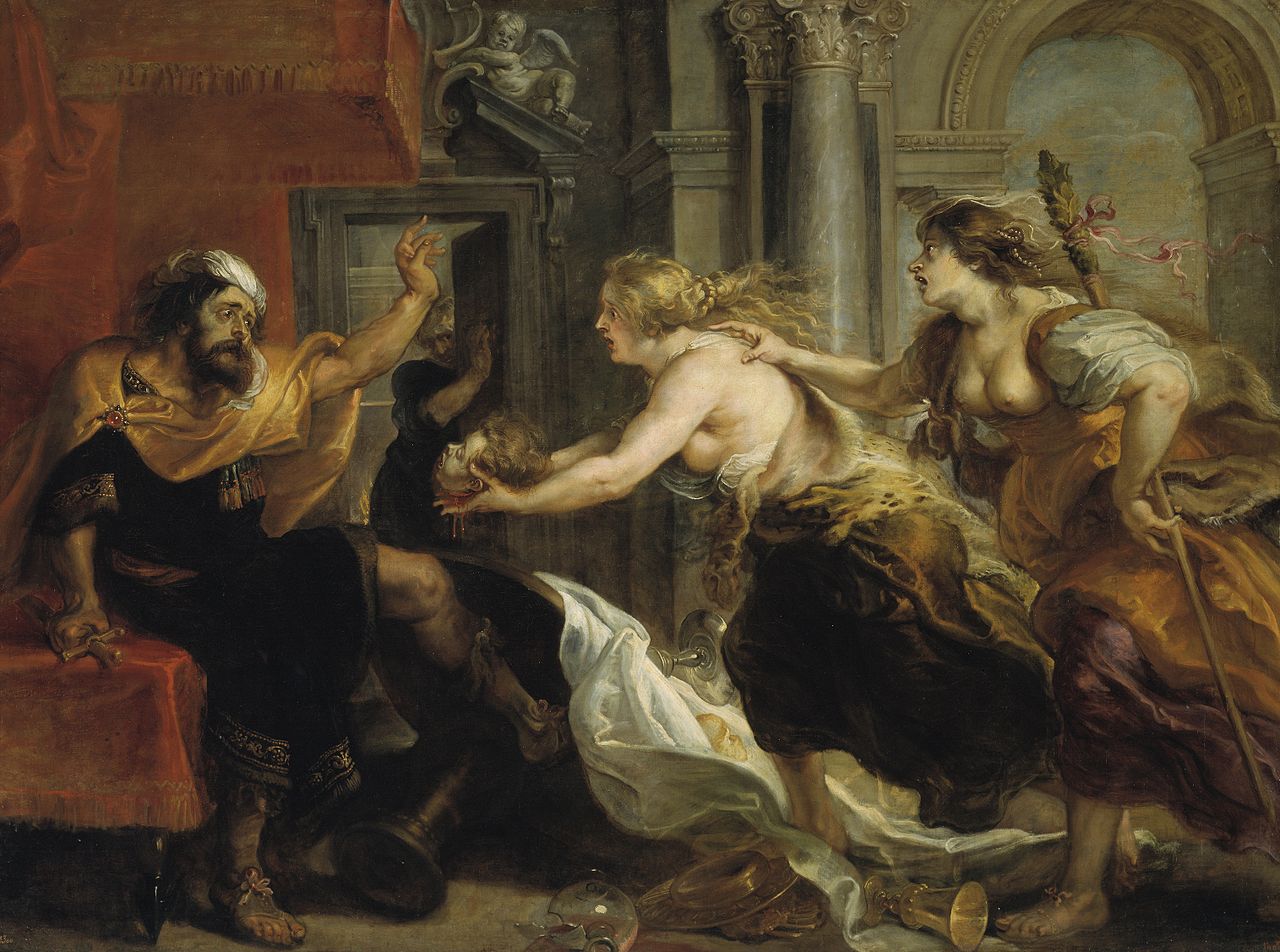
Tereus Confronted with the Head of his Son Itylus by Peter Paul Rubens (1636-1638). The dramatic moment when Procne and Philomela reveal to Tereus the horrible truth of what he has just consumed.

The End of Tereus, Procne, and Philomela

Tereus tried to kill both the sisters and they tried to escape, because he was in raging anger from what had happened to his only and most loving son. In all this mess, the Olympian gods interfered.

When the Olympians saw how each and every one of the three had crossed a line and committed unspeakable crimes, they came to a decision together and the three were then turned into different breeds of birds by the gods as a punishment.

Tereus was turned into a hoopoe, Philomela was made into a swallow, and Procne was turned into a nightingale. The nightingale Procne would then sing the song and mourn her son, Itys forever.

Conclusion

Itys' story is incomplete without mentioning his troubled family. He was an innocent soul who paid for the crimes of his father. Here we have concluded the article with a few points:

  • Itys was the son of a Thracian king Tereus and an Athenian princess Procne.

  • Tereus raped Philomela, his sister-in-law, and cut her tongue for the sake of secrecy. Philomela wove her story and truth in a tapestry which she showed to Procne.

  • Procne murdered Itys and served it to Tereus to avenge Philomela.

  • Tereus was turned into a hoopoe, Philomela was made into a swallow, and Procne was turned into a nightingale by the Olympian gods.

This is no doubt one of the worst stories in all of Greek mythology. A man's lust and a woman's revenge took the life of an innocent boy. Here we come to the end of the article about Itys.

By Ancient Literature

Created: February 16th, 2024

Modified: January 11th, 2025

Procne and Philomena

Procne and Philomena

Procne (Πρόκνη) and Philomena (Φιλομήλα) were the daughters of King Pandion I of Athens. When Tereus, the king of Thrace, aided their father in the war against Labdacus, the king of Thebes, Pandion gave Procne to Tereus in marriage. At first the m...

January 13th, 2001 • Jimmy Joe
Atreus and Thyestes

Atreus and Thyestes

During Perseus' reign, Pelops was king of Pisa while his wife Hippodaemia bore him many children, including Pittheus (king of Troezen), Atreus (Ἀτρεύς) and Thyestes (Θυέσης). Pelops cleverly married most of his daughters to the sons of Perseus: As...

August 23rd, 2003 • Jimmy Joe
Erysichthon

Erysichthon

Erysichthon (Ἐρυσίχθων) was the son of Triopas. Erysichthon was the father of Mestra (Μήστρα), a girl who would later marry Autolycus and become the mother of Anticleia. He was a rich and impious man who cut down a tree from a sacred grove. By cut...

March 17th, 2001 • Jimmy Joe
Iphis

Iphis

In Crete, there was a man named Lidgus who desperately wanted a son, a man of humble family from the city of Phaestus. His wife Telethusa was pregnant. Lidgus declared that if his wife gave birth to a daughter, he would put the girl to death. Her ...

June 22nd, 2000 • Jimmy Joe
Athamas

Athamas

King of Orchomenus. Athamas (Ἀθάμας) was the son of Aeolus and Enarete. The goddess Hera arranged Athamas' first marriage to Nephele (Νεφέλη), who bore him a son named Phrixus (Φρίξος) and a daughter named Helle (Ἥλλη). However, Athamas became tir...

April 27th, 1999 • Jimmy Joe
Cephalus and Procris

Cephalus and Procris

Procris (Πρόκρις) was the daughter of King Erechtheus of Athens. Procris was the sister of Cecrops, Butes, Creusa, Oreithyia and other unnamed sisters. Cephalus (Κέφαλος) was the son of Deion, the king of Phocis, and Diomede, daughter of Xuthus. C...

June 22nd, 2000 • Jimmy Joe
Iphigenia

Iphigenia

Iphigenia or Iphigeneia (Ἰφιγένεια) was the heroine of a couple of tragedies written by Euripides – Iphigenia at Aulis and Iphigenia among the Taurians. Homer only knew her as Iphianassa. Usually, Iphigeneia was seen as the eldest daughter of Agam...

June 22nd, 2003 • Jimmy Joe
Oedipus

Oedipus

Laïus (Laius or Laios; Λάιος) became the king of Thebes after the death of Amphion and Zethus. He married Jocasta (Ἰοκάστη; some authors call her Epicasta), daughter of Menoeceus and sister of Creon. Laius had at one time visited Pelops, king of P...

May 6th, 1999 • Jimmy Joe
Attis

Attis

A Phrygian vegetation god. Attis was the son of Nana, daughter of the river god Sangarius. Nana fell pregnant when an almond dropped into her lap. The almond came from a tree that was originally the severed male genital from a hermaphrodite being....

September 7th, 2004 • Jimmy Joe
Catreus

Catreus

Crete was divided between Minos two sons, Catreus (Κατρεύς) and Deucalion (Δευκαλίων). Deucalion was the father of Idomeneus and a daughter named Crete. Crete was probably the eponym of the island; however, some said that Crete was the daughter of...

September 22nd, 2002 • Jimmy Joe
Timeless Myths

Exploring mythology and legends from around the world.

Explore Myths

All Stories Characters All Articles Search Site Map

Mythologies

Norse Mythology Classical Mythology Celtic Mythology Arthurian Legends Mythology Gods Ancient Literature

About Us

Introduction About Jimmy Bibliography FAQs Retro Version

Resources

Timeless Myths All Stories All Articles Characters
© 1999-2026 Timeless Myths • Copyright • Privacy Policy • Cookie Policy • Contact
Follow us: